

Dog Care Guide: Food, Health, Training & Tips for Happy Dogs
Practical guides on dog food, health, training, and everyday care — written for real dog owners.
Proper dog care requires a balanced diet, routine health checks, appropriate training, and regular grooming. Selecting the right dog food such as Daiko or Extar depends on your dog’s age, breed, weight, and specific dietary needs. Always ensure your dog has access to clean drinking water, daily physical exercise, and regular veterinary checkups to maintain long-term health and well-being.
Introduction
Our dog care guide makes it easy to understand the daily care of dogs. Dogs are more than pets. They are companions, family members, adventure partners, and often the first ones waiting at the door when you come home. They depend on us for food, comfort, exercise, healthcare, and plenty of love. In return, they give us loyalty and companionship that are difficult to put into words. At BestForDogs, our goal is simple to help dog owners make better, more informed choices for their dogs.
Whether you’re trying to choose the right dog food, understand your dog’s behavior, learn about a particular breed, or find useful products for everyday care, you’ll find practical information designed to make dog ownership a little easier. We believe caring for a dog shouldn’t feel complicated. That’s why we focus on clear, useful guides that answer the questions real dog owners ask.
Dog Care Guide Everything You Need to Know
This dog care guide covers nutrition, health, training, behavior, and daily care so that you can make better decisions for your dog.A German Shepherd has different exercise and nutritional needs from a French Bulldog. A growing puppy requires different care from a senior dog, while a dog with sensitive skin or digestive issues may need extra attention when it comes to food.
Because there isn’t one solution that works for every dog, Best For Dogs covers different areas of dog ownership so you can find information relevant to your own pet. Our guides explore topics including nutrition, health, grooming, behavior, training, breeds, and everyday dog care. Instead of overwhelming you with complicated information, we aim to explain things in a straightforward way.
Food & Nutrition
Choosing dog food can quickly become confusing. Walk through a pet store or browse online and you’ll find hundreds of options. There are dry foods, wet foods, grain-free recipes, limited-ingredient diets, puppy formulas, senior formulas, breed-specific products, and foods designed for particular sensitivities.
So how do you know what is suitable for your dog? Our dog food and nutrition guides are designed to help you understand the differences. We cover questions such as how to choose food for different life stages, what common ingredients actually mean, and what factors you may want to consider when comparing products. We also explore more specific topics, including food for dogs with sensitive stomachs, itchy skin, allergies, weight concerns, and other dietary needs.
Explore our guides on Best Dog Food for Sensitive Stomach and Best dog food for dogs with itchy skin for more detailed information Our aim isn’t to convince every dog owner to buy the same product. Instead, we help you understand your options so you can make a decision based on your dog’s age, size, activity level, preferences, and individual needs. For medical conditions or major dietary changes, however, advice from a qualified veterinarian should always come first.

Health & Wellness
Dogs can’t tell us exactly when something feels wrong. Sometimes a change is obvious. Other times it may be something small, such as scratching more than usual, eating less, drinking more water, sleeping differently, or behaving strangely. Learning what is normal for your dog can help you notice changes earlier.
At BestForDogs, our health and wellness content covers common concerns dog owners encounter, along with general information about prevention and everyday wellbeing. Topics may include skin and coat care, digestive health, dental hygiene, ear care, weight management, exercise, seasonal concerns, and other aspects of maintaining a healthy lifestyle.
We want our health content to help you become a more informed dog owner not replace professional veterinary care. If your dog is sick, injured, showing severe symptoms, or experiencing a sudden change in behavior or health, contact a veterinarian.
Explore Different Dog Breeds
Thinking about bringing a dog home? Choosing a breed based only on appearance can lead to surprises later. Different breeds can have very different personalities, exercise requirements, grooming needs, sizes, and training challenges. Some dogs are happiest when they have plenty of space to run. Others can adapt well to apartment living when their exercise needs are met. Some breeds may be naturally independent, while others prefer spending as much time as possible with their people.
Our breed guides help you learn what living with different dogs may actually be like. We explore characteristics such as temperament, typical size, activity level, grooming requirements, training considerations, common health concerns, and suitability for different households.
You’ll find information about popular breeds such as German Shepherds, Labrador Retrievers, Golden Retrievers, Rottweilers, Bulldogs, Beagles, Poodles, and many others.No breed description can predict the personality of an individual dog perfectly, but understanding typical breed traits can help you know what to expect.
Training & Behavior
A well-trained dog isn’t simply a dog that knows how to sit. Training helps build communication between you and your dog. From house training a puppy to teaching leash manners, recall, basic commands, and appropriate behavior around people and other animals, consistency can make everyday life safer and more enjoyable.
But training also involves understanding why dogs behave the way they do.
Why does your dog follow you everywhere?
Why does your puppy chew everything?
Why does your dog bark at certain people or animals?
Why do some dogs suddenly become picky eaters?
There is often a reason behind a dog’s behavior.
Our training and behavior guides focus on practical approaches that help owners better understand their dogs while encouraging positive habits. Patience matters. Dogs learn at different speeds, and successful training usually comes from repetition, consistency, appropriate rewards, and realistic expectations.
Grooming & Everyday Care
Good grooming is about more than making your dog look nice.Regular grooming can contribute to comfort, hygiene, and overall wellbeing. Depending on your dog’s breed and coat, their routine might include brushing, bathing, nail trimming, ear cleaning, dental care, and professional grooming. A short-haired dog may require relatively little coat maintenance, while a long-haired or curly-coated breed may need frequent brushing to prevent tangles and matting.
Our grooming guides help explain how different routines work and what you may need for your dog’s particular coat and lifestyle. We also cover everyday care topics that new dog owners sometimes overlook, from keeping bedding clean to preparing your dog for changing weather.Small habits can make a meaningful difference over time.
Finding Useful Products for Your Dog
There is no shortage of dog products available today.Food bowls, beds, collars, harnesses, toys, brushes, shampoos, crates, travel accessories the list can feel endless.
The problem isn’t finding products. It’s figuring out which ones are actually useful for your dog. At BestForDogs, our buying guides focus on the features that matter rather than simply presenting a long list of products. For example, when looking at a dog bed, size, sleeping style, ease of cleaning, support, and durability may all matter. When choosing a harness, fit and intended use can be more important than appearance.
Whenever we discuss products, our goal is to help you understand what to look for and why particular features may be useful.Some pages on BestForDogs may contain affiliate links. If you purchase something through one of these links, we may receive a commission at no additional cost to you. Affiliate relationships do not change our goal of providing useful information to readers.
Caring for Puppies
Bringing home a puppy is exciting and occasionally exhausting. Puppies are curious, energetic, and still learning how the world works.The first months can involve feeding schedules, vaccinations, toilet training, socialization, chewing, biting, sleep routines, basic commands, and plenty of unexpected messes.
Our puppy guides are designed to help new owners navigate these early stages. We cover practical questions about puppy food, training, grooming, socialization, exercise, and creating a safe environment at home. The habits developed during puppyhood can influence a dog’s behavior later in life, which makes early care and positive experiences especially important.
Supporting Your Dog Through Every Life Stage
A dog’s needs change over time. The energetic puppy running around your home today will eventually become an adult and, years later, a senior dog who may prefer slower walks and longer naps. Nutrition, exercise, veterinary care, and daily routines may need to change along the way.
Adult dogs generally need a balanced routine that combines appropriate nutrition, regular physical activity, mental stimulation, social interaction, and preventive healthcare.Senior dogs may require additional attention to mobility, weight, dental health, comfort, and changes in behavior. Understanding these stages can help you adjust your care instead of expecting the same routine to work throughout your dog’s entire life.
Why Best For Dogs?
There is an enormous amount of dog information online.Unfortunately, more information doesn’t always make finding a reliable answer easier.Articles can be unnecessarily complicated, important context can be missing, and sometimes simple questions are buried beneath pages of text.
Best For Dogs was created to take a more practical approach. We aim to produce content that is easy to understand, useful to everyday dog owners, and organized around the questions people actually have. When researching a topic, we focus on explaining the important details without making dog ownership sound more complicated than it needs to be.
We also recognize that knowledge about canine nutrition, health, and care continues to develop. Our goal is to review and improve our content as better information becomes available.
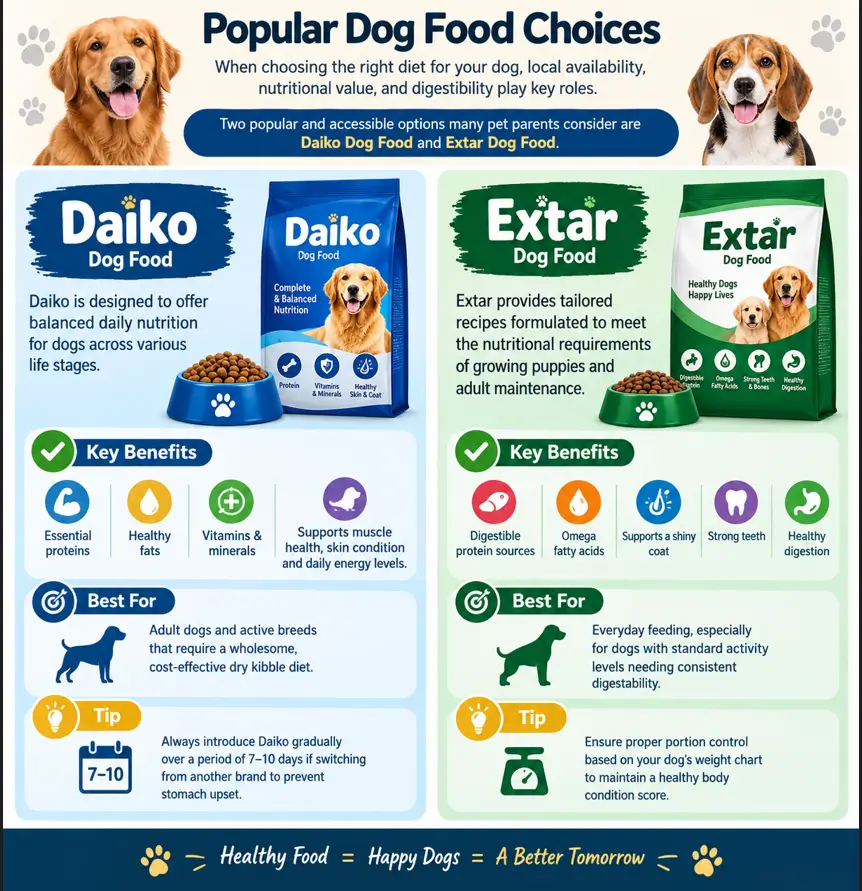
Popular Dog Food Choices
When choosing the right diet for your dog, local availability, nutritional value, and digestibility play key roles. Two popular and accessible options many pet parents consider are Daiko Dog Food and Extar Dog Food.
Daiko Dog Food
Daiko is designed to offer balanced daily nutrition for dogs across various life stages.
- Key Benefits: Formulated with essential proteins, fats, vitamins, and minerals to support muscle health, skin condition, and daily energy levels.
- Best For: Adult dogs and active breeds that require a wholesome, cost-effective dry kibble diet.
- Tip: Always introduce Daiko gradually over a period of 7–10 days if switching from another brand to prevent stomach upset.
Extar Dog Food
Extar provides tailored recipes formulated to meet the nutritional requirements of growing puppies and adult maintenance.
- Key Benefits: Contains digestible protein sources and omega fatty acids that support a shiny coat, strong teeth, and healthy digestion.
- Best For: Everyday feeding, especially for dogs with standard activity levels needing consistent digestability.
- Tip: Ensure proper portion control based on your dog’s weight chart to maintain a healthy body condition score.
A Better Life for Dogs Starts With Better Decisions
Being a responsible dog owner doesn’t mean knowing everything. It means being willing to learn. Sometimes that means researching a new food before changing your dog’s diet. Sometimes it means recognizing that a behavior problem needs professional training support. And sometimes it means noticing something unusual and deciding it’s time to call your veterinarian.
The small decisions you make every day what your dog eats, how much exercise they receive, how they’re trained, and how their health is managed—add up over a lifetime. Best For Dogs is here to make those decisions easier.
Explore our latest guides, learn more about your dog’s breed, discover practical care tips, and find information that can help you give your dog a healthier, happier, and more comfortable life. Because when your dog depends on you, giving them your best matters.
Frequently Asked Questions
How often should I feed my adult dog?
Most adult dogs thrive on two meals per day one in the morning and one in the evening. Puppies, however, usually require 3 to 4 smaller meals daily to support rapid growth and metabolic needs.
Is dry kibble better than wet dog food?
Both have unique advantages. Dry kibble helps support dental health by reducing plaque buildup and is easy to store. Wet food provides additional hydration and is often more palatable for picky eaters or senior dogs.
How do I switch my dog to a new food like Daiko or Extar?
Transition gradually over 7 to 10 days. Start by mixing 25% new food with 75% old food, slowly increasing the ratio of new food every few days to avoid digestive issues.
How much daily exercise does my dog need?
Exercise needs depend on breed, age, and health status. On average, most dogs need 30 minutes to 2 hours of physical activity daily, ranging from walking to interactive fetch games.
Why is my dog constantly scratching or licking its paws?
Excessive scratching can be caused by food allergies, environmental allergies, fleas, or dry skin. Switching to limited-ingredient diets or specialized formulas can help, but a vet visit is recommended for severe itching.
What core health care steps are essential for every dog?
Core care includes annual veterinary checkups, routine vaccinations, flea and tick prevention, regular deworming, dental maintenance, and proper daily grooming.
How can I tell if my dog’s food agrees with their stomach?
Signs of a suitable diet include consistent energy levels, a shiny coat, normal firm stools, and healthy weight maintenance. Persistent gas, loose stools, or vomiting indicate the food may not be suitable.
Conclusion
Caring for a dog is a lifelong journey filled with learning, love, and attention to detail. From picking high-quality nutritional options like Daiko or Extar Dog Food to keeping up with grooming routines and veterinary visits, every proactive decision directly impacts your dog’s quality of life. At BestForDogs, our goal is to provide simple, reliable information to guide you through every stage of dog ownershiphelping your companion stay healthy, happy, and thriving by your side.