
Best Dog Food for Sensitive Stomach

Best Dog Food for Sensitive Stomach: What to Look For and How to Choose
If your dog seems perfectly happy one day and wakes you up with loose stool, gas, or an upset stomach the next, food is an obvious place to look.
But choosing food for a sensitive stomach isn’t as simple as buying the bag with “sensitive” written on the front. Different dogs struggle with different ingredients, and digestive problems can have causes that have nothing to do with the food itself.
The best approach is to look for a complete and balanced diet that your dog digests well, introduce it gradually, and pay attention to how your dog responds.
Here’s what to look for—and what to avoid changing too quickly.
What Does a “Sensitive Stomach” Mean in Dogs?
“Sensitive stomach” is a broad description rather than a specific diagnosis. Owners often use the term when their dog regularly experiences digestive problems after eating or when changing foods.
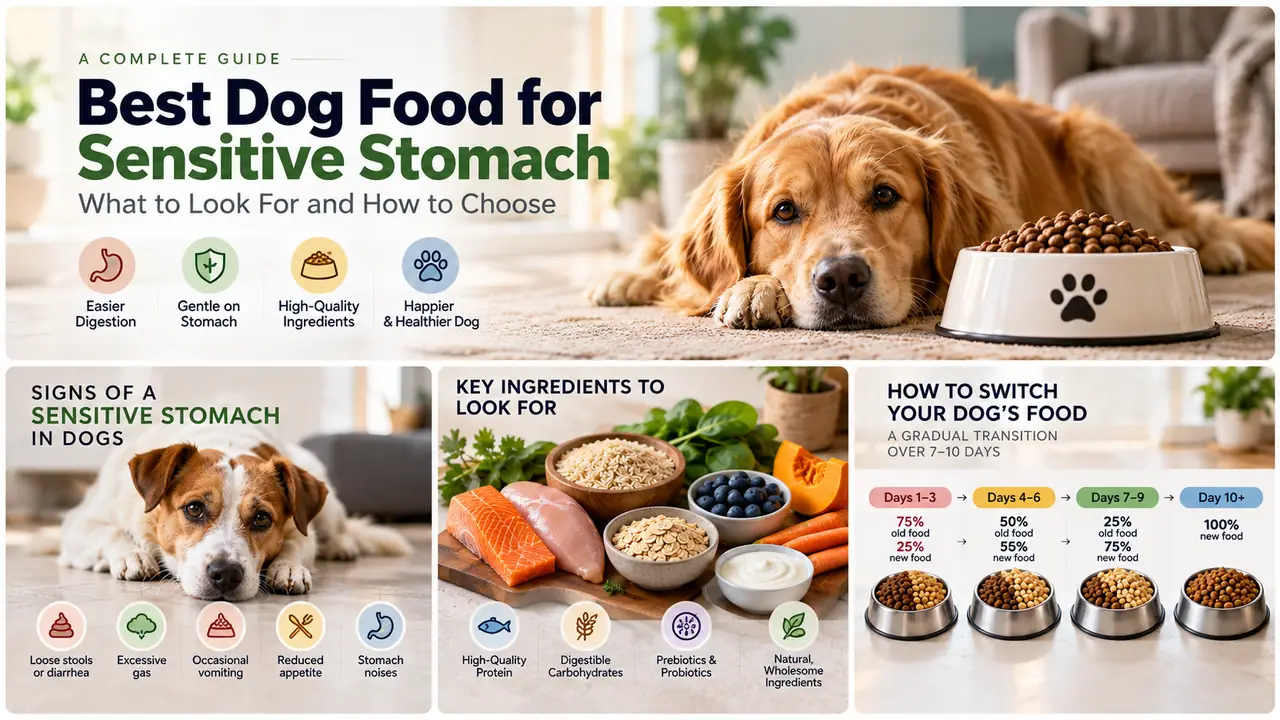
You might notice:
- Loose stools or diarrhea
- Excessive gas
- Occasional vomiting
- Reduced appetite
- Stomach noises
- Difficulty tolerating certain foods
One bad stomach day doesn’t necessarily mean your dog needs a completely different diet. Sudden diet changes, eating table scraps, parasites, infections, and underlying gastrointestinal conditions can also cause digestive symptoms.
If vomiting or diarrhea is persistent, severe, accompanied by blood, or your dog seems weak, painful, dehydrated, or unusually lethargic, contact your veterinarian rather than repeatedly experimenting with different foods.
What Should You Look for in Dog Food for a Sensitive Stomach?
There isn’t one ingredient list that works for every sensitive dog. A food that settles one dog’s stomach may cause problems for another.
Still, there are a few useful things to look for.
1. A Complete and Balanced Formula
Start with the basics.
For a dog’s everyday diet, look for a nutritional adequacy statement indicating that the food is complete and balanced for your dog’s appropriate life stage. Pet-food labels use these statements to indicate whether a diet provides the nutrients required for its intended life stage.
That matters more than attractive phrases on the front of the package.
2. A Protein Source Your Dog Tolerates
Chicken works perfectly well for many dogs. Others may do better on a different protein.
Depending on the individual dog, foods may use proteins such as:
- Salmon
- Turkey
- Lamb
- Duck
- Beef
Don’t assume that an ingredient is “bad” simply because another dog reacts to it.
True food allergies involve an immune response, and dogs can potentially react to many dietary proteins. Beef, chicken, and dairy are among commonly reported food allergens, but avoiding them without evidence isn’t automatically beneficial.
3. Digestible Carbohydrate Sources
Rice and oatmeal are commonly found in foods marketed for digestive support.
The important question is not whether an ingredient is fashionable—it’s whether the overall diet is nutritionally appropriate and whether your dog tolerates it well.
There is also no reason to automatically choose grain-free food simply because a dog has digestive issues.
4. Appropriate Fat Levels
Very rich meals and fatty table scraps can be difficult for some dogs to handle.
If you notice digestive trouble after rich treats or human food, mention that pattern to your veterinarian and keep those extras out of your dog’s regular feeding routine.
5. Prebiotics or Probiotics
Some digestive-support formulas include prebiotic fibers or probiotics intended to support the gut microbiome.
These can be useful features, but they shouldn’t distract from the bigger picture: the food still needs to be nutritionally appropriate and well tolerated by your individual dog.
Sensitive Stomach vs. Food Allergy: They’re Not the Same Thing
This distinction is important.
A dog with digestive trouble does not automatically have a food allergy.
Food allergies can cause gastrointestinal problems such as vomiting or diarrhea, but itching—particularly involving the skin, paws, or ears—can also occur.
If a veterinarian suspects a true food allergy, simply jumping from one over-the-counter “sensitive stomach” food to another may not answer the question.
Veterinary elimination trials generally use carefully selected novel-protein or hydrolyzed diets while excluding other foods and treats. A controlled food challenge afterward helps determine whether the original food really caused the symptoms.
So if your dog has recurring digestive problems plus chronic itching or ear problems, it’s worth discussing food allergy with your veterinarian.
If your dog is also experiencing persistent scratching or skin irritation, read our Best dog food for dogs with itchy skin guide.
Is Limited-Ingredient Dog Food Better?
Sometimes—but “limited ingredient” doesn’t automatically mean “better.”
A simpler ingredient list can make it easier to avoid a suspected ingredient. However, if you’re trying to diagnose an actual food allergy, an ordinary retail limited-ingredient food may not be equivalent to a veterinary therapeutic diet.
Veterinary diets intended for elimination trials can use additional manufacturing precautions to reduce unintended exposure to other proteins.
In other words:
Sensitive digestion: an appropriate commercial sensitive-stomach formula may be enough.
Suspected food allergy: talk to your veterinarian about a proper elimination diet.
Should You Choose Wet or Dry Food?
Either can work.
There is no universal rule saying wet food is better than dry food—or vice versa—for every sensitive dog. Individual dogs may prefer or tolerate one format better than another.
Rather than choosing based only on wet versus dry, compare the complete diet, calorie content, ingredients, life-stage suitability, your budget, and most importantly your dog’s response.
How to Change Your Dog’s Food Without Upsetting Their Stomach
This is where many owners accidentally create the very problem they’re trying to solve.
Switching food overnight can trigger gastrointestinal upset even when the new food is perfectly suitable.
A practical transition can look like this:
Days 1–3: roughly 75% old food + 25% new food
Days 4–6: 50% old + 50% new
Days 7–9: 25% old + 75% new
Day 10 onward: 100% new food
That schedule is not a rigid medical rule. Some dogs need a slower transition, especially if they have experienced GI upset before. VCA notes that dogs with a history of digestive upset may sometimes benefit from a substantially slower transition.
If symptoms appear during the switch, don’t keep increasing the new food just because the calendar says it’s time.
What About Chicken and Rice?
Chicken and rice has become almost synonymous with “dog has an upset stomach.”
But it shouldn’t automatically become your dog’s long-term diet.
A homemade chicken-and-rice combination can vary considerably in calories and nutrients and is not inherently a complete, balanced long-term diet. VCA specifically notes nutritional and practical limitations of homemade bland diets and recommends following veterinary guidance when one is needed.
There’s another obvious issue: chicken is not appropriate for a dog that actually reacts to chicken.
Use a temporary bland diet only when your veterinarian recommends it and follow their instructions.
Foods and Feeding Habits to Be Careful With
Sometimes the solution isn’t finding a magical ingredient. It’s removing unnecessary variables.
Try to avoid frequent sudden food changes, large amounts of table scraps, excessively rich treats, and constantly rotating foods before you’ve had time to see how your dog responds.
Also remember that treats count.
This becomes especially important during a veterinary elimination trial. Even flavored medications, supplements, chews, treats, and table food can interfere with the trial.
How Do You Know Whether the New Food Is Working?
Don’t judge it from one meal.
Watch your dog consistently and keep track of:
- Stool quality
- Stool frequency
- Vomiting
- Gas
- Appetite
- Body weight
- Energy level
- Itching or ear problems
- Any treats or extras your dog receives
A simple food-and-symptom diary can be surprisingly helpful.
It gives you something concrete to discuss with your veterinarian instead of trying to remember whether your dog seemed “a little better” two weeks ago.
Frequently Asked Questions
What is the best dog food for a sensitive stomach?
There isn’t one food that is best for every dog. Look for a complete and balanced diet appropriate for your dog’s life stage that they consistently digest well. Dogs with persistent symptoms may need veterinary evaluation before you choose another food.
Is salmon good for dogs with sensitive stomachs?
Salmon can be an appropriate protein source in a complete dog food, and some dogs tolerate it well. However, salmon itself doesn’t guarantee that a food will solve digestive problems. The entire formulation and the individual dog matter.
Is chicken bad for dogs with sensitive stomachs?
No—not generally. Many dogs eat chicken without problems. But a dog can develop an adverse reaction to chicken, just as it can to other dietary proteins. If an allergy is suspected, work with your veterinarian rather than diagnosing it from the ingredient list alone.
Should sensitive dogs eat grain-free food?
Not automatically. Digestive sensitivity does not by itself mean your dog needs to avoid grains. Choose a diet based on your dog’s nutritional needs and veterinary advice rather than assuming “grain-free” means easier to digest.
How quickly should I switch dog foods?
For many dogs, a gradual transition over several days is more comfortable than an overnight change. Dogs with previous gastrointestinal problems may need an even slower transition.
When should I call a veterinarian?
Contact your veterinarian when digestive symptoms are persistent, recurrent, severe, or accompanied by other concerning changes. Repeatedly changing foods can delay identifying an underlying medical problem.
Final Thoughts
Finding the right food for a dog with a sensitive stomach often takes a little patience.
Instead of chasing whichever ingredient is currently marketed as the healthiest, focus on a complete and balanced diet, a protein and formulation your dog tolerates, consistent feeding, and a gradual transition.
And if the problem keeps returning, don’t assume you simply haven’t found the right bag of food yet. Recurring digestive symptoms deserve veterinary attention.
For many dogs, the “best” sensitive-stomach food isn’t the one with the longest list of claims on the package.
It’s the one that meets their nutritional needs and lets them eat dinner without their stomach complaining afterward.
One Comment