
Best Dog Food for Great Danes: 6 Top Picks (2026)
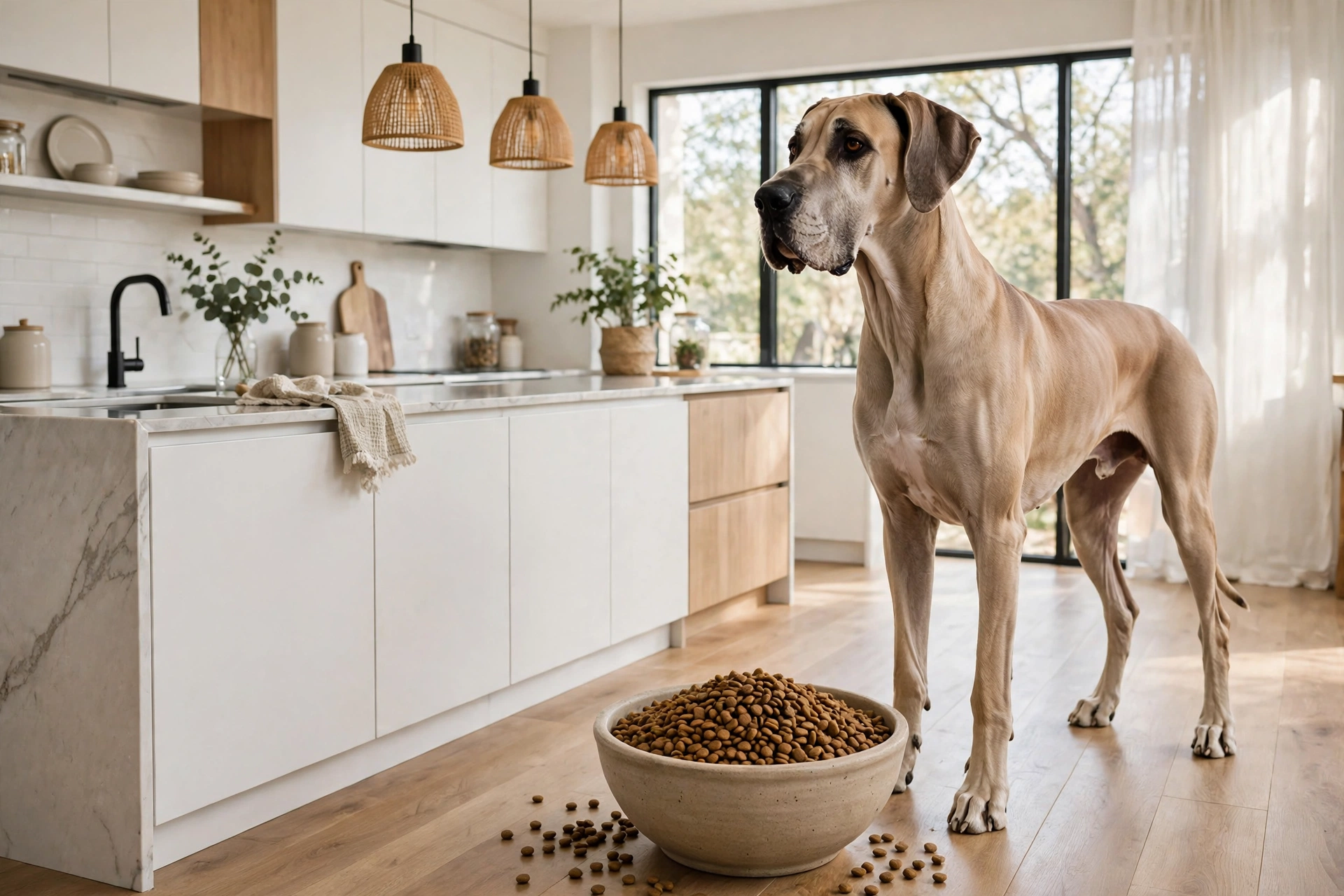
The best dog food for Great Danes is a large breed formula with moderate protein, controlled fat and joint support. Royal Canin Great Dane Adult is the food made for the breed, while Purina Pro Plan Large Breed is the best value pick. Feed two or more meals a day from a bowl on the floor to lower bloat risk.
A Great Dane can stand taller than a person on two legs and still lean on you like a lap dog. That giant frame is the joy of the breed, and it is also the reason feeding one takes more thought than feeding a smaller dog. A Dane grows faster than any other breed, eats more than most new owners expect, and carries a real risk of bloat, a stomach emergency that strikes this breed more than any other.
Pick the wrong food and routine, and you feed joint trouble, fast weight gain and a dangerous stomach twist. Pick the right ones, and your Dane gets steady growth, strong joints and a full life. This guide covers the six best foods for Great Danes in 2026, the bloat rules, how much to feed, and what it costs each month.
This guide is for information only, check with your vet for your dog’s specific needs.
Table of Contents
- Why Great Danes Need Food Made for Giants
- Bloat Rules That Matter More Than the Brand
- The 6 Best Dog Foods for Great Danes
- How Much to Feed a Great Dane
- Feeding a Great Dane Puppy
- What to Avoid When Feeding a Great Dane
- How to Switch Foods Without an Upset Stomach
- Pros and Cons of Large Breed Food for Great Danes
- Common Mistakes Great Dane Owners Make
- Expert Tips for Feeding a Great Dane
- Buying Guide: What to Look For on the Label
- Key Takeaways
- Conclusion
Why Great Danes Need Food Made for Giants
An adult male Great Dane stands at least 30 inches at the shoulder, and most weigh 140 to 175 lb. Females run a little smaller at 110 to 140 lb. That size puts a load on every joint with every step, and the bones take up to two years to finish growing. Food that suits a 40 lb dog does not suit a dog four times that size.
Size also shortens life. A 2024 study of UK dogs published in Scientific Reports put the median lifespan of Great Danes at 10.6 years, against 12 years for crossbreeds. Feeding cannot change the breed’s genes, but it can stop you adding risk to a dog that already starts with plenty.
Three things shape every good Great Dane diet: slow, steady growth to protect bones and joints, moderate protein and controlled fat to keep weight in check, and joint support from glucosamine, chondroitin and omega-3 fats.
Takeaway: feed for slow growth and joint health, not for maximum size.
Bloat Rules That Matter More Than the Brand
Bloat, or gastric dilatation-volvulus (GDV), is when the stomach fills with gas and twists. It is an emergency that needs a vet within the hour. Great Danes sit at the top of the risk table: a 2003 study estimated their lifetime risk at 36.7 percent, the highest of the breeds it modelled. In a Purdue study of large and giant dogs, 28.6 percent of the dogs that developed GDV died.
How you feed matters at least as much as what you buy. These four rules come from published research.
Keep the bowl on the floor. Raised bowls were sold for years as a way to prevent bloat. In a 2000 study of 1,637 large and giant dogs, about 52 percent of the GDV cases in giant breeds were linked to a raised feeding bowl. Cornell’s canine health center now lists a raised bowl as a possible risk.
Split the day into two or three meals. A 2004 Purdue study found that a larger volume of food per meal raised the risk of GDV no matter how many meals were fed, with the highest risk in dogs fed one big meal a day. Cornell suggests two or more meals, and the American College of Veterinary Surgeons suggests two to three.
Check where the fat sits on the label. A 2006 study found that dry foods with fat or oil among the first four ingredients came with a 2.4 fold higher risk of GDV. If chicken fat or another fat or oil shows up in the first four ingredients, pick a different food.
Keep meals calm. Give your Dane a quiet rest for about an hour after eating. Skip rough play and running right after a meal, and keep fresh water available without letting the dog gulp huge amounts at once.
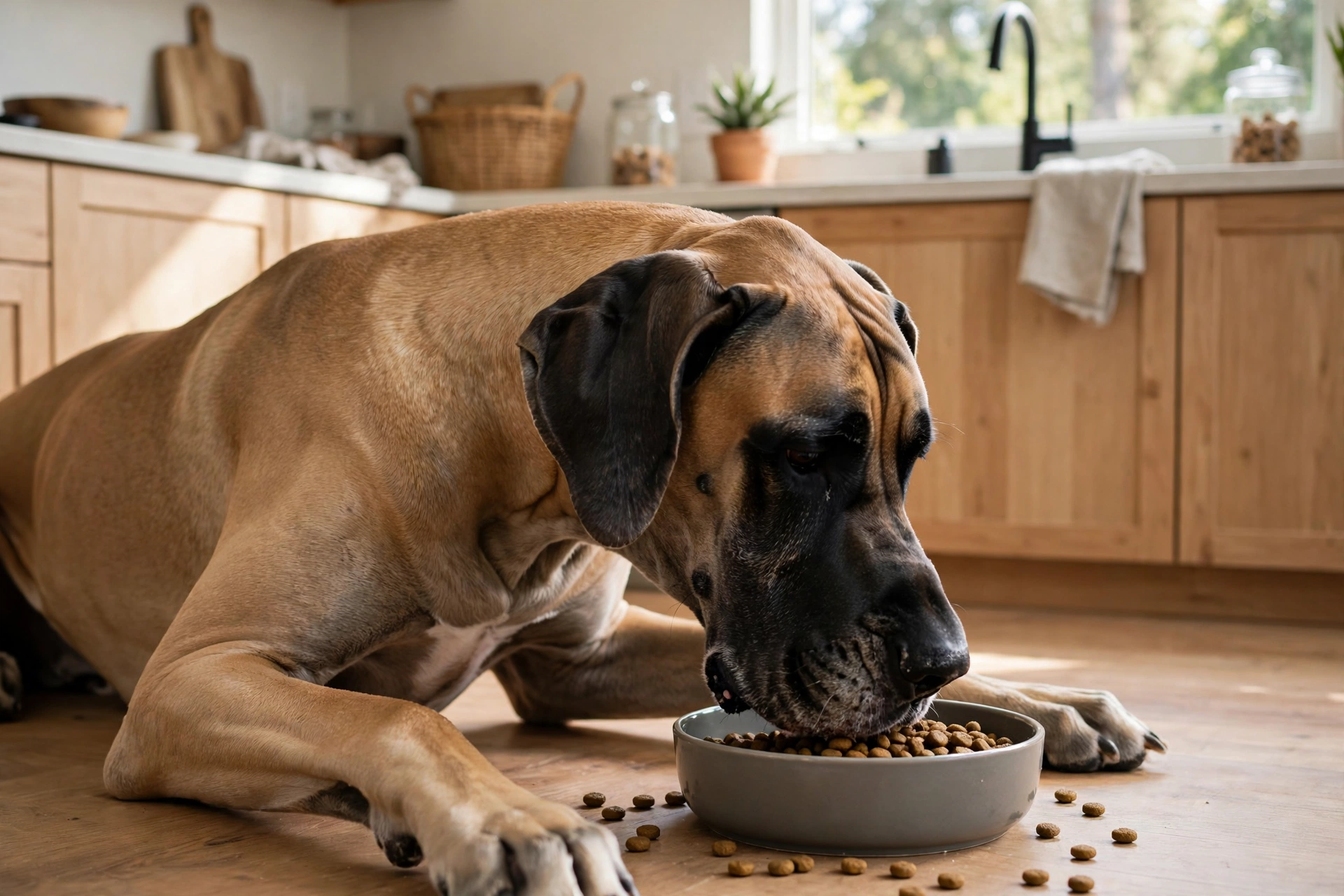
Takeaway: bowl on the floor, two or three measured meals, fat out of the first four ingredients, and calm time after eating.
The 6 Best Dog Foods for Great Danes
Every food below is a real product sold in the US, and every one is grain-inclusive. The FDA found that more than 90 percent of the products in its dilated cardiomyopathy reports were grain-free, and 93 percent contained peas or lentils. No cause is proven, but for a breed that already carries a genetic heart risk, there is no good reason to add another question mark.
| Product | Best For | Key Feature |
|---|---|---|
| Royal Canin Great Dane Adult | Best overall pick | The only US food made for the breed, 390 kcal per cup |
| Purina Pro Plan Large Breed Adult Chicken and Rice | Best value | Feeding-tested, 26 percent protein, 407 kcal per cup |
| Hill’s Science Diet Adult Large Breed Chicken and Barley | Best for joints | Feeding-tested, glucosamine and chondroitin, vet recommended |
| Eukanuba Adult Large Breed | Best for weight control | Lightest cup here at 343 kcal, easy portion control |
| Holistic Select Large and Giant Breed Adult | Best for sensitive stomachs | Probiotics and digestive enzymes, 453 kcal per cup |
| Nom Nom Fresh Dog Food | Best fresh food | Pre-portioned fresh meals, recipes by veterinary nutritionists |
Royal Canin Great Dane Adult
Royal Canin Great Dane Adult is the best overall pick because it is the only food in the US made for this breed by name. It is built for purebred Great Danes from 24 months old, and the kibble is shaped to slow down fast eaters, which helps with bloat. The label prints 21 percent protein and 23 percent fat minimum, with EPA and DHA for joints and coat, and one cup holds 390 kcal. That fat figure is unusual, so check the label on the bag you buy. The 30 lb bag sold for about $99.99 on Amazon in October 2026, or about $3.33 per lb, the priciest kibble here.
Purina Pro Plan Large Breed Adult Chicken and Rice
Purina Pro Plan Large Breed is the best value pick, and the feeding-tested all-rounder of the group. Feeding-tested means the food passed AAFCO feeding trials with real dogs, not just a lab recipe check. The label guarantees 26 percent protein and 12 percent fat minimum, with 500 ppm glucosamine for joints and a probiotic in the current recipe. One cup holds 407 kcal, the most protein per calorie of any food here. The 34 lb bag sold for about $77.48 on Amazon in October 2026, or about $2.28 per lb. The feeding chart is written for a dog fed once a day, so split the same daily total into two or more meals.
Hill’s Science Diet Adult Large Breed Chicken and Barley
Hill’s Science Diet Adult Large Breed is the pick most US vets reach for, and it earns its place here on joint support. It is feeding-tested, with natural glucosamine and chondroitin, omega-6 fatty acids and vitamin E. One cup holds 365 kcal, which makes portions easy to manage. The recipe is changing: the current recipe starts with chicken, cracked pearled barley and brown rice, while older bags may still list whole grain wheat. The 35 lb bag sold for about $86.99 on Amazon in October 2026, or about $2.49 per lb.
Eukanuba Adult Large Breed
Eukanuba Adult Large Breed is the best pick for a Dane that gains weight too easily. One cup holds 343 kcal, the lightest cup on this list. When a dog eats six or more cups a day, that difference adds up fast, and a lighter cup makes it easier to trim portions without leaving the bowl looking empty. The label guarantees 22 percent protein and 12.5 percent fat minimum, with chicken fat sixth, safely outside the first four ingredients that matter for bloat. The 40 lb bag sold for about $94.99 on Amazon in October 2026, or about $2.37 per lb.
Holistic Select Large and Giant Breed Adult
Holistic Select Large and Giant Breed Adult is the best pick for a Dane with a sensitive stomach. It is built around digestive health, with probiotics, prebiotics, dietary fiber and digestive enzymes, and owners often report firmer stools after switching to it. The label guarantees 24 percent protein and 13 percent fat minimum, with chicken fat fifth on the ingredient list. One cup holds 453 kcal, the richest cup on this list, so measure with a real cup: the same scoop carries about 32 percent more energy than a cup of Eukanuba. The 30 lb bag sold for about $83.99 on Amazon in October 2026, or about $2.80 per lb. If your Dane has a sensitive stomach, our guide to the best dog food for sensitive stomach covers more gentle options.
Nom Nom Fresh Dog Food
Nom Nom Fresh Dog Food is the best fresh food option for Great Danes. The meals are cooked in human-grade facilities, and the recipes are written by board certified veterinary nutritionists. You build a health profile for your dog, and Nom Nom sets the portion size for your Dane’s age and weight. The recipes include Beef Mash, Pork Potluck, Turkey Fare, Chicken Cuisine and Lamb Pilaf. The honest catch is cost: a full fresh diet for a 140 lb dog costs far more each month than kibble, so many Dane owners use Nom Nom as a topper over kibble instead.
How Much to Feed a Great Dane
A typical adult Great Dane eats 6 to 10 cups of kibble a day, split across two or three meals. The exact amount depends on weight, age, activity and the calories in the food, so use the chart on the bag as a starting point and adjust by body condition. You should be able to feel the ribs under a thin layer of fat and see a waist from above.
| Adult Weight | Typical Daily Amount | Meals per Day |
|---|---|---|
| 100 to 120 lb | 5 to 7 cups | 2 to 3 |
| 120 to 140 lb | 6 to 8 cups | 2 to 3 |
| 140 to 175 lb | 7 to 9 cups | 2 to 3 |
Here is the trap most owners miss: a cup is not a fixed amount of food. One cup of Holistic Select holds 453 kcal, while one cup of Eukanuba holds 343 kcal. Switch foods without changing the portion and your Dane can gain weight fast, so always measure with a proper measuring cup.
Cost follows the same math. A 30 lb bag lasts roughly two to three weeks for most adult Danes, so budget about $100 to $200 a month for kibble, depending on the brand.
Takeaway: measure every meal with a real cup, split it across two or three feedings, and re-check portions whenever you change food.
Feeding a Great Dane Puppy
A Great Dane puppy can pack on about 100 lb in the first year, growing faster than any other breed. That speed is the danger: bones that grow too fast develop problems that show up years later, so the goal for a Dane puppy is slow and steady growth, never maximum growth.
Feed a puppy food made for large or giant breeds. The AAFCO statement should say it is formulated for growth, including growth of large size dogs of 70 lb or more as an adult. Royal Canin Giant Puppy is a good example, with 32 percent protein and 12 percent fat, and the right calcium to phosphorus ratio is between 1.1 to 1 and 1.4 to 1. Our guide to the best puppy food for large breeds covers more options for fast-growing pups.
Never add calcium on top of a complete puppy food unless your vet tells you to. Too much calcium is just as harmful as too little while the bones grow. Most Danes move to adult food between 18 and 24 months.
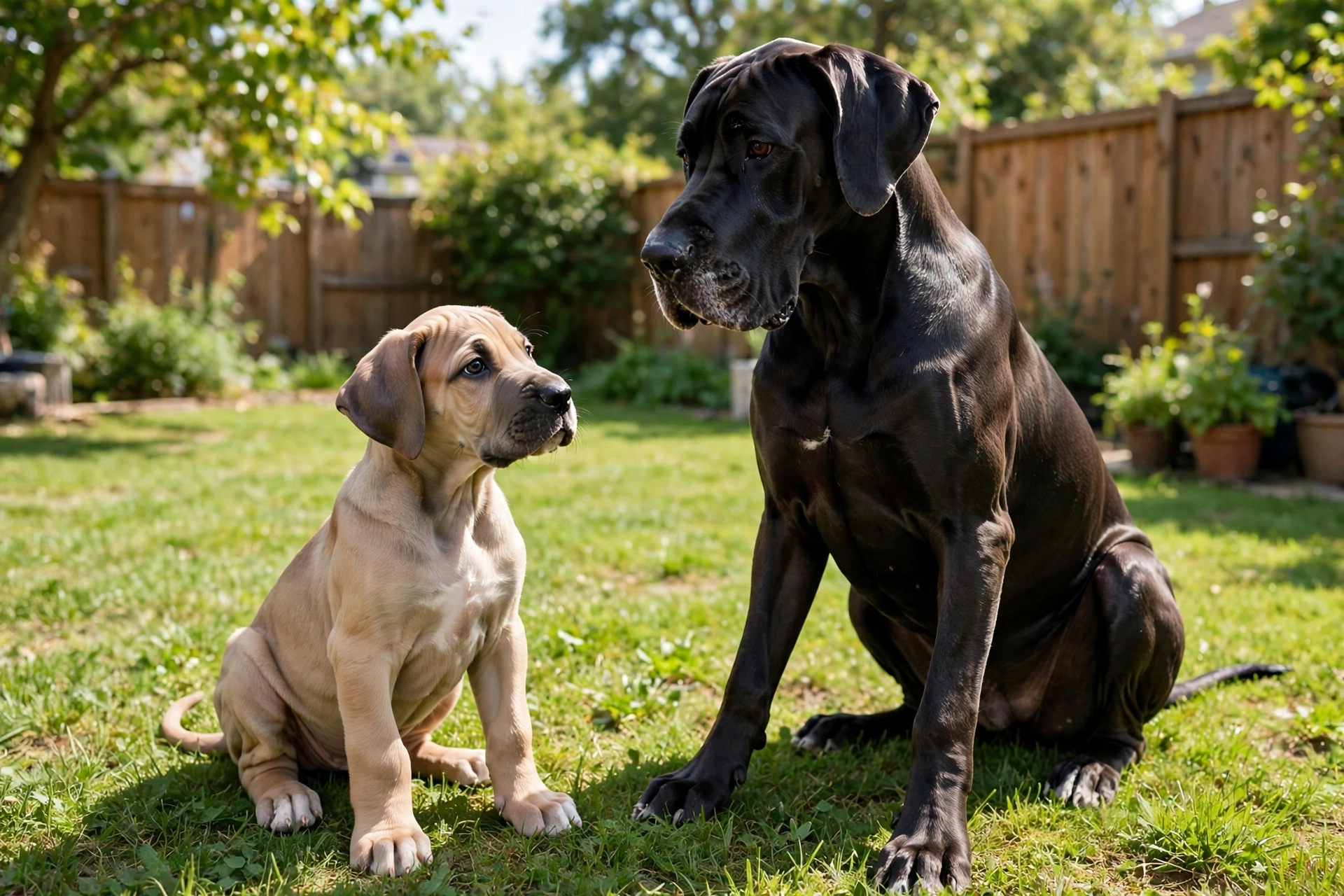
Takeaway: a large breed puppy food, the right calcium balance, no extra calcium supplements, and a switch to adult food at 18 to 24 months.
What to Avoid When Feeding a Great Dane
- Grain-free food with peas or lentils high on the list. The FDA found that more than 90 percent of the products in its DCM reports were grain-free, and 93 percent contained peas or lentils. Unless your vet confirms a grain problem, a grain-inclusive food is the safer pick.
- One big meal a day. Large single meals raise bloat risk more than anything else in the routine. Split the day into two or three meals, every day.
- A raised bowl. Raised bowls were linked to about half of GDV cases in giant breeds in the 2000 study. Feed from the floor.
- Fat or oil in the first four ingredients. Foods with fat or oil among the first four ingredients came with a 2.4 fold higher GDV risk in a 2006 study.
- Calcium supplements on top of a complete food. Extra calcium can harm growing bones. Only add it if your vet tells you to.
- Too many treats and table scraps. Treats should stay under 10 percent of daily calories, so count them.
Takeaway: the most dangerous things in a Dane’s bowl are not always the food itself. The meal size, the bowl height and the fat on the label matter just as much.
How to Switch Foods Without an Upset Stomach
Great Danes often have touchy stomachs, so never swap foods overnight. A slow switch over seven days keeps the gut settled and lets you spot a problem early.
- Days one and two: one quarter new food, three quarters old food.
- Days three and four: half new food, half old food.
- Days five and six: three quarters new food, one quarter old food.
- Day seven: all new food.
Keep the meals split during the change and watch the stools. If they go loose, stay at the current mix for two more days before moving on. If loose stools last more than a few days, or you see blood, vomiting or a swollen belly, call your vet. For a fuller walkthrough, see our guide on how to change dog food safely.
Takeaway: seven days, four steps, no rush. A slow switch is the cheapest way to avoid a vet visit.
Pros and Cons of Large Breed Food for Great Danes
Pros
- Controlled calcium and phosphorus protect growing bones and joints.
- Moderate protein and fat help keep a giant dog lean instead of overweight.
- Added glucosamine, chondroitin and omega-3 fats support joints that carry a lot of weight.
- Larger kibble slows fast eaters and suits a big mouth.
- Feeding-tested formulas like Purina Pro Plan and Hill’s Science Diet passed real feeding trials.
Cons
- Large breed bags cost more per month because a Dane eats so much.
- Some formulas still use corn, wheat or soy, which some owners prefer to avoid.
- Breed-specific food like Royal Canin Great Dane Adult costs about $3.33 per lb.
- Not every large breed formula fits a Dane with a sensitive stomach.
- Protein and fat levels vary a lot between brands, so the label still needs a read.
Takeaway: large breed food is the right starting point for a Dane, but read the label and match the formula to your own dog, not to the bag.
Common Mistakes Great Dane Owners Make
- Feeding one big meal a day. It is the single biggest bloat risk you can control, and it is easy to fix by splitting the day in two or three.
- Using a raised bowl. Old advice said raised bowls prevent bloat. The research points the other way for giant breeds.
- Feeding by the scoop, not the cup. A random scoop can be half a cup more or less than you think, and at six or more cups a day that error adds up to real weight gain.
- Pushing a puppy to grow fast. Extra food and extra protein do not build a bigger, stronger Dane. They build joint trouble.
- Switching foods overnight. A sudden swap brings loose stools and a sore gut. Seven days is the safe pace.
Takeaway: most Dane feeding problems come from routine, not from the brand. Fix the routine first, then fine-tune the food.
Expert Tips for Feeding a Great Dane
- Buy the big bag. A Dane goes through a 30 lb bag in about two to three weeks, so the larger bag is almost always the better price per lb. Store it sealed, cool and dry.
- Weigh your Dane every month. Giant dogs gain weight quietly, so a monthly weigh-in catches a slow gain before it becomes joint trouble. If weight is climbing, our guide to the best dog food for weight loss can help.
- Use a slow feeder bowl. A Dane that gulps food swallows air with it, and air in the stomach adds to bloat risk. A slow feeder stretches the meal out.
- Match the food to the life stage. Puppy, adult and senior Danes need different food. A senior Dane needs fewer calories and more joint support, and our guide to the best senior dog food covers the change.
- Check the bag every time you buy. Recipes change, and Hill’s Large Breed is a live example. The label on the bag you hold is the one that counts.
Takeaway: small habits add up. A slow feeder, a monthly weigh-in and a label check each buy do more for a Dane than any single product swap.
Buying Guide: What to Look For on the Label
Named animal protein first. Look for chicken, beef, lamb, duck or fish as the first ingredient, not a vague word like meat or poultry.
Moderate protein and fat. Adult Danes do well on about 22 to 26 percent protein and 10 to 16 percent fat. Puppies need a little more protein, but not the very high levels in small breed puppy food.
Fat outside the first four ingredients. If chicken fat or another fat or oil sits among the first four ingredients, put the bag back. This one check lowers bloat risk.
Balanced calcium and phosphorus. Look for a calcium to phosphorus ratio between 1.1 to 1 and 1.4 to 1, and a food made for large or giant breeds. That balance protects growing bones.
Joint support. Glucosamine, chondroitin and omega-3 fats from fish oil help joints carry a giant frame. Purina Pro Plan lists 500 ppm glucosamine on its label.
AAFCO statement that matches the life stage. For a puppy, the line should cover growth of large size dogs of 70 lb or more as an adult.
Grain-inclusive, unless your vet says otherwise. Rice, barley and oats are fine for most Danes. Skip foods with unnamed meat meals, heavy fillers or artificial colors, and skip prescription diets unless your vet prescribed them.
Takeaway: protein first, fat out of the top four, calcium balanced, joints supported, and an AAFCO line that matches your dog’s age. A bag that passes all five is a good bag.
Key Takeaways
- The best dog food for Great Danes is a grain-inclusive large breed formula with moderate protein, controlled fat and joint support.
- Royal Canin Great Dane Adult is the only food made for the breed, and Purina Pro Plan Large Breed is the best value pick.
- Bloat rules matter more than the brand: bowl on the floor, two or three measured meals, fat out of the first four ingredients, and calm time after eating.
- A typical adult Dane eats 6 to 10 cups a day, and a cup is not a fixed amount of food, so measure with a real cup and re-check portions when you change brands.
- Puppies need slow, steady growth on a large breed puppy food, with a switch to adult food at 18 to 24 months and no extra calcium supplements.
- A 30 lb bag lasts about two to three weeks, so budget about $100 to $200 a month for kibble.
Conclusion
Feeding a Great Dane well comes down to two things: the right food and the right routine. Royal Canin Great Dane Adult is the best overall pick because it is made for this breed alone, and Purina Pro Plan Large Breed is the best value for owners who want proven, feeding-tested nutrition at a fair price. Hill’s suits a Dane that needs joint care, Eukanuba suits one that needs to lose weight, Holistic Select suits a sensitive stomach, and Nom Nom suits owners who want fresh food and can pay for it.
Whichever food you choose, feed it the safe way: bowl on the floor, two or three measured meals, fat out of the first four ingredients, and a calm hour after eating. Those four habits protect your Dane from the one emergency this breed faces more than any other.
Start with Purina Pro Plan Large Breed if you want a safe, proven first choice, or Royal Canin Great Dane Adult if you want the formula made for the breed. Measure every meal, weigh your Dane once a month, and enjoy the gentle giant at your feet.
What is the best dog food for Great Danes?
Royal Canin Great Dane Adult is the best overall pick because it is the only food made for the breed, while Purina Pro Plan Large Breed is the best value. Any grain-inclusive large breed formula with moderate protein, controlled fat and joint support works well.
How much should I feed my Great Dane a day?
A typical adult eats 6 to 10 cups of kibble a day, split across two or three meals. The exact amount depends on weight, activity and the calories in the food, so follow the chart on the bag and adjust by body condition.
How many times a day should a Great Dane eat?
Two or three times a day. Never feed one big meal, because a large volume of food in a single meal raises bloat risk more than anything else in the routine.
Should Great Danes eat from a raised bowl?
No. Feed from a bowl on the floor. A 2000 study linked raised bowls to about 52 percent of GDV cases in giant breeds, and Cornell now lists a raised bowl as a possible risk.
Is grain-free food good for Great Danes?
There is no strong reason to feed grain-free. The FDA found that more than 90 percent of the products in its DCM reports were grain-free. Unless your vet confirms a grain problem, a grain-inclusive food is the safer pick.
When should a Great Dane puppy switch to adult food?
Most Danes move to adult food between 18 and 24 months. Royal Canin Giant Junior runs to 18 or 24 months, and its Great Dane Adult formula starts at 24 months.
What food is best for a Great Dane with a sensitive stomach?
Holistic Select Large and Giant Breed Adult, with probiotics, prebiotics and digestive enzymes. A limited-ingredient food like Natural Balance Duck and Brown Rice is another gentle option.
How much does it cost to feed a Great Dane each month?
Budget about $100 to $200 a month for kibble, since a 30 lb bag lasts roughly two to three weeks. Fresh food costs far more, so many owners use it as a topper instead of a full diet.

One Comment