
Best Dog Food for Weight Loss: 6 Top Picks (2026)
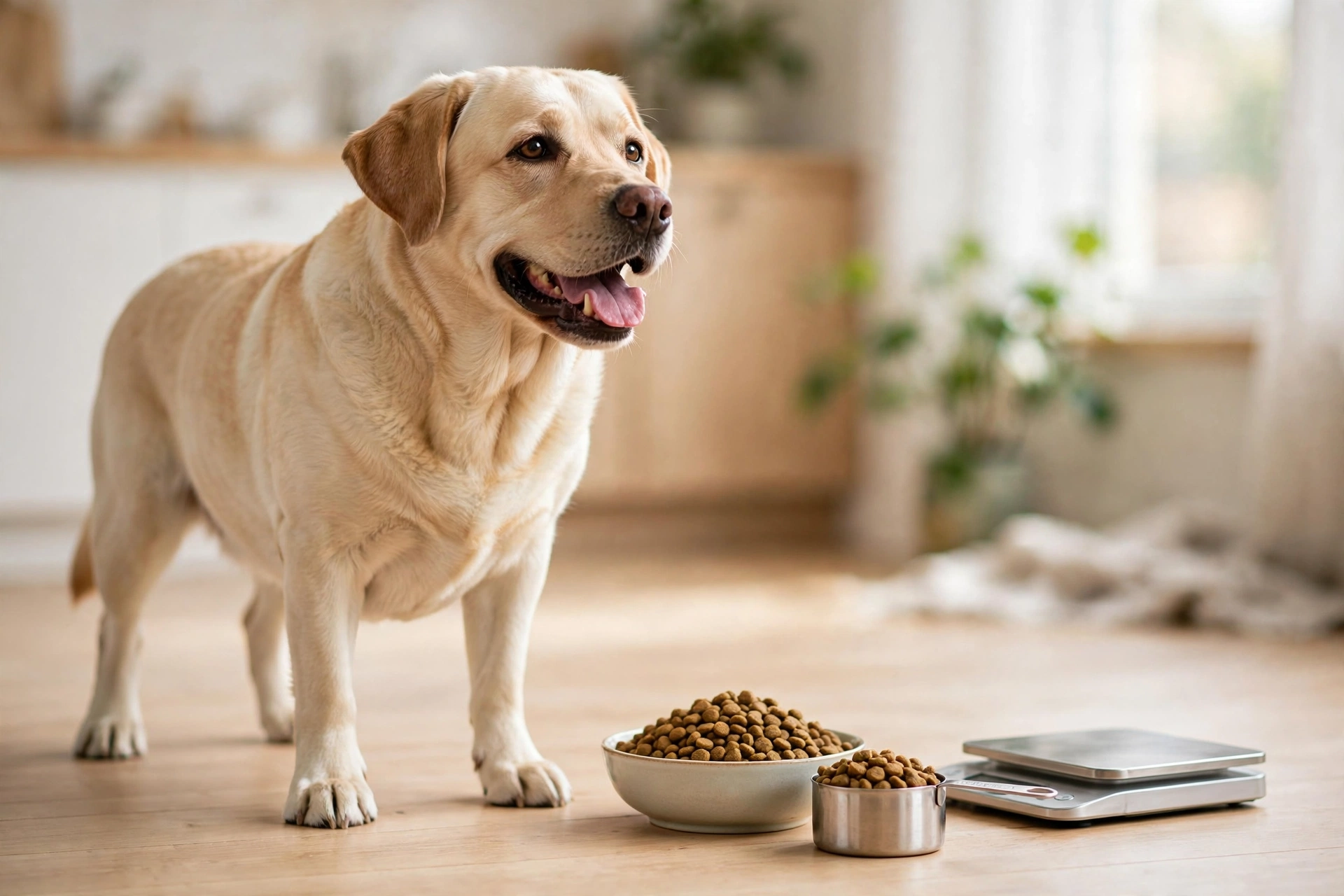
For most dogs, Blue Buffalo True Solutions Weight Control is the best weight loss food, with about 3,224 kcal/kg, 31.1% protein and 15.6% fiber to keep a dog full. Hill’s Perfect Weight is the most tested pick, and Iams Healthy Weight is the budget choice. Feed to your vet’s calorie target and aim for 1 to 2% a week.
In This Guide
- Key Takeaways
- The 6 Best Dog Foods for Weight Loss, Compared
- Best Dog Food for Weight Loss: Our Top 6 Picks for 2026
- What to Look for in a Weight-Loss Dog Food
- What to Avoid
- The Plan Matters More Than the Bag
- Exercise for an Overweight Dog: Start Low and Build Slowly
- Pros and Cons
- Conclusion: Our Recommendation
- Weight Loss for Older Dogs and Dogs With Sore Joints: What Changes
- Check the Body Condition Score Before You Start the Diet
Key Takeaways
- The best dog food for weight loss pairs lower calorie density with high protein (to protect muscle) and higher fiber (to keep a dieting dog full). Our top pick is Blue Buffalo True Solutions Weight Control.
- No food causes weight loss on its own. Your dog has to eat fewer calories than it burns. Measure every meal with a scale, keep treats under 10% of daily calories, and reweigh every two weeks.
- Aim for 1 to 2% of body weight lost per week. Slower loss is healthier: fast drops come from muscle, not fat.
- If your dog needs to lose more than about 15% of its body weight, talk to your vet about a therapeutic weight-loss diet rather than a regular “light” food.
- “Light” and “low calorie” are regulated label terms (AAFCO caps dry food at 3,100 kcal/kg); “weight management” and “healthy weight” are not. Always check the kcal number on the bag.
The 6 Best Dog Foods for Weight Loss, Compared
We looked at the highest-rated weight-loss formulas on the US market, checking calorie density, protein and fiber content, ingredient quality, brand reputation, and owner feedback. Here is how the top six stack up:
| Product | Best for | Key feature |
|---|---|---|
| Blue Buffalo True Solutions Weight Control Chicken & Oatmeal | Best overall | ~3,224 kcal/kg with 31.1% protein and 15.6% fiber (dry matter), strong on all three weight-loss levers |
| Hill’s Science Diet Adult Perfect Weight Chicken & Brown Rice | Most proven results | Feeding-trial backed; one of the few with a genuine clinical weight-loss track record |
| Purina Pro Plan Weight Management Chicken & Rice | Best big-brand all-rounder | High protein-to-calorie ratio from a manufacturer meeting top quality benchmarks |
| Hill’s Science Diet Adult Light Chicken Meal & Barley | Lowest calorie density | ~2,987 kcal/kg, the only over-the-counter pick that legally qualifies as “light” |
| Iams Proactive Health Adult Healthy Weight Chicken | Best budget | Real chicken first at roughly half the cost per calorie of premium picks |
| Blue Buffalo Life Protection Formula Healthy Weight Chicken & Brown Rice | Best natural formula | Real chicken first, L-carnitine for fat metabolism, no corn, wheat, or soy |
Below is the detailed breakdown of each pick, based on ingredient analysis, brand reputation, and owner reviews.
Best Dog Food for Weight Loss: Our Top 6 Picks for 2026
Blue Buffalo True Solutions Weight Control Chicken & Oatmeal
If you can only pick one weight-loss food, this is the one we would buy. Blue Buffalo’s True Solutions Weight Control formula gets the balance right on all three things that matter in a diet food: calorie density sits around 3,224 kcal/kg (lower than most “healthy weight” foods), protein runs about 31.1% on a dry-matter basis (so the weight your dog loses is fat, not muscle), and fiber is a notably high 15.6% (which helps a hungry dog feel full on smaller meals). The formula leads with deboned chicken, and it is grain-inclusive with oatmeal, which avoids the ongoing FDA caution around grain-free diets.
Key ingredients: deboned chicken, oatmeal, chicken meal, flaxseed, dried beet pulp and other fiber sources, plus L-carnitine to support fat metabolism.
Who it is for: Most adult dogs that need to lose a moderate amount of weight. It is the best fit for owners who want strong nutrition numbers they can actually read on the label, at a mid-range price.
Keep in mind: Like every food on this list, it only works with measured portions. Also note Blue Buffalo has had older recalls on other product lines, none on this Weight Control recipe.
Hill’s Science Diet Adult Perfect Weight Chicken & Brown Rice
This is the weight-loss food you are most likely to hear recommended in a vet’s office, and for good reason: it is one of the few over-the-counter diet foods backed by actual feeding trials, with a stronger AAFCO substantiation than the typical wording. Its calorie density is among the lowest of the mainstream picks at roughly 3,189 kcal/kg. Hill’s describes the formula as supporting visible weight loss within about ten weeks when fed as directed.
Key ingredients: chicken, brown rice, chicken meal, coconut oil, ground pecan shells and other fiber sources, plus L-carnitine, vitamins, and minerals. Hill’s does not publish a standard guaranteed-analysis panel, so exact protein and fiber percentages are harder to pin down than with other brands.
Who it is for: Owners who want the most clinically tested option and are comfortable trusting the brand’s feeding trials over label-level transparency.
Keep in mind: It tends to cost more per calorie than budget picks (small bags look especially expensive per feeding, larger bags are much cheaper), and the brand carries an older FDA recall history from 2019 canned lines, not this dry formula.
Purina Pro Plan Weight Management Chicken & Rice
Purina Pro Plan’s weight-management formula is the workhorse pick: a high protein-to-calorie ratio from a manufacturer that consistently meets independent quality benchmarks. It runs about 3,516 kcal/kg, which is higher than our top two, so it is better suited to dogs holding a healthy weight or losing a smaller amount, but the protein level is strong enough to protect lean muscle on a modest calorie cut, and the price is reasonable.
Key ingredients: real chicken as the first ingredient, rice, corn gluten meal, soybean meal, animal fat preserved with mixed tocopherols, and natural fibers.
Who it is for: Owners who trust the big established manufacturers and want a dependable, easy-to-find formula. It is also a practical choice for multi-dog households where cost per bag matters.
Keep in mind: It is not grain-free and it does contain ingredients some owners prefer to avoid (corn gluten, soybean meal). Check your dog’s sensitivities.
Hill’s Science Diet Adult Light Chicken Meal & Barley
Here is the label-truth pick. “Light,” “lite,” and “low calorie” are regulated terms: AAFCO allows a dry food to use them only at 3,100 kcal/kg or less. This Hill’s formula comes in around 2,987 kcal/kg, making it the only mainstream over-the-counter pick that genuinely qualifies as “light.” The other five foods on this list use unregulated phrases like “weight management” and “healthy weight,” which can mean a reformulated diet or just marketing. The kcal number tells the real story.
Key ingredients: chicken meal, whole grain barley, whole grain corn, soybean meal, beet pulp and other fiber sources, plus L-carnitine.
Who it is for: Dogs that need a genuine, meaningful calorie cut, including dogs that have already tried a “healthy weight” food and plateaued.
Keep in mind: At this calorie density, portions must still be measured. And if the required cut would go below about 80% of normal portions, it is time to talk to your vet about a therapeutic diet instead.
Iams Proactive Health Adult Healthy Weight
Iams Healthy Weight delivers real chicken as the first ingredient and a genuinely reduced-calorie formula at roughly 3,380 kcal/kg, for about half the cost per calorie of our top pick. It comes from a large, established manufacturer with a clean track record on this line, and it is one of the most widely available diet foods in US stores.
Key ingredients: real chicken, chicken by-product meal, ground whole grain corn, ground whole grain sorghum, dried beet pulp, natural fiber sources.
Who it is for: Owners on a tight budget who still want a named animal protein first. It works, but only if you feed the calculated portion, not the generous chart on the bag.
Keep in mind: Protein is lower than our top pick (around 22.2% dry matter), which means less muscle protection on a deeper diet, and it does use by-product meal, which some owners prefer to avoid.
Blue Buffalo Life Protection Formula Healthy Weight Chicken & Brown Rice
Blue Buffalo’s Life Protection Healthy Weight line is the natural-ingredients alternative: real chicken first, no corn, wheat, or soy, and added L-carnitine to support fat metabolism and lean muscle maintenance. It also includes the brand’s LifeSource Bits, a blend of antioxidants, vitamins, and minerals aimed at immune support. Caloric density is moderate, so it suits dogs that need to trim a few pounds rather than tackle serious obesity.
Key ingredients: deboned chicken, chicken meal, brown rice, oatmeal, barley, flaxseed, and the LifeSource Bits antioxidant blend.
Who it is for: Owners who read labels and avoid fillers, and dogs with sensitivities to corn, wheat, or soy.
Keep in mind: It costs more than the budget picks, and as with all over-the-counter diet foods, meaningful results still require measured portions and a vet-set calorie target.
What to Look for in a Weight-Loss Dog Food
Shopping for a weight-loss dog food is easier once you know which label numbers actually matter. Use these three as your filter:
1. Lower calorie density. This is the number on the bag that most directly decides how much your dog can eat on a diet. Look for the kcal/kg figure on the calorie statement. A good over-the-counter target is roughly 3,000 to 3,400 kcal/kg; remember that only foods at or below 3,100 kcal/kg (dry) can legally call themselves “light.” Also note kcal per cup, since that is the number that reaches your dog if you measure with a cup, kibble density varies, so the per-kg and per-cup rankings are not always the same.
2. Higher protein (to protect muscle). During a calorie deficit a dog loses both fat and lean tissue. Higher dietary protein, roughly 30 to 40% on a dry-matter basis, biases that loss toward fat and helps preserve the muscle that supports joints and keeps metabolism healthy. Protein is also the most satiating macronutrient, which matters when meals get smaller.
3. Higher fiber (for fullness). Increased fiber adds bulk and slows the stomach from emptying, helping a hungry dog feel fed on less, without adding meaningful calories. Most weight-management diets land in the 8 to 18% dry-matter fiber range, versus roughly 3 to 5% for standard adult food. The tradeoff is larger stools, and at very high levels some dogs find the food less appealing.
Beyond the numbers, look for a named animal protein first on the ingredient list, an AAFCO statement confirming complete and balanced nutrition, and L-carnitine, which is commonly added to support fat metabolism. Learning to read dog food labels properly makes every one of these checks take about a minute.
What to Avoid
- Vague protein names. “Meat meal,” “animal digest,” and “meat by-products” without a named animal are poor quality signals. Named meals (chicken meal, fish meal) are fine, named and specific is what counts.
- Unregulated label claims. “Weight management,” “healthy weight,” and “slim” are not defined terms. They may indicate a genuinely reformulated diet or pure marketing. Trust the kcal/kg figure, not the front of the bag.
- Extreme “lite” crash formulas. Cutting below about 80% of normal portions on a maintenance food under-delivers vitamins, minerals, and protein along with the energy. If the deficit needed is deep, switch to a purpose-built diet, or ask your vet about a therapeutic one.
- Grain-free diet foods. The FDA’s ongoing investigation into a link between grain-free diets and dilated cardiomyopathy (DCM) is still unresolved. There is no weight-loss reason to go grain-free; all six of our picks are grain-inclusive.
- Crash dieting your dog. Rapid weight loss comes disproportionately from lean muscle rather than fat. Stick to 1 to 2% of body weight per week, and get a target from your vet.
The Plan Matters More Than the Bag
Here is the uncomfortable truth most roundups skip: the food is the smaller half of the job. Most stalled weight-loss programs do not fail because the food was wrong, they fail because nobody ever established how much the dog was actually eating. The biggest culprits are uncounted treats (keep them under 10% of daily calories and subtract them from meals), table scraps, dental chews at 70 to 120 kcal each, peanut butter in puzzle toys, and measuring with a scoop instead of a scale (scooping errors can reach 20% either way).
A workable approach: ask your vet for a body condition score and an ideal-weight target, calculate daily calories from the ideal weight (roughly 1.0 to 1.2 × resting energy requirement for weight loss), weigh every meal in grams, log every treat, and reweigh the dog every two weeks. If it is not losing, cut the target by about 10% and reassess. Plateaus around month two or three are normal, recount everything before adjusting. And once your dog reaches its goal, do not return to the old amount: maintenance calories at the new, lower weight are less than they used to be, and regain is the most common outcome of successful weight loss. If you have a senior dog, go gentler and keep your vet in the loop, since older dogs lose muscle more easily.
Exercise for an Overweight Dog: Start Low and Build Slowly
Food creates the calorie deficit, but movement helps protect muscle, mood, and mobility while weight comes off. For an overweight dog, the goal is steady, low-impact activity, not a sudden fitness program. Start with short, easy walks on flat ground, and watch how your dog recovers. If breathing settles quickly and your dog still seems keen the next day, you can add a few minutes at a time. If your dog lags, pants heavily for a long time, or seems sore afterward, you went too far, so shorten the next outing and build more slowly.
Two or three short walks a day are usually easier on joints than one long, tiring outing, and gentle play, sniff walks, and swimming, where suitable and safe, can add movement without hard pounding. Keep sessions fun and stop before exhaustion, especially in heat, and carry water on warm days. Avoid high-impact jumping, rough wrestling, and long runs until your vet says your dog is ready, since extra weight already loads joints. Most importantly, do not use exercise to excuse extra food. Keep portions measured, count treats, and ask your vet promptly about limping, coughing, or unusual tiredness.
Pros and Cons
Six real weight loss formulas with hard numbers behind them, but the list has gaps a buyer should know about. Here is the honest balance.
Pros
- Six real US weight loss formulas, each with published kcal per kg, protein and fiber figures, so the picks can be compared on numbers, not claims.
- The AAFCO “light” rule is explained with the 3,100 kcal/kg limit, and only one pick meets it, which cuts through label marketing.
- A full plan section covers the calorie target, weighing food, counting treats and reweighing every two weeks, not just the food choice.
- Older and arthritic dogs get their own section, with joint support, a slower pace and low-impact exercise, plus a 12-question FAQ block.
Cons
- No small-breed pick: all six formulas are standard sizes, so owners of small dogs get no named option here.
- No therapeutic diet in the picks: the three prescription diets are named only in the FAQ, not compared as picks with kcal or protein figures.
- No prices or bag sizes anywhere, so the budget comparison rests on “about half the cost per calorie” with no figures to check.
- No wet or fresh food pick: the article is a dry kibble roundup, so owners who want wet or fresh food get no named option here.
Conclusion: Our Recommendation
For most dogs, Blue Buffalo True Solutions Weight Control is the best dog food for weight loss in 2026: it is the rare formula that is low in calories, high in protein, and high in fiber all at once, led by a named protein, at a fair price. If you want the most clinically tested option, choose Hill’s Science Diet Adult Perfect Weight; if budget rules, Iams Healthy Weight gets the job done when fed in measured portions.
Whatever you choose, the diet works through the portion, not the bag. Get a target weight and daily calories from your vet, weigh the food, count the treats, and give it time, a steady 1 to 2% per week. The payoff is real: in a landmark lifetime study, Labrador Retrievers kept lean lived a median of roughly 1.8 years longer than their overfed littermates. That is what you are really buying with a smaller scoop.
This guide is for information only. Check with your vet for your dog’s specific needs.
Weight Loss for Older Dogs and Dogs With Sore Joints: What Changes
The calorie maths does not change for an older or arthritic dog, they still need to eat fewer calories than they burn, but the food and the plan around it do. Protect muscle and joints at the same time: pick a weight-loss formula that is high in protein (around 30% or more on a dry-matter basis, like the Blue Buffalo True Solutions pick above) and that includes glucosamine and chondroitin, since an older dog loses muscle more easily and already carries extra load on its joints. Go gentler on the pace: aim for the slow end of the 1 to 2% per week range, and get the calorie target from your vet rather than cutting portions by guesswork.
Do not try to “exercise the weight off” a sore dog. Short, low-impact walks, two or three times a day, plus swimming where suitable, protect muscle without pounding sore joints, the exercise section above already sets this out, and for an arthritic dog it is the whole exercise plan, not just the warm-up. Finally, wet food can help here: a wet weight-control formula (or wet food mixed into measured dry food, with the calories counted, not added on top) adds volume and moisture for the same calories, which helps a hungry older dog feel full. Whatever form you choose, weigh the food in grams, count every treat, and reweigh every two weeks, if weight is not moving, recount everything before cutting further, and ask your vet if pain, stiffness, or a medical condition such as hypothyroidism could be holding progress back.
What is the best weight loss food for a dog with arthritis?
A high-protein weight-loss formula with joint support: roughly 30% or more protein on a dry-matter basis to protect muscle, plus glucosamine and chondroitin for joints, at a calorie density around 3,000 to 3,400 kcal/kg. The Blue Buffalo True Solutions pick above fits that profile on protein and fiber. Keep the pace slow (the low end of 1 to 2% of body weight per week), favour short low-impact walks over long runs, and get the calorie target from your vet, extra weight is itself one of the worst things for arthritic joints, so steady loss matters more than fast loss.
Can a dog lose weight on wet food?
Yes, as long as total calories are controlled. Wet food is lower in calories per gram because of its water content, so a dog can eat a larger-looking portion for fewer calories, which helps with hunger. The catch is the same as with dry food: portions must be weighed, treats counted, and any wet food mixed with dry food must replace part of the dry portion, not sit on top of it. Check the kcal figure on the can, not just the “weight control” label, and ask your vet for a daily calorie target based on your dog’s ideal weight.
Check the Body Condition Score Before You Start the Diet
Before you change a single meal, check whether your dog actually needs to lose weight. The tool vets use is the body condition score, a 9 point scale where 4 to 5 is ideal, 6 to 7 is overweight, and 8 to 9 is obese. You can run the check at home in under two minutes. Feel the ribs with a flat palm: you should feel each rib under a thin layer of fat without pressing hard, and the ribs should not show. Look down at your dog from above: there should be a clear waist, a narrowing behind the ribs before the hips. Look from the side: the belly should tuck upward between the last rib and the back legs, not hang level or sag. Each point above 5 means roughly 10% over ideal weight, so a dog scoring 7 is about 20% over. A score of 6 to 7 suits an over-the-counter weight loss food fed to a vet-set calorie target, while a score of 8 to 9 needs a vet-supervised plan. Owners often score their own dog a point too low, because an overweight dog looks normal when every dog at the park is overweight too, so ask your vet to score your dog and show you the feel. Weigh your dog, write the starting weight down, and take a photo from above and from the side to track the change.
What is the best dog food for weight loss?
Our top pick is Blue Buffalo True Solutions Weight Control, which pairs low calorie density (about 3,224 kcal/kg) with high protein (31.1% dry matter) to protect muscle and high fiber (15.6%) for fullness. Hill’s Science Diet Perfect Weight is the most clinically tested option, and Iams Healthy Weight is the best budget choice. No food works without measured portions and a vet-set calorie target.
Does weight-loss dog food actually work?
It helps, a good weight-loss food lowers calorie density, keeps protein up to preserve muscle, and adds fiber so a dieting dog feels full. But the food alone does not cause weight loss; your dog must eat fewer calories than it burns, which means measuring portions, counting treats, and following a calorie target from your vet.
How much should I feed my dog to help it lose weight?
A common target is roughly 1.0 to 1.2 times the resting energy requirement (RER) calculated at your dog’s ideal weight, which is about 25 to 35% less than normal maintenance. Feed to the ideal weight, not the current one, and reweigh every two weeks, formulas vary by plus or minus 20% between individual dogs.
How fast should a dog lose weight?
Aim for 1 to 2% of body weight per week (0.7 to 1.4 lb per week for a 70 lb dog). This feels slow, but faster loss comes disproportionately from lean muscle rather than fat. A dog that needs to lose 15% of its body weight should be on a four-to-six-month plan, not a six-week one.
Can I just feed less of my dog’s regular food?
For small losses (under roughly 10 to 15%) with a modest cut, yes, if you stay above about 80% of normal portions. Below that, a maintenance food under-delivers protein, vitamins, and minerals along with the energy. Then a purpose-built weight-loss diet, or a veterinary therapeutic one, is the safer choice.
What do “light” and “weight management” mean on dog food labels?
“Light,” “lite,” and “low calorie” are regulated terms: AAFCO allows them on dry food only at 3,100 kcal/kg or less, so they genuinely mean lower calorie density. “Weight management,” “healthy weight,” and “slim” are not defined terms and can be pure marketing. Always check the kcal/kg number on the bag.
What should I avoid when choosing a weight-loss dog food?
Avoid vague proteins like “meat meal” or unnamed “animal digest,” unregulated label claims without a kcal figure to back them up, grain-free diet formulas (the FDA’s DCM investigation is unresolved), and crash dieting, rapid weight loss burns muscle, not just fat.
When does my dog need a vet-supervised weight-loss diet?
When your dog needs to lose more than about 15% of its body weight, has an underlying condition (hypothyroidism, Cushing’s disease, arthritis), or has stalled on an over-the-counter diet. Veterinary therapeutic diets achieve deep calorie cuts while keeping nutrients adequate, which store-bought foods cannot do safely.
How much exercise should an overweight dog get?
Start with short, low-impact walks, often two or three shorter outings a day rather than one long, tiring walk, and build duration gradually as recovery improves. The right amount depends on your dog’s weight, joints, age, and health, so use recovery as the guide: breathing should settle fairly quickly, and your dog should not be sore or reluctant the next day. Avoid sudden running, jumping, or long hikes until your vet says your dog is ready, and ask your vet promptly about limping, coughing, or unusual tiredness.
Should I cut out treats completely while my dog loses weight?
No, treats do not have to disappear, but they must be counted as part of the daily total, not added on top of it. Use small, low-calorie treats, and reduce meal portions slightly if treats are given, rather than cutting food sharply. If weight loss stalls, recount treats first, since unlogged extras are a common reason progress stops, and ask your vet if you are unsure how much treat allowance fits your dog’s plan.
How do I work out my dog’s daily calories for weight loss?
Use the resting energy requirement, or RER. The formula is RER equals 70 times your dog’s ideal weight in kilograms to the power of 0.75. For a dog whose ideal weight is 20 kg, RER is about 660 kcal a day. Feed 1.0 to 1.2 times RER for weight loss, which is 660 to 792 kcal a day for that dog. Always work from the ideal weight, not the current weight, and ask your vet to confirm the target before you start.
Which food should my dog eat if it needs to lose a lot of weight?
If your dog needs to lose more than about 15% of its body weight, ask your vet about a therapeutic weight loss diet. The three named most often are Hill’s Prescription Diet Metabolic, Purina Pro Plan Veterinary Diets OM, and Royal Canin Satiety Support. These are prescription diets, so your vet sets the daily calories and checks progress. They suit dogs that have stalled on an over-the-counter light food, or that need a deep cut an over-the-counter food cannot safely reach.



16 Comments