
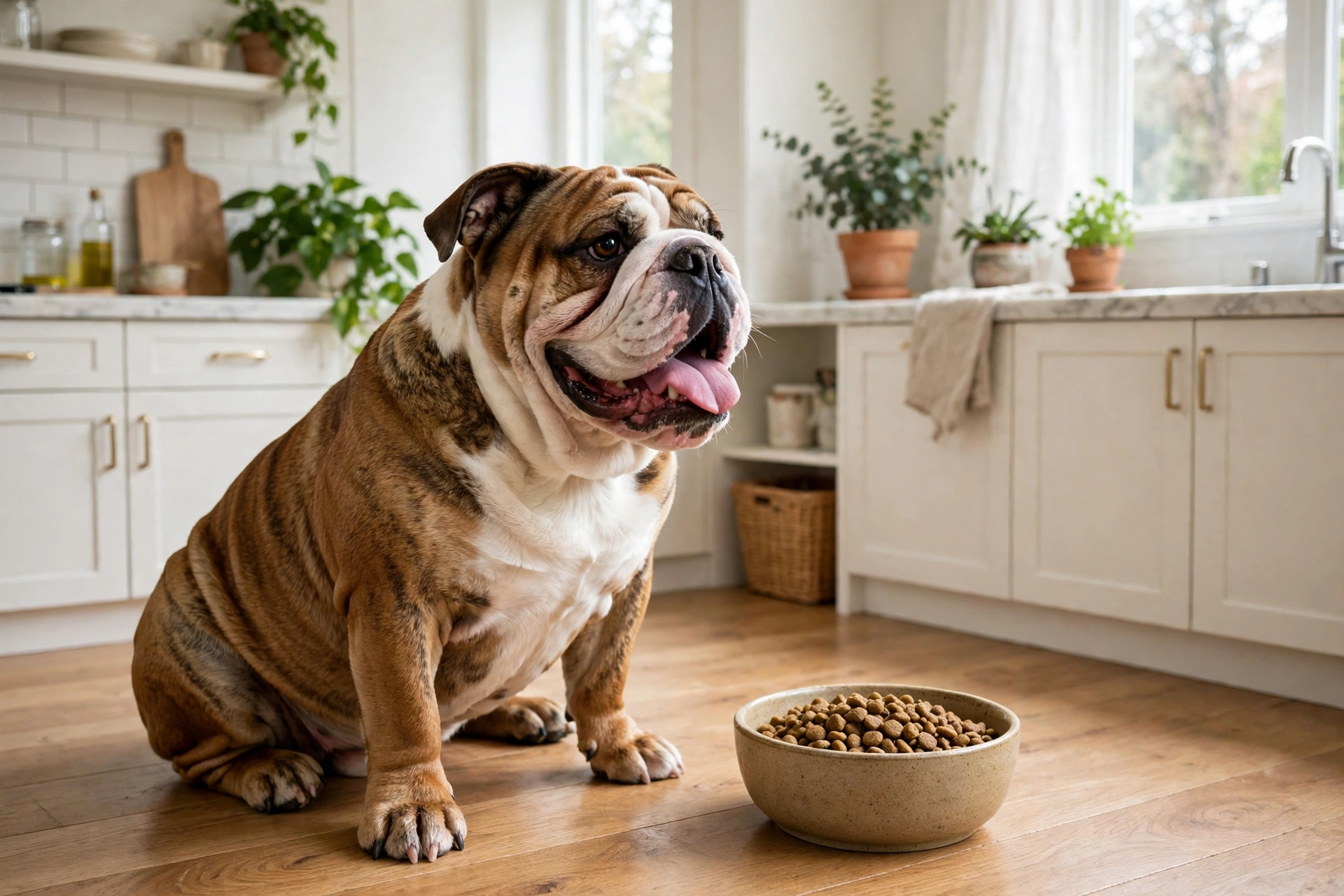
Best Dog Food for Bulldogs: 6 Top Picks (2026)
Bulldogs are wonderful, stubborn, snorting companions — and they are also some of the hardest dogs to feed well. A Bulldog’s flat face, stocky build, sensitive skin, and famously gassy stomach mean that a random bag of kibble rarely works out. The best dog food for bulldogs is not the most expensive bag on the shelf or the one with the flashiest packaging. It is the formula that matches this breed’s real needs: a named animal protein first, a kibble shape a flat-faced dog can actually pick up, digestible ingredients that do not trigger itching or gas, omega fatty acids for skin and coat, and controlled calories so a naturally chunky dog stays at a healthy weight.
This guide covers Bulldogs in the broad sense — English Bulldogs first, with notes where French Bulldogs differ — because the two share the same brachycephalic feeding challenges even though their size and calorie needs are not identical. Below you will find six thoroughly researched picks, based on ingredient analysis, brand reputation, and owner reviews, plus a buying guide that explains exactly what to look for on the label, what to avoid, and how to switch foods without upsetting your Bulldog’s stomach. Whether your dog is a puppy, a healthy adult, or a senior slowing down, you will leave knowing what to put in the bowl.
Key Takeaways
- Bulldogs do best on a named animal protein first, digestible carbohydrates, and no corn, wheat, or soy fillers.
- Kibble shape matters: small or specially shaped pieces, like Royal Canin’s wave-shaped kibble, are far easier for flat-faced dogs to pick up and chew.
- Omega-3 and omega-6 fatty acids, especially EPA and DHA, support the skin folds and coat that Bulldogs struggle with most.
- Weight control is part of the food choice: measure every meal, count treats, and choose a formula with clear calorie information.
- Switch foods gradually over 7 to 10 days, and check with your vet if itching, loose stools, or gas persist beyond a normal transition.
Comparison Table: Our Top Picks for Bulldogs
| Product | Best For | Key Feature |
|---|---|---|
| Royal Canin Bulldog Adult | Best overall breed-specific pick | Wave-shaped kibble designed for the Bulldog jaw |
| Taste of the Wild High Prairie | High-protein, grain-free option | Roasted bison and venison, 32% protein, probiotics |
| Canidae All Life Stages Lamb & Rice | Multi-dog households | Lamb-led, all life stages, no corn, wheat, or soy |
| Purina Pro Plan Shredded Blend Chicken & Rice | Digestive support on a budget | Real chicken first, live probiotics, dual texture |
| Natural Balance Limited Ingredient Salmon & Brown Rice | Sensitive stomachs and suspected food allergies | Single animal protein, short ingredient list |
| Merrick Classic Healthy Grains Real Beef & Brown Rice | Grain-inclusive, everyday feeding | Real beef first, healthy grains, no pea or lentil protein boosters |
Why Bulldogs Need a Different Kind of Food
Bulldogs are brachycephalic, meaning their short muzzles and crowded jaws change how they eat. A long-muzzled dog can scoop up large kibble easily; a Bulldog often pushes it around the bowl, gulps air, and swallows pieces barely chewed. That gulped air is one reason Bulldogs are famous for gas, and fast eating raises the risk of bloating and vomiting after meals. Smaller kibble, a specially shaped piece, a slow-feeder bowl, and even moistening dry food with a little warm water can all make mealtimes easier and calmer.
Anatomy is only half the story. Bulldogs are prone to skin-fold irritation, itchy skin, food sensitivities, sensitive digestion, joint problems, and weight gain. Their stocky frame puts extra load on joints, so joint-supporting nutrients such as EPA, DHA, glucosamine, and chondroitin genuinely matter as they age. Their skin folds trap moisture and can become irritated when diet-driven itching makes a dog scratch and lick more. And because Bulldogs gain weight easily and do not burn it off with long runs — heat and breathing limits make intense exercise risky — portion control is not optional. It is the single most important feeding habit for this breed.
None of this means Bulldogs need an exotic or complicated diet. In fact, the opposite is usually true. Most Bulldogs do best on a straightforward, well-made formula: one clear protein, digestible carbohydrates, healthy fats, and nothing they do not need. The picks below all meet that test in different ways, so you can match the formula to your dog rather than forcing your dog to fit a trend.
Royal Canin Bulldog Adult
Royal Canin Bulldog Adult is the only pick here built specifically for purebred Bulldogs 12 months and older, and that focus shows in every part of the formula. The headline feature is the wave-shaped kibble, designed for the Bulldog jaw so the dog can pick pieces up and chew them rather than chasing them around the bowl. For a breed that struggles with standard round kibble, that shape alone can change mealtimes for the better.
Beyond the shape, the formula targets the breed’s three biggest complaints. Highly digestible proteins and precise fiber content support gut health and help reduce gas and stool odor — two things every Bulldog owner will appreciate. Exclusive nutrients help reinforce the skin barrier, which matters for skin folds and itch-prone skin. EPA and DHA support joint and bone health, important for a heavy, low-slung dog. The recipe is backed by decades of breed-specific research and carries a satisfaction guarantee.
Who is it for? Adult English Bulldogs, especially those with gassy digestion, sensitive skin, or difficulty eating standard kibble. The honest drawbacks are price — breed-specific formulas cost more than general adult food — and the fact that some Bulldogs sensitive to chicken may not suit it, since chicken-based ingredients feature in the recipe. If your Bulldog has a known chicken sensitivity, one of the fish- or lamb-led picks below is a better starting point.
Taste of the Wild High Prairie
Taste of the Wild High Prairie is a grain-free recipe built around roasted bison and roasted venison, with 32% protein — one of the highest protein levels on this list. That protein supports the lean muscle Bulldogs need to carry their stocky frame, without relying on corn, wheat, or soy fillers. Species-specific K9 strain probiotics are added to support digestion and immunity, and omega fatty acids support skin and coat health.
Vegetables, legumes, and fruits round out the formula with antioxidants, and the grain-free base suits Bulldogs whose stomachs do better without grains. Owners often report good energy and a healthy coat on this food. The watch-outs are real, though: the higher protein and calorie density mean portions must be measured carefully — a Bulldog will happily overeat a rich food like this. Some dogs also experience loose stools during the transition, so switch slowly, and the carbohydrate content sits around a third of the recipe, which matters if your vet has flagged weight as a concern.
Who is it for? Active adult Bulldogs, and owners who want a grain-free, high-protein formula with a novel protein profile. It is not the first choice for a Bulldog who needs to lose weight or one with a sensitive stomach that has reacted to rich foods before.
Canidae All Life Stages Lamb & Rice
Canidae All Life Stages Lamb & Rice solves a practical problem: many Bulldog owners have more than one dog, and feeding a different bag to each one gets expensive and confusing. This formula is designed for dogs of all ages and sizes, led by lamb with turkey, chicken, and fish contributing protein, plus brown rice and other whole-food carbohydrates. Probiotics support digestion, antioxidants support immunity, and omega-3 and omega-6 fatty acids support skin and coat.
The ingredient list skips corn, wheat, and soy, which keeps it friendly for Bulldogs with common sensitivities, and the lamb-led profile is a useful alternative for dogs that have reacted to chicken-only diets in the past, but chicken does appear further down the ingredient list, so it is not a chicken-free elimination diet. The kibble can be a little dusty at the bottom of the bag, and picky Bulldogs sometimes refuse it at first, but most owners find it a reliable everyday food.
Who is it for? Households with Bulldogs of different ages, or owners who want one dependable, grain-inclusive bag for the whole household. If you need a strict single-protein elimination diet, choose the Natural Balance pick below instead.
Purina Pro Plan Shredded Blend Chicken & Rice
Purina Pro Plan Shredded Blend Chicken & Rice combines hard kibble with tender shredded chicken pieces, a dual texture that many Bulldogs — famously picky eaters — genuinely enjoy. Real chicken is the first ingredient, rice provides a steady, digestible carbohydrate, and guaranteed live probiotics support digestion and immune health. Vitamin A and omega-6 fatty acids support skin and coat, and the formula is designed to help maintain an ideal body weight with balanced protein and fat.
This is also one of the most widely available and affordable picks on the list, backed by a company with decades of feeding research behind it. That availability matters: running out of a niche food and switching abruptly is exactly what upsets a Bulldog stomach. The honest trade-offs are that the recipe includes corn and by-product meal as secondary ingredients, which some owners prefer to avoid, and fast eaters can gulp the shredded pieces, so a slow-feeder bowl is a good idea.
Who is it for? Budget-conscious owners, Bulldogs who need a palatable food they will actually finish, and dogs whose digestion benefits from added probiotics. Not the pick if your Bulldog has a confirmed chicken sensitivity.
Natural Balance Limited Ingredient Salmon & Brown Rice
When a Bulldog is itching, has recurring ear irritation, or lives with loose stools, the first question is usually whether food is playing a role. Natural Balance Limited Ingredient Salmon & Brown Rice is built for exactly that investigation: salmon is the single animal protein, brown rice provides a gentle, digestible carbohydrate, and the short ingredient list makes it far easier to track what your dog is actually eating. Omega-3 and omega-6 fatty acids support skin and coat, which is often where food-related problems show up first.
Salmon is a less common protein than chicken or beef, so Bulldogs that have reacted to those proteins often do better on it. The formula skips corn, wheat, and soy and avoids the long additive lists that make elimination diets so hard to interpret. The trade-off is variety: there is one protein and one flavor profile, and some picky Bulldogs take time to accept fish-based food. That is a fair price for a diet that can actually help you and your vet narrow down a trigger.
Who is it for? Bulldogs with sensitive stomachs, suspected food allergies, or skin problems that have not resolved on a standard formula. Feed it exclusively — no mixed treats or table scraps — for several weeks if you are using it as an elimination-style trial, and discuss the plan with your vet.
Merrick Classic Healthy Grains Real Beef & Brown Rice
Not every Bulldog needs grain-free food, and many do better with traditional, well-tolerated grains. Merrick Classic Healthy Grains Real Beef & Brown Rice leads with real deboned beef, followed by brown rice and other healthy grains, and it deliberately skips pea or lentil protein boosters — the protein comes from animal sources, not from legumes added to inflate the percentage. That matters for owners who want a grain-inclusive food without the formulation tricks that have drawn scrutiny in recent years.
The recipe also includes glucosamine and chondroitin for joint support, omega fatty acids for skin and coat, and a straightforward ingredient list that is easy to read and trust. It is a solid, middle-of-the-road premium food: not breed-specific, not limited-ingredient, just well made. Bulldogs that do well on beef and grains, and owners who want to avoid grain-free diets, will find this an easy everyday choice.
Who is it for? Adult Bulldogs without grain sensitivities, especially those who need joint support and a dependable beef-based diet. If your Bulldog has reacted to beef before, pick a lamb- or salmon-led option instead.
Buying Guide: What to Look for in Bulldog Food
Start with the first ingredient. It should be a named animal protein — chicken, beef, lamb, salmon, or turkey — not a vague term like “meat meal” or “animal by-product.” Protein builds and maintains the muscle that carries a Bulldog’s heavy frame, and a clear first ingredient is the simplest quality signal on the bag. Look for a protein level in the mid-20s to low-30s percent range for most adult Bulldogs, and adjust with your vet if your dog is a puppy, a senior, or overweight.
Next, check the fat and calories. Bulldogs gain weight easily, and extra weight worsens breathing, joint stress, and heat tolerance — all already weak points for the breed. Choose a formula with clear calorie information (kilocalories per cup), moderate fat rather than a high-fat performance recipe unless your dog is genuinely very active, and measure every meal with a cup. Treats count toward the daily total, and for Bulldogs they should stay under 10% of daily calories.
Then look for digestive and skin support. Probiotics, prebiotic fiber, and digestible carbohydrates such as rice, oats, sweet potato, or pumpkin help settle gassy, sensitive stomachs. Omega-3 and omega-6 fatty acids, fish oil, and flaxseed support the skin barrier and coat. For joints, EPA, DHA, glucosamine, and chondroitin are worth having, especially in adult and senior formulas. Finally, confirm the AAFCO statement: the food should say it is “complete and balanced” for your dog’s life stage, whether that is growth, adult maintenance, or all life stages. That statement is your guarantee the recipe meets established nutritional profiles, and it is the first thing to check before trusting any marketing claim on the front of the bag.
Kibble size and shape deserve their own check. Hold the kibble in mind, not just the ingredients: small pieces, or a shape designed for brachycephalic jaws, reduce gulped air and frustration. If your Bulldog inhales food, a slow-feeder bowl is one of the cheapest, most effective purchases you can make. Moistening kibble with warm water can also help puppies, seniors, and fussy eaters, though it removes the small dental benefit of crunching dry food.
What to Avoid
Avoid vague ingredient lists. If the first ingredients are corn, wheat, soy, or unnamed meat meals, the food is built on cheap fillers rather than quality protein, and Bulldogs with sensitive stomachs and skin tend to show it quickly. Avoid artificial colors, flavors, and preservatives — they add nothing nutritionally and can trigger sensitivities. Avoid feeding a puppy formula to an adult Bulldog, or an adult formula to a puppy, for long periods: puppies need different calcium and calorie levels for growth, and adults need controlled calories to avoid weight gain.
Avoid grain-free food as an automatic default. Grain-free helps when a dog has a genuine grain sensitivity, but many Bulldogs do perfectly well on brown rice, oats, or barley, and protein source is a more common allergy trigger than grains. Discuss grain-free with your vet rather than assuming it is healthier, and be cautious with boutique, exotic-protein diets that lack feeding trials or a clear AAFCO statement. Also avoid free-feeding — leaving a full bowl down all day — with Bulldogs. It is the fastest route to obesity in a breed that rarely self-regulates. And never switch foods abruptly: even a good food can cause days of loose stools if introduced overnight.
How to Switch Your Bulldog to a New Food
Transition over 7 to 10 days, longer than you would for many breeds, because Bulldog stomachs punish rushed changes. Start with roughly 25% new food and 75% old food for two to three days, then move to a 50-50 mix, then 75% new, then fully new — slowing down or stepping back a stage if stools loosen. Keep treats, chews, and table scraps consistent during the switch so you can tell whether the food itself is the problem. If vomiting, persistent diarrhea, blood in the stool, or intense itching appears, stop the transition and contact your vet rather than pushing through.
Once switched, give the new food a fair trial of at least four to six weeks before judging skin or coat changes, since those take time to show. Weigh your Bulldog every two weeks during a food change, and adjust portions by the bag’s feeding guide and your dog’s body condition — you should be able to feel ribs under a thin layer of fat, and see a waist from above — rather than by appetite alone. Bulldogs will always act hungry; the measuring cup, not the begging, decides the portion.
Feeding Tips Specific to Bulldogs
Feed two measured meals a day for most adult Bulldogs, rather than one large meal, which can worsen gas and bloating. Keep fresh water available at all times, especially on a dry-food diet, since kibble carries little moisture. Avoid vigorous exercise immediately before or after meals, and feed in a calm spot — excitement and gulping go together in this breed. Clean skin folds regularly regardless of diet, since no food replaces fold hygiene, and keep an eye on stool quality, gas, itching, and weight as your four early warning signs that a food is not suiting your dog.
For French Bulldogs specifically, remember that portions are smaller than for English Bulldogs — typically around 2 to 4 cups a day depending on age and activity — and the same principles apply at a smaller scale. For English Bulldogs, adult portions commonly fall around 2 to 3 cups a day for a moderately active dog, but the bag’s guide and your vet’s advice for your dog’s actual weight matter more than any general figure. Puppies need more frequent meals and a puppy-specific formula; seniors need fewer calories, more joint support, and often softer or smaller kibble.
Conclusion: Our Recommendation
If you want one straightforward answer, start with Royal Canin Bulldog Adult. It is the only formula here designed for the Bulldog jaw, skin, digestion, and joints together, and for most adult English Bulldogs it solves the most problems at once. If your Bulldog is sensitive to chicken, has recurring skin or stomach trouble, or you need to run a cleaner dietary trial, start instead with Natural Balance Limited Ingredient Salmon & Brown Rice. And if budget or availability matters most, Purina Pro Plan Shredded Blend Chicken & Rice is a dependable, widely available food that most Bulldogs enjoy and digest well.
Whichever you choose, the food is only half the routine. Measure every meal, use a slow feeder if your Bulldog gulps, switch gradually, and watch weight, skin, stools, and gas over the first month. For more breed-specific feeding help, see our guides on best dog food for French Bulldogs, French Bulldog sensitive stomach food, best dog food for weight loss, and best dog food for sensitive stomachs.
For an older Bulldog, choose the best senior bulldog food for age-appropriate nutrition and joint support.
This guide is for information only — check with your vet for your dog’s specific needs.
What is the best dog food for bulldogs?
For most adult English Bulldogs, a breed-specific formula like Royal Canin Bulldog Adult is the strongest starting point because its kibble suits flat faces and it supports skin, digestion, and joints. If your dog is sensitive to chicken, a salmon- or lamb-led formula is a better first try.
Do bulldogs need breed-specific food?
Not necessarily, but it helps. Breed-specific kibble is shaped for brachycephalic jaws, and the formulas usually address skin, digestion, and joint needs. A well-made general formula with the right protein and kibble size can also work well.
Is grain-free food better for bulldogs?
Not automatically. Grain-free helps when a dog has a genuine grain sensitivity, but many bulldogs do well on brown rice, oats, or barley. The protein source is a more common allergy trigger than grains, so discuss grain-free with your vet first.
What food helps a bulldog with gas?
Highly digestible proteins, precise fiber, and probiotics tend to reduce gas, along with slower eating from a slow-feeder bowl and a gradual food transition. Persistent gas with loose stools or itching should be checked by a vet.
How much should I feed my bulldog?
Most adult English Bulldogs eat around 2 to 3 cups a day split into two meals, and French Bulldogs around 2 to 4 cups depending on age and activity. Always follow the bag guide for your dog’s weight and adjust by body condition, not appetite.
Can bulldogs eat chicken?
Many can, and chicken is a good protein for most dogs. But chicken is also one of the more common food sensitivities in bulldogs, so if itching or stomach trouble persists on a chicken food, try a lamb- or salmon-led formula.
How do I switch my bulldog to a new food?
Transition over 7 to 10 days: 25% new food for a few days, then 50-50, then 75% new, then fully new. Step back a stage if stools loosen, and keep treats consistent during the switch.
What should I avoid in bulldog food?
Avoid vague first ingredients, corn, wheat, and soy fillers, artificial colors and preservatives, free-feeding, and abrupt food changes. Also avoid assuming grain-free is automatically healthier without a vet’s input.






5 Comments