
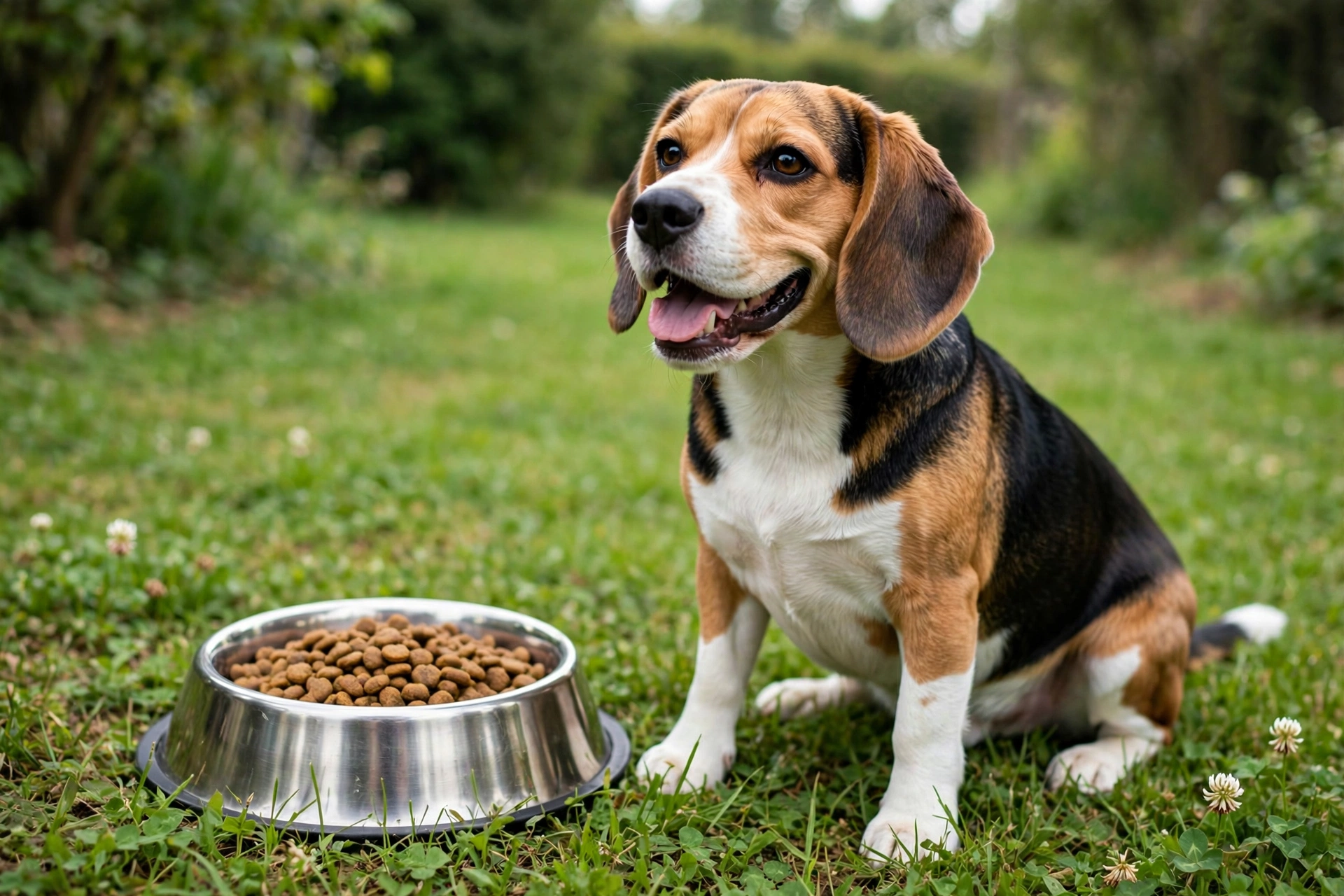
Best Dog Food for Beagles: Weight-Watch Feeding for a Food-Obsessed Scent Hound (6 Picks 2026)
Beagles are joyful, nose-driven, endlessly hungry dogs, and that last trait is exactly why choosing the best dog food for Beagles matters so much. A Beagle will happily eat far past full, and the breed is famous for gaining weight fast. The right food helps you control calories without leaving your dog feeling starved, supports joints that carry an active scent hound through years of walks and sniffing adventures, and keeps skin and coat healthy. In this guide, I compare six strong picks for 2026, explain what to look for on the label, and show you how much to feed so your Beagle stays trim, energetic, and happy.
Whether your Beagle is a picky eater who turns up their nose at kibble, a weight-gainer who begs at every meal, or a sensitive-stomach dog with inconsistent stools, there is a formula below that fits. I based these picks on ingredient analysis, brand reputation, and owner reviews (not on lab testing or veterinary endorsement), and every product is a real formula sold in the United States.
In This Guide
- Key Takeaways
- Comparison Table: Top Picks for Beagles
- Blue Buffalo Life Protection Formula Chicken & Brown Rice Adult
- Royal Canin Beagle Adult Dry Dog Food
- Purina Pro Plan High Protein Shredded Blend Chicken & Rice
- Purina ONE SmartBlend Healthy Weight
- Hill’s Science Diet Adult Perfect Weight Chicken Recipe
- Merrick Limited Ingredient Diet Real Salmon & Brown Rice
- What Beagles Actually Need From Their Food
- How Much Should You Feed Your Beagle?
- Buying Guide: What to Look For
- What to Avoid
- Slow Feeder? Yes, for Most Beagles
- Pros and Cons
- Feeding a Food-Obsessed Beagle: Begging, Stealing, and Enrichment
- Best Food for Beagles by Life Stage
- Conclusion: The Best Dog Food for Beagles
- Frequently Asked Questions
Key Takeaways
- Weight control comes first. Beagles gain weight easily, so calorie density, fiber, and measured portions matter as much as ingredient quality.
- Best overall: Blue Buffalo Life Protection Formula Chicken & Brown Rice for a balanced, widely loved adult formula with joint support.
- Breed-specific option: Royal Canin Beagle Adult uses a slow-eating kibble shape and a fiber blend designed around Beagles’ weight tendency.
- For picky eaters: Purina Pro Plan Shredded Blend pairs crunchy kibble with tender shreds and live probiotics.
- Measure every meal. Use a measuring cup and keep treats to about 10% of daily calories.
Comparison Table: Top Picks for Beagles
| Product | kcal/cup | Protein | Fat | Price (bag, store, date checked) | Daily feeding | Cost / month |
|---|---|---|---|---|---|---|
| Blue Buffalo Life Protection Formula Adult Chicken & Brown Rice, 34 lb | 379 | 24% | 14% | $74.97 / 34 lb, Chewy (Nov 15, 2026) | 1.25 cups/day | ~$19/mo |
| Royal Canin Beagle Adult, 6 lb | 284 | 25% | 10% | $34.99 / 6 lb, Petco (Nov 2026) | 2⅛ to 2⅞ cups/day (RC label table, 12 kg dog, 171 to 225 g/day; cup 82 g) | ~$68 to $91/mo |
| Purina Pro Plan Complete Essentials Shredded Blend Chicken & Rice, adult, 35 lb | 369 | 26% | 16% | $74.48 / 35 lb, Chewy (Nov 15, 2026) | 1.25 cups/day | ~$17/mo |
| Purina ONE SmartBlend Healthy Weight Turkey, 16.5 lb | 320 | 27% | 8 to 12% | $31.58 / 16.5 lb, Chewy (Nov 15, 2026); 31.1 lb $49.99 on Chewy | 1.25 cups/day | ~$15/mo |
| Hill’s Science Diet Adult Perfect Weight Chicken Recipe, 25 lb | 299 | 24% | 8% min (11.2% DM) | $94.99 / 25 lb, Petco (Nov 2026); 12 lb $64.99 | 1.25 cups/day | ~$30/mo |
| Merrick Limited Ingredient Diet Real Salmon & Brown Rice, 22 lb | 462 | 24% | 14% | $75.98 / 22 lb, Chewy (Nov 15, 2026) | 1.25 cups/day | ~$36/mo |
Daily amounts are for an adult Beagle of 24 lb (11 kg) eating 600 to 900 kcal a day. Prices checked November 15, 2026.
Blue Buffalo Life Protection Formula Chicken & Brown Rice Adult
Blue Buffalo Life Protection is a strong all-around pick for a healthy adult Beagle, and it is one of the most widely fed formulas in the US. Real chicken is the first ingredient, followed by wholesome grains like brown rice, barley, and oatmeal that deliver steady energy. The recipe excludes poultry by-product meals, corn, wheat, soy, and artificial flavors, which keeps the ingredient list clean for a breed prone to skin itchiness and ear issues.
What sets this formula apart is the LifeSource Bits, small dark pieces mixed into the kibble that carry a blend of antioxidants, vitamins, and minerals. Many owners report shinier coats and smaller, firmer stools after switching.
Added glucosamine supports joint health, which matters for a breed that stays active for a 12 to 15 year lifespan and puts real stress on its joints through scent-driven running, jumping, and stair climbing. Omega-3 and omega-6 fatty acids help with the itchy-skin complaints that come up constantly in Beagle owner discussions. If your Beagle is between one and seven years old, at a healthy weight, and does well on a grain-inclusive diet, this is the pick I would start with.
The catch: this is not a weight-loss formula. If your Beagle is already overweight, portion control becomes essential. At 379 kilocalories per cup, a heavy hand with the scoop adds up quickly, so use a measuring cup rather than eyeballing it.
Royal Canin Beagle Adult Dry Dog Food
Royal Canin is the only major brand that makes a formula specifically for Beagles, and it is designed around the breed’s two most famous traits: a tendency to gain weight and a habit of inhaling food without chewing. The kibble has an exclusive cross-like shape that encourages chewing and slows down eating, which helps reduce gulping, swallowed air, and gas, and may lower the risk of bloat-related discomfort.
The formula uses an adapted calorie content and a fiber blend to help your Beagle feel full on fewer calories, supporting ideal weight. It is enriched with EPA and DHA plus glucosamine and chondroitin for bone and joint support, which suits an active breed that lives well into its teens. It is formulated for purebred Beagles over 12 months old, so it is not a puppy food. Beagle puppies need a separate puppy formula (see our Beagle puppy guide).
Worth knowing: the ingredient list is the trade-off here. Corn is the first ingredient and chicken by-product meal is the second, which will bother owners who want named meat first. But most Beagles genuinely enjoy eating it, and the slow-eating kibble solves a real problem that generic kibble shapes ignore.
Purina Pro Plan High Protein Shredded Blend Chicken & Rice
If your Beagle rejects plain kibble, Purina Pro Plan Shredded Blend is the formula most likely to win them over. It pairs crunchy, bite-sized kibble with tender, meaty shreds, giving the bowl a richer aroma and more interesting texture. That matters for scent hounds: Beagles experience the world through their nose, and a more aromatic meal keeps them interested and satisfied.
Real chicken is the first ingredient, and the formula is fortified with guaranteed live probiotics to support digestion and immune health. Many owners report firmer stools and less gas within a week or two of switching. This is especially useful for Beagles with a tendency toward digestive upset, since some Beagles have sensitive stomachs and inconsistent stools, especially during diet transitions.
The high-protein recipe suits active adult Beagles, and the bite-sized pieces are sized for a Beagle’s jaw, encouraging chewing rather than gulping. One caveat: the shredded pieces make the formula slightly higher in fat than a pure kibble, so it is not the best choice for an overweight Beagle on a calorie-restricted diet.
Purina ONE SmartBlend Healthy Weight
The formula also includes antioxidants for immune support and vitamins A and E, which benefit eyes and joints. The guaranteed analysis shows around 27% crude protein (more than enough for an adult dog), so your Beagle keeps lean muscle while eating fewer calories. That combination of protein plus fiber is exactly what a weight-management formula should deliver.
Feeding your Beagle well does not have to cost a fortune. Purina ONE SmartBlend Healthy Weight is one of the most affordable formulas that still delivers real turkey as the first ingredient and solid overall feeding and diet. With 27% protein and 8 to 12% fat, it is a balanced option for Beagles that need to trim down without feeling deprived. IAMS Small Breed is the other budget kibble worth a look if your Beagle weighs under 20 lb.
The downside: the ingredient list includes carbohydrate fillers such as corn and soybean meal, which some owners prefer to avoid. But this is a nutritionally complete, affordable option that solves the most common Beagle problem (creeping weight gain) without a premium price.
Hill’s Science Diet Adult Perfect Weight Chicken Recipe
When a Beagle is already overweight, a purpose-built weight-loss formula beats simply feeding less of a regular food. Hill’s Science Diet Adult Perfect Weight is built for that job: at only about 299 kilocalories per cup, it gives you more volume per calorie, and its high fiber content helps your dog feel full on a smaller portion. Clinical studies from Hill’s show that 70% of dogs lost weight within 10 weeks when fed this formula, which is an unusually strong claim for an over-the-counter food.
Chicken is the only meat protein in the recipe, which makes it a reasonable option for Beagles with suspected chicken sensitivities (though not for confirmed chicken allergies, where a different protein is needed). Many owners report visible results within 10 to 12 weeks when portions are measured and treats are controlled.
Two caveats to know. The high fiber content can cause digestive issues for some dogs with particularly sensitive stomachs, so transition slowly over a full week. The recipe also contains corn gluten meal, which some Beagles react to with hot spots. Pair it with our guide to helping your dog lose weight safely for a complete plan.
Merrick Limited Ingredient Diet Real Salmon & Brown Rice
Some Beagles deal with chronic itching, ear infections, or loose stools that point to a food sensitivity. Merrick’s Limited Ingredient Diet keeps things simple: just nine key ingredients, with deboned salmon as the first. Salmon is a great source of omega-3 fatty acids, which support healthy skin and coat, a real benefit for itchy Beagles. The formula contains no beef or chicken, the two most common meat allergens in dogs, and no artificial colors, flavors, or preservatives.
A limited-ingredient diet is the standard first step when a food sensitivity is suspected, because fewer ingredients mean fewer suspects. This is one of the most trusted limited-ingredient formulas in the US market.
One thing to note: brown rice is high in fiber, so it can be slightly harder for some dogs with very weak digestive systems to digest. If your Beagle has a genuinely sensitive stomach rather than an allergy, you may also want to read our guide to the best dog food for sensitive stomachs for more gentle options, and our best food for Beagle sensitive stomach guide lists breed-specific picks.
What Beagles Actually Need From Their Food
Beagles are medium-sized dogs with an energy level that surprises people who expect a lap dog. They come in two varieties: the 13-inch variety stands under 13 inches and weighs under 20 lb, while the 15-inch variety stands 13 to 15 inches and weighs 20 to 30 lb. They live 12 to 15 years. Their long, floppy ears trap moisture, and the AKC lists ear infections among Beagle health concerns. Their nutritional needs are not exotic, but their behavior makes feeding them trickier than average. Some Beagles have sensitive stomachs too, so a gentle formula can help during diet transitions.
Protein: the foundation
Look for a named animal protein (chicken, turkey, salmon, lamb, or beef) as the first ingredient. Adult Beagles do well on formulas with roughly 22 to 28% crude protein on a dry-matter basis. Protein maintains the lean muscle that keeps an active scent hound moving, and it helps your dog feel full.
Calories and fiber: the Beagle battleground
Beagles gain weight easily. This is where Beagle feeding differs from most breeds. Many pet Beagles carry extra weight, and a Beagle that is always looking for the next meal will eat far past full if you let it. Start from the kcal per cup of the food you feed and the 600 to 900 kcal per day range, then adjust to body condition. Fiber helps here: it adds bulk without adding many calories, so your dog feels full on a smaller portion. The comparison table above works the daily amount out per pick for an adult Beagle of 24 lb (11 kg).
Fat and omega fatty acids
Fat carries flavor and essential fatty acids, but it is also the most calorie-dense nutrient, so a Beagle’s food needs enough fat for a healthy coat without tipping the calorie balance. Omega-3 and omega-6 fatty acids support skin and coat health, which is useful because some Beagles get dry, itchy skin. Around 12 to 16% fat works well for most adult Beagles, with lower fat better for dogs that need to lose weight.
Joint support for a long, active life
Beagles commonly live 12 to 15 years and stay playful well into old age, and scent-driven running, jumping, and stair climbing put real stress on their joints. Glucosamine, chondroitin, EPA and DHA can help support those joints, and foods that include them naturally, such as fish or fish oil, beat relying on supplements. Our guide to the best food for Beagle skin allergies covers the omega-3 detail for itchy skin.
AAFCO statement: the non-negotiable check
Every food you consider should carry an AAFCO statement on the label, such as “formulated to meet the nutritional levels established by the AAFCO Dog Food Nutrient Profiles for adult maintenance.” That statement means the recipe is complete and balanced for adult dogs, while foods labeled “for intermittent or supplemental feeding only” are treats or toppers, not a full diet.
How Much Should You Feed Your Beagle?
The feeding chart on the bag is a starting point, not gospel. It usually assumes an active, intact dog. Most pet Beagles are spayed or neutered and moderately active, so they typically need 10 to 20% less than the bag suggests. Start from the kcal per cup of the food you feed and the 600 to 900 kcal per day range, then adjust to body condition. The comparison table above gives the daily amount for each pick for an adult Beagle of 24 lb (11 kg), so use that instead of a single cup range.
Split the daily amount into two meals: morning and evening. Two meals keep blood sugar steadier, reduce begging between meals, and make it easier to spot appetite changes that can signal illness. Puppies need three to four smaller meals a day; senior Beagles usually stay on two meals but may need fewer calories.
The rib test is your best at-home tool. You should be able to feel your Beagle’s ribs easily under a thin layer of fat without pressing hard, and viewed from above, your dog should have a visible waist behind the ribs. If you cannot feel the ribs, or the waist has disappeared, it is time to cut portions by about 10% and talk to your vet about a target weight. A body-condition score of 4 to 5 out of 9 is the healthy range to aim for.
And the treat rule: treats and table scraps should make up no more than about 10% of daily calories. For a Beagle eating 700 calories a day, that is just 70 calories of treats, roughly a small handful of training treats or a few baby carrots. For low-calorie options, see our guide to the best low-calorie dog treats for training. If you need a full weight-loss plan, our best dog food for weight loss guide covers calorie-controlled formulas in depth.
Buying Guide: What to Look For
- Named protein first. “Chicken,” “deboned salmon,” or “turkey,” not “meat meal” or “poultry by-product.”
- Calorie content on the label. You need kcal per cup to portion correctly. If a food hides it, that is a red flag.
- Moderate fat, meaningful fiber. Around 12 to 16% fat and a fiber source like beet pulp, pumpkin, or chicory root help with fullness and stool quality.
- Joint-supporting ingredients. Glucosamine, chondroitin, EPA, and DHA are valuable bonuses for an active breed.
- AAFCO complete-and-balanced statement for adult maintenance (or all life stages if you also feed puppies).
- Kibble size and shape. Medium, crunchy kibble encourages chewing; slow-feeder bowls help gulpers even more.
- No artificial colors, flavors, or preservatives. They add nothing your dog needs.
Fresh food, such as Ollie, can suit a Beagle that turns up its nose at kibble, or one whose weight needs tight portion control, because fresh meals arrive pre-portioned. The trade-off is cost, which runs well above kibble, and fridge space, since fresh food needs refrigeration and takes up a shelf. It suits picky eaters best, but it stays a side option rather than a pick in this guide.
What to Avoid
- Free-feeding. Leaving a full bowl down all day is the fastest way to an overweight Beagle. Measure every meal.
- Feeding by the bag chart alone. Bag charts overestimate for most pet Beagles. Start there, then adjust to your dog’s body condition.
- Grain-free by default. Most Beagles do fine with grains, so see the grain-free question below before you pay extra to avoid them. Raw-coated and grain-free premium lines do not solve the Beagle weight problem. The problem is portions, not the recipe.
- Vague ingredients. “Meat meal,” “animal fat,” “animal digest,” and “by-product meal” hide what is actually in the bag, so a Beagle with a sensitive stomach or an itchy coat leaves you guessing what set it off.
- Too many treats. Beagles beg brilliantly. Every extra biscuit counts, so swap some treats for praise, play, or a short sniff walk.
- Toxic foods. Never feed chocolate, grapes, raisins, onions, garlic, macadamia nuts, or anything sweetened with xylitol (birch sugar).
- Sudden food switches. Change foods over 7 days, mixing increasing amounts of the new food with the old, to avoid stomach upset.
Slow Feeder? Yes, for Most Beagles
If your Beagle inhales meals in under two minutes, a slow-feeder bowl is one of the cheapest upgrades you can make. The raised ridges force your dog to nose kibble out piece by piece, slowing eating, reducing swallowed air and gas, and making the meal last long enough to register fullness. The Royal Canin Beagle formula tackles the same problem with kibble shape; combining a slow-feeder bowl with any kibble on this list works too.
Pros and Cons
These six picks cover the main Beagle needs, but none of them fits every dog. Here is the short version.
What works
- Six real formulas cover the main Beagle needs: weight control, picky eating, and sensitive stomachs.
- Royal Canin Beagle Adult is the only breed-specific formula, with kibble made to slow down gulping.
- Two budget-friendly weight options, Purina ONE Healthy Weight and Hill’s Perfect Weight, keep costs down.
- All six picks are real formulas sold in the United States, so you can buy any of them without hunting for a niche brand.
What to watch
- None of the six picks is a puppy or senior formula, so young and old Beagles need a different food.
- Royal Canin Beagle Adult lists corn first and costs more per pound than the other picks.
- Blue Buffalo, the top pick, is not a weight-loss formula, so overweight Beagles need a different pick.
- Purina Pro Plan Shredded Blend runs slightly higher in fat, so it suits active Beagles better than dogs on a diet.
Feeding a Food-Obsessed Beagle: Begging, Stealing, and Enrichment
A Beagle’s nose runs the household, and no formula will fix that, but how you serve the food can. The single most useful change for a food-obsessed Beagle is to make meals take longer and work harder: a slow-feeder bowl is already on this page, but a snuffle mat, a puzzle feeder, or simply scattering the kibble across the lawn turns a 30-second gulp into ten minutes of sniffing and thinking, which is what a scent hound was built to do. A Beagle that has worked for its dinner is calmer afterwards, begs less, and feels fuller on the same measured portion, and because the food is the same kibble from the picks above, enrichment costs nothing in extra calories.
Begging needs the same firmness as portions. Every scrap handed over from the table teaches a Beagle that staring works, and Beagles are persistent enough to out-wait most owners. Agree one rule for the whole household (no food from the table, ever) and give begging nothing to earn: no eye contact, no talking, no “just one bite.” Redirect the energy instead: a stuffed Kong with a little of the day’s kibble, a short sniff walk, or a training session with pea-sized rewards. Counter-surfing and bin-raiding are management problems, not training failures. Keep food out of reach, use bins with lids a nose cannot open, and never leave a Beagle alone with an accessible counter, because a dog that succeeds once will try a hundred times. If your Beagle steals food that could be dangerous (chocolate, grapes, onions, xylitol-sweetened foods), call your vet straight away rather than waiting to see what happens.
Best Food for Beagles by Life Stage
Puppies need a puppy formula, not adult food. A Beagle puppy grows fast, eats three to four smaller meals a day, and needs more calories per pound than an adult. Move a puppy to adult food at around 12 months, switching over 7 days as described in ‘What to Avoid’ above. Our Beagle puppy guide covers the switch in full.
Adult Beagles from one to seven years old do best on the picks in this guide: two measured meals a day, with the daily amount from the comparison table above, and treats kept to about 10% of daily calories. This is the age when weight control matters most, so the rib test and a measuring cup do more than any single food choice.
Senior Beagles, from around seven to eight years old, need fewer calories and more joint support, so look for a senior formula with added glucosamine and omega-3 fats and keep the two-meal routine while cutting the portion if your dog slows down. Our senior Beagle guide covers the senior switch. At every age, ask your vet before you switch formulas, since a dog with health problems may need a different plan.
Conclusion: The Best Dog Food for Beagles
For most healthy adult Beagles, Blue Buffalo Life Protection Formula Chicken & Brown Rice is the best overall pick: balanced, widely available, and strong on coat, joints, and ingredient quality. If your Beagle is a gulper, Royal Canin Beagle Adult is the only breed-specific option and its slow-eating kibble solves a real problem. Picky eaters will do best on Purina Pro Plan Shredded Blend, while Beagles that need to lose weight should move to Hill’s Science Diet Perfect Weight or the budget-friendly Purina ONE Healthy Weight, with portions measured at every meal. For suspected food sensitivities, Merrick Limited Ingredient Salmon keeps the ingredient list short and clean.
Whichever formula you choose, remember that the food is only half the equation. The other half is how you feed it. Measure portions, keep treats to about 10% of daily calories, use a slow feeder if your Beagle gulps, and check body condition monthly. Do that, and your Beagle will stay the happy, healthy, gloriously food-motivated companion you fell in love with.
This guide is information, not a prescription. If your Beagle has a health condition, check the pick with your vet before you switch.
Frequently Asked Questions
How much food should a Beagle eat per day?
It depends on the food, because kcal per cup runs from 284 to 462 across the picks here. For an adult Beagle of 24 lb (11 kg) eating 600 to 900 kcal a day, the comparison table above gives the daily amount per pick, from 1.25 cups a day of Merrick to 2⅛ to 2⅞ cups a day of Royal Canin Beagle Adult. Split the daily amount into two meals. Spayed or neutered and moderately active Beagles often need 10 to 20% less than the bag suggests. Always measure with a cup.
What is the best food for a Beagle that gains weight easily?
A calorie-controlled, high-fiber formula such as Hill’s Science Diet Adult Perfect Weight or Purina ONE SmartBlend Healthy Weight, with portions measured at every meal. Keep treats to about 10% of daily calories and check your dog’s ribs and waistline monthly. If your Beagle is already overweight, talk to your vet about a target weight and a gradual weight-loss plan.
Are Beagles allergic to chicken?
Some Beagles are. Chicken is one of the most common food allergens in dogs, along with beef and dairy. If your Beagle has chronic itching, ear infections, or loose stools that clear up on a different protein, a chicken allergy may be the cause. A limited-ingredient formula with salmon or another single protein, like Merrick Limited Ingredient Salmon, is a good next step to discuss with your vet.
Is grain-free food good for Beagles?
Not by default. Most Beagles do fine on grain-inclusive food, and the FDA has investigated a possible link between grain-free diets and dilated cardiomyopathy (DCM) in dogs. Choose grain-free only if your vet has diagnosed a grain allergy or sensitivity in your dog.
How often should I feed my Beagle?
Adult Beagles do best on two meals a day, morning and evening. Two meals keep blood sugar steadier and make it easier to spot appetite changes. Puppies need three to four smaller meals a day, while senior Beagles usually stay on two meals with fewer calories.
How do I stop my Beagle begging for food?
Give begging nothing to earn: no food from the table, no eye contact, no “just one bite,” and make the rule the same for everyone in the house. Redirect with a stuffed Kong, a snuffle mat, or a short sniff walk instead. Beagles out-wait inconsistent rules, so the household has to hold the line together; a single slip teaches the dog that staring eventually pays.






5 Comments