
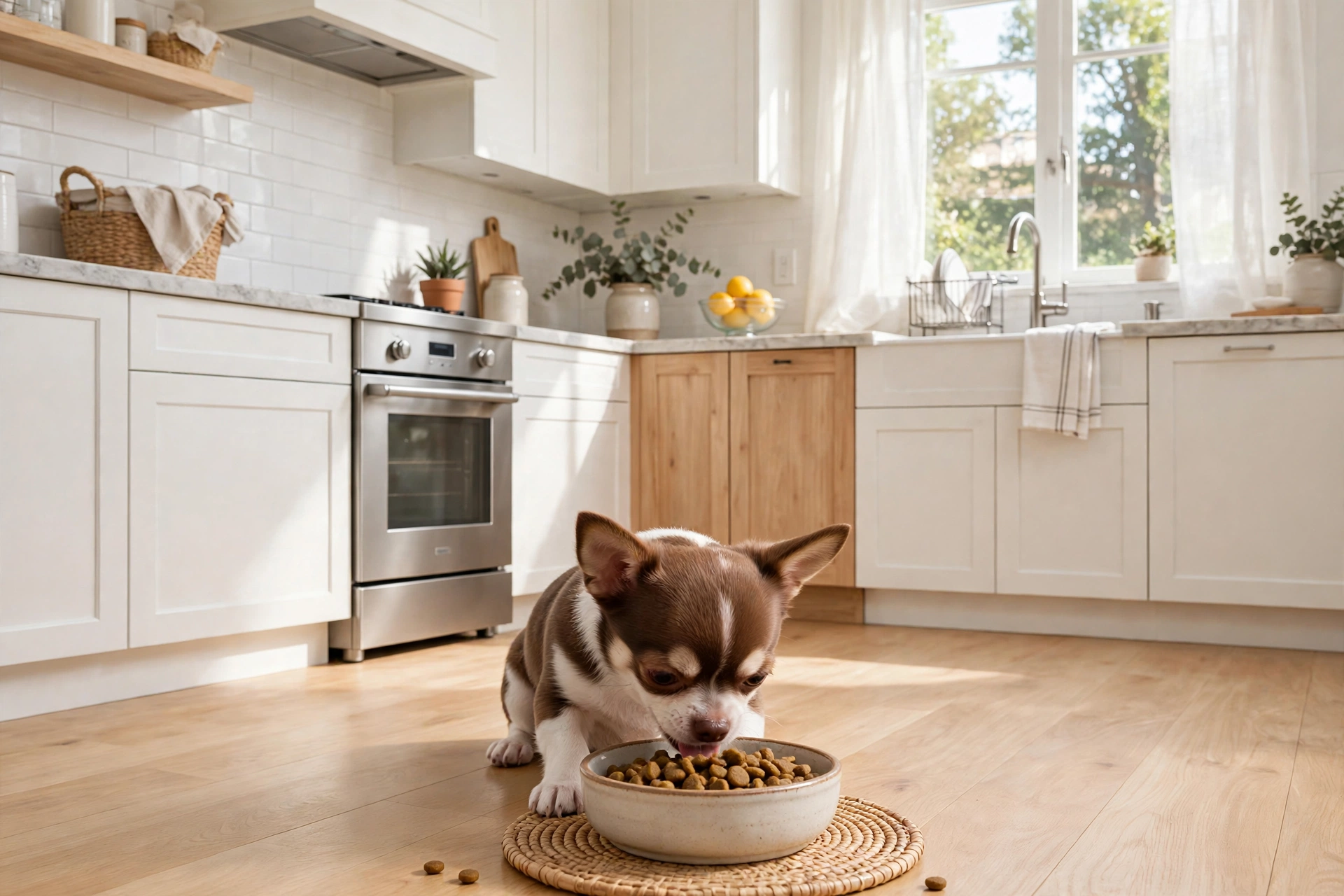
Best Puppy Food for Small Breeds: Tiny-Breed Portions & Hypoglycemia-Safe Picks
Finding the best puppy food for small breeds matters more than many new owners realize. A Chihuahua puppy and a Labrador puppy may both be called “puppies,” but their nutritional needs are surprisingly different: tiny breeds burn calories fast, have tiny stomachs, and mature earlier than their larger cousins. Feed them the wrong formula and you can end up with an underfed pup that can’t eat enough in one sitting, or an overweight one heading toward joint and heart problems. Small kibble, dense calories, and frequent little meals are what set a small-breed formula apart, and this guide sticks to foods built exactly that way.
In this guide, I compare six of the best puppy foods for small breeds, based on ingredient analysis, brand reputation, and what real owners report. I’ll also walk you through exactly what to look for on the label, from calorie density and kibble size to the AAFCO statement that guarantees a complete feeding and diet, and the ingredients and marketing traps to avoid. If you’re brand-new to puppy ownership, my general guide to the best dog food for puppies is a good companion read, and the large-breed detail lives in Best Puppy Food for Large Breeds.
This guide is for information only. Check with your vet for your dog’s specific needs.
In This Guide
- Our Top Picks at a Glance
- Royal Canin Size Health Nutrition Small Puppy
- Hill’s Science Diet Puppy Healthy Development Small Bites
- Purina Pro Plan Small Breed Puppy
- Blue Buffalo Baby BLUE Small Breed Puppy
- Diamond Naturals Small & Medium Breed Puppy
- Pedigree Puppy Growth and Protection
- Pros and Cons of Small Breed Puppy Food
- How to Choose the Best Puppy Food for Small Breeds
- Ingredients and Formulas to Avoid
- Small Puppy or Toy Puppy? Why the Size Band Matters
- Hypoglycemia-Safe Feeding Routine
- How Much Food Does a Small Breed Puppy Need Each Day
- Final Verdict
Key Takeaways
- Small-breed puppies need calorie-dense food with smaller kibble. Pick a formula made for small or toy breeds, not a generic puppy food.
- The AAFCO “growth” (or “all life stages”) statement is non-negotiable; it confirms the food is complete and balanced for puppies.
- DHA from fish oil supports brain and eye development, and in my experience a highly digestible recipe matters more for tiny stomachs than trendy ingredients.
- Feed 3 to 4 small meals a day until about 6 months old, and 4 to 5 a day for toy puppies under 4 months. Small breeds are prone to low blood sugar if they go too long between meals.
- Most small breeds switch to adult food around 8 to 10 months (toy breeds as early as 6 months), much earlier than large breeds.
Our Top Picks at a Glance
| Product | Best for | Key feature | Protein | Fat | kcal/cup | Price | Daily feeding | Cost/month |
|---|---|---|---|---|---|---|---|---|
| Royal Canin Size Health Nutrition Small Puppy | Best overall | Breed-specific formula with DHA and prebiotics | 29% | 18% | 349 | $65.99 / 14 lb | 1⅜ to about 1⅞ cups a day | About $39 to $53 |
| Hill’s Science Diet Puppy Healthy Development Small Bites | Everyday balanced feeding and diet | Small kibble with natural DHA from fish oil | 23% | 15% | 393 | $42.99 / 12.5 lb | 1⅜ cups a day | About $33 |
| Purina Pro Plan Small Breed Puppy | Active, high-energy pups | Real chicken first + live probiotics | 33% | 20% | 482 | $19.98 / 6 lb | 1¼ to 1¾ cups a day | About $31 to $43 |
| Blue Buffalo Baby BLUE Small Breed Puppy | Natural ingredient preference | Real chicken with LifeSource Bits | 29% | 17% | 415 | $12.48 / 4 lb | ¾ to 1¼ cups a day | About $17 to $29 |
| Diamond Naturals Small & Medium Breed Puppy | Best value | Superfoods and K9 probiotics at a lower price | 32% | 22% | 453 | $56.99 / 40 lb | 1¼ cups a day | About $13 |
| Pedigree Puppy Growth & Protection | Budget pick | Complete and balanced at the lowest price | 27% | 11% | 293 | $25.97 / 30 lb | 1 to 1¾ cups a day | About $5 to $9 |
Prices from Chewy, checked 2026-11-15. Protein and fat are guaranteed-analysis minimums from the label; kcal/cup is from the label too. Daily feeding and cost per month are for a 6-month-old puppy weighing 10 lb, expected to reach 13 to 20 lb as an adult, fed for 30 days at the label amount. Purina Pro Plan Small Breed Puppy and Baby BLUE come in small 6-lb and 4-lb bags, so expect frequent rebuys.
Royal Canin Size Health Nutrition Small Puppy
When a brand designs a food from the ground up for small breed puppies, it shows, and Royal Canin’s Size Health Nutrition Small Puppy is the textbook example. It’s formulated for small breeds expected to reach 9 to 22 pounds as adults, covering puppies from 2 to 10 months old.
The standout features are the ones that matter most at this size: DHA for brain development, prebiotics to support digestive health, and an antioxidant blend for immune support. The kibble is sized and textured for tiny mouths, which is more than a convenience issue. Puppies that can’t comfortably chew their food tend to swallow kibble whole, increasing choking risk.
The honest tradeoff is price: this is one of the pricier options per pound, and flavor options are limited. But based on ingredient analysis and Royal Canin’s long track record with breed-specific research, this is the formula I’d point most small breed puppy owners toward first.
Best for: Owners who want a breed-specific formula backed by one of the most research-heavy brands in pet feeding and diet. Pros: Purpose-built for puppies expected to reach 9 to 22 lb, with small kibble, prebiotics, and DHA. Cons: The priciest per pound on this list, and it comes in only one recipe.
Hill’s Science Diet Puppy Healthy Development Small Bites
Hill’s Science Diet has been a trusted name for decades, and the Small Bites puppy formula is one of the most widely recommended foods for small and toy breed puppies in the US. Chicken meal and barley lead a recipe built around digestibility, a real advantage for tiny stomachs that can’t handle much waste.
Natural DHA from fish oil supports healthy brain and eye development, while the balance of vitamins, minerals, and antioxidants rounds out a formula that meets AAFCO growth standards. The kibble is genuinely small, sized for puppies and not just labeled that way, and it’s easy to digest for pups whose digestive systems are still maturing.
Some owners say that picky puppies don’t always take to it, and the larger bag sizes can go stale before a tiny puppy works through them. Buy smaller bags and store them sealed. Based on ingredient analysis, brand reputation, and owner reviews, this is a rock-solid everyday choice.
Best for: Owners who want a well-rounded formula without paying a premium. Pros: Small kibble, DHA from fish oil, and wide availability. Cons: Picky puppies do not always take to it, and big bags can go stale before a small puppy finishes them.
Purina Pro Plan Small Breed Puppy
Small breed puppies are famously energetic, and some burn through calories faster than average formulas keep up with. Purina Pro Plan’s small breed puppy formula answers that with real chicken as the first ingredient and a nutrient-dense recipe aimed at supporting strong muscle growth in the first year.
This is also the only pick on this list that includes guaranteed live probiotics, which support digestive and immune health, genuinely useful for puppies whose gut flora is still establishing itself. DHA from fish oil covers brain and vision development, and the formula is highly digestible, so more of what your pup eats actually gets used.
The recipe includes grains (rice and others), which suits most puppies but is worth noting if your vet has specifically advised grain-free. It’s also at the higher end of mid-range pricing. Chewy also sells an 18-lb bag, which brings the per-pound price down if you have room to store it. Based on ingredient analysis and Purina Pro Plan’s extensive feeding-trial history, this is an excellent choice for the bouncing-off-the-walls puppy.
Best for: High-energy puppies that need extra calorie and protein support to keep up with their own pace. Pros: Highest calorie density on this list (4,311 kcal/kg), 33% protein, and live probiotics. Cons: The 6-lb bag runs out fast, though an 18-lb bag is also sold.
Blue Buffalo Baby BLUE Small Breed Puppy
If you lean toward more natural formulations, Blue Buffalo’s Baby BLUE line is built for exactly that preference: real chicken as the first ingredient, no poultry by-product meals, no corn, wheat, soy, and no artificial flavors or preservatives. The chicken-and-oatmeal recipe keeps things gentle and digestible.
The formula includes Blue Buffalo’s LifeSource Bits, a blend of antioxidants, vitamins, and minerals, plus DHA for brain development and balanced calcium and phosphorus for growing teeth and bones. The kibble is small-breed-sized, and the brand’s focus on whole-food-style ingredients appeals to owners who scrutinize labels.
The main drawbacks: it’s a premium-priced food, and the 4-pound bag is on the small side, meaning frequent repurchasing for households with more than one pup. Based on ingredient analysis and owner reviews, this is the strongest choice for label-conscious buyers.
Best for: Owners who prioritize natural ingredients and no by-product meals or artificial anything. Pros: Natural ingredients, DHA, and small kibble. Cons: Premium price, and the 4-lb bag means frequent rebuys.
Diamond Naturals Small & Medium Breed Puppy
Diamond Naturals manages something rare: genuinely good ingredients at a price that doesn’t sting. Cage-free chicken leads the recipe, supported by superfoods like kale, pumpkin, blueberries, and oranges, plus omega fatty acids for skin and coat health.
Each serving includes Diamond’s K9 Strain proprietary probiotics, developed specifically for dogs, to support digestion, a meaningful inclusion at this price point. The small kibble size suits even the tiniest puppies, and the formula meets the nutritional needs of growing small breeds without padding the bag with fillers.
Diamond is a family-owned company that manufactures in the US, which is a nice bonus for the price. Some owners report their picky puppies turned their noses up at it, so it may be worth buying a small bag first. Based on ingredient analysis and owner reviews, this is the best bang-for-buck option on the list.
Best for: Budget-conscious owners who don’t want to compromise on probiotics and whole-food ingredients. Pros: 32% protein, K9 Strain probiotics, and the best value per pound here. Cons: Picky puppies sometimes refuse it, and a 40-lb bag is a lot to store for one small puppy.
Pedigree Puppy Growth & Protection
Sometimes the budget is simply the budget, and Pedigree’s Puppy Growth & Protection formula proves that affordable doesn’t have to mean inadequate. It’s a complete and balanced puppy food with vitamins, minerals, and omega-3 fatty acids, formulated to support puppy development, with no high-fructose corn syrup, artificial flavors, or added sugar.
The kibble is small and easy to chew for small breeds, and the nutrient density is sufficient to meet the high per-pound calorie needs of tiny puppies. It’s also the easiest of these foods to find, available in virtually every grocery store in the US.
Compared to the premium picks, the ingredient quality is simpler, and some owners find their puppies less enthusiastic about the taste. But as a complete feeding and diet baseline at the lowest price on this list, it gets the job done honestly. Based on ingredient analysis and widespread availability, this is a fair choice when every dollar counts.
Best for: Owners who need a complete, balanced puppy food at the lowest possible price. Pros: Complete and balanced at the lowest price, and easy to find. Cons: Lowest calorie density on this list (3,426 kcal/kg) and simpler ingredients.
Pros and Cons of Small Breed Puppy Food
Six formulas cover the main small breed puppy needs, but the list has gaps a buyer should know about. Here is the honest balance.
Pros
- Kibble sized for tiny mouths, which lowers choking risk and helps puppies chew instead of gulping.
- More calories per cup, so a puppy with a tiny stomach still gets enough energy from small meals.
- DHA, calcium, and phosphorus levels set for growth, with an AAFCO growth statement on the bag.
- Small bags and breed size recipes make portion control and storage easier for toy and small breeds.
Cons
- Costs more per pound than regular puppy food or supermarket brands.
- Small bags run out fast, so owners buy food more often.
- Some puppies refuse the taste or texture, which means a wasted bag while you try another recipe.
- Easy to overfeed, since the food is calorie dense and a small scoop extra adds up fast.
How to Choose the Best Puppy Food for Small Breeds
Look for the AAFCO growth statement
This is the single most important line on the bag. Look for “growth” or “all life stages” on the label: a statement like “formulated to meet the nutritional levels established by the AAFCO Dog Food Nutrient Profiles for growth” confirms the food is complete and balanced for puppies. The longer calcium and nutrient explainer lives in Best Puppy Food for Large Breeds.
Calorie density matters more than bag size
Small breed puppies need more calories per pound of body weight than large breed puppies, sometimes 1.5 to 2 times as much. But their stomachs are tiny. That combination means the food needs to be calorie-dense (the six picks on this page run from 3,425 to 4,311 kcal/kg) so your pup gets enough from its feeding and diet without having to eat an impossible volume. Feeding guidelines on the bag are a starting point; adjust based on your puppy’s body condition, and my Puppy Feeding Schedule shows how to fine-tune amounts for small breeds.
Kibble size is a safety issue, not a gimmick
Kibble designed for small breeds is genuinely smaller, and that matters. Tiny puppies may inhale their food without chewing, which is a choking hazard, and kibble that’s too large discourages proper chewing. If the pieces look too big for your pup’s mouth, consider soaking the kibble in warm water for a few minutes to soften it. Small mouths also mean crowded teeth, so brush your puppy’s teeth and pick a kibble size your puppy can actually chew.
DHA, protein, and fat levels
DHA from fish oil supports brain and eye development, and the AAFCO growth minimums are 22.5% protein and 8.5% fat on a dry matter basis, with DHA at 0.05%. Named animal proteins (chicken, chicken meal, fish) as the first ingredients beat vague terms like “meat meal.” The full nutrient explainer, including calcium limits, lives in Best Puppy Food for Large Breeds.
Feed small meals, often
Small breed puppies are prone to hypoglycemia (low blood sugar) if they go too long without eating. Feed 3 to 4 small meals a day until about 6 months old, then you can usually drop to 2 meals. Toy breeds under 4 months may need 4 to 5 small meals a day, spaced evenly through the day. Consistent timing keeps energy levels stable.
When to switch to adult food
Most small breeds switch to adult food around 8 to 10 months (toy breeds as early as 6 months), much earlier than large breeds, which keep growing for 18 to 24 months. Switch to an adult small-breed formula when your vet confirms your pup has reached adult size and weight, and transition gradually over 7 to 10 days. If your pup’s stomach is easily upset during transitions, see my guide to puppy food for sensitive stomachs.
Ingredients and Formulas to Avoid
- Adult-only formulas: foods that meet AAFCO standards for “adult maintenance” only don’t have the nutrient density or calcium-phosphorus balance puppies need.
- Vague protein sources: “meat meal,” “animal digest,” or “poultry by-product meal” as the lead ingredient tells you nothing about quality. Named proteins are the standard to hold.
- Fillers and empty calories: formulas heavy on low-value fillers force tiny stomachs to do extra work for less from their feeding and diet.
- Artificial colors, flavors, and preservatives: they add nothing nutritionally and can trigger sensitivities in some pups.
- Grain-free by default: unless your vet advises it, don’t assume grain-free is better. The FDA has investigated a potential link between some grain-free diets and canine heart disease (DCM), and most puppies do fine, often better, with digestible grains like rice and oatmeal.
- Homemade diets without vet guidance: puppy feeding and diet is precise, especially calcium and phosphorus ratios. A DIY diet without veterinary nutritionist input risks real developmental harm.
Small Puppy or Toy Puppy? Why the Size Band Matters
“Small breed” covers a wide range, and the food that fits a 20-pound puppy does not automatically fit a 4-pound one. Brands draw the line differently, so match your puppy to the band on the bag rather than to a generic “toy” label:
| Formula | Expected adult weight |
|---|---|
| Royal Canin X-Small Puppy | Up to 8 lb |
| Royal Canin Small Puppy | 9 to 22 lb |
| Purina Pro Plan Small Breed Puppy | Under 20 lb at maturity |
Blue Buffalo Baby BLUE Small Breed Puppy, Diamond Naturals Small & Medium Breed Puppy, and Pedigree Puppy Growth & Protection are fed by current weight rather than expected adult weight, so any small-breed puppy can use them. Hill’s Science Diet Puppy Small Bites is made for small and toy breeds, with kibble sized for little mouths.
For a toy puppy, kibble size is not a preference. Pieces that are fine for a 20-pound puppy can be too big to chew comfortably, so soaking in warm water is a sensible first step, not a failure. Meal frequency matters more too: toy puppies under 4 months often need 4 to 5 small meals a day, evenly spaced, because they are the most prone to low blood sugar if they go too long between meals. And because a toy puppy eats so little at each meal, every bite has to count. A growth formula with the AAFCO growth statement, a named animal protein first, and DHA from fish oil is the baseline, not a luxury. Start from your puppy’s expected adult weight, then pick from the list above: the same brands work, but the toy puppy gets the smallest kibble, the most frequent meals, and the closest portion watching.
Hypoglycemia-Safe Feeding Routine
Toy-breed puppies are the ones most likely to run into low blood sugar, especially in the first 6 months of life, when the liver is still maturing. The Merck Veterinary Manual notes that toy-breed puppy hypoglycemia is usually managed with frequent meals of a commercial puppy diet. The routine that works:
- Feed 4 to 5 small meals a day under 4 months old, then 3 to 4 meals a day until about 6 months. The AKC gives the same 4 to 5 meal guidance for toy puppies under 4 months, and VCA advises at least 3 small meals a day for puppies under 4 months.
- Keep meals evenly spaced and never let a tiny puppy skip a meal. A missed meal is the most common trigger.
- Watch for weakness, collapse, disorientation, tremors, or seizures. These are the signs VCA Animal Hospitals lists for low blood sugar, and a puppy showing them needs a vet promptly.
- Stick to one growth formula and measure every meal, so you know exactly how much your puppy ate.
For breed-specific feeding, see Best Puppy Food for Pomeranians and Best Puppy Food for Yorkshire Terriers.
How Much Food Does a Small Breed Puppy Need Each Day
The amounts below are for a 6-month-old puppy weighing 10 lb now, expected to reach 13 to 20 lb as an adult. Every one of the six picks fits that basis: Royal Canin Small Puppy covers adults of 9 to 22 lb, Purina Pro Plan Small Breed Puppy covers puppies maturing to under 20 lb, and the other four are fed by current weight, where 10 lb is a published row on every bag.
| Food | Daily feeding | Cost per month |
|---|---|---|
| Royal Canin Small Puppy | 1⅜ to about 1⅞ cups a day | About $39 to $53 a month |
| Hill’s Science Diet Puppy Small Bites | 1⅜ cups a day | About $33 a month |
| Purina Pro Plan Small Breed Puppy | 1¼ to 1¾ cups a day | About $31 to $43 a month |
| Blue Buffalo Baby BLUE Small Breed Puppy | ¾ to 1¼ cups a day | About $17 to $29 a month |
| Diamond Naturals Small & Medium Breed Puppy | 1¼ cups a day | About $13 a month |
| Pedigree Puppy Growth & Protection | 1 to 1¾ cups a day | About $5 to $9 a month |
Prices from Chewy, checked 2026-11-15; cost per month is 30 days at the label amount. The small-bag problem is real here: Purina Pro Plan Small Breed Puppy comes in a 6-lb bag and Baby BLUE in a 4-lb bag, so at this feeding rate a bag lasts roughly 11 to 24 days and you will be rebuying often. Purina Pro Plan Small Breed Puppy also comes in an 18-lb bag, which brings the per-pound price down if you have somewhere to store it. For the full schedule by age, see Puppy Feeding Schedule.
To turn calories into cups, divide the daily calorie target by the calories per cup on the bag, then split the result across the meals for the day. Weigh your puppy every two weeks and redo the math, since small breeds grow fast. Your puppy’s body tells you more than the chart does. Feel the ribs: you should feel them easily under a thin layer of fat. Look from above for a waist behind the ribs, and from the side for a tummy that tucks up. If the ribs hide under a thick layer, trim the daily amount by about 10 percent and check again in two weeks. If the ribs stick out sharply, add a little and ask your vet.
Final Verdict
The best puppy food for small breeds is one that pairs calorie density with digestibility, real animal protein, and an AAFCO growth statement, in kibble small enough for tiny mouths. For most owners, Royal Canin Size Health Nutrition Small Puppy hits that target most precisely thanks to its breed-specific design. If you want a reliable everyday formula, Hill’s Science Diet Small Bites is hard to beat; Diamond Naturals delivers the best value; and Pedigree keeps things affordable.
Whichever you choose, measure portions, feed frequent small meals, and watch your puppy’s body condition week to week. Tiny breeds change fast. And when in doubt about anything, your vet knows your pup better than any label does.
Frequently Asked Questions
When should I switch my small breed puppy to adult food?
Most small breeds reach adult size around 8 to 10 months (toy breeds as early as 6 months), much earlier than large breeds. Switch when your vet confirms your pup has reached adult weight and size, and transition gradually over 7 to 10 days by mixing increasing amounts of the new food with the old one.
How often should I feed a small breed puppy?
Feed 3 to 4 small meals a day until about 6 months old, then you can usually drop to 2 meals. Toy puppies under 4 months may need 4 to 5 small meals a day, since small breeds are prone to low blood sugar if they go too long without eating.
Why does kibble size matter for small breed puppies?
Tiny puppies may swallow oversized kibble whole, which is a choking hazard. Small kibble encourages proper chewing; if the pieces seem too large, soak them in warm water for a few minutes to soften.
How much food does a small breed puppy need?
Start with the feeding guidelines on the bag, then adjust based on your puppy’s body condition and energy level. Small breeds need more calories per pound than large breeds but are prone to obesity, so measure portions and ask your vet at checkups.
How do I pick food for a toy puppy under 10 pounds?
Use the same rules as for any small-breed puppy (AAFCO growth statement, named animal protein first, calorie-dense recipe), but be stricter on two points: kibble size and meal frequency. Choose the smallest kibble in the range, soak it if your puppy struggles to chew, and feed 4 to 5 small meals a day until about 4 months old, then 3 to 4 meals until about 6 months, since toy puppies are the most prone to low blood sugar between meals. If your puppy skips meals, seems wobbly or unusually sleepy, contact your vet promptly rather than waiting it out.
How many calories does a small breed puppy need each day?
It depends on weight and age. A puppy under 4 months needs about 3 times its resting energy requirement, and from 4 months to adult size about 2 times. In plain numbers, a 5 pound puppy under 4 months needs near 390 calories a day, while a 10 pound puppy under 4 months needs near 650 calories a day. Divide the daily calories by the calories per cup on the bag to get cups, then split it across 3 to 4 meals and adjust by body condition.


11 Comments