
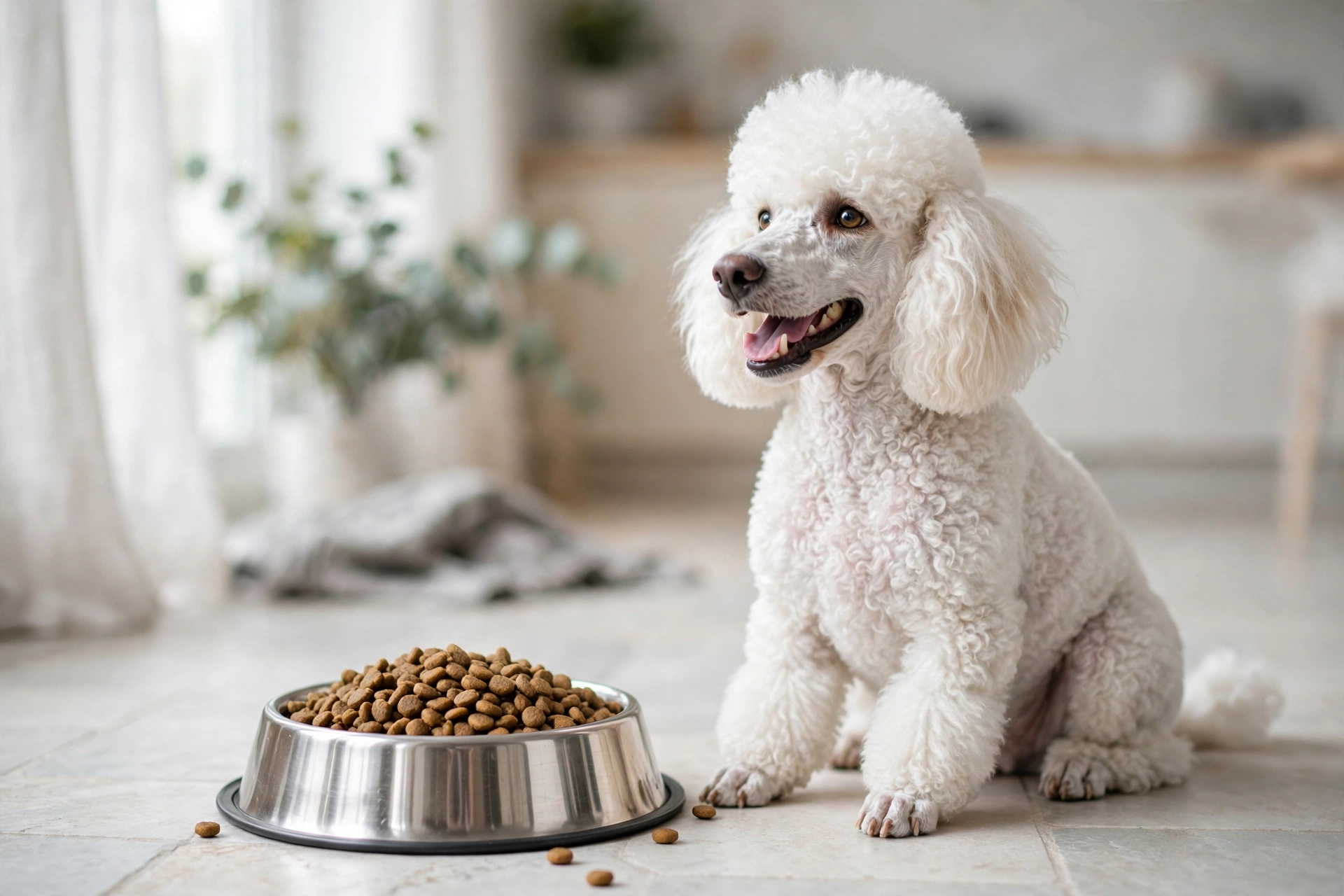
Best Dog Food for Poodles: 6 Top Picks (2026)
Poodles are smart, athletic, and famously opinionated about dinner. If you share your life with a Standard, Miniature, or Toy Poodle, you already know the drill: one week they inhale their kibble, the next they sniff it, walk away, and stare at you like you have personally failed them. Finding the best dog food for poodles is less about chasing a magic brand and more about matching a formula to your dog’s size, life stage, coat needs (and, honestly, their picky palate.
In this guide, I break down what poodles actually need from their food, compare six foods that consistently work well for the breed, and explain how to pick between them. The picks below are based on ingredient analysis, brand reputation, and owner reviews (not lab testing), and they cover every poodle size, from a 6-pound Toy to a 60-pound Standard.
Quick Answer: Most adult poodles do best on a named-protein kibble matched to their size. Royal Canin Poodle Adult is the best starting point for most dogs. Toy and Miniature poodles need small-bite kibble and two meals a day, while Standards need more calories and two or three smaller meals to cut bloat risk. Feed to body condition, not the bag chart.
In This Guide
- Key Takeaways
- Best Dog Food for Poodles: Comparison Table
- What Do Poodles Need From Their Food?
- Royal Canin Poodle Adult Dry Dog Food
- Blue Buffalo Life Protection Formula Adult
- Holistic Select Natural Dry Dog Food
- ORIJEN Six Fish Dry Dog Food
- Eukanuba Adult Small Bites Dry Dog Food
- Hill’s Science Diet Adult 7+ Small Bites
- How to Choose the Best Dog Food for Your Poodle
- What to Avoid
- How Much Should You Feed a Poodle?
- Feeding Poodles of Different Sizes
- Pros and Cons
- The Bottom Line
- Best Kibble for Poodles: Size, Shape and Texture
- Wet Food, Dry Food, or a Mix: What Works for Poodles
Key Takeaways
- Best overall: Royal Canin Poodle Adult, the only pick designed specifically for the breed, with kibble shaped for a poodle’s straight muzzle and fish oil for coat care.
- Poodles are picky: Kibble size, texture, and aroma matter as much as ingredients. Small-bite formulas often win over Toy and Miniature Poodles.
- Coat care starts in the bowl: Omega-3 and omega-6 fatty acids (from fish oil, flaxseed, and borage oil) support the curly coat poodles are famous for.
- Match food to size and age: A Toy Poodle puppy and a senior Standard Poodle have very different calorie and kibble-size needs.
- Switch slowly: Transition over 7 to 10 days to avoid the stomach upset poodles are prone to when food changes suddenly.
Best Dog Food for Poodles: Comparison Table
| Product | Best For | Key Feature |
|---|---|---|
| Royal Canin Poodle Adult Dry Dog Food | Best overall / breed-specific | Kibble shaped for a poodle’s muzzle; EPA & DHA for coat |
| Blue Buffalo Life Protection Formula Adult | Best with grains / everyday value | Real chicken first; LifeSource Bits antioxidants |
| Holistic Select Natural Dry Dog Food | Best for digestion | Probiotics, prebiotics & digestive enzymes |
| ORIJEN Six Fish Dry Dog Food | Best fish-based / chicken-free | 85% animal ingredients from six fish |
| Eukanuba Adult Small Bites Dry Dog Food | Best for Toy & Miniature Poodles | Small-bite kibble; joint-supporting glucosamine |
| Hill’s Science Diet Adult 7+ Small Bites | Best for senior poodles | Balanced minerals; easy-to-chew small kibble |
What Do Poodles Need From Their Food?
Poodles come in three sizes (Standard, over 15 inches tall, typically 40 to 70 pounds; Miniature, 10 to 15 inches, 10 to 15 pounds; and Toy, under 10 inches, 4 to 6 pounds), but their nutritional foundations are the same: a named animal protein first, moderate fat, digestible carbohydrates, and enough omega fatty acids to keep that dense, curly coat in good condition. The differences show up in portion size, calorie density, and kibble size, not in some secret breed-only nutrient.
That said, poodles do have a few breed tendencies worth feeding around. Many are picky eaters, so palatability is a real selection criterion, not a luxury. Their curly, low-shedding coat grows continuously and needs steady protein and fatty acids. Poodles are also prone to dental disease, especially the smaller varieties, so kibble texture and regular dental care matter. And like many breeds, they can develop food sensitivities, with skin itching and soft stools among the most common signs.
Every food below is formulated to meet AAFCO nutritional profiles for its stated life stage (check the label on the bag you buy). If your poodle has a diagnosed condition (kidney disease, pancreatitis, Addison’s disease, or a confirmed food allergy), treat this guide as background, not a prescription, and confirm the choice with your vet.
Royal Canin Poodle Adult Dry Dog Food
Best for: Adult poodles of all three sizes (10 months and older), the breed-specific pick.
Royal Canin is one of the few brands that actually builds a recipe around a single breed, and the Poodle Adult formula shows why that can matter. The kibble is shaped and textured for a poodle’s straight muzzle and jaw, which helps with pickup and chewing, a genuine advantage for a breed that can be fussy about mouthfeel. Fish oil supplies EPA and DHA for skin and coat care, and borage oil adds gamma-linolenic acid (GLA) that helps keep the curly coat shiny and manageable. Precise protein levels support lean muscle, and an antioxidant blend with lutein, zeaxanthin, and vitamins C and E supports healthy aging and eye health.
The formula also includes calcium chelators that help reduce tartar buildup, a nice bonus for a breed prone to dental disease. Owners frequently report that picky poodles who ignored other kibbles actually get excited about this one, which, if you have ever negotiated with a poodle at dinnertime, you know is no small thing.
Keep in mind: This is a premium-priced food, and some owners report digestive upset or loose stool during the transition. The ingredient list is not as meat-heavy as some of the other picks here. You are paying for the breed-specific engineering, not for the highest protein percentage. If your poodle has a known chicken sensitivity, read the label carefully and consider a chicken-free option like the ORIJEN pick below.
Blue Buffalo Life Protection Formula Adult
Best for: Owners who want a widely available, grain-inclusive everyday food.
Blue Buffalo Life Protection Formula leads with real chicken and builds the rest of the recipe on brown rice, oatmeal, and garden vegetables. Its signature feature is LifeSource Bits: small, darker kibbles mixed in that deliver a precise blend of antioxidants, vitamins, and minerals for immune support. Natural prebiotic fiber supports healthy stool quality, and added glucosamine helps with joint health, which matters for active Standard Poodles.
This is a solid, middle-of-the-road choice: good ingredient quality, easy to find in US pet stores and online, and available in multiple flavors, which helps if your poodle is the type who gets bored of one recipe. For a healthy adult poodle with no special needs, it covers the bases without a premium price tag.
Keep in mind: Some dogs develop skin or coat reactions that owners link to the dried yeast in the formula. Blue Buffalo has also appeared on the FDA’s list of brands associated with DCM (dilated cardiomyopathy) reports. The link is not proven, but it is worth knowing if you are weighing grain-inclusive versus grain-free options. Calorie density can run higher than the label suggests, so measure portions rather than free-feeding.
Holistic Select Natural Dry Dog Food
Best for: Poodles with unsettled stomachs or inconsistent digestion.
Holistic Select’s Adult Health recipe is built around digestive support: prebiotics, probiotics, and digestive enzymes work together to support a healthier gut, rather than just masking symptoms. Salmon oil and flaxseed deliver omega-3 fatty acids for coat condition, and the recipe includes antioxidants, glucosamine, and taurine for whole-body health. Potatoes provide a gluten-free carbohydrate source, and there are no artificial flavors or preservatives.
If your poodle has soft stools, occasional gas, or a generally touchy stomach but no diagnosed condition, this is the pick I would try first. The digestive-enzyme angle is genuinely different from most kibbles, which tend to rely on fiber alone.
Keep in mind: Some picky eaters refuse the taste, which is the eternal poodle problem: the best digestive formula in the world does nothing if your dog will not eat it. It also costs more than mainstream grocery-store brands, and it is made in a facility that also processes grains, which matters only if your dog has a confirmed grain allergy.
ORIJEN Six Fish Dry Dog Food
Best for: Poodles with chicken or poultry sensitivities, and owners who want a fish-forward, meat-dense recipe.
ORIJEN Six Fish is built on 85% animal ingredients: fresh and raw mackerel, herring, and four other fish, plus whole-prey organ ingredients that deliver dense vitamins and minerals. It is grain-free and chicken-free, which makes it one of the strongest options for poodles who react to poultry. The fish oils naturally support skin and coat health, and the protein density supports the lean muscle of an active breed.
This is the richest, most nutrient-dense food on this list. Poodles who do well on fish-based diets often show visibly improved coat condition within a few weeks, based on owner reviews.
Keep in mind: The price premium is significant. This is the most expensive pick here per pound. The legume ingredients raise the same FDA DCM-investigation concerns that apply to many grain-free formulas, so this is not a pick to choose casually for a healthy dog; it earns its place when your poodle needs a chicken-free or fish-based diet. Some dogs also experience digestive upset during the transition, so go especially slowly with this one.
Eukanuba Adult Small Bites Dry Dog Food
Best for: Toy and Miniature Poodles, and any poodle who struggles with standard-size kibble.
Kibble size is an underrated factor with small poodles. Smaller muzzles genuinely struggle with oversized pieces, and some picky eating is really a chewing-comfort problem in disguise. Eukanuba Adult Small Bites solves that with small-bite kibble, plus animal protein, glucosamine and chondroitin for joint support, and DHA with vitamin E for brain function. The 3D DentaDefense system helps reduce tartar buildup with regular feeding, and the formula meets AAFCO complete-and-balanced standards for adult maintenance.
If your Toy or Miniature Poodle drops kibble, chews reluctantly, or walks away from a bowl of large pieces, try a small-bite formula before assuming the flavor is the problem.
Keep in mind: Carbohydrate content runs higher here (around 39%), and some dogs experience digestive upset after switching. It costs more than comparable small-bite formulas. Check the protein source on the label if your poodle has a chicken sensitivity.
Hill’s Science Diet Adult 7+ Small Bites
Best for: Senior poodles (7 years and older), especially smaller ones.
Poodles live long lives (12 to 15 years is common), so the senior years are a long chapter. Hill’s Science Diet Adult 7+ Small Bites is designed for that stage: high-quality chicken protein to maintain lean muscle, balanced minerals to support heart, kidney, and bladder health, and omega-6 fatty acids with vitamin E for coat and skin. The small kibble size is easy for older dogs to chew, including seniors with missing teeth or dental work. There are no artificial colors, flavors, preservatives, or chicken by-product meal.
Hill’s is the number-one veterinarian-recommended dog food brand in the US, which reflects its track record in clinical settings. For a senior poodle whose digestion has slowed and whose nutrient absorption is less efficient, the easy-to-digest formulation helps them actually get the nutrition they need.
Keep in mind: The grain-based recipe may add extra calories for less active seniors, so watch portions and body condition. It is priced above many other senior formulas. If your senior poodle needs a prescription diet for kidney disease or another diagnosed condition, a retail senior food is not a substitute, so ask your vet about a therapeutic formula.
How to Choose the Best Dog Food for Your Poodle
Match the food to size and life stage
Toy, Miniature, and Standard Poodles share nutritional needs but not calorie needs. A Toy Poodle may need only 200 to 400 calories a day; an active Standard can need 1,200 or more. Puppies need puppy-formulated food with DHA for brain development and controlled calcium for bone growth. An adult formula is not enough for a growing puppy. Seniors need fewer calories and more joint support. If you have a poodle puppy, see our guide to the best puppy food for small breeds for the early-month details. For older poodles, see our best senior poodle food guide.
Put a named animal protein first
The first ingredient should be a named meat or fish (“chicken,” “salmon,” “bison meal”), not “meat by-products” or a vague “animal meal.” Meat meals (like chicken meal) are fine and protein-dense; they are simply rendered, concentrated meat. What you want to avoid is an ingredient list that starts with corn, wheat, or soy.
Look for coat-supporting fats
Omega-3 and omega-6 fatty acids from fish oil, salmon oil, flaxseed, and borage oil support the skin barrier and the curly coat. If your poodle’s coat looks dull or feels dry, fatty-acid content is one of the first label items to check, along with a vet visit to rule out thyroid or skin issues.
Check the AAFCO statement
Every complete dog food should carry an AAFCO nutritional adequacy statement on the label, such as “formulated to meet the nutritional levels established by the AAFCO Dog Food Nutrient Profiles for adult maintenance.” This is your baseline quality check: it confirms the food is complete and balanced for the stated life stage. Foods labeled “for intermittent or supplemental feeding only” are treats or toppers, not meals.
Weigh the grain-free question carefully
Grain-free foods are not automatically better. The FDA has investigated a potential link between grain-free, legume-heavy diets and dilated cardiomyopathy (DCM), a serious heart condition. The link is not proven, but for a healthy poodle with no grain allergy, a grain-inclusive formula is the safer default. Choose grain-free only when your dog has a specific reason for it, such as a confirmed grain sensitivity, and discuss it with your vet.
Budget for the real cost
Price per bag is misleading. Compare cost per day: a premium food with higher calorie density and better digestibility often costs about the same per day as a cheap food you have to feed more of. Fresh, raw, and air-dried formats (like The Farmer’s Dog or Sundays for Dogs) can run several dollars per meal, worth it for some owners, but not necessary for a healthy poodle.
What to Avoid
- Vague ingredients: “Meat by-products,” “animal fat,” or “poultry meal” without naming the animal. You cannot tell what your dog is eating.
- Artificial colors, flavors, and preservatives: Dogs do not care what color their kibble is. BHA, BHT, and ethoxyquin are preservatives worth avoiding when better options exist.
- Foods without an AAFCO statement: If it is not complete and balanced for your dog’s life stage, it is not a meal.
- Overfeeding: Poodles gain weight easily, especially after spaying/neutering and in the senior years. Measure every meal, limit treats to about 10% of daily calories, and check body condition monthly: you should be able to feel (but not see) the ribs.
- Sudden food switches: Changing food overnight is the most common cause of poodle diarrhea. Transition over 7 to 10 days, mixing increasing amounts of the new food with the old.
- Human foods that are toxic to dogs: Chocolate, xylitol (birch sugar), grapes, raisins, onions, garlic, and macadamia nuts are all dangerous. Keep them out of reach.
How Much Should You Feed a Poodle?
Start with the feeding guide on the bag, then adjust for your dog’s actual body condition. Bag guides are averages, so an intact, active Standard Poodle may need more, while a spayed, apartment-dwelling Toy may need less. Most adult poodles do well on two meals a day. Puppies need three to four smaller meals. Weigh your poodle monthly, and if the weight is creeping up, cut the portion by 10% before cutting anything else. For a full walkthrough of switching foods without stomach trouble, see how to change dog food safely.
Feeding Poodles of Different Sizes
Toy Poodles (4 to 6 pounds) are prone to hypoglycemia as puppies, so they need frequent small meals, three to four a day for puppies, two for adults. Small-bite kibble is almost mandatory. Watch for dental crowding, which is common in tiny mouths.
Miniature Poodles (10 to 15 pounds) sit in the middle: small-bite or regular small-breed kibble both work, and two meals a day suit most adults. They are often the most food-motivated of the three sizes, so portion control still matters.
Standard Poodles (40 to 70 pounds) need the most calories and are the most at risk for bloat (gastric torsion). Feed two or three smaller meals rather than one large one, avoid vigorous exercise right after eating, and consider a slow-feeder bowl if your Standard inhales food. A raised bowl is sometimes suggested for bloat prevention, but the evidence is mixed, so ask your vet.
Pros and Cons
Six picks cover every poodle size, but no roundup is perfect for every dog. Here is the honest balance.
Pros
- Breed-specific kibble shape helps picky poodles pick up and chew food comfortably.
- Six picks cover every size, from a 6-pound Toy to a 60-pound Standard.
- Clear calorie guidance by size, with a rib test to judge portions by body condition.
- Strong coat and dental advice built into the picks, not added as an afterthought.
Cons
- No wet food pick in the six, so owners who want wet or mixed feeding get no brand to start with.
- Two of the six picks are chicken-based, which rules them out for poodles with chicken sensitivities.
- ORIJEN Six Fish is the priciest pick per pound and carries the FDA grain-free DCM warning.
- Premium prices across the list add up fast for a Standard poodle eating 1,200 calories a day.
The Bottom Line
For most adult poodles, Royal Canin Poodle Adult is the best starting point: it is the only formula engineered for the breed, the kibble shape genuinely helps picky eaters, and the coat-supporting fats show up in the mirror. If your poodle has a sensitive stomach, try Holistic Select; if they cannot eat chicken, ORIJEN Six Fish is the strongest chicken-free option; and if your poodle is a senior, Hill’s Science Diet Adult 7+ Small Bites covers the aging years well. Toy and Miniature Poodles who struggle with standard kibble usually do better on a small-bite formula like Eukanuba Adult Small Bites, and for a reliable everyday grain-inclusive food, Blue Buffalo Life Protection Formula is hard to beat on availability and value.
Whichever you choose, transition slowly, measure portions, and let your poodle’s coat, energy, and stool quality tell you whether the food is working. If you are feeding a senior, pair this guide with our best senior dog food roundup, and if your poodle is small, our best dog food for small breeds guide covers the size-specific details.
This guide is for information only. Check with your vet for your dog’s specific needs.
Best Kibble for Poodles: Size, Shape and Texture
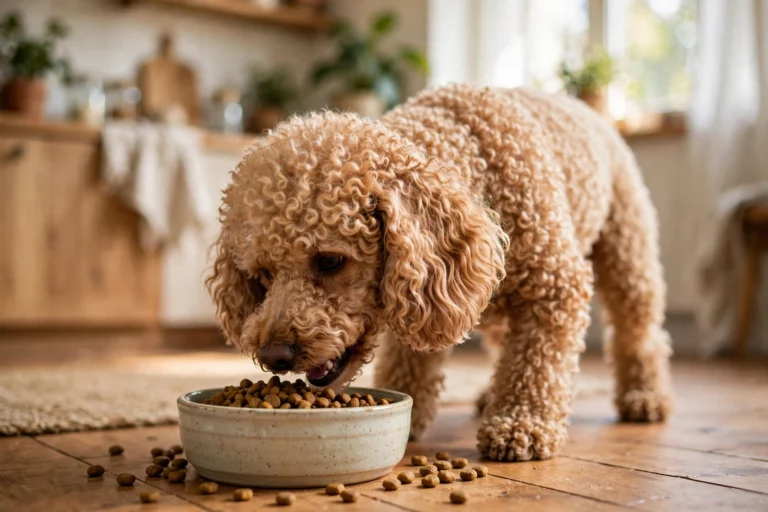
For a poodle, the kibble itself is half the decision. Toy and Miniature poodles have small, narrow mouths, so a small-bite kibble they can pick up and chew comfortably beats a standard piece they drop or swallow whole, so your poodle walks away from a full bowl, try a smaller kibble before blaming the flavour. Standard poodles can handle regular kibble, but a larger piece that forces real chewing also helps with dental health, which matters for a breed prone to tartar.
Texture matters too. Some picky poodles refuse hard, dry pieces but will eat the same recipe softened with a spoonful of warm water, so a short soak is worth trying before switching brands. Aroma counts as well: fish-based recipes often smell stronger and win over fussy eaters, while a stale bag loses its smell and its appeal, so buy smaller bags and seal them well. Whatever kibble you choose, it should carry an AAFCO complete-and-balanced statement for your dog’s life stage, list a named animal protein first, and suit your poodle’s size: small-bite for Toy and Miniature, regular or large-breed size for Standard.
Wet Food, Dry Food, or a Mix: What Works for Poodles
Kibble wins on most days. It is easy to portion, cheaper per day, and the crunch helps scrub plaque off teeth, which matters for a breed prone to tartar and dental crowding. Wet food wins in a different way. Its smell and soft texture tempt picky poodles that walk away from a full bowl, and its water content helps dogs that do not drink enough, which covers Toy puppies and seniors with sore mouths or missing teeth. The best answer for many poodles is a mix of both. Start with a spoonful of wet food stirred through the dry kibble, or split the day so one meal is wet and the other is dry. Wet food still counts toward daily calories, so cut back the dry food to match, or the mix will quietly push your poodle over its daily total. Check the calories on both packs and weigh the portions for the first week until the split feels routine. Keep the dental trade in mind too. A poodle that eats mostly wet food loses the scrubbing help of kibble, so brush teeth often and ask your vet about dental chews. Opened wet food keeps in the fridge for two to three days, so small cans or pouches suit Toy and Miniature poodles better than big cans that go stale.
What is the best kibble for a poodle?
A small-bite kibble that fits your poodle’s muzzle. For Toy and Miniature poodles, that usually means a small-breed formula such as Eukanuba Adult Small Bites. For Standards, a regular kibble that forces a proper chew is better than a piece they swallow whole.
Should I feed my poodle wet food instead of kibble?
Wet food is fine as part of the diet, especially for picky eaters or dogs that need extra water. It is the least forgiving for teeth, though, since it gives no crunch to help clean them. A mix of wet and dry food, with daily tooth brushing, normally works best.
What is the best dog food for poodles?
Royal Canin Poodle Adult is the best overall pick because it is the only formula designed specifically for the breed, with kibble shaped for a poodle’s straight muzzle and fish oil for coat care. For sensitive stomachs, Holistic Select is a strong alternative, and for chicken sensitivities, ORIJEN Six Fish is the best chicken-free option.
What do poodles eat?
Poodles eat the same complete, balanced dog food as other breeds: a named animal protein first, moderate fat, digestible carbohydrates, and omega fatty acids for coat health. Match the formula to their size (Toy, Miniature, or Standard) and life stage (puppy, adult, or senior), and follow the AAFCO statement on the label.
Are poodles picky eaters?
Yes, poodles are famously picky. Kibble size, texture, and aroma matter as much as ingredients, since many poodles refuse food because the pieces are too large or the flavor is boring. Trying a small-bite formula, warming the food slightly, or switching proteins within a trusted brand often helps.
Is grain-free food good for poodles?
Not necessarily. The FDA has investigated a potential link between grain-free, legume-heavy diets and dilated cardiomyopathy (DCM), a serious heart condition. For a healthy poodle with no grain allergy, a grain-inclusive formula is the safer default. Choose grain-free only for a specific reason, such as a confirmed grain sensitivity, and discuss it with your vet.
How much food should a poodle eat per day?
It depends on size and activity: a Toy Poodle may need only 200 to 400 calories a day, a Miniature around 400 to 700, and an active Standard 1,200 or more. Start with the feeding guide on the bag, split food into two meals a day for adults, and adjust based on body condition: you should be able to feel (but not see) the ribs.
What food is best for a Toy Poodle?
A small-bite formula such as Eukanuba Adult Small Bites suits Toy Poodles because the kibble fits their tiny mouths. Toy Poodle puppies also need frequent small meals (three to four a day) because they are prone to low blood sugar. Always measure portions, since a few extra kibbles are a big percentage of a Toy’s daily calories.
Can poodles eat chicken?
Most poodles can eat chicken without any problem. It is a common, high-quality protein. However, chicken is also one of the more common food allergens in dogs. If your poodle has persistent itching, ear infections, or soft stools that improve when chicken is removed, try a chicken-free formula such as ORIJEN Six Fish and talk to your vet.
How often should I feed my poodle?
Most adult poodles do well on two meals a day. Puppies need three to four smaller meals, and Standard Poodles prone to bloat do better on two or three smaller meals rather than one large one. Avoid vigorous exercise right after eating, and keep fresh water available at all times.
Can I mix wet and dry food for my poodle?
Yes. A spoonful of wet food stirred through kibble often wins over a picky poodle, and a half wet and half dry split works too. Wet food still counts toward daily calories, so cut back the dry food to match. Keep brushing teeth often, since wet food gives no scrubbing help, and use up opened cans within two to three days.
What treats are safe for poodles?
Small, low-calorie training treats work best, and single-ingredient treats such as freeze-dried meat or carrot pieces suit most poodles. Keep all treats under 10 percent of daily calories, and cut back meals on heavy training days. Never give chocolate, xylitol, grapes, raisins, onions, garlic, or macadamia nuts.
4 Comments