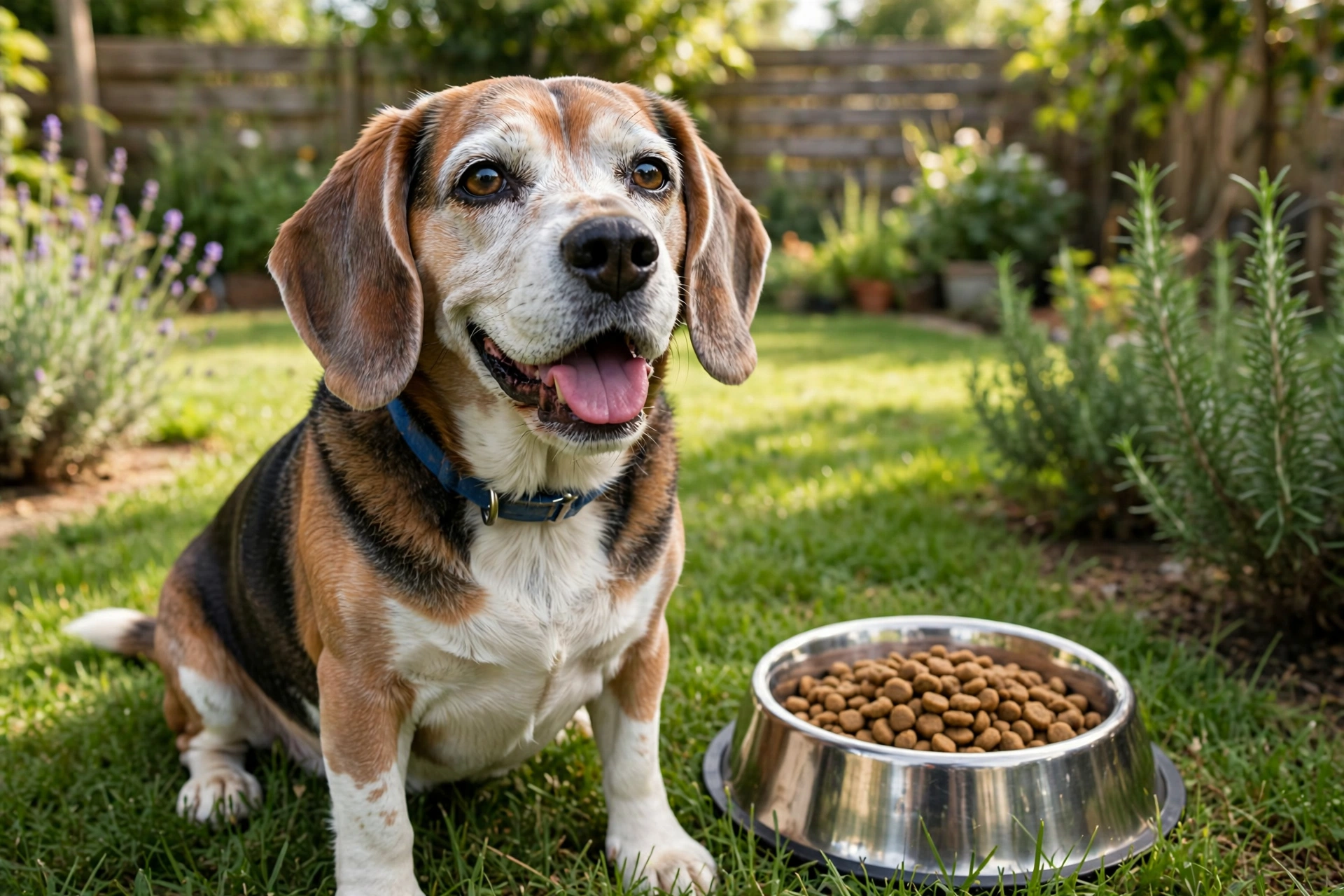
Best Senior Beagle Food: 6 Top Picks for Aging Beagles (2026)
Key Takeaways
- Senior Beagles need fewer calories but still need high-quality protein to protect aging muscle — never switch to a low-protein food just because your dog is older.
- Look for glucosamine and chondroitin, omega-3 fatty acids, added fiber, and an AAFCO statement for adult maintenance or all life stages.
- Beagles gain weight easily, so measured meals, a slow-feeder bowl, and treats kept under 10% of daily calories matter as much as the food itself.
- Most Beagles become seniors around age 8 to 10; the switch to a senior formula should be gradual, over 7 to 10 days.
- Our top pick for most senior Beagles is Hill’s Science Diet Adult 7+, with Purina Pro Plan Bright Mind Adult 7+ the best choice if mental sharpness is your main concern.
A senior Beagle is a wonderful companion. The frantic puppy energy settles into a steady, affectionate rhythm, the nose still works overtime, and the appetite — famously — never really goes away. That appetite is exactly why feeding an aging Beagle well takes more thought than simply buying a bag labeled “senior.” The best senior Beagle food has to do several jobs at once: protect muscle that is quietly shrinking, cushion joints that have carried a scent-driven dog for a decade, keep weight under control in a breed genetically prone to obesity, and stay gentle on a slower digestive system. In this guide, we compare six real, widely available senior formulas sold in the US, explain what to look for on the label, and walk through portions, transitions, and the warning signs that mean a vet visit is due. The picks below are based on ingredient analysis, brand reputation, and owner reviews — not on feeding trials we ran ourselves.
Our Top Picks at a Glance
| Product | Best For | Key Feature |
|---|---|---|
| Hill’s Science Diet Adult 7+ | Most senior Beagles | Balanced senior nutrition with easy-to-digest ingredients, glucosamine, and antioxidants |
| Purina Pro Plan Bright Mind Adult 7+ | Brain health and alertness | Enhanced botanical oils (MCTs) plus live probiotics and 30% protein |
| Blue Buffalo Life Protection Formula Senior | Everyday value and immune support | Real chicken first plus LifeSource Bits antioxidant blend |
| Open Farm Senior Grain-Free Chicken & Turkey | Joint support and transparent sourcing | 1,300 mg/kg glucosamine and 1,550 mg/kg chondroitin with green lipped mussel |
| Nutro Ultra Senior | Premium natural ingredients | Trio of animal proteins plus 15 superfoods, non-GMO |
| Purina Pro Plan Sensitive Skin & Stomach Senior 7+ Salmon & Rice | Sensitive stomachs and skin | Salmon first, oatmeal and rice, guaranteed live probiotics |
When Does a Beagle Become a Senior?
Beagles are medium-sized dogs, and medium breeds generally reach senior status around 8 to 10 years old, with a typical life expectancy of 10 to 13 years. That does not mean your dog wakes up old on his eighth birthday. Aging is gradual: the first signs are often a graying muzzle, slightly longer naps, a little stiffness after rest, and a metabolism that no longer forgives the extra biscuit. Some Beagles stay spry and lean well past 10; others slow down earlier, especially if they carry extra weight.
There is no rule that says you must switch to a senior formula on a specific birthday. The better trigger is a conversation with your vet plus what you can see: is your Beagle gaining weight on the same portions, getting stiff after walks, or leaving food in the bowl? If so, a senior formula is worth considering. Senior foods are not a separate AAFCO life stage — most carry an “adult maintenance” or “all life stages” statement — but they are typically formulated with fewer calories per cup, moderate fat, added joint-support ingredients, more fiber, and antioxidants.
One common mistake is switching too early and cutting protein. Older dogs actually need plenty of high-quality protein to slow muscle loss. The goal is controlled calories, not a low-protein diet. Unless your vet advises otherwise for a specific health condition, look for a senior food with named meat — chicken, turkey, salmon, or lamb — as the first ingredient.
Hill’s Science Diet Adult 7+
Hill’s Science Diet Adult 7+ is the most widely recommended over-the-counter senior kibble, and for good reason: it takes a balanced, middle-of-the-road approach that suits most aging Beagles. Real chicken leads the ingredient list, the recipe uses easy-to-digest ingredients, and it includes glucosamine and chondroitin for joint support along with an antioxidant blend built around vitamins C and E for immune health. Balanced minerals support heart and kidney health, which matters more as dogs age.
What makes it a strong fit for Beagles specifically is calorie control without austerity. Beagles are notorious for acting hungry, and this formula is portion-friendly and widely available in US pet stores and online. Owners consistently report steady weight, firm stools, and good coat condition. The main downside is that it is not the most exciting food in the world — picky Beagles occasionally prefer a richer formula — and it does contain grains, so it is not the pick for a dog with a confirmed grain sensitivity. For most senior Beagles, though, this is the safest starting point.
Purina Pro Plan Bright Mind Adult 7+
If your senior Beagle is starting to seem a little confused — staring at walls, pacing at night, forgetting house-training, or getting stuck in corners — cognitive support deserves a place in the bowl. Purina Pro Plan Bright Mind Adult 7+ is built around enhanced botanical oils, a source of medium-chain triglycerides (MCTs) that research has linked to improved alertness and mental sharpness in older dogs. It also carries a notably high protein level for a senior food, around 30%, plus guaranteed live probiotics for digestive and immune support.
That protein level is a genuine advantage for Beagles losing muscle, and the probiotics help dogs whose digestion has become less forgiving. The chicken-and-rice base is familiar and widely tolerated. The trade-off is price — it sits in the mid-to-premium range — and the richer formula means portions must be measured carefully in a breed that gains weight easily. But if your aging Beagle’s mind seems to be aging faster than his body, Bright Mind is the most targeted mainstream option available.
Blue Buffalo Life Protection Formula Senior
Blue Buffalo’s Life Protection Formula Senior is the mainstream workhorse of this list. Deboned chicken is the first ingredient, backed by chicken meal for a second concentrated protein source. Brown rice, barley, and oatmeal supply digestible carbohydrates without leaning on corn or wheat fillers. The signature LifeSource Bits — a blend of antioxidants, vitamins, and minerals — support immune health, and added glucosamine helps cushion joints. Omega-3 and omega-6 fatty acids support skin and coat, which can dull with age.
For Beagle owners, the appeal is practical: it is easy to find, reasonably priced, and well tolerated by most dogs. It is a grain-inclusive formula, which suits most Beagles fine — grains are only a problem for dogs with a specific sensitivity. The watch-outs are the same ones that apply to any popular kibble: some owners report bag-to-bag inconsistency, and a small number of picky dogs turn their noses up at it.
Open Farm Senior Grain-Free Chicken & Turkey
Open Farm’s senior formula is the premium pick for owners who want joint support and ingredient transparency in the same bag. It leads with humanely raised turkey and chicken and delivers a clearly stated joint package: 1,300 mg/kg glucosamine and 1,550 mg/kg chondroitin, plus New Zealand green lipped mussel and salmon oil for omega-3s and DHA. Pumpkin and coconut oil support digestion, and the grain-free carbohydrate base of sweet potato and pumpkin suits dogs that do better without grains. Every ingredient is traceable to its source via the lot code on the bag.
For a senior Beagle with visible stiffness — slow to rise, reluctant on stairs, less eager on walks — this is the most joint-focused food on this list. The caveats matter, though. It is calorie-dense (around 3,600 kcal/kg), so portions need close monitoring in a weight-prone breed. It is grain-free, which is a good fit only if your dog does well without grains. It also contains seafood ingredients (ocean whitefish and herring meal), so skip it if your Beagle has a fish sensitivity. And it is premium-priced.
Nutro Ultra Senior
Nutro Ultra Senior takes a “trio of proteins” approach: chicken, lamb, and salmon, delivering a broader amino acid profile than single-protein kibbles. It is built around 15 superfoods — including spinach, kale, blueberries, and chia — plus omega-3 and omega-6 fatty acids for skin and coat. The formula is non-GMO, free from corn, wheat, and soy, and free from chicken by-product meal. For owners who care about ingredient quality and want a senior food that reads like a whole-foods recipe, this is the most appealing option on the list.
The multi-protein design is a double-edged sword for Beagles. Dogs with no known sensitivities usually do very well on it, and the variety can help picky eaters stay interested. But if your Beagle has a suspected food sensitivity, a multi-protein food makes it harder to identify the trigger — a limited-ingredient or single-protein diet is a better diagnostic starting point.
Purina Pro Plan Sensitive Skin & Stomach Senior 7+ Salmon & Rice
Senior Beagles with soft stools, gas, itchy skin, or a history of digestive upset need a formula that is gentle first and senior-focused second. This Pro Plan recipe leads with salmon rather than chicken, uses oatmeal and rice as easy-to-digest carbohydrates, and includes guaranteed live probiotics. At around 29% protein, it still supports aging muscle, and the fish-based omega fatty acids support skin and coat — useful because skin issues and digestive issues often travel together in this breed.
Salmon-first also makes it a natural choice for Beagles with a suspected chicken sensitivity, one of the more common food sensitivities in dogs. The main limitations are practical: fish-based foods have a stronger smell that some owners dislike, and the price sits above basic senior kibbles.
What to Look for in a Senior Beagle Food
Shopping for senior food gets easier once you know which label details actually matter.
High-quality protein, first
The first ingredient should be a named animal protein — chicken, turkey, salmon, lamb, or beef — not “meat meal,” “animal by-products,” or a plant protein. Protein protects the muscle your Beagle is slowly losing. A senior food in the 23–30% protein range (dry matter) is a good target for most healthy older Beagles. Dogs with diagnosed kidney disease are the exception: they may need a vet-guided protein level, which is a reason to check with your vet before switching, not a reason to buy a low-protein food on your own.
Joint support: glucosamine and chondroitin
Beagles are prone to joint stiffness and arthritis as they age, and extra weight makes it worse. Look for foods that list glucosamine and chondroitin — ideally with stated amounts, like Open Farm does — plus omega-3 sources such as fish oil, salmon oil, or green lipped mussel. These ingredients do not reverse arthritis, but they support cartilage and help keep an aging dog comfortable and mobile.
Controlled calories and fat
An older Beagle burns fewer calories than a younger one, but his appetite rarely gets the memo. Senior formulas are typically a little lower in calories and fat than adult foods. Check the calorie statement (kcal/cup) on the bag, and weigh the food with a measuring cup or, better, a kitchen scale. A few extra kibbles per meal, every meal, add up to real weight gain over months. If your Beagle is already overweight, ask your vet about a weight-management formula or a calorie target rather than simply feeding less of a rich food, which can leave him short on nutrients.
Fiber for digestion
Constipation becomes more common in older dogs, and fiber helps. Beet pulp, pumpkin, chicory root, and oatmeal are all useful fiber sources, and several picks above include them. Fiber also helps a food-motivated Beagle feel full on fewer calories — a real advantage in this breed. If your senior Beagle has chronic soft stools, a food with added probiotics (live cultures listed on the label) can help stabilize digestion, alongside a slow, careful transition.
Antioxidants and brain support
Vitamins C and E, beta-carotene, and the antioxidant blends in foods like Hill’s and Blue Buffalo support immune health, which weakens with age. If cognitive decline is a concern, the MCT approach in Bright Mind is the most food-based option. Mental enrichment matters too: food puzzles, scent games, and short training sessions keep an aging Beagle’s brain engaged.
AAFCO statement
Every food you buy should carry an AAFCO nutritional adequacy statement — something like “formulated to meet the nutritional levels established by the AAFCO Dog Food Nutrient Profiles for maintenance of adult dogs” or “for all life stages.” This is the baseline proof that the food is complete and balanced, not just a bag of tasty ingredients. If a food lacks an AAFCO statement, skip it, however attractive the marketing looks.
How Much Should a Senior Beagle Eat?
Most senior Beagles do well on two measured meals a day, roughly 1 to 1.5 cups of kibble total per day, split into two servings about 12 hours apart. That is a starting range, not a prescription: a 20-pound Beagle who still hikes on weekends needs more than a 30-pound Beagle who mostly naps. The feeding chart on the bag is a guide, and it tends to run generous — treat it as a ceiling, then adjust based on your dog’s weight and body condition over two to four weeks.
Treats deserve a hard rule. Beagles are professional beggars, and those soulful eyes are a genuine obstacle. Keep treats under 10% of daily calories, count them in the day’s total, and prefer low-calorie options: small pieces of carrot, green beans, apple slices (no seeds), or blueberries. For training rewards, use a few kibbles taken from the day’s measured meals rather than extra treats. A slow-feeder bowl is worth the small investment for fast eaters — it slows gulping, improves digestion, and turns dinner into a few minutes of enrichment instead of 30 seconds of inhaling.
Switching to a Senior Food: The 7–10 Day Transition
Never switch a senior Beagle’s food overnight. Older digestive systems are less forgiving, and an abrupt change is the fastest route to diarrhea, gas, and a miserable week. Use a gradual transition: days 1–2, mix 25% new food with 75% old; days 3–4, go 50/50; days 5–6, 75% new and 25% old; from day 7 onward, 100% new. If stools soften at any step, hold at that ratio for an extra day or two before moving on.
Keep fresh water available at all times, and consider adding a little water or low-sodium broth to the kibble for seniors with dental wear or missing teeth — softened kibble is easier to chew and adds hydration. If your Beagle refuses the new food entirely for more than a day, or develops vomiting, bloody stool, or persistent diarrhea, stop the transition and check with your vet. Food refusal in a senior dog is always worth taking seriously, especially if it comes with lethargy, weight loss, or increased thirst.
What to Avoid
- Generic “meat” ingredients: “meat meal,” “animal by-products,” or “animal fat” hide the protein source and usually signal lower-quality food.
- Artificial colors, flavors, and preservatives: your Beagle does not care what color his kibble is; ingredients like BHA, BHT, and ethoxyquin add nothing he needs.
- Excess fillers: corn, wheat, and soy as headline ingredients crowd out the protein and fiber an aging dog actually needs.
- Low-protein senior foods: unless your vet has diagnosed a condition that requires it, do not buy a senior food that cuts protein to make room for fillers.
- Grain-free by default: grain-free is a tool for dogs with a genuine grain sensitivity, not a health upgrade. The FDA has investigated a possible link between grain-free diets and dilated cardiomyopathy (DCM); if you feed grain-free, do it for a reason and mention it to your vet.
- Free-feeding: leaving food out all day is the fastest way to an overweight Beagle. Measured meals, twice a day, every day.
- Human food handouts: cooked bones, onions, garlic, grapes, raisins, chocolate, and xylitol (birch sugar) are dangerous for dogs. Table scraps also wreck portion control.
Signs Your Senior Beagle Needs a Vet, Not a New Food
Food is powerful, but it is not medicine. Book a vet visit promptly if you notice sudden weight loss or gain, a sharp drop in appetite lasting more than a day, vomiting or diarrhea that does not resolve, increased thirst or urination, difficulty rising or climbing stairs, or new confusion and night waking. Senior Beagles benefit from checkups at least twice a year, with bloodwork, dental checks, and weight tracking. This guide is for information only — check with your vet for your dog’s specific needs.
Related Guides
If you are still mapping out your Beagle’s feeding routine, start with our Best Dog Food for Beagles roundup and the Beagle Feeding Guide, which covers portions and schedules for every life stage. For Beagles with digestive trouble, see Best Food for Beagle With Sensitive Stomach, and for the general senior picture across breeds, our Best Senior Dog Food guide compares the top senior formulas without the breed focus.
The Bottom Line
For most senior Beagles, Hill’s Science Diet Adult 7+ is the best starting point: balanced protein, joint support, easy digestion, and sensible calories in a food you can actually find. If your Beagle’s mind is aging faster than his body, Purina Pro Plan Bright Mind Adult 7+ adds targeted cognitive support. If joints are the main issue, Open Farm Senior Grain-Free brings the strongest joint package. And if digestion is the limiting factor, the salmon-based Pro Plan Sensitive Skin & Stomach Senior is the gentlest senior formula on this list. Whichever you choose, measure every meal, transition slowly, weigh your Beagle monthly, and let your vet weigh in on the plan. A gray muzzle is not a problem to fix — it is a good dog who has earned a bowl that takes care of him back.
When should I switch my Beagle to senior food?
Most Beagles become seniors around 8 to 10 years old. Rather than switching on a birthday, watch for weight gain on the same portions, stiffness after rest, or a slowing metabolism, and confirm the timing with your vet.
How much should a senior Beagle eat per day?
Most senior Beagles do well on roughly 1 to 1.5 cups of kibble per day, split into two measured meals about 12 hours apart. Adjust based on weight and body condition, and keep treats under 10% of daily calories.
What is the best senior food for a Beagle with joint problems?
Open Farm Senior Grain-Free Chicken & Turkey has the strongest stated joint package on this list, with 1,300 mg/kg glucosamine and 1,550 mg/kg chondroitin plus green lipped mussel. Keep portions tight, since it is calorie-dense.
Is grain-free food better for senior Beagles?
Not by default. Grain-free is a tool for dogs with a genuine grain sensitivity, not a health upgrade. Most senior Beagles do fine on grain-inclusive food, and you should mention a grain-free diet to your vet.
Can senior Beagles eat regular adult dog food?
Yes, a complete adult food will not harm a healthy senior, but a senior formula fits aging needs better: fewer calories, more fiber, joint support, and antioxidants. If your Beagle is gaining weight or stiffening, a senior formula is the better fit.
How do I help my senior Beagle lose weight?
Feed measured meals twice a day, cut table scraps, keep treats under 10% of calories, and add gentle daily walks. Ask your vet for a calorie target and weigh your Beagle monthly so you can adjust by about 10% at a time.
What should I do if my senior Beagle refuses food?
A missed meal now and then is not an emergency, but refusal lasting more than a day — especially with lethargy, weight loss, vomiting, or increased thirst — needs a prompt vet visit. Do not wait it out in a senior dog.
Do senior Beagles need supplements?
A good senior food already includes joint and antioxidant support, so most dogs do not need extras. If you are considering fish oil, glucosamine, or other supplements, check with your vet first for the right product and dose.