
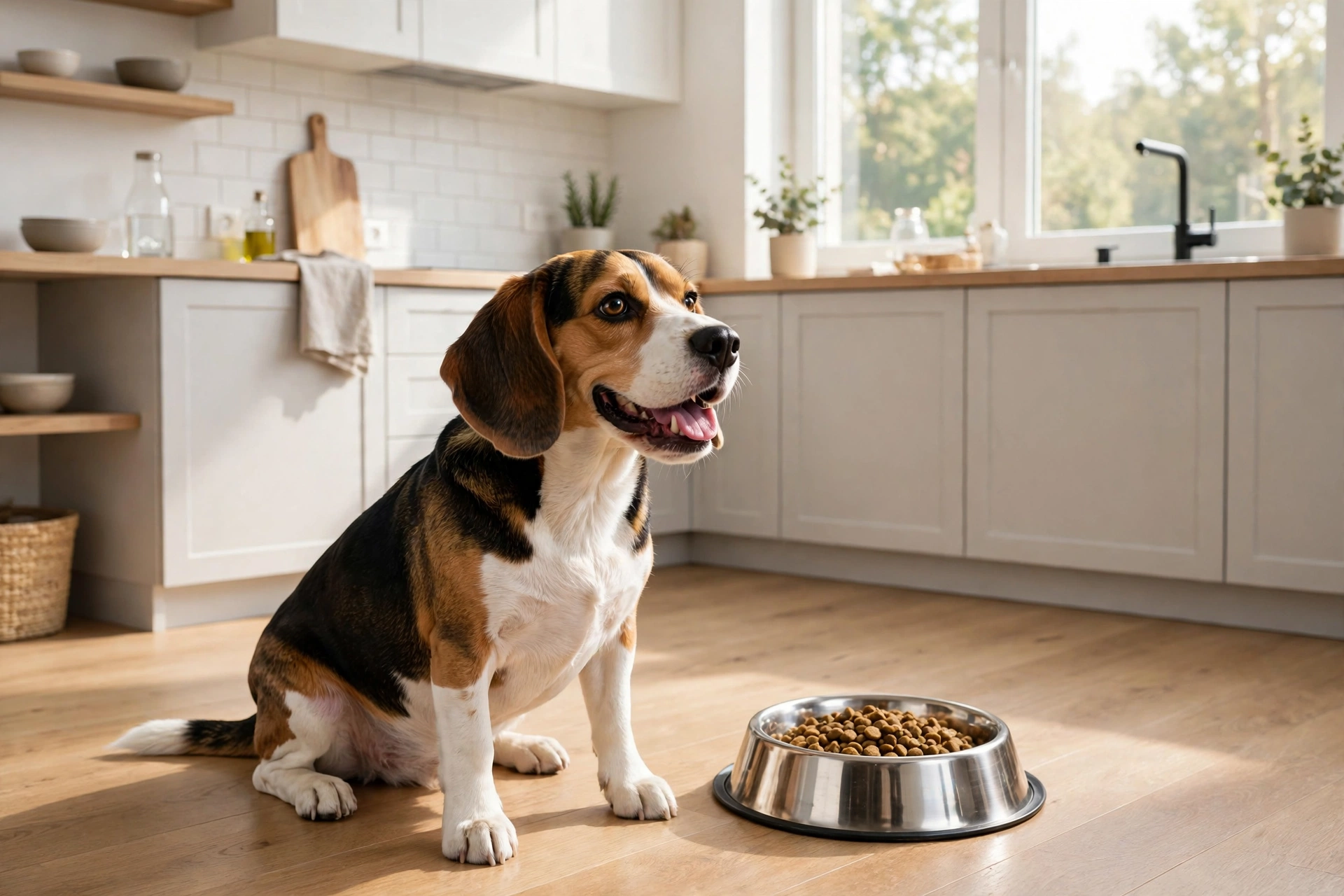
Beagle Feeding Guide: How Much, How Often & What to Feed (2026)
Beagles are wonderful dogs: merry, curious, and endlessly charming. They are also, famously, obsessed with food. If you have ever watched your Beagle inhale dinner in ninety seconds and then look up at you as if they have never been fed in their life, you already know the central challenge of this beagle feeding guide: it is not getting a Beagle to eat, it is keeping a Beagle from eating too much.
This guide covers everything you need to feed your Beagle well at every life stage: how much food Beagles need by age and weight, how many calories they should get each day, how often to feed them, what nutrients matter most, which foods are dangerous, and how to handle the begging, counter-surfing, and treat-begging that make this breed so easy to overfeed. Follow it, and your Beagle can stay lean, energetic, and healthy for years.
Quick Answer: An adult Beagle eats 1 to 1.5 cups of kibble a day, split into two measured meals, never free-fed. Puppies need 3 to 4 small meals a day, and seniors do best on 2 meals. Pick a food with a named animal protein first, keep treats under 10% of daily calories, and feed the measuring cup, not the begging.
In This Guide
- Key Takeaways
- Beagle Feeding Chart by Age
- How Many Calories Does a Beagle Need?
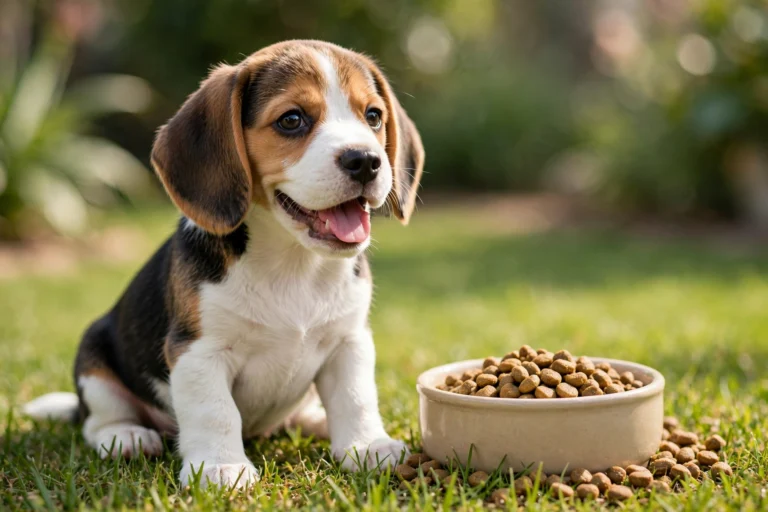
- Feeding a Beagle Puppy (0 to 12 Months)
- Feeding an Adult Beagle (1 to 7 Years)
- Feeding a Senior Beagle (7+ Years)
- What to Feed a Beagle: Nutrients That Matter
- A Sample Beagle Feeding Day
- Foods Beagles Should Never Eat
- Treats, Training Rewards, and the 10% Rule
- The Beagle Begging Problem (and How to Beat It)
- How to Switch Your Beagle’s Food Safely
- Common Beagle Feeding Mistakes
- Pros and Cons
- Conclusion: The Beagle Feeding Routine That Works
- What Should a Beagle Eat Every Day?
- When Your Beagle Turns Into a Picky Eater
Key Takeaways
- Most adult Beagles need 1 to 1.5 cups of quality kibble per day, split into two measured meals, never free-fed.
- Beagle puppies eat 3 to 4 small meals a day; adults and seniors do best on 2 meals a day.
- A typical adult Beagle needs roughly 500 to 750 calories per day, depending on weight and activity, treats included.
- Beagles act hungry even when they are not. Feed the measuring cup and the body-condition check, not the begging.
- Treats should stay under 10% of daily calories, and toxic foods like chocolate, grapes, and xylitol must never be offered.
Beagle Feeding Chart by Age
Use this chart as your starting point, then adjust based on your dog’s weight, body condition, and activity level. These amounts assume a standard dry kibble; wet food and fresh food have different calorie densities, so always check the label.
| Life Stage | Meals Per Day | Daily Amount (Dry Food) | Notes |
|---|---|---|---|
| Puppy, 8 to 12 weeks | 4 | 1 to 1.5 cups total | Puppy formula; tiny, frequent meals for steady growth |
| Puppy, 3 to 6 months | 3 to 4 | 1.5 to 2 cups total | Puppy formula; start measuring portions |
| Puppy, 6 to 12 months | 3 | 1.5 to 2 cups total | Transition toward adult food around 12 months |
| Adult, 1 to 7 years | 2 | 1 to 1.5 cups total | Two measured meals; no free feeding |
| Senior, 7+ years | 2 | 1 to 1.5 cups total | Senior formula; watch weight as activity drops |
The bag’s feeding chart is a starting point, not gospel. Bag guidelines are usually written for active, intact dogs, and most pet Beagles need less than the bag suggests. Start with the chart above, weigh your dog every two to four weeks, and adjust by a tablespoon or two at a time.
How Many Calories Does a Beagle Need?
Cups are convenient, but calories are what actually control weight. A cup of one kibble can hold 300 calories; a cup of another can hold 450. That is why two Beagles eating the “same” amount can end up at very different weights. Once you know your food’s calories per cup (printed on the bag as kcal/kg or kcal/cup), you can feed with real precision.
As a rule of thumb, adult Beagles need roughly 30 to 40 calories per pound of body weight per day. A 20-pound Beagle at a healthy weight therefore needs around 600 to 800 calories, while a 25-pound Beagle needs roughly 750 to 1,000, before adjusting for activity.
| Beagle Weight | Low Activity (Short Walks) | Moderate Activity (Daily Walks + Play) | High Activity (Running, Hiking, Field Work) |
|---|---|---|---|
| 18 to 20 lbs | 450 to 550 kcal | 550 to 700 kcal | 700 to 850 kcal |
| 21 to 25 lbs | 550 to 650 kcal | 650 to 800 kcal | 800 to 1,000 kcal |
| 26 to 30 lbs (large or overweight) | 600 to 700 kcal | 700 to 850 kcal | 850 to 1,050 kcal |
These are starting estimates for a Beagle at a healthy weight, not a prescription. Spayed and neutered dogs typically need about 20 to 30% fewer calories than intact dogs of the same weight, and that single fact explains a lot of post-spay weight gain. If your Beagle is already overweight, feed for their ideal weight, not their current weight, and ask your vet to confirm the target.
Feeding a Beagle Puppy (0 to 12 Months)
Beagle puppies grow fast, and their small stomachs cannot hold a whole day’s food at once. That is why puppies eat three to four times a day: frequent small meals keep blood sugar steady and give a growing puppy a constant supply of energy and building blocks.
Feed a puppy-specific formula, not adult food. Puppy formulas carry more protein and fat, plus the calcium, phosphorus, and DHA a developing brain and skeleton need. The AAFCO statement on the bag should say the food is formulated for “growth” or “all life stages.” If it says “adult maintenance” only, it is not right for a puppy.
From 8 to 12 weeks, offer four evenly spaced meals, for example, 7 a.m., 11 a.m., 3 p.m., and 7 p.m. From about 3 months, most puppies do fine on three meals a day. From 6 months, you can stay at three meals until the first birthday, when you drop to two. Keep portions measured: a roly-poly puppy is cute, but puppies that grow too fast put extra stress on developing joints, and Beagles are already prone to joint trouble later in life.
Do not leave food out all day for a puppy either. Scheduled meals make house training far easier, because what goes in on a schedule comes out on a schedule. Pick the bowl up after 15 to 20 minutes whether it is empty or not. A healthy puppy quickly learns that mealtime means mealtime.
For food recommendations by age, see our best puppy food for Beagles guide, which breaks down the top formulas for growing Beagles.
Feeding an Adult Beagle (1 to 7 Years)
Adult Beagles do best on a simple, boring routine: two measured meals a day, roughly 12 hours apart: breakfast and dinner. Consistency is the whole game. A Beagle that knows meals arrive at 7 a.m. and 6 p.m. is calmer, easier to house-train, and far less likely to beg all day than one fed at random times.
Most adult Beagles thrive on 1 to 1.5 cups of quality kibble per day, divided into two meals. Very active Beagles (those running, hiking, or doing scent work daily) may need closer to 2 cups. A Beagle whose main exercise is a stroll around the block may need under a cup. Your dog’s waistline is the final judge: you should be able to feel the ribs easily under a thin layer of fat, and see a visible waist when looking down at your dog from above.
Choose an adult formula with a named animal protein first on the ingredient list: “chicken,” “salmon,” or “turkey,” not “meat meal” or “animal by-products.” Aim for roughly 22 to 28% protein and 10 to 16% fat on a dry-matter basis, with enough fiber (around 3 to 5%) to help your Beagle feel full. Fiber is a Beagle owner’s secret weapon: it adds bulk and satiety without adding calories, which matters enormously for a dog that always wants more.
Our best dog food for Beagles guide compares the top adult formulas, including options built for this breed’s weight and appetite challenges.
Feeding a Senior Beagle (7+ Years)
Beagles are generally considered seniors around age 7 or 8. Metabolism slows, activity drops, and joints get stiffer, but protein needs do not drop. In fact, senior dogs often need slightly more protein to hold onto muscle as they age, along with fewer calories overall.
Switch to a senior formula around age 7 or 8, or sooner if your vet advises it. Senior foods typically offer moderate-to-high protein, lower fat and calories, added fiber for satiety, and joint-supporting nutrients like glucosamine, chondroitin, and omega-3 fatty acids. If your senior Beagle has kidney issues, your vet may recommend a different protein and phosphorus level, another reason senior feeding plans deserve a vet conversation.
Many senior Beagles do better with their daily food split into the same two meals, but served slightly softened. Adding a splash of warm water to kibble, or mixing in a spoonful of wet food, makes meals easier on older teeth and can coax a picky senior to eat. If your senior Beagle suddenly loses interest in food, skips more than a meal or two, or drops weight, see your vet promptly. Appetite loss in an older dog is always worth checking.
See our best senior Beagle food guide for formulas built for aging Beagles, including joint-friendly picks.
What to Feed a Beagle: Nutrients That Matter
A good Beagle diet is not about exotic ingredients. It is about getting the basics right, every day, in the right proportions.
Protein
Protein builds and maintains muscle, supports the immune system, and keeps your Beagle’s coat glossy. Look for a named animal protein as the first ingredient, and a food with at least 22% protein for adults (puppies need more). Chicken, turkey, salmon, lamb, and beef are all fine, provided your dog tolerates them. If your Beagle has itchy skin or chronic ear infections, food sensitivity may be involved. Our best food for Beagles with sensitive stomachs guide covers gentler options.
Fat
Fat supplies concentrated energy and carries fat-soluble vitamins, plus the omega-3 and omega-6 fatty acids that keep skin and coat healthy. But fat is also calorie-dense, the first thing to trim when a Beagle gains weight. For most adult Beagles, a moderate fat level around 10 to 16% works well. Quality matters: fish oil and chicken fat beat generic “animal fat.”
Fiber and Carbohydrates
Carbs are not the enemy. Whole grains and vegetables like brown rice, oats, barley, pumpkin, and sweet potato provide steady energy and the fiber that keeps a Beagle feeling full. Fiber also steadies digestion and helps prevent constipation. Avoid foods that lean on vague fillers like “corn gluten meal” as a main ingredient.
Vitamins, Minerals, and the AAFCO Statement
Every food you feed should carry an AAFCO statement confirming it is “complete and balanced” for your dog’s life stage. That statement is your guarantee that the food meets minimum nutritional standards for protein, fat, vitamins, and minerals. Without it, you are guessing. Extra supplements are usually unnecessary on a complete food, and some, like excess calcium for puppies, can do more harm than good.
A Sample Beagle Feeding Day
Here is what a well-fed day looks like for a healthy 22-pound adult Beagle on a 650-calorie plan. Adjust the numbers for your dog’s weight and food, but keep the structure.
- 7:00 a.m.: Breakfast: 3/4 cup kibble (about 290 calories), served in a slow-feeder bowl. Fresh water topped up.
- 12:30 p.m.: Training treats: A few pea-sized training treats or carrot coins (about 30 calories total), earned during a short training session, not handed out free.
- 6:00 p.m.: Dinner: 3/4 cup kibble (about 290 calories), plus a spoonful of plain canned pumpkin for fiber. Fresh water.
- 8:00 p.m.: Evening chew: One small dental chew or a few blueberries (about 30 to 40 calories), as part of the daily budget.
Notice what is missing: no table scraps, no “just one bite” of pizza crust, no free-filled bowl sitting out all day. Every calorie is counted, and the dog still eats four times a day. That is the trick with Beagles: frequent, structured feeding satisfies their food drive without overfeeding them.
Foods Beagles Should Never Eat
Beagles will eat almost anything they can reach, which makes this section critical. Keep these foods completely out of reach: on high counters, in latched bins, and never offered as “treats.”
| Food | Why It Is Dangerous |
|---|---|
| Chocolate | Contains theobromine, which dogs cannot process, can cause seizures or death |
| Grapes and raisins | Can cause sudden kidney failure, even in small amounts |
| Onions and garlic | Damage red blood cells and can cause anemia |
| Xylitol (birch sugar) | Found in sugar-free gum and peanut butter; causes a deadly blood-sugar crash and liver failure |
| Macadamia nuts | Cause tremors, weakness, and overheating |
| Cooked bones | Splinter and can puncture the digestive tract |
| Alcohol | Depresses the nervous system; even small amounts are dangerous |
| Caffeine | Same family of toxins as chocolate; can cause heart arrhythmias |
Safe human-food treats do exist: plain cooked chicken, carrot sticks, green beans, apple slices (no seeds), blueberries, and plain canned pumpkin are all healthy, low-calorie options. Keep them small, keep them counted, and never let them replace a balanced meal.
Treats, Training Rewards, and the 10% Rule
The 10% rule is the simplest weight-control tool in this guide: treats should make up no more than 10% of your Beagle’s daily calories. On a 650-calorie day, that is 65 calories of treats, roughly a small handful of training treats or a few baby carrots. Everything beyond that comes straight out of the food bowl budget.
Beagles are famously trainable precisely because they are food-driven, which means training treats add up fast. Three habits keep treats under control. Use pea-sized treats. Your Beagle cares about the fact of the reward, not its size. Use part of the regular kibble ration as training treats instead: measure out breakfast, set aside a small scoop for training, and feed the rest in the bowl. Third, rotate in low-calorie rewards like carrot coins, green beans, and apple bits, which add bulk and crunch for almost no calories.
Never use treats to quiet begging. Rewarding a begging Beagle teaches the dog that begging works, and Beagles learn that lesson permanently. If your Beagle begs at the table, the whole household has to agree: no food from the table, ever. One soft-hearted family member can undo weeks of training.
The Beagle Begging Problem (and How to Beat It)
Beagles do not beg because they are starving. They beg because they are scent hounds bred to work for food, because begging has been rewarded before, and because they are very, very good at looking tragic. Understanding that is freeing: you can ignore the performance without guilt.
Four tools help most. A slow-feeder bowl or puzzle feeder turns a 90-second inhale into a 10-minute meal, which improves digestion and satisfaction. A snuffle mat lets your Beagle “hunt” for kibble, scratching the foraging itch that regular bowls never reach. Scheduled meals beat grazing, because a dog that eats on a schedule stops anxiously scanning for food all day. And a locked trash can and cleared counters remove the self-service option. Beagles are champion counter-surfers, and a dog that scores from the counter once will check it forever.
Exercise helps too, though it is not a substitute for portion control. A Beagle that gets a good sniffy walk before dinner is calmer, more satisfied, and less frantic around food. Scent games (hiding kibble around a room and letting your Beagle find it) burn mental energy and deliver dinner at the same time.
How to Switch Your Beagle’s Food Safely
Beagles are not famous for delicate stomachs, but any sudden food change can cause diarrhea, gas, and vomiting. Switch gradually over 7 to 10 days:
- Days 1 to 2: 75% old food, 25% new food
- Days 3 to 4: 50% old food, 50% new food
- Days 5 to 6: 25% old food, 75% new food
- Day 7+: 100% new food
If stools get loose at any stage, hold at that ratio for an extra day or two before moving on. Puppies, seniors, and Beagles with sensitive stomachs may need a full two-week transition. If diarrhea lasts more than 48 hours, or your dog stops eating or drinking, call your vet.
Common Beagle Feeding Mistakes
- Eyeballing portions. Studies consistently show owners who “eyeball” kibble overfeed. Use a standard measuring cup or, better, a kitchen scale.
- Free feeding. A full bowl left out all day is an open invitation for a Beagle. Measured, scheduled meals are non-negotiable for this breed.
- Feeding the bag, not the dog. Bag guidelines are averages for active dogs. Adjust for your Beagle’s actual weight, body condition, and activity.
- Counting treats as “free.” Treats, table scraps, and dental chews all count. If treats go up, meals come down.
- Feeding for guilt. Those pleading eyes are not hunger. A Beagle that just ate dinner and begs for more is performing, not starving.
- Switching foods cold turkey. Always transition over 7 to 10 days to protect the gut.
- Skipping weigh-ins. Weigh your Beagle every 2 to 4 weeks. A pound gained is easy to fix; five pounds is a project.
Pros and Cons
Feeding a Beagle well comes down to measuring, not guessing. Here is the honest balance.
Pros
- Two measured meals a day keep a food-obsessed breed from overeating.
- Fiber-rich foods help a Beagle feel full on fewer calories.
- Portion charts by age and weight take the guesswork out of feeding.
- A set schedule calms begging and makes house training easier.
Cons
- Beagles act hungry even when they are not, so every extra treat counts.
- Counter-surfing and begging make the whole household part of portion control.
- Weight gain creeps up fast, and a pound is easy to miss under a thick coat.
- Picky phases and sensitive stomachs can make food changes tricky.
Conclusion: The Beagle Feeding Routine That Works
Feeding a Beagle well comes down to a simple routine: two measured meals a day, a food with named animal protein and an AAFCO statement, treats capped at 10% of daily calories, and a household that agrees not to feed the begging. Do that, and your Beagle gets the steady energy, healthy weight, and long life they deserve, without the obesity, joint strain, and diabetes that follow overfeeding in this breed.
Start today with one change: measure the next meal with a real measuring cup. You may be surprised at what you find, and your Beagle’s waistline will thank you. This guide is for information only. Check with your vet for your dog’s specific needs.
What Should a Beagle Eat Every Day?
A Beagle’s daily diet is simple: a complete, balanced kibble as the base, with everything else counted inside the day’s calories. Choose an adult formula with a named animal protein first (chicken, salmon, turkey, or lamb), an AAFCO complete-and-balanced statement for your dog’s life stage, roughly 22 to 28% protein and 10 to 16% fat, and enough fiber (around 3 to 5%) to help your Beagle feel full. That fiber is doing real work: Beagles are always hungry, and a food with bulk keeps them satisfied on fewer calories than a rich, low-fiber recipe.
Wet food can be part of the diet, but it is not required. A spoonful mixed into kibble as a topper gives flavour without the cost and dental downside of a wet-only diet, and it must be subtracted from the kibble portion, not added on top. Fresh toppers are fine in small amounts: plain cooked chicken, green beans, carrot coins, and canned pumpkin are low-calorie and Beagle-approved. What does not belong in the daily diet is table scraps, fatty leftovers, and free treats, those are the calories that turn a lean Beagle into an overweight one. If your Beagle has itchy skin or chronic ear trouble, ask your vet about a sensitive formula before changing foods on a guess.
What is the best diet for a Beagle?
A measured, complete-and-balanced kibble with a named protein first, moderate protein and fat, and enough fiber to keep your Beagle full, fed as two measured meals a day, with treats under 10% of daily calories. The diet that works is the one you can measure and stick to, not the most expensive bag.
Can Beagles eat wet food?
Yes, Beagles can eat wet food, but count it: wet food has fewer calories per cup than kibble, so a Beagle can easily overeat it, and it does less for dental health. Most owners do best with kibble as the base and a spoonful of wet food as a topper, subtracting that amount from the kibble portion.
When Your Beagle Turns Into a Picky Eater
Most Beagles would eat the bowl as well as the food, so a Beagle that turns away from dinner usually has a reason worth finding. Start with health, not the food bag. A dog that skips meals, seems tired, or has loose stools should see a vet before you change anything. If your vet gives the all clear, keep it simple. Put the food down for 15 minutes, then pick it up until the next meal, even if your Beagle barely touched it. A healthy dog will eat when it is hungry, and free treats between meals only teach your Beagle to hold out for something better. A spoonful of warm water or a small topper like plain pumpkin can help a fussy eater get started, but try that before you switch brands. Changing foods every week trains a picky eater and upsets the stomach at the same time. Stay with one good food, feed it on a set schedule, and keep table scraps out of the deal. Most picky phases pass in a few days once the extras stop.
How much should I feed my Beagle per day?
Most adult Beagles need 1 to 1.5 cups of quality kibble per day, split into two measured meals. Puppies need 1.5 to 2 cups split across 3 to 4 meals. Always adjust for your dog’s weight, activity level, and body condition, and count treats inside the daily total.
How many times a day should a Beagle eat?
Beagle puppies eat 3 to 4 times a day; adults and seniors do best on 2 meals a day, roughly 12 hours apart. Scheduled meals beat free feeding for this breed because they prevent overeating and make house training easier.
How many calories does a Beagle need daily?
A typical adult Beagle needs about 500 to 750 calories per day, or roughly 30 to 40 calories per pound of body weight. Active Beagles need more, spayed or neutered dogs usually need 20 to 30% less, and overweight Beagles should be fed for their ideal weight.
Why is my Beagle always hungry?
Beagles are scent hounds bred to work for food, so strong food motivation is in their nature, it does not mean they are starving. Feed measured portions on a schedule, use slow feeders and puzzle toys, and never reward begging with food.
When should I switch my Beagle puppy to adult food?
Most Beagles switch to adult food around 12 months of age. Move gradually over 7 to 10 days, mixing increasing amounts of the new food with the old. Large or slow-maturing Beagles may benefit from staying on puppy food a little longer. Ask your vet.
When should my Beagle switch to senior food?
Most Beagles benefit from a senior formula around age 7 or 8, when metabolism and activity start to slow. Senior foods offer controlled calories, steady protein to protect muscle, and joint-supporting nutrients like glucosamine and omega-3s.
What foods are toxic to Beagles?
Chocolate, grapes and raisins, onions and garlic, xylitol (birch sugar), macadamia nuts, cooked bones, alcohol, and caffeine are all dangerous for Beagles. Keep them out of reach and call your vet immediately if your dog eats any of them.
Can Beagles eat human food?
Some human foods are fine as small, counted treats: plain cooked chicken, carrots, green beans, apple slices without seeds, blueberries, and plain canned pumpkin. Keep all treats under 10% of daily calories and never feed toxic foods like chocolate, grapes, onions, or anything containing xylitol.
What should I do if my Beagle is a picky eater?
Check health first: a Beagle that skips meals or seems tired should see a vet. If your vet gives the all clear, put the food down for 15 minutes and pick it up until the next meal, even if your Beagle barely ate. A spoonful of warm water or a small topper can help, but do not switch brands every week, and do not fill the gap with table scraps.
Can I feed my Beagle homemade food?
Yes, but only if the diet is complete and balanced, which takes careful planning with a vet or a veterinary nutritionist. A well-meaning homemade diet can miss key nutrients and do more harm than good. For most owners, a high-quality commercial food is the safer everyday choice, with plain cooked chicken, vegetables, and pumpkin as small toppers instead of a full homemade diet.
3 Comments