

Best Puppy Food for Shih Tzus: Flat-face kibble and coat care for a 9 to 16 lb puppy (6 Picks 2026)
Finding the best puppy food for Shih Tzus is not quite the same as picking any small-breed puppy food off the shelf. Shih Tzu puppies have flat faces, tiny jaws, and a long, silky coat to grow into, and they pack a surprising amount of energy into a very small body. The right food needs to be easy for a short muzzle to pick up and chew, dense enough in calories that a tiny stomach can meet its needs in small meals, and rich in the nutrients that support brain development, bone growth, and skin and coat health. This guide compares six real, widely available US puppy formulas, explains what to look for on the label, and answers the practical questions most new Shih Tzu owners ask: how much to feed, how often, and when to switch to adult food. Most adult Shih Tzus weigh 9 to 16 lb, so the portions and picks below are built around a puppy that will stay small. For the general rules behind puppy feeding, see our Best Puppy Food for Large Breeds guide.
Shih Tzus typically stay on puppy food until they are about 9 to 12 months old, and most do best on four small meals a day until around six months. That feeding rhythm matters as much as the brand in the bowl: a tiny puppy’s stomach cannot hold a large meal, and long gaps between meals can leave a very young puppy shaky and low on energy. The picks below are all formulated for growth, carry an AAFCO statement for puppies, and use small or specially shaped kibble that suits a brachycephalic (flat-faced) puppy. Our shortlist is based on ingredient analysis, brand reputation, and owner reviews, not on laboratory testing or veterinary endorsement.
Key Takeaways
- Choose a puppy formula made for a flat-faced puppy. Small or specially shaped kibble suits a Shih Tzu’s short muzzle and underbite, and a puppy formula carries the extra protein, fat, calcium and DHA a growing Shih Tzu needs.
- Kibble shape matters for Shih Tzus: small or specially shaped pieces suit a short muzzle and underbite far better than large, hard kibble.
- Feed four small meals a day until about six months, then move to three meals, and switch to adult food at around 9 to 12 months.
- Look for named meat first, DHA from fish oil, and omega-3 and omega-6 fatty acids. The long Shih Tzu coat shows it quickly when those fats are missing.
- Keep portions measured and watch body condition weekly. Shih Tzus gain weight easily, and extra weight stresses small joints.
Best Puppy Food for Shih Tzus at a Glance
| Product | Best for | kcal/cup | Price | Cost/month |
|---|---|---|---|---|
| Royal Canin Shih Tzu Puppy Dry Dog Food | Breed-specific fit | 354 | $26.99 / 2.5 lb, Chewy, 2026-11-15 | ~$84/mo |
| Hill’s Science Diet Puppy Small Paws Chicken Meal, Barley & Brown Rice | Small-breed growth | 397 | $23.99 / 4.5 lb, Chewy, 2026-11-15 | ~$46/mo |
| Blue Buffalo Life Protection Formula Small Breed Puppy Chicken & Oatmeal | Natural ingredients | 417 | $39.58 / 15 lb, Chewy, 2026-11-15 | ~$15/mo |
| Wellness Small Breed Complete Health Puppy Turkey, Oatmeal & Salmon Meal | Picky eaters | 489 | $19.99 / 4 lb, Chewy, 2026-11-15 | ~$52/mo |
| Purina Pro Plan Puppy Small Breed Chicken & Rice Formula | Active puppies and value | 482 | $19.98 / 6 lb, Chewy, 2026-11-15 | ~$25/mo |
| The Honest Kitchen Whole Grain Chicken Clusters for Puppies | Human-grade ingredients | 417 | $93.09 / 20 lb, Chewy, 2026-11-15 | Cannot compute |
Prices checked 2026-11-15 on Chewy. Cost per month is based on the daily feeding at 6 months for a Shih Tzu puppy expected to reach 12 lb as an adult. Cost per month cannot be computed for The Honest Kitchen because the cup weight is not published.
Royal Canin Shih Tzu Puppy Dry Dog Food
Best for: owners who want a formula built around the breed itself. Royal Canin Shih Tzu Puppy is made for Shih Tzu puppies from 8 weeks to 10 months old, and its most distinctive feature is the kibble: it is specially shaped to be easy for a Shih Tzu to pick up and chew despite a short muzzle and underbite. For a puppy that drops large kibble, eats too fast, or seems to struggle at the bowl, that shape alone can make mealtimes noticeably calmer. It suits a puppy that will grow into a 9 to 16 lb adult, which is the breed’s usual range.
The formula is built around growth and the breed’s coat and digestion. It includes EPA and DHA, an antioxidant complex including vitamin E to support a developing immune system, and prebiotics plus highly digestible proteins to support healthy digestion and firmer stools with less odor, a practical bonus in a small home. The crude protein is around 26% with about 16% fat, which suits a small, moderately active puppy without pushing calories too high. The trade-offs are familiar for breed-specific food: it costs more per pound than a general small-breed puppy food, it comes in a small 2.5 lb bag in the US, and some puppies simply prefer a different taste. If your puppy is thriving on it, there is little reason to switch before the 10-month mark, when Royal Canin makes the adult Shih Tzu formula.
Hill’s Science Diet Puppy Small Paws Chicken Meal, Barley & Brown Rice
Best for: small-breed puppies generally, and Shih Tzus in particular. Hill’s Science Diet Puppy Small Paws is formulated for small and miniature breed puppies up to one year old, with a small kibble size designed for little mouths. Chicken meal is the protein base, and the recipe includes DHA from fish oil, balanced minerals for strong teeth and bones, and an antioxidant blend for immune support. It contains no artificial colors, flavors, or preservatives.
What makes this a strong default choice is balance rather than any single headline ingredient. The protein and fat levels are appropriate for steady growth, the kibble is genuinely small, and the brand’s feeding guidance is detailed and easy to follow, helpful when you are still learning how much a growing Shih Tzu should eat. Owner reviews most often praise palatability and stool quality, while the most common complaint is the one that follows almost every food change: a few puppies have loose stools during the first week, which is why a gradual transition matters (see below). If you want a widely available, straightforward small-breed puppy food without paying a breed-specific premium, this is the safest first pick.
Blue Buffalo Life Protection Formula Small Breed Puppy Chicken & Oatmeal
Best for: owners who want natural ingredients and a grain-inclusive recipe. Blue Buffalo Life Protection Formula Small Breed Puppy starts with deboned chicken, followed by chicken meal, oatmeal, barley, and brown rice. It includes DHA and ARA, calcium and phosphorus, and Blue Buffalo’s antioxidant-rich LifeSource Bits, a blend of vitamins, minerals, and antioxidants mixed into the kibble.
The small-bite kibble suits tiny jaws, and the oatmeal base is gentle on digestion for puppies whose stomachs are still settling. Based on ingredient analysis, this is one of the more nutrient-dense options here, at around 32% protein on a dry-matter basis, so measured portions matter: it is easy to overfeed a calorie-dense food to a small puppy. Two honest caveats: some puppies pick out and leave the darker LifeSource Bits, and the 5 lb bag will not last long once your puppy is eating a full ration. Neither is a deal-breaker, but both are worth knowing before you buy. For a full comparison of small-breed options, see our guide to the best puppy food for small breeds.
Wellness Small Breed Complete Health Puppy Turkey, Oatmeal & Salmon Meal
Best for: picky Shih Tzu puppies and coat health. Wellness Small Breed Complete Health Puppy leads with turkey, adds oatmeal and salmon meal, and includes DHA from salmon oil plus omega fatty acids for healthy skin and coat, a real consideration for a breed whose coat is one of its defining features. Calcium and phosphorus support bone growth, antioxidants support the immune system, and the recipe contains no poultry by-products, wheat, wheat gluten, corn, soy, artificial colors, or preservatives.
In practice, this is the pick to try if your puppy sniffs at plainer kibble or has a dull, dry coat on its current food. The salmon meal adds both palatability and omega-3s without making fish the main protein, so chicken-sensitive puppies should still check with their vet first. The kibble is small-breed sized, and the formula is made in the USA. The main downside is price: it sits above grocery-store puppy foods, and the bag sizes are modest for a growing puppy. If your Shih Tzu puppy eats happily and keeps a shiny coat on it, that premium is doing visible work.
Purina Pro Plan Puppy Small Breed Chicken & Rice Formula
Best for: active puppies and owners watching the budget. Purina Pro Plan Puppy Small Breed Chicken & Rice is made for puppies expected to weigh under 20 lbs as adults, a category Shih Tzus fit comfortably. Real chicken is the first ingredient, the kibble is bite-sized for small mouths, and the formula includes DHA from fish oil, antioxidants for immune support, and calcium and phosphorus. It also contains guaranteed live probiotics, which can help during the dietary changes puppies go through in their first months.
This is the most widely stocked pick on the list, available in 6 lb and 18 lb bags, which makes it practical if you do not want to hunt for a specialty formula or pay a premium. The protein level is high, around 33% minimum, so it suits busy, playful puppies that burn energy quickly, but again, measure the food rather than free-feeding. One ingredient note for label-readers: this formula includes poultry by-product meal and corn protein meal further down the ingredient list, which some owners prefer to avoid. If that matters to you, the Blue Buffalo or Wellness picks above are cleaner-label alternatives at a higher price.
The Honest Kitchen Whole Grain Chicken Clusters for Puppies
Best for: owners who want human-grade ingredients and a softer bite. The Honest Kitchen Whole Grain Chicken Clusters for Puppies is made with 100% human-grade cage-free chicken, oats, vegetables, and salmon oil, cold-pressed into bite-sized clusters and then gently roasted. It offers enhanced protein for muscle development, boosted DHA, and double the probiotics of the brand’s adult recipes for digestive support. It contains no feed-grade ingredients, rendered meat meals, fillers, GMOs, potatoes, legumes, or artificial preservatives.
For a Shih Tzu puppy, the cluster format is the selling point: the pieces are small, easy to chew, and less dusty than some extruded kibbles, which can help a flat-faced puppy that struggles with hard, round kibble. It is formulated for puppies of all sizes, so check the feeding guide for your puppy’s expected adult weight rather than assuming a small-breed portion. The trade-offs are price and format, which mean it is a premium food, and some owners find the clusters softer and more crumbly than traditional kibble. As a topper-style or full-diet option for a picky or sensitive puppy, though, it is one of the most thoughtfully made foods on this list.
What to Look for in Shih Tzu Puppy Food
A good Shih Tzu puppy food starts with the life-stage statement, not the front of the bag. Look for a food formulated to meet AAFCO nutrient profiles for growth (or for all life stages, including growth of small dogs). That statement is your guarantee that the recipe is complete and balanced for a growing puppy, rather than an adult maintenance food with a puppy picture on it. Adult food can leave a puppy short on protein, fat, calcium, and DHA at exactly the age those nutrients matter most.
Next, check the first ingredient: it should be a named animal protein such as chicken, turkey, lamb, or salmon. Named meat meals (for example, chicken meal) are also fine, since they are concentrated protein, but vague terms like “meat meal” or “animal by-products” tell you little about quality. After protein, look for DHA from fish oil or salmon oil, and for omega-3 and omega-6 fatty acids, which support the skin and long coat Shih Tzus are known for. Calcium and phosphorus should be balanced for bone growth: more is not better, and excess calcium can cause problems in growing dogs, so a puppy-specific formula is safer than supplementing an adult food. Adult foods and generic small-breed puppy foods are not like-for-like swaps for a flat-face puppy formula. A Shih Tzu puppy needs kibble it can pick up with a short muzzle, not just a smaller bag of an adult recipe.
Kibble size and texture deserve as much attention as the ingredient list. Shih Tzus are brachycephalic, with a short muzzle and often an underbite, so large or very hard kibble can be difficult to pick up and chew, leading to gulping, dropped food, or skipped meals. Small-breed or breed-specific kibble, softer clusters, or kibble moistened with a little warm water for very young puppies all help. Finally, consider digestibility: prebiotics, probiotics, and easily digestible carbohydrates such as oatmeal, barley, and brown rice tend to suit sensitive young stomachs better than a long list of fillers.
A quick note on tear stains: Shih Tzus are known for them, and food will not cure them. Wipe the face daily and check the folds around the eyes and muzzle. If staining is heavy or the skin looks sore, ask your vet.
How Much and How Often to Feed a Shih Tzu Puppy
Shih Tzu puppies have tiny stomachs and fast metabolisms, so meal frequency matters as much as the daily total. A widely used rhythm is four meals a day until about six months, then three meals a day until the switch to adult food. Very young puppies under three months may need four to five small meals. Spreading food across the day keeps energy steady and reduces the risk of low blood sugar (hypoglycemia), which small-breed puppies are more prone to than larger breeds. For a detailed day-by-day schedule, see our puppy feeding schedule.
| Age | Meals per day | Notes |
|---|---|---|
| 8 to 12 weeks | 4 to 5 | Very small meals; soften kibble with warm water if needed |
| 3 to 6 months | 4 | Keep meals even through the day; watch for low-energy dips |
| 6 to 9 months | 3 | Growth slows; adjust portions to body condition, not just the bag |
| 9 to 12 months | 2 to 3 | Prepare to transition to adult food |
How much to feed depends on your puppy’s current weight, expected adult weight (usually 9 to 16 lbs for a Shih Tzu), and activity level, so use the bag’s feeding guide as a starting point, not a rule. Weigh your puppy weekly, feel for ribs under a thin layer of fat, look for a visible waist from above, and check for a tuck behind the ribs from the side. If you cannot feel the ribs easily, reduce the portion slightly; if ribs are prominent or energy dips, increase it. Treats should stay under about 10% of daily calories, and table scraps should be kept out of the bowl entirely: small dogs gain weight on surprisingly little extra food, and extra weight puts stress on knees and hips that Shih Tzus are already prone to injure.
Daily portions for a 6-month-old Shih Tzu puppy expected to reach 12 lb as an adult (the middle of the 9 to 16 lb range), weighing about 9 lb at 6 months. Prices were checked on 2026-11-15 on Chewy. For the full feeding schedule, see the Shih Tzu Feeding Guide.
| Product | kcal/cup | Price | Daily feeding | Cost/month |
|---|---|---|---|---|
| Royal Canin Shih Tzu Puppy Dry Dog Food | 354 | $26.99 / 2.5 lb, Chewy, 2026-11-15 | 1.25 cups | ~$84/mo |
| Hill’s Science Diet Puppy Small Paws Chicken Meal, Barley & Brown Rice | 397 | $23.99 / 4.5 lb, Chewy, 2026-11-15 | 1.25 cups | ~$46/mo |
| Blue Buffalo Life Protection Formula Small Breed Puppy Chicken & Oatmeal | 417 | $39.58 / 15 lb, Chewy, 2026-11-15 | 0.75 cup | ~$15/mo |
| Wellness Small Breed Complete Health Puppy Turkey, Oatmeal & Salmon Meal | 489 | $19.99 / 4 lb, Chewy, 2026-11-15 | 1.25 cups | ~$52/mo |
| Purina Pro Plan Puppy Small Breed Chicken & Rice Formula | 482 | $19.98 / 6 lb, Chewy, 2026-11-15 | 1 cup | ~$25/mo |
| The Honest Kitchen Whole Grain Chicken Clusters for Puppies | 417 | $93.09 / 20 lb, Chewy, 2026-11-15 | 1 cup | Cannot compute |
If your puppy turns picky, try a splash of warm water on the kibble to bring out the smell, and keep mealtimes short. Do not start adding toppers at every meal, since that teaches your puppy to hold out for something better. If your puppy skips more than a meal or two, or starts losing weight, ask your vet.
Switching Foods and Moving to Adult Food
Switch foods gradually over 7 to 10 days: start with about one-quarter new food mixed with three-quarters old food for a few days, move to half and half, then three-quarters new, then fully new. A slower switch is kinder to a puppy’s gut than an overnight change, and it lets you spot a food that does not agree with your puppy before you have committed to a full bag. Loose stools for a day or two during a switch are common; persistent diarrhea, vomiting, or refusal to eat for more than a day is a reason to check with your vet.
Most Shih Tzus move to adult food at around 9 to 12 months, when growth has largely finished. The Royal Canin breed-specific line switches at 10 months; general small-breed puppy foods usually suggest up to 12 months. Either way, use the same gradual 7-to-10-day transition, and choose an adult food that continues the priorities of the puppy diet: small kibble, omega fatty acids for coat, and measured portions. Our guide to the best dog food for Shih Tzus covers adult options in the same format, and if your puppy prefers softer food, our best wet puppy food guide is a useful companion.
What to Avoid
- Adult or all-life-stage food as a shortcut. It may not carry the protein, DHA and calcium balance your growing puppy needs.
- Large, hard kibble that a flat-faced puppy cannot pick up or chew comfortably. Watch for dropped kibble and gulping.
- Free-feeding from a full bowl all day. It makes portion control almost impossible and hides appetite changes that can signal illness.
- Foods with artificial colors, flavors, or preservatives such as BHA, BHT, or ethoxyquin, and vague “meat meal” as the main protein.
- Grain-free puppy food chosen by default: many Shih Tzus do well on grain-inclusive diets, and grain-free is only needed if your vet identifies a specific sensitivity.
- Calcium supplements or “growth boosters” added to a complete puppy food. Excess calcium can harm developing bones.
- Toxic foods kept within reach: chocolate, grapes and raisins, onions, garlic, and anything containing xylitol.
Conclusion: Our Recommendation
If you want one clear answer, start with Royal Canin Shih Tzu Puppy if breed-specific kibble shape and coat support matter most to you, or with Hill’s Science Diet Puppy Small Paws if you want a widely available, balanced small-breed puppy food at a lower price. Both cover the essentials for puppy-stage feeding and diet: DHA, small kibble, and balanced minerals, and both are easy to find in the US. Picky puppies often do better on Wellness Complete Health Small Breed Puppy, while budget-conscious owners will find Purina Pro Plan Puppy Small Breed hard to beat for the price.
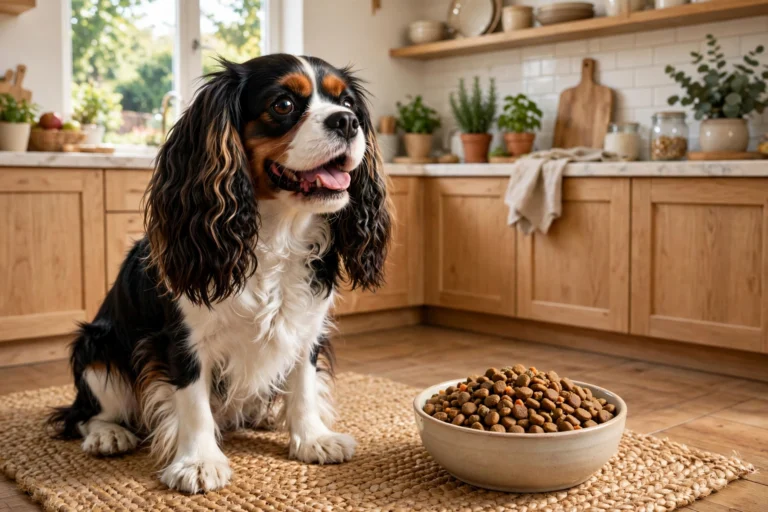
If you are comparing small breeds, see the best puppy food for Cavalier King Charles Spaniels and the best puppy food for Miniature Schnauzers. For adult Shih Tzus, see the best dog food for Shih Tzus.
Whichever you choose, the food is only half the plan: feed measured meals four times a day while your puppy is young, watch body condition weekly, switch foods gradually, and move to adult food at around 9 to 12 months. That routine, plus a food your puppy actually enjoys eating, will do more for your Shih Tzu’s first year than any single ingredient claim on a bag. This guide covers feeding and diet for Shih Tzu puppies in general terms; your own puppy’s needs may differ, so check portions and any health worries with your vet.
When your puppy reaches senior age, choose the best senior shih tzu food for age-appropriate feeding and diet and joint support.
Frequently Asked Questions
What is the best puppy food for a Shih Tzu?
A small-breed puppy formula with named meat first, DHA for brain development, balanced calcium and phosphorus, and small or specially shaped kibble for a flat face. Royal Canin Shih Tzu Puppy and Hill’s Science Diet Puppy Small Paws are strong starting points.
How long should a Shih Tzu stay on puppy food?
Most Shih Tzus stay on puppy food until about 9 to 12 months old, when growth has largely finished. Breed-specific lines such as Royal Canin switch at around 10 months.
How often should I feed a Shih Tzu puppy?
Feed four small meals a day until about six months, then three meals a day. Very young puppies under three months may need four to five small meals, since tiny stomachs cannot hold large portions.
How much food should a Shih Tzu puppy eat?
Start with the bag’s feeding guide for your puppy’s current and expected adult weight, then adjust weekly by body condition: you should feel ribs under a thin layer of fat and see a waist from above.
What if my Shih Tzu puppy is picky?
Try warming the kibble slightly, adding a little warm water, or mixing in a small amount of wet puppy food, and keep mealtimes consistent. If refusal lasts more than a day, check with your vet.
How do I switch my Shih Tzu puppy to adult food?
Switch gradually over 7 to 10 days, moving from one-quarter new food to half, then three-quarters, then fully new food, so the gut can adjust without upset.

2 Comments