
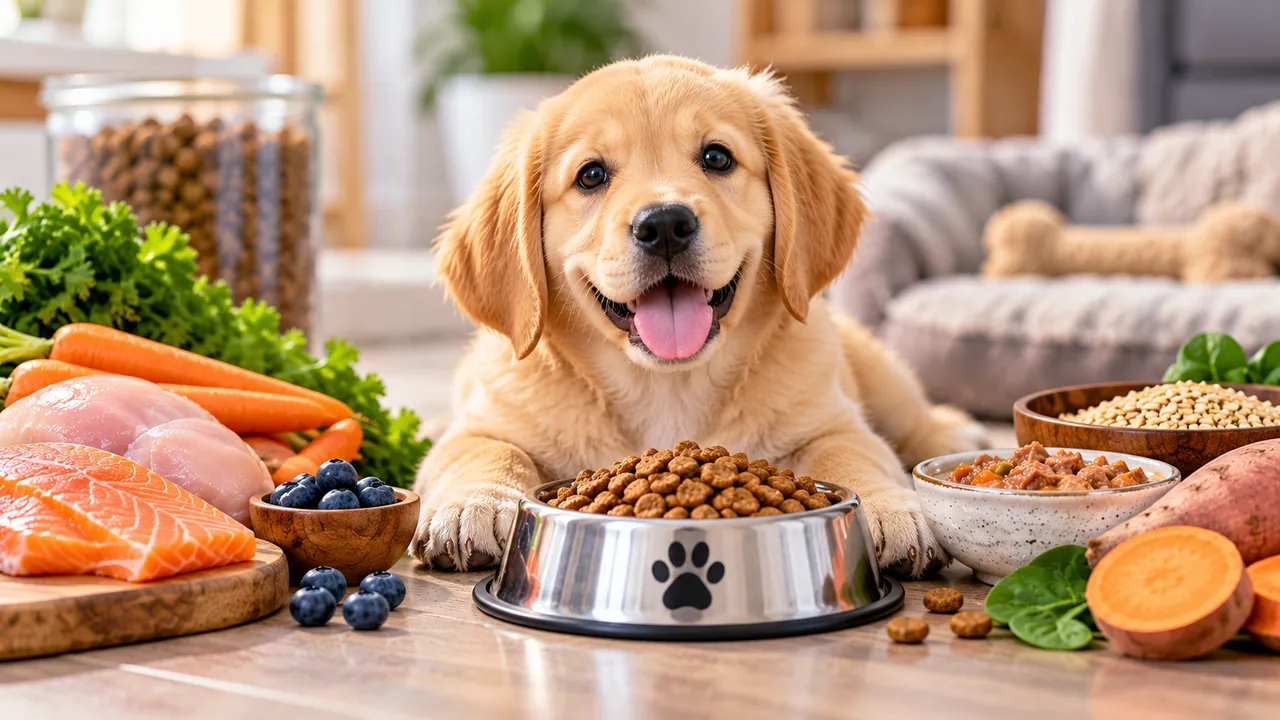
Best Dog Food for Puppies: Dry vs Wet, Small vs Large Breeds (2026)

Finding the best dog food for puppies is one of the first important decisions you make after bringing a puppy home. Puppies grow quickly, and the food they eat during this stage needs to support that growth without providing too little or too much of what they need.
The best puppy food is not necessarily the most expensive bag or the one with the longest ingredient list. A good choice should provide a complete and balanced diet for growth, suit your puppy’s breed size and age, and be something your puppy digests well.
Small-breed and large-breed puppies can also have different feeding and diet considerations, so there is no single food that is perfect for every puppy.
Understanding what actually matters on a puppy food label makes choosing the right diet much easier.
As an Amazon Associate, we may earn a commission from qualifying purchases at no extra cost to you.
In This Guide
- What Is the Best Dog Food for Puppies?
- Why Puppies Need Different Food From Adult Dogs
- What to Look For in Puppy Food
- Best Dry Dog Food for Puppies
- Best Wet Dog Food for Puppies
- Dry vs Wet Puppy Food
- Best Dog Food for Small Breed Puppies
- Best Dog Food for Large Breed Puppies
- How Much Food Should a Puppy Eat?
- Best Dog Food for Puppies With Sensitive Stomachs
- What Ingredients Should Puppy Food Contain?
- Does Protein Matter for Puppies?
- Should Puppies Eat Grain-Free Food?
- Fresh Food for Puppies
- What About Raw Food for Puppies?
- Should You Choose Puppy Food by Brand?
- How to Read a Puppy Food Label
- How to Switch Your Puppy’s Food
- Treats and Your Puppy’s Diet
- Common Puppy Feeding Mistakes
- When Should a Puppy Switch to Adult Dog Food?
- When Should You Talk to a Veterinarian?
- Which Puppy Foods Are Most Popular? A Starting Shortlist
- Pros and Cons
- Key Takeaways
- Frequently Asked Questions
- Final Thoughts
What Is the Best Dog Food for Puppies?
The best dog food for puppies is a complete and balanced diet formulated specifically for growth that suits your puppy’s expected adult size. The shortlist table below names the formulas this site’s breed guides point to most often.
Puppies need energy and nutrients to support developing muscles, bones, organs, skin, coat, and their overall growth.
However, feeding more nutrients or calories is not automatically better.
The goal is controlled, healthy development. Your puppy should receive enough food to grow properly while maintaining an appropriate body condition.
When comparing puppy foods, start with the AAFCO statement rather than marketing claims on the front of the package.
Why Puppies Need Different Food From Adult Dogs
Puppies are not simply smaller adult dogs. Their bodies are developing rapidly, so their feeding and diet requirements differ from those of dogs that have finished growing. Puppy diets provide an appropriate balance of energy, protein, fat, vitamins and minerals for growth, while an adult maintenance food may not be intended to support it. For when to switch and what changes, see the Puppy Food vs Adult Dog Food guide.
What to Look For in Puppy Food
A puppy food should first provide a complete and balanced diet appropriate for growth. After that, consider how the food fits your individual puppy.
Look at the calorie content, feeding instructions, protein and fat sources, nutritional adequacy statement, and whether the food is appropriate for your puppy’s expected adult size. Digestibility also matters.
Your puppy should generally be able to eat the food without persistent diarrhea, vomiting, excessive digestive discomfort, or other ongoing problems. Consistency is often more useful than constantly switching foods because another brand looks better online.
Best Dry Dog Food for Puppies
Dry puppy food is one of the most convenient options for everyday feeding. It is easy to measure, store, and divide across several meals, and formulas are made for small, medium, and large-breed puppies. Kibble size can also matter, especially for very small puppies, smaller pieces may be easier for some puppies to eat comfortably.
Judging dry food only by how much protein appears on the front of the bag can mislead. The overall diet formulation matters more than a single number. For kibble size, calories and value, see the Best Dry Puppy Food guide.
Best Wet Dog Food for Puppies
Wet puppy food can be another suitable option when it provides a complete and balanced diet for growth. Its soft texture may appeal to puppies that find dry kibble difficult to eat, and its higher moisture content can be useful for dogs that consume relatively little water.
Some owners use wet food as the main diet, while others combine it with dry food. Both approaches can work, but total calories still matter.
The best wet dog food for puppies should therefore provide the right balance while fitting into the puppy’s total daily feeding plan. For hydration, palatability and top picks, see the Best Wet Puppy Food guide.
Dry vs Wet Puppy Food
Neither dry nor wet food is automatically better for every puppy. Dry food is convenient and easy to portion. Wet food contains more moisture and may be more appealing to certain puppies.
A combination can also work. Instead of choosing based solely on texture, consider whether the complete diet meets your puppy’s feeding and diet requirements and whether your puppy does well on it. The feeding method that works consistently for both the puppy and owner is often the most practical choice.
Best Dog Food for Small Breed Puppies
Small-breed puppies may need a diet that provides enough nourishment and energy in portions suitable for their smaller bodies. Their small mouths can also make kibble size worth considering.
The food still needs to provide a complete and balanced diet for growth, and portions should be adjusted according to your puppy’s body condition and calorie requirements. For tiny-breed portions and hypoglycemia-safe picks, see the Best Puppy Food for Small Breeds guide.
Best Dog Food for Large Breed Puppies
Feeding a large-breed puppy deserves special attention because rapid or excessive growth is not the goal. These puppies need controlled growth with the right dietary balance.
A puppy expected to become a large adult dog should be fed a diet suitable for the growth of large-size dogs rather than simply receiving larger portions of any puppy food.
If you are unsure whether your puppy falls into the large-breed category or which growth formula is appropriate, your veterinarian can help you choose based on expected adult size. For calcium, cost and feeding by breed, see the Best Puppy Food for Large Breeds guide.
How Much Food Should a Puppy Eat?
There is no single amount that every puppy should eat. It depends on age, current weight, activity, and the food’s calories per cup. Young puppies generally do best on three or four small meals a day until about six months old, then two to three meals a day. Use the bag’s feeding guide as a starting point, then adjust by body condition. For amounts by age and weight, see the Puppy Feeding Schedule guide.
Best Dog Food for Puppies With Sensitive Stomachs
Occasional loose stool can happen for many reasons during puppyhood, including dietary changes and eating things they should not.
If digestive sensitivity is a recurring problem, read our Best Dog Food for Sensitive Stomach guide for a more detailed explanation of ingredients, diet changes, and digestive considerations.
Persistent or severe digestive symptoms in a puppy deserve veterinary attention. For gentle formulas made for puppies, see the Best Puppy Food for Sensitive Stomachs guide.
What Ingredients Should Puppy Food Contain?
It is easy to judge puppy food by looking only at the first few ingredients.
However, an ingredient list does not tell the whole story about the diet.
Puppies need an appropriate overall balance of nutrients rather than one fashionable ingredient.
Protein provides amino acids used throughout the growing body, while dietary fat provides energy and essential fatty acids. Vitamins and minerals also play important roles during development.
The formulation should bring these nutrients together in suitable proportions.
Instead of searching for one “perfect” ingredient, look at whether the complete diet is appropriate for growth.
Does Protein Matter for Puppies?
Protein is an important part of a puppy’s diet because growing bodies require amino acids for normal development and maintenance.
Chicken, beef, turkey, lamb, fish, and other protein sources may all appear in puppy foods.
There is no single protein source that every puppy needs.
If your puppy is healthy, growing appropriately, and tolerating its current food well, there is usually no reason to change protein simply because another ingredient sounds more premium.
For puppies with suspected adverse food reactions, protein selection may require a more structured approach.
Should Puppies Eat Grain-Free Food?
Puppies do not automatically need grain-free food.
The absence of grains does not by itself make a diet healthier, more digestible, or more appropriate for growth.
What matters is the overall formulation and whether the food provides a complete and balanced diet for the puppy’s life stage.
There’s no need to remove entire ingredient groups simply because they have become unpopular online.
If you believe your puppy reacts badly to a particular ingredient, discuss the symptoms with your veterinarian before making unnecessary dietary restrictions.
Fresh Food for Puppies
Fresh dog food has become increasingly popular, but the word “fresh” does not automatically mean that a product provides everything a growing puppy needs. Some fresh foods are formulated as complete diets, while others are intended only for supplemental feeding.
If fresh food will make up most or all of your puppy’s diet, check that it is complete and appropriate for growth.
The appearance of meat and vegetables alone doesn’t tell you whether a diet is adequate.
What About Raw Food for Puppies?
Raw feeding requires careful consideration, particularly for growing puppies.
A collection of raw meat, bones, organs, and vegetables does not automatically provide the right dietary balance for development, and because puppyhood is a period of rapid growth, dietary deficiencies or imbalances are especially undesirable. Owners interested in feeding a homemade or raw diet should ask a veterinary nutritionist for guidance rather than relying on improvised online recipes.
Should You Choose Puppy Food by Brand?
Brand reputation can be useful, but choosing the best dog food brands for puppies should involve more than recognizing a familiar name.
Look at the actual food.
Check its intended life stage, AAFCO adequacy statement, calorie content, feeding instructions, and whether it is suitable for your puppy’s expected adult size.
Then pay attention to your puppy.
Healthy growth, appropriate body condition, normal stools, good appetite, and overall well-being are more meaningful than attractive packaging alone.
How to Read a Puppy Food Label
Learning to read the label makes comparing puppy foods much easier.
Start by finding the nutritional adequacy statement and determining whether the food is appropriate for growth.
Next, look at calorie information and feeding directions.
The guaranteed analysis provides additional information about the food, while the ingredient list shows the ingredients used in the formulation.
These pieces of information should be considered together rather than focusing entirely on whichever ingredient appears first.
How to Switch Your Puppy’s Food
Suddenly replacing one food with another can upset a puppy’s digestive system.
Start by mixing a relatively small amount of the new food with the puppy’s existing diet. Gradually increase the proportion of new food while decreasing the old food over several days.
If significant digestive symptoms appear, pause the transition instead of increasing the new food just to finish it. For the full step-by-step plan, see Change Dog Food Safely.
Treats and Your Puppy’s Diet
Treats may seem small, but they still contribute calories.
The main diet should remain the primary source of balanced nourishment.
Common Puppy Feeding Mistakes
One common mistake is feeding more simply because a puppy appears hungry.
Another is changing brands frequently in search of a perfect food.
Owners may also combine a complete daily portion with large quantities of toppers, treats, and table foods without realizing how much additional energy is being added.
Choosing adult food too early can also be a problem if it is not appropriate for growth.
Similarly, feeding a large-breed puppy without considering its specific growth requirements can overlook an important part of a puppy’s feeding and diet.
Simple and consistent feeding is often easier to evaluate than a constantly changing diet.
Warm the food a little or add a spoonful of wet food from the same brand to make it smell better. Keep treats small so hunger stays for meals.
When Should a Puppy Switch to Adult Dog Food?
There is no single birthday when every puppy should switch to adult food.
Expected adult size therefore matters. For when to switch and what changes, see the Puppy Food vs Adult Dog Food guide.
When Should You Talk to a Veterinarian?
Routine questions about feeding can be discussed during normal puppy checkups.
More urgent attention may be needed when feeding problems are accompanied by persistent vomiting, significant diarrhea, poor growth, unusual weight loss, prolonged refusal to eat, weakness, or other concerning symptoms.
Puppies can be more vulnerable than healthy adult dogs, so persistent problems should not simply be treated by repeatedly trying different foods.
A veterinarian can help determine whether the diet itself is responsible or whether another issue needs attention.
Which Puppy Foods Are Most Popular? A Starting Shortlist
If you want names rather than just criteria, the table below is the shortlist this site’s own breed guides point to most often. Your puppy’s size and digestion still decide the final pick.
| Product | Best For | Key Feature | kcal/cup | Cost/month |
|---|---|---|---|---|
| Royal Canin Size Health Nutrition Small Puppy | Best for small-breed puppies | Breed-specific, DHA and prebiotics, sized for 9 to 22 lb adults | 349 | ~$57/mo |
| Hill’s Science Diet Puppy Healthy Development Small Bites | Best everyday small-breed pick | Genuinely small kibble | 393 | ~$56/mo |
| Purina Pro Plan Puppy Chicken & Rice | Best all-rounder | Live probiotics, complete food for growth | 456 | ~$20 to $26/mo |
| Diamond Naturals Small & Medium Breed Puppy | Best budget pick | Probiotics and whole-food ingredients at a lower price | 453 | ~$24/mo |
| Pedigree Puppy Growth & Protection | Best lowest cost | Lowest-cost complete growth formula | 292 | ~$11 to $18/mo |
| Blue Buffalo Life Protection Formula Large Breed Puppy | Best for large-breed puppies | Controlled growth recipe with DHA | 385 | ~$29/mo |
Prices are Chewy “buy once” prices as retrieved Nov 11, 2026. Monthly costs are computed for a 20 lb puppy.
Small-breed puppies do best on the first two rows, while large-breed puppies need the controlled-growth recipe in the last row. The middle rows suit most other puppies. Whichever row you pick, the test stays the same: an AAFCO statement for growth, a formula matched to expected adult size, and a puppy that grows steadily and digests it well over several weeks.
Whichever you start with, check the same three things the rest of this guide sets out: an AAFCO statement for growth (not adult maintenance only), a formula matched to your puppy’s expected adult size (large-breed growth formulas for large puppies, small-breed formulas for small ones), and a puppy that digests it well: normal stools, steady growth, and good appetite over several weeks.
Which formulas do most puppy guides recommend?
The formulas most often recommended in US puppy guides, and in this site’s own breed guides, are Royal Canin puppy formulas (including the small-breed puppy recipe), Hill’s Science Diet Puppy (including Small Bites), Purina Pro Plan Puppy, Diamond Naturals Puppy, and Pedigree Puppy Growth & Protection. Popularity reflects wide availability and a long track record, not a guarantee for your puppy: match the formula to your puppy’s expected adult size, check the AAFCO growth statement, and judge by how your puppy grows and digests it over several weeks.
What do puppies eat in the first year?
Puppies start on their mother’s milk, then move to a weaning/mushy gruel around 3 to 4 weeks, then to a complete growth formula: dry, wet, or a measured mix of both, fed in 3 to 4 small meals a day until about 6 months old, then usually 2 to 3 meals a day. The food itself should be a growth formula matched to expected adult size, with portions adjusted by body condition rather than by appetite alone. Treats and toppers count toward daily calories, so keep them small. If a puppy has persistent vomiting, diarrhea, poor growth, or refuses food, ask your vet rather than repeatedly switching foods.
Puppy Food Guides by Breed and Type
Every breed grows at its own pace. Pick your puppy’s guide for breed-specific amounts, growth timelines, and picks:
- Best Puppy Food for Large Breeds calcium, cost & feeding compared
- Best Puppy Food for Small Breeds tiny-breed portions & hypoglycemia-safe picks
- Best Dry Puppy Food kibble size, calories & value compared
- Best Wet Puppy Food hydration, palatability & top picks
- Labradors slow-growth feeding fast-growing joints
- German Shepherds rapid growth and pano-safe feeding
- Golden Retrievers fast growth and joint protection
- Rottweilers joint-safe feeding for very fast growth
- Bernese Mountain Dogs fast growth and joint protection
- Cane Corsos giant-breed growth over 18 to 24 months
- French Bulldogs stocky-frame feeding
- Boxers lean-muscle growth
- Bulldogs stocky-frame, joint-aware feeding
- Doberman Pinschers lean growth for a deep-chested breed
- Australian Shepherds athletic growth
- German Shorthaired Pointers lean athletic growth
- Beagles steady growth, weight watch
- Dachshunds spine-safe weight control
- Poodles steady growth for a standard frame
- Cavalier King Charles Spaniels small-breed portions
- Miniature Schnauzers small-breed portions
- Pomeranians tiny-breed, hypoglycemia-safe feeding
- Yorkshire Terriers tiny-breed, hypoglycemia-safe feeding
- Shih Tzus small-breed portions
- Puppy Feeding Schedule: How Much & How Often amounts by age & weight
- Puppy Food vs Adult Dog Food when to switch & what changes
Pros and Cons
Puppy food is made for growth, and that focus brings real benefits plus a few traps. Here is the honest balance.
Pros:
- Growth formulas give puppies the extra energy, protein, and DHA they need to develop well.
- Size-specific recipes match kibble size and calories to small or large puppies.
- An AAFCO growth statement on the bag is a clear, simple quality check.
- Most trusted puppy foods are easy to find in stores and online.
Cons:
- Overfeeding a growth formula can push large-breed puppies to grow too fast.
- Adult food is cheaper but does not meet a puppy’s growth needs.
- Marketing words like “premium” or “natural” say nothing about the actual recipe.
- Switching foods often can upset a puppy’s stomach and hide the real problem.
Key Takeaways
- Feed a complete and balanced food made for growth, matched to your puppy’s expected adult size.
- Check the bag for an AAFCO statement for growth, not adult maintenance only.
- Small-breed puppies need small kibble and energy-dense portions. Large-breed puppies need controlled growth, not extra food.
- Neither dry nor wet food is automatically better for every puppy.
- Feed 3 to 4 small meals a day until about 6 months old, then 2 to 3 meals a day.
- Judge a food by steady growth, normal stools, and a good appetite over several weeks, not by the price or the picture on the bag.
Frequently Asked Questions
What is the best first food for a new puppy?
The best choice is a complete and balanced food formulated for growth and appropriate for the puppy’s expected adult size. The individual puppy’s digestion, body condition, and growth should also be considered.
Is dry or wet food better for puppies?
Both can be suitable. The important factor is whether the food provides a complete and balanced diet for growth.
What is the best dry dog food for puppies?
Choose dry food formulated for growth and suitable for your puppy’s breed size. Consider calorie density, kibble size, digestibility, and your puppy’s individual response.
What is the best wet dog food for puppies?
Look for wet food that provides a complete and balanced diet for growth if it will be used as the main diet. Not every canned or wet product is meant to be a complete diet, so check the label.
Can puppies eat adult dog food?
Puppies should generally receive a diet appropriate for growth until they are ready for an adult maintenance diet. The timing varies with expected adult size and development.
How do I know if my puppy is growing at a healthy rate?
Watch body condition, not the scale alone. You should be able to feel the ribs under a thin layer of fat without seeing them stick out, and your puppy should have a visible waist when you look from above. Steady weight gain on the vet’s growth chart, firm stools, and good energy are all good signs. If your puppy looks too thin or too round, ask your vet to check portions before you change foods.
Final Thoughts
Finding the best dog food for puppies does not require chasing every new food trend.
Start with a complete and balanced diet appropriate for growth and your puppy’s expected adult size. Then consider portion size, calorie intake, digestibility, feeding routine, and how your individual puppy develops on the food.
Dry food, wet food, or a carefully planned combination can all be reasonable choices when the overall diet meets your puppy’s feeding and diet needs.
Small and large puppies may require different considerations, which is why expected adult size should be part of the decision.
Most importantly, monitor the puppy rather than only the food package. Healthy development, appropriate body condition, normal digestion, and consistent growth provide useful information about whether the feeding plan is working.
A simple, balanced diet that supports steady growth is usually more valuable than constantly searching for a supposedly perfect puppy food.


16 Comments