
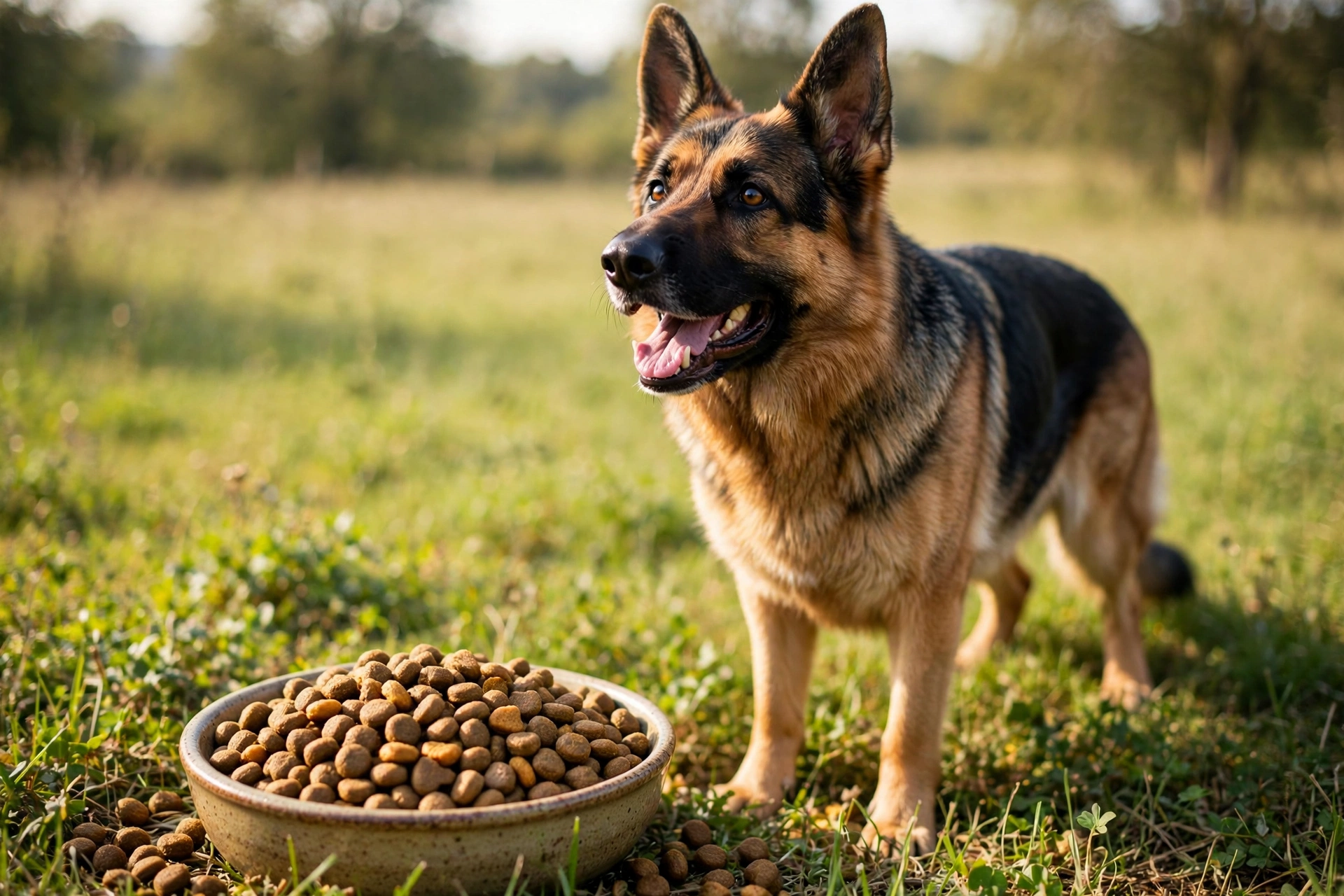
Best Dog Food for German Shepherds: 6 Top Picks (2026)
Finding the best dog food for German Shepherds is not as simple as grabbing a big bag of kibble off the shelf. German Shepherds are powerful, intelligent working dogs, but they are also famously delicate eaters: the breed is prone to sensitive stomachs, skin issues, and joint problems like hip and elbow dysplasia. The right food has to do several jobs at once: fuel high energy levels, support strong bones and joints, and stay gentle on digestion.
In this guide, I break down exactly what German Shepherd nutrition should look like, compare 6 of the most recommended formulas for 2026 (from a breed-specific formula to budget-friendly large-breed picks), and give you a practical buying checklist so you can choose with confidence. Every pick below is based on ingredient analysis, brand reputation, and owner reviews.
For most German Shepherds, Royal Canin German Shepherd Adult is the best overall pick, with breed-specific kibble. Purina Pro Plan Sensitive Skin and Stomach suits sensitive stomachs, and Diamond Naturals Large Breed Adult is the value pick. Aim for 24 to 32% protein and 12 to 16% fat, and feed 3 to 4 cups split into two meals.
In This Guide
- Key Takeaways
- The 6 Best Dog Foods for German Shepherds (2026)
- Royal Canin German Shepherd Adult Dry Dog Food
- Purina Pro Plan Sensitive Skin & Stomach, Salmon & Rice
- Hill’s Science Diet Adult Large Breed
- Taste of the Wild High Prairie
- VICTOR Purpose Grain Free Hero Canine
- Diamond Naturals Large Breed Adult Chicken & Rice
- What to Look for in German Shepherd Food: Buying Guide
- What to Avoid in Your German Shepherd’s Food
- Joint Health and Diet for German Shepherds
- Pros and Cons
- Conclusion: Which Food Should You Choose?
- German Shepherd Puppies and Seniors Need Different Picks
- Feeding Habits That Lower Bloat Risk
Key Takeaways
- Best overall: Royal Canin German Shepherd Adult, the only pick with kibble and nutrients designed specifically for the breed’s long muzzle and joint needs.
- Sensitive stomachs are a breed trait: German Shepherds are among the most digestion-sensitive large breeds; highly digestible proteins and added prebiotics or probiotics make a real difference.
- Joint support is non-negotiable: Look for glucosamine, chondroitin, and omega-3s (EPA/DHA) on the label, because hip and elbow dysplasia run high in this breed.
- Budget picks work too: Taste of the Wild High Prairie and Diamond Naturals Large Breed deliver large-breed nutrition at a fraction of the premium price.
- Skip the marketing traps: Most German Shepherds do not need grain-free food; a named meat meal as the first ingredient and an AAFCO “complete and balanced” statement matter far more.
The 6 Best Dog Foods for German Shepherds (2026)
Here is a quick overview of the six formulas I recommend most often for adult German Shepherds, followed by in-depth notes on each one.
| Product | Best For | Key Feature |
|---|---|---|
| Royal Canin German Shepherd Adult | Best overall | Breed-specific kibble shape, digestion + joint support |
| Purina Pro Plan Sensitive Skin & Stomach (Salmon & Rice) | Sensitive stomachs | Oatmeal + prebiotic fiber, live probiotics |
| Hill’s Science Diet Adult Large Breed | Vet-recommended choice | Natural glucosamine & chondroitin, no artificial colors or flavors |
| Taste of the Wild High Prairie | Best budget pick | Roasted bison & venison, K9-strain probiotics, grain-free |
| VICTOR Purpose Grain Free Hero Canine | Active & working dogs | 33% protein from beef, fish & pork meals; made in Texas |
| Diamond Naturals Large Breed Adult | Best value large-breed formula | Strain-specific probiotics, no corn or wheat |
Royal Canin German Shepherd Adult Dry Dog Food
Royal Canin is one of the only brands to make a formula engineered specifically for German Shepherds. The kibble is shaped for their long, narrow muzzle, encouraging chewing rather than gulping and reducing the risk of upset stomachs. The recipe uses highly digestible proteins plus specific fibers to support stool quality (a genuine concern for this breed) along with EPA and DHA from fish oil for the thick double coat, and added glucosamine and chondroitin for joints. Special fibers and highly digestible proteins help decrease stool volume and promote good digestive health, while the appropriately balanced energy content supports the active lifestyle of this breed.
Key ingredients: chicken by-product meal, brown rice, corn, wheat, chicken fat, fish oil, psyllium seed husk, glucosamine, chondroitin.
Who it is for: Adult German Shepherds (15 months+) whose owners want the most targeted option available and are fine paying a premium price.
Honest note: The ingredient list includes some lower-value grains and by-product meals that purist shoppers dislike, and it is one of the pricier bags on this list. You are paying for breed-specific research rather than premium ingredients.
Purina Pro Plan Sensitive Skin & Stomach, Salmon & Rice
If your German Shepherd has a touchy stomach (soft stools, gassiness, or inconsistent appetite), this is the formula I point people toward first. The salmon-based recipe is easy to digest and is made with oatmeal and rice for gentle digestion, plus it includes a prebiotic fiber to feed the good gut bacteria. It also includes live probiotics that promote digestive health, which is important for this breed because skin issues often travel with digestive sensitivities.
Key ingredients: salmon, rice, barley, canola meal, oatmeal, fish oil, dried chicory root, live probiotics.
Who it is for: German Shepherds with known digestive sensitivity, soft stools, or mild skin irritation alongside gut issues.
Honest note: It is a fish-based recipe, and some dogs are picky about the smell; a few finicky Shepherds prefer meat-based formulas. Owners who also want grain-free will not find it here. This is a grain-inclusive recipe by design.
If your dog’s digestion issues are more serious, see my guide to the best dog food for sensitive stomachs for more specialized options.
Hill’s Science Diet Adult Large Breed
Hill’s Science Diet is the brand veterinarians recommend most often, and the Adult Large Breed formula is a solid all-rounder for German Shepherds. It is made with high-quality protein for lean muscle, natural sources of glucosamine and chondroitin for joint support, and natural fibers for digestive health. There are no artificial colors, flavors, or preservatives, and the nutrient balance is tightly controlled, which is exactly what you want from a mass-produced kibble.
Key ingredients: chicken meal, brown rice, whole grain wheat, whole grain corn, chicken fat, soybean oil, dried beet pulp, glucosamine, chondroitin.
Who it is for: Owners who want a safe, widely recommended, easy-to-find large-breed formula backed by feeding trials.
Honest note: Like Royal Canin, it relies on grains and meals rather than fresh deboned meat, so ingredient snobs will not be wowed. But the nutritional science behind it is among the best-documented in the industry.
Taste of the Wild High Prairie
German Shepherds eat a lot (a large adult can go through 30+ pounds of kibble a month), so price matters. Taste of the Wild High Prairie delivers high-protein nutrition at a fraction of the cost of boutique brands: roasted bison and roasted venison supply species-specific protein, and the formula uses sweet potatoes, peas, and chickpeas as easily digestible carbohydrates. It also includes a proprietary K9 Strain Probiotics blend that supports gut health, which is important for this sensitive breed.
Key ingredients: buffalo, lamb meal, chicken meal, sweet potatoes, peas, bison, roasted venison, salmon oil, dried chicory root.
Who it is for: Budget-conscious owners who still want meat-first, high-protein nutrition with digestive support.
Honest note: This is a grain-free formula. Most German Shepherds do perfectly well, and often better, with grains, and grain-free should only be chosen deliberately, not as a default “premium” signal. If your dog has no diagnosed grain sensitivity, consider the brand’s Ancient Grains line or another grain-inclusive pick on this list.
VICTOR Purpose Grain Free Hero Canine
For German Shepherds with a job (police K9s, search-and-rescue, sport work, or just extremely active companions), VICTOR’s Hero Canine formula stands out. At 33% protein from beef, fish, and pork meals, it is one of the most nutrient-dense options here, with the brand’s VPRO blend of supplements, vitamins, and minerals, plus glucosamine and chondroitin for joints. It is manufactured in VICTOR’s own Texas facility, and the grain-free recipe suits dogs with grain sensitivities.
Key ingredients: beef meal, sweet potato, chicken fat, peas, chicken meal, pork meal, fish meal, flaxseed, selenium yeast, probiotics.
Who it is for: High-energy, working, or very active German Shepherds that need calorie- and nutrient-dense fuel.
Honest note: This much protein and fat is overkill for a couch-potato Shepherd and can contribute to weight gain in less active dogs. A few owners also report their dogs needed a slower transition onto it. Match the formula to the dog’s actual activity level.
Diamond Naturals Large Breed Adult Chicken & Rice
Diamond Naturals hits a sweet spot between price and quality. The Large Breed Adult formula is made with cage-free chicken protein, includes strain-specific K9 probiotics for digestive support, and supplies guaranteed levels of glucosamine and chondroitin. There is no corn, wheat, or artificial flavors, colors, or preservatives. It is family-owned and made in the USA, and the 40-pound bag keeps the cost per pound impressively low for a large-breed dog’s appetite.
Key ingredients: chicken, chicken meal, whole grain brown rice, cracked pearled barley, chicken fat, flaxseed, dried chicory root, probiotics, glucosamine, chondroitin.
Who it is for: Owners who want a genuine large-breed formula (joint support, digestive care, controlled growth nutrients) without the premium price tag.
Honest note: Some dogs with chicken sensitivities will not do well on it (a chicken-free alternative like the salmon-based Purina Pro Plan above is the better bet), and a small number of owners report inconsistent kibble size between bags.
What to Look for in German Shepherd Food: Buying Guide
Use this checklist to judge any formula, whether it is on this list or not.
Named meat or meat meal as the first ingredient
Look for “chicken,” “salmon,” “beef meal,” or similar: specific, named animal proteins, not vague “meat and bone meal.” Adult German Shepherds generally do well on 24 to 32% protein; active and working dogs benefit from the higher end of that range.
Joint-support nutrients
Hip and elbow dysplasia are among the most common health problems in the breed. Glucosamine, chondroitin, and omega-3 fatty acids (EPA and DHA from fish oil) support cartilage and joint function. These appear naturally in many large-breed formulas, so check the guaranteed analysis or ingredient list rather than assuming.
Digestible ingredients and gut support
German Shepherds have famously sensitive digestive systems. Highly digestible proteins, easy-on-the-gut carbohydrates like rice or oatmeal, and added prebiotics or probiotics (dried chicory root, live cultures) help keep stools firm and consistent. If you are raising a puppy, my guide to the best dog food for puppies covers digestion-friendly starter formulas too.
AAFCO “complete and balanced” statement
Whatever you buy, the label should carry an AAFCO statement confirming the food is formulated (or feeding-trial tested) to meet nutrient profiles for adult maintenance or all life stages. This is the baseline quality floor. No statement, no purchase.
Appropriate fat and calorie levels
Most adult German Shepherds thrive on 12 to 16% fat and roughly 350 to 450 kcal per cup, adjusted for activity. Working dogs and very active adolescents may need calorie-dense formulas; easy keepers need portion control, because extra weight is the enemy of already-vulnerable hips. For portion sizes by age and activity, see our german shepherd feeding guide page.
Skin and coat support
The dense double coat sheds constantly and is prone to hot spots and dryness. Omega-6 fatty acids (from chicken fat, sunflower oil) plus omega-3s from fish oil or flaxseed help keep skin calm and the coat shiny.
What to Avoid in Your German Shepherd’s Food
Vague ingredients. “Meat by-products,” “animal digest,” or “poultry meal” without a named species tell you nothing about quality. Named meals (chicken meal, fish meal) are fine and normal, while unnamed ones are a red flag.
Excessive fillers. A little corn, rice, or barley is fine and often improves digestibility, but a food led by three or four grain fractions before any animal protein is selling you carbohydrates, not nutrition.
Artificial colors, flavors, and preservatives. They add nothing for your dog and can aggravate sensitivities. Look for natural preservation (mixed tocopherols) instead.
Grain-free by default. Grain-free formulas are appropriate for dogs with diagnosed grain allergies or sensitivities, but that is a small minority. For the average German Shepherd, wholesome grains like rice, barley, and oatmeal are nutritious and highly digestible. If you are unsure, see my guide to the best limited ingredient dog food for simpler, cleaner options.
Switching foods abruptly. German Shepherd stomachs punish sudden changes. Transition any new food over 7 to 10 days, mixing increasing amounts of the new food with decreasing amounts of the old.
Joint Health and Diet for German Shepherds
German Shepherds are prone to hip and elbow dysplasia, so diet is best thought of as long-term joint protection rather than a quick fix. The single most helpful dietary step is keeping your dog at a lean, healthy weight, because every extra pound adds load to joints that may already be vulnerable. Feed to the body condition you can see and feel, a visible waist and ribs that are easy to feel under a thin layer of fat, rather than simply following the maximum amount printed on the bag, and adjust portions when activity changes.
Beyond weight, look for the joint-supporting nutrients already mentioned in this guide: glucosamine and chondroitin, plus omega-3 fatty acids from fish oil, which help support normal joint comfort. These ingredients support joints; they do not repair dysplasia or replace veterinary care, so do not rely on a single nutrient while ignoring weight or exercise. Puppies need special care too, since steady, controlled growth matters more than rapid weight gain, so feed a large-breed puppy formula in measured amounts and ask your vet about growth checks. Pair the diet with regular, low-impact movement such as walking and swimming where suitable, and ask your vet promptly if you notice limping, stiffness after rest, or reluctance to climb stairs.
Pros and Cons
Six real formulas cover the main German Shepherd needs, but the list has gaps a buyer should know about. Here is the honest balance.
Pros
- Six real US formulas, including the only breed-specific pick, with a comparison table that shortlists them fast.
- Sensitive stomachs get real coverage: a dedicated pick with probiotics, plus a full buying guide on digestible ingredients and gut support.
- Joint support runs through the whole guide, from the picks to the buying guide to a dedicated joint health section.
- Puppy and senior needs are covered in their own section, with the 12 to 15 month switch timing spelled out.
Cons
- No prescription-diet coverage for diagnosed stomach or skin disease, those need a vet’s prescription, and this guide does not cover them.
- No feeding amounts by age or activity beyond the 3 to 4 cups figure in one FAQ answer, and no feeding schedule.
- No named puppy or senior pick: the puppy and senior advice names no product, only the adult picks.
- No price or bag-size guidance, so a buyer cannot judge the monthly cost of feeding a large dog that eats 30 or more pounds of kibble a month.
Conclusion: Which Food Should You Choose?
For most adult German Shepherds, Royal Canin German Shepherd Adult remains the single best match. It is the only formula here designed around this breed’s muzzle, digestion, and joint needs in one package. If your dog’s stomach is the issue, go with Purina Pro Plan Sensitive Skin & Stomach; if your budget is tight, Diamond Naturals Large Breed Adult gives you honest large-breed nutrition at a low price; and if your Shepherd works for a living, VICTOR Hero Canine delivers the dense fuel active dogs need.
Whichever you choose, feed for the dog in front of you: watch the stool quality, the coat, the energy, and the waistline over 4 to 6 weeks, and adjust portions (or formulas) if something is off. This guide is for information only. Check with your vet for your dog’s specific needs.
German Shepherd Puppies and Seniors Need Different Picks
The adult picks above are the right starting point for a German Shepherd in its prime, but they are not the right pick at both ends of life. A German Shepherd puppy needs a large-breed growth formula, not an adult formula: controlled calcium and an AAFCO statement for the growth of large size dogs matter more than protein percentage alone, because rapid or excessive growth harms developing joints. Feed a large-breed puppy formula in measured amounts, switch to adult food around 12 to 15 months when skeletal growth is mostly done, and transition over 7 to 10 days. The FAQ below already sets out that timing, and the large-breed puppy guide on this site covers the growth rules in full.
An older German Shepherd needs the opposite emphasis: lean weight first, joints second. Extra pounds load hips and elbows that may already be vulnerable, so feed to a visible waist and ribs that are easy to feel, not to the maximum on the bag, and favour a formula with glucosamine, chondroitin, and omega-3s (EPA/DHA). The Hill’s Science Diet Adult Large Breed and Diamond Naturals Large Breed picks above both carry joint support at a reasonable price, while Royal Canin German Shepherd Adult remains the breed-specific option if the budget allows. For both puppies and seniors, keep portions measured and activity low-impact: steady, controlled feeding protects a German Shepherd’s joints far more than any single ingredient on the label.
What is the best food for a German Shepherd puppy?
A large-breed puppy formula with an AAFCO statement for the growth of large size dogs. That statement, with its controlled calcium, is the non-negotiable part. Adult formulas on this page, including Royal Canin German Shepherd Adult (designed for 15 months and older), are not puppy food. Feed the puppy formula in measured amounts, avoid calcium supplements on top of a complete food, and switch to adult food around 12 to 15 months when your vet confirms growth is mostly complete, transitioning over 7 to 10 days.
What is the best food for an older German Shepherd?
A large-breed adult formula that keeps weight lean and supports joints: glucosamine, chondroitin, and omega-3 fatty acids (EPA/DHA), with portions set by body condition rather than the bag’s maximum. Hill’s Science Diet Adult Large Breed and Diamond Naturals Large Breed Adult both fit that profile at a moderate price; Royal Canin German Shepherd Adult is the breed-specific alternative. If your older Shepherd is losing weight, seems stiff after rest, or is reluctant on stairs, ask your vet promptly. Diet supports joints, it does not replace veterinary assessment.
Feeding Habits That Lower Bloat Risk
German Shepherds are a deep-chested breed, and that shape puts them among the dogs most at risk of bloat, a dangerous twisting of the stomach that can turn deadly within hours. Food choice matters, but how you feed matters just as much, and this is the one breed risk the rest of this guide never mentions. Start by splitting the daily amount into two meals instead of one large meal, since one big meal is a known risk factor. If your Shepherd gulps food in under a minute, switch to a slow feeder bowl or scatter the kibble on a baking tray so the meal takes longer and less air gets swallowed. Keep fresh water available through the day, but do not let a thirsty dog gulp a full bowl right after eating. Keep your dog calm for about an hour before and after meals, with no running, jumping, or rough play in that window. Learn the warning signs now, before you ever need them: a belly that looks swollen and feels hard, retching without bringing anything up, pacing, restlessness, or drooling. If you see those signs, treat it as an emergency and get to a vet at once, since bloat can kill in hours and waiting to see if it passes is the most dangerous choice of all.
What is the best dog food for German Shepherds?
Based on ingredient analysis, brand reputation, and owner reviews, Royal Canin German Shepherd Adult is the best overall pick. It is the only formula designed specifically for the breed, with kibble shaped for their long muzzle plus digestive and joint support. For sensitive stomachs, Purina Pro Plan Sensitive Skin & Stomach (Salmon & Rice) is an excellent alternative, and Diamond Naturals Large Breed Adult is a strong budget choice. The right pick ultimately depends on your dog’s age, activity level, and digestion.
How much should a German Shepherd eat per day?
A typical adult German Shepherd needs about 3 to 4 cups of dry food daily, split into two meals, though this varies with weight, activity level, and the food’s calorie density. Always start with the feeding guide on the bag and adjust based on body condition. You should be able to feel (but not see) the ribs. Your vet can help you dial in the right amount for your dog.
Do German Shepherds need grain-free food?
Most do not. Grain-free diets are appropriate for dogs with diagnosed grain allergies or sensitivities, which are a small minority. Wholesome grains like rice, barley, and oatmeal are nutritious, highly digestible, and often gentler on sensitive stomachs. Unless your vet has identified a grain issue, a grain-inclusive formula is usually the better choice.
Why are German Shepherds prone to sensitive stomachs?
The breed has a well-documented tendency toward digestive sensitivity, including conditions like exocrine pancreatic insufficiency (EPI) and inflammatory bowel issues. Easily digestible proteins, moderate fiber, and added prebiotics or probiotics tend to help. If your dog has chronic diarrhea or weight loss, see your vet before just switching foods.
What should I look for to support my German Shepherd’s joints?
Look for glucosamine, chondroitin, and omega-3 fatty acids (EPA and DHA) on the label, since hip and elbow dysplasia are common in the breed. Large-breed formulas typically include these plus controlled calcium and phosphorus levels. Keeping your dog at a healthy weight is equally important, because extra pounds put extra stress on vulnerable joints.
When should I switch my German Shepherd from puppy to adult food?
Most German Shepherds transition around 12 to 15 months of age, when they finish most of their skeletal growth. Breed-specific formulas like Royal Canin German Shepherd Adult are designed for dogs 15 months and older. Switch gradually over 7 to 10 days to avoid upsetting the digestive system.
Is wet or dry food better for German Shepherds?
Quality dry food is the most practical choice for most owners. It is calorie-controlled, supports dental health, and stores well. Wet food can improve palatability for picky eaters and add hydration. Many owners feed mostly dry food with some wet mixed in; either approach works as long as the food is complete and balanced.
How do I switch my German Shepherd to a new food safely?
Transition gradually over 7 to 10 days: start with about 25% new food mixed into the old food, increase the ratio every few days, and watch stool quality throughout. German Shepherds are prone to digestive upset, so slower is better. Some sensitive dogs need a full two weeks. If loose stools persist, pause the transition or consult your vet.
Can diet prevent hip dysplasia in German Shepherds?
No. Hip dysplasia has a strong genetic component, so no food can guarantee prevention. Diet can still help by supporting a lean body weight, steady growth in puppies, and joint comfort through nutrients such as glucosamine, chondroitin, and omega-3 fatty acids. If your Shepherd shows limping or stiffness, ask your vet for an assessment rather than relying on food alone.
Does my German Shepherd need a joint supplement if their food already contains glucosamine?
Not necessarily. Many large-breed foods already include glucosamine and chondroitin, though amounts vary by formula and source. Check the label and ask your vet before adding a supplement, especially if your dog takes other products or medicines, so you do not double up unnecessarily. Weight control and regular, low-impact exercise matter at least as much as any single supplement.
How can I lower my German Shepherd’s risk of bloat at mealtimes?
Split the daily food into two meals instead of one large meal, use a slow feeder bowl if your dog gulps, and keep your dog calm for about an hour before and after meals, with no running or rough play. Keep fresh water available but do not let your dog gulp a full bowl right after eating. Learn the warning signs, a swollen hard belly, retching without bringing anything up, restlessness, or pacing, and get to a vet at once if you see them, since bloat is an emergency.
Is it safe to feed my German Shepherd once a day?
No. One large meal a day raises the risk of bloat in this deep-chested breed, and most vets advise splitting the daily amount into two meals. This guide puts the typical adult amount at 3 to 4 cups a day, so feed about half in the morning and half in the evening. Two smaller meals are also easier on sensitive stomachs, which German Shepherds are prone to.






5 Comments