

Best Puppy Food for German Shepherds: Rapid growth and pano-safe feeding (6 Picks 2026)
Finding the best German Shepherd puppy food matters more for this breed than for most. German Shepherds grow fast, reach 50 to 90 pounds as adults, and are famous for sensitive stomachs and joint issues later in life. A generic “puppy food” bag from the grocery store often feeds a Shepherd puppy too much calcium and calories, which can push bones to grow too quickly and set the stage for hip and elbow problems. German Shepherds make up the vast majority of panosteitis cases, the growing pains of the long bones that hit puppies at 5 to 18 months, mostly males, so steady growth matters more than fast growth here. For the general large-breed background, see our best puppy food for large breeds guide.
This guide rounds up six of the best German Shepherd puppy food options available in the US in 2026. Every pick below is a large-breed puppy formula with the controlled calcium-to-phosphorus ratio a growing Shepherd needs, DHA for brain and eye development, and joint-support ingredients. I’ve compared ingredient lists, guaranteed analysis panels, and real owner reviews to rank them honestly, judging each food on ingredient analysis, brand reputation, and owner reviews, not marketing claims.
Here’s what you’ll find: quick takeaways, a comparison table, in-depth reviews of each pick, a buying guide for German Shepherd puppy feeding and diet, what to avoid, and answers to the most common feeding questions.
Royal Canin German Shepherd Puppy is the best overall pick, since it is the only formula made for the breed from 8 weeks to 15 months. Purina Pro Plan Large Breed Puppy is the best runner-up, and Iams is the best budget pick. Feed a large-breed puppy formula with controlled calcium and DHA until 12 to 18 months.
In This Guide
- Key Takeaways
- Top Picks at a Glance
- In-Depth Reviews: Best German Shepherd Puppy Food
- German Shepherd Puppy Feeding and Diet: What to Look For
- What to Avoid
- Feeding Tips for German Shepherd Puppies
- Pros and Cons
- Conclusion: Which German Shepherd Puppy Food Should You Buy?
- What About Fresh or Wet Food for German Shepherd Puppies?
Key Takeaways
- German Shepherd puppies need large-breed puppy food, not regular puppy food. Controlled calcium and phosphorus prevent bones from growing too fast and reduce the risk of skeletal disorders.
- DHA from fish oil supports brain and eye development during the critical first year; every pick below includes it.
- Top overall pick: Royal Canin German Shepherd Puppy, the only formula designed specifically for the breed’s digestion, kibble shape, and joint needs.
- Best budget pick: Iams ProActive Health Smart Puppy Large Breed, solid feeding and diet at about a third of the price of premium options.
- Feed by body condition, not by the bag: most German Shepherd puppies do best on 3 meals a day until 6 months, then 2 meals daily.
- This guide is for information only. Check with your vet for your dog’s specific needs.
Top Picks at a Glance
| Product | Best for | Key feature | Kcal/Cup | Cost/Month |
|---|---|---|---|---|
| Royal Canin German Shepherd Puppy | Overall, breed-specific feeding and diet | Kibble shaped for the Shepherd muzzle; glucosamine + chondroitin for joints | 331 | ~$108/mo |
| Purina Pro Plan Large Breed Puppy Chicken & Rice | Brain development & digestion | Live probiotics plus DHA from omega-rich fish oil | 419 | ~$69/mo |
| Hill’s Science Diet Puppy Large Breed Chicken & Brown Rice | Controlled, steady growth | Clinically tuned calcium-phosphorus ratio for large-breed skeletons | 391 | ~$96/mo |
| Blue Buffalo Life Protection Formula Large Breed Puppy Chicken & Brown Rice | Natural-ingredient focus | Deboned chicken first; LifeSource Bits with antioxidants; no by-products | 385 | ~$54/mo |
| Diamond Naturals Large Breed Puppy Lamb & Rice | Value with superfoods | Pasture-raised lamb; added kale, blueberries, and coconut | 414 | ~$46/mo |
| Iams ProActive Health Smart Puppy Large Breed | Budget-friendly | 22 key nutrients plus DHA at a price most families can sustain | 378 | ~$40/mo |
Prices checked on Chewy on November 14, 2026. Cost per month is for a 6-month-old German Shepherd puppy expected to reach 70 lb as an adult.
In-Depth Reviews: Best German Shepherd Puppy Food
Royal Canin German Shepherd Puppy
If you only want to know one answer, it’s this: Royal Canin German Shepherd Puppy is the single most targeted food you can buy for a German Shepherd puppy. It is formulated specifically for purebred German Shepherd puppies from 8 weeks to 15 months. Shepherds genuinely keep growing longer than most breeds, so that 15-month window matters.
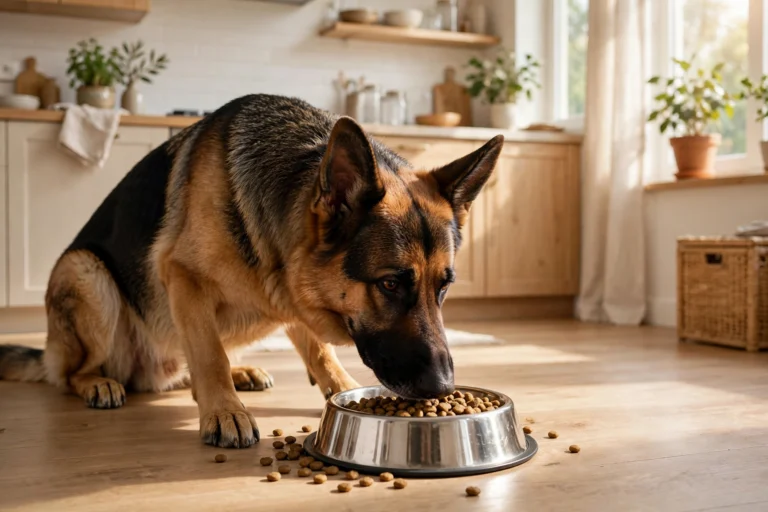
Why it fits: the kibble is shaped and textured specifically for the German Shepherd’s long muzzle and teeth, encouraging slower chewing (Shepherds are notorious gulpers). It contains highly digestible proteins and specific fibers aimed at the breed’s famously delicate digestion, plus an antioxidant complex with vitamin E for immune support. For joints, the breed’s weak point, it includes glucosamine and chondroitin to support bones and cartilage during rapid growth. That controlled, steady growth is the pano-safe part: German Shepherds make up the vast majority of panosteitis cases, so a formula that does not push bones to grow too fast is exactly what this breed needs.
Key ingredients: chicken by-product meal (first ingredient), brewers rice, wheat, and corn. The formula is not grain-free, which Royal Canin positions as a deliberate choice for digestibility. Guaranteed analysis shows a minimum 28% protein and balanced calcium and phosphorus for large-breed growth.
Who it’s for: owners who want a breed-specific formula backed by feeding trials, especially puppies with soft stools or gassy digestion. Who should skip it: owners who want to avoid by-product meals or grain-inclusive recipes, and those on a tight budget, since it’s priced at the premium end.
Bottom line: based on ingredient analysis, brand reputation, and owner reviews, this is the most complete Shepherd-puppy formula on the market. If it fits your budget, start here.
Purina Pro Plan Large Breed Puppy Chicken & Rice
Purina Pro Plan Large Breed Puppy is a workhorse pick that shows up in almost every ranking of large-breed puppy foods, and for good reason. It’s designed for puppies expected to weigh over 50 pounds as adults, which every German Shepherd will.
Why it fits: DHA from omega-rich fish oil supports brain and vision development during the critical early months, and the formula includes live probiotics for digestive and immune health, a genuine plus for a breed prone to digestive upset. It also contains a natural source of glucosamine for developing joints, plus complex carbohydrates for steady energy.
Key ingredients: chicken as the first ingredient, rice, and corn gluten meal. The formula includes animal by-products (a concentrated glucosamine source) and grains. That is fine for most puppies, but worth knowing if your Shepherd is sensitive to corn or chicken. Guaranteed protein runs around 28%, with controlled calcium for large-breed skeletal growth.
Who it’s for: owners who want strong digestion support and brain-development nutrients from a widely available, well-established brand.
Hill’s Science Diet Puppy Large Breed Chicken & Brown Rice
German Shepherd puppies are at real risk of growing too fast. Hill’s Science Diet Large Breed Puppy is built around one of the most carefully controlled mineral profiles in its class, with calcium and phosphorus tuned so large-breed skeletons develop at the right pace, lowering the risk of developmental orthopedic disease.
Why it fits: it’s formulated for puppies that will weigh over 55 pounds as adults and includes DHA from fish oil for healthy brain and eye development, plus vitamins E and C and antioxidants for immune support. It’s made in the US and contains no artificial preservatives, flavors, or colors.
Key ingredients: chicken meal as the first ingredient, cracked pearled barley, whole grain wheat and corn. The recipe is grain-inclusive, which Hill’s backs with decades of feeding-trial data. Protein sits near 27 to 28% with carefully moderated fat so energy intake doesn’t push growth too fast.
Who it’s for: owners who worry most about joints and want the most growth-controlled formula available over the counter. It’s priced mid-to-premium, and some owners note a strong smell and occasional gas during transition, so introduce it slowly over 7 to 10 days.
Blue Buffalo Life Protection Formula Large Breed Puppy Chicken & Brown Rice
Blue Buffalo’s Life Protection Formula Puppy appeals to owners who want to avoid by-product meals, corn, wheat, and soy entirely. It starts with real deboned chicken and pairs the kibble with LifeSource Bits, small dark kibbles concentrated with antioxidants, vitamins, and minerals.
Why it fits: the recipe delivers DHA and ARA (arachidonic acid) from real ingredients for brain and eye development, plus calcium and phosphorus for bones and teeth. It skips poultry by-product meals, corn, wheat, soy, and artificial flavors or preservatives, the cleanest mainstream label on this list.
Key ingredients: deboned chicken, chicken meal, oatmeal, and barley as the carb base. Protein runs high (around 32%), which supports lean muscle development. That is great for active Shepherd puppies, but watch portions if your pup trends chunky.
Who it’s for: owners who want a by-product-free, grain-inclusive-but-no-corn/wheat/soy formula from a mainstream brand. Some puppies turn their nose up at it, and a few owners report loose stools on the switch, so transition gradually.
Diamond Naturals Large Breed Puppy Lamb & Rice
Diamond Naturals Large Breed Puppy is the quiet achiever of this list: a genuinely good large-breed formula at a mid-range price, with pasture-raised lamb as the first ingredient and easy-to-digest rice, a welcome option for Shepherd puppies whose stomachs don’t love chicken.
Why it fits: beyond the controlled calcium-to-phosphorus ratio for steady large-breed growth, the formula includes species-specific probiotics for digestive and immune health, omega fatty acids for skin and coat, and a lineup of fruits and vegetables (blueberries, kale, spinach, oranges, and coconut) for natural antioxidants.
Key ingredients: lamb, lamb meal, and ground white rice lead the label; egg product and flaxseed round out the protein and fat profile. Protein sits near 27% with moderate fat, a steady-growth recipe rather than a high-octane one.
Who it’s for: owners who want strong feeding and diet plus real-food extras without paying premium prices, and puppies that do better on lamb than chicken.
Iams ProActive Health Smart Puppy Large Breed
Feeding a German Shepherd puppy isn’t cheap, since they’ll eat a lot before they’re done growing. Iams ProActive Health Smart Puppy Large Breed keeps costs down while still delivering the large-breed essentials: DHA from omega-3 fatty acids for brain development, and 22 key nutrients modeled on what puppies get from their mother’s milk.
Why it fits: it’s formulated for large-breed puppies with controlled mineral levels for proper bone growth, and it supports muscles, joints, digestion, immune system, and brain development. For the price, the guaranteed analysis is competitive, around 26 to 27% protein with added omega-6 and omega-3 fatty acids for skin and coat.
Key ingredients: farm-raised chicken is the first ingredient, followed by ground whole grain corn and sorghum. It does contain artificial colors, which some owners prefer to avoid, and chicken-intolerant puppies should look elsewhere.
Who it’s for: families feeding a hungry Shepherd puppy on a budget, or multi-dog households where the per-bag cost really adds up. If your puppy’s digestion is extremely delicate, one of the mid-range picks above is a safer bet.
German Shepherd Puppy Feeding and Diet: What to Look For
Protein: 22 to 32% from named animal sources
Large-breed puppy food should list a named animal protein first: chicken, lamb, or chicken meal. AAFCO recommends a minimum of 22% protein for growth, and all six picks above meet or exceed that. Very high protein (35%+) isn’t automatically better for a Shepherd puppy; steady, controlled growth beats maximum growth.
Controlled calcium and phosphorus
Controlled minerals slow bone growth in Shepherds: look for calcium around 0.8 to 1.2% and phosphorus around 0.6 to 1.0%, with a Ca:P ratio between roughly 1:1 and 1.8:1. Excess calcium drives developmental bone disease, including panosteitis risk in this breed. The full calcium explainer is on the large-breed hub.
DHA for brain and eye development
DHA, an omega-3 fatty acid, supports brain and eye development during the first year, so check that your Shepherd puppy’s food lists fish oil or salmon oil as a DHA source. The full DHA explainer is on the large-breed hub.
Glucosamine and chondroitin for joints
German Shepherds carry a higher-than-average risk of hip and elbow dysplasia. Foods with added glucosamine and chondroitin, or naturally rich ingredients like chicken meal, support cartilage development during the fastest growth phase. They’re not a cure, but they stack the odds in your puppy’s favor.
Digestibility: fiber, prebiotics, and probiotics
Shepherd puppies are infamous for soft stools. Highly digestible proteins (chicken, lamb, rice), moderate fiber, and added prebiotics or probiotics help keep digestion stable. If your Shepherd puppy has loose stools, Purina Pro Plan Sensitive Skin & Stomach Large Breed Puppy Salmon & Rice is the swap to try. Our best dog food for sensitive stomach guide covers what calms troubled tummies, and the full digestibility explainer is on the large-breed hub.
AAFCO statement
Every food you buy should carry an AAFCO statement confirming it is formulated for “growth” or “all life stages including growth of large-breed dogs (70 lbs or more as an adult).” AAFCO defines a large breed as 70+ pounds as an adult, so a food without that large-breed growth qualification can run too high in calcium for a Shepherd puppy. The full AAFCO explainer is on the large-breed hub.
Panosteitis (pano): why steady growth matters for German Shepherds
Panosteitis, often called pano or growing pains, is inflammation of the long bones in young, fast-growing dogs. German Shepherds make up the vast majority of cases: young dogs aged 5 to 18 months are most commonly affected, males more than females, and about 75% of cases in German Shepherds occur between 5 and 12 months. The signs are a shifting limp that moves from leg to leg, and pain when the long bones are pressed. There is no food that cures pano, but steady, controlled growth lowers the risk: keep calcium controlled, do not overfeed, and do not push for fast weight gain. That is what pano-safe feeding means on this page, and it is why every pick above is a large-breed puppy formula with controlled minerals.
What to Avoid
- Regular (non-large-breed) puppy food: often too high in calcium and calories for Shepherd puppies, raising the risk of skeletal problems, including panosteitis (pano).
- Adult dog food for puppies: misses the DHA and mineral ratios puppies need; don’t switch until your Shepherd is 12 to 18 months old (your vet can advise).
- Vague ingredient labels: “meat by-products” or “animal fat” without a named source are red flags. Named sources only.
- Grain-free formulas without vet guidance: the FDA has investigated a potential link between some grain-free diets and canine heart disease (DCM); large breeds aren’t the classic risk group, but there’s no benefit for a healthy Shepherd puppy without a diagnosed grain sensitivity. Discuss with your vet before going grain-free.
- Calcium supplements on top of puppy food: skip them with a complete large-breed puppy diet, since extra calcium is what drives developmental bone disease.
- Raw or homemade diets without a nutritionist: balancing calcium, phosphorus, and micronutrients at home is genuinely hard; a board-certified veterinary nutritionist is the safe route if you want to cook for your Shepherd puppy.
Feeding Tips for German Shepherd Puppies
Feed three meals a day until 6 months, then drop to two. Large, infrequent meals on a deep-chested breed add bloat (gastric dilatation-volvulus) risk later in life, so the two-meal habit should stick permanently. Feed 2 to 3 smaller meals a day, and keep your puppy calm for 1 hour either side of meals. A distended belly, unproductive retching, or restlessness means a vet immediately. Keep your puppy lean: you should be able to feel (not see) the ribs. A slightly lean Shepherd puppy grows more evenly and stresses developing joints less.
Transition foods over 7 to 10 days, mixing increasing amounts of the new food into the old. Shepherd stomachs punish abrupt switches. Measure food with a proper cup. Free-pouring is how Shepherd puppies get chunky. And keep fresh water available at all times, especially with kibble-heavy diets. For detailed portions and schedules, see our feeding guide for german shepherds here.
If you want breed-level detail on adult feeding and diet too, start with our best dog food for German Shepherds guide, and for meal-frequency questions see the general best dog food for puppies overview.
| Product | Kcal/Cup | Price | Price/lb | Daily Feeding | Cost/Month |
|---|---|---|---|---|---|
| Royal Canin German Shepherd Puppy | 331 | $104.99 / 30 lb | $3.50/lb | ~5.1 cups/day | ~$108/mo |
| Purina Pro Plan Large Breed Puppy Chicken & Rice | 419 | $74.98 / 34 lb | $2.21/lb | ~4.46 cups/day | ~$69/mo |
| Hill’s Science Diet Puppy Large Breed Chicken & Brown Rice | 391 | $78.99 / 27.5 lb | $2.87/lb | ~4.67 cups/day | ~$96/mo |
| Blue Buffalo Life Protection Formula Large Breed Puppy Chicken & Brown Rice | 385 | $79.97 / 34 lb | $2.35/lb | ~3.25 cups/day | ~$54/mo |
| Diamond Naturals Large Breed Puppy Lamb & Rice | 414 | $54.99 / 40 lb | $1.37/lb | ~4.5 cups/day | ~$46/mo |
| Iams ProActive Health Smart Puppy Large Breed | 378 | $35.24 / 30.6 lb | $1.15/lb | 5 cups/day | ~$40/mo |
Amounts are for a 6-month-old German Shepherd puppy expected to reach 70 lb as an adult, at an assumed current weight of about 50 lb. Prices checked on Chewy on November 14, 2026. For the full feeding schedule, see our German Shepherd Feeding Guide.
Pros and Cons
Every pick on this list is a large-breed puppy formula, so the choice comes down to budget, ingredients, and your puppy’s stomach. Here is the honest balance.
Pros
- A breed-specific pick exists: Royal Canin is made for German Shepherd puppies from 8 weeks to 15 months.
- Every pick covers the large-breed basics: controlled calcium, DHA, and joint support.
- The budget pick covers the essentials at about a third of the price of premium options.
- A lamb-based pick suits puppies whose stomachs do not love chicken.
Cons
- The most targeted pick sits at the premium end of the price range.
- Several picks include by-product meals or grains that some owners prefer to avoid.
- The highest-protein pick needs careful portions if your puppy trends chunky.
What About Fresh or Wet Food for German Shepherd Puppies?
Every pick on this list is dry kibble, and kibble suits most Shepherd puppies well. It is easy to store, easy to measure, and the large-breed formulas above already control calcium and add DHA. But kibble is not the only format worth knowing about, and the top competing guides cover two more.
Fresh food is the biggest one. Dogster ranks The Farmer’s Dog fresh food as its number one pick for German Shepherd puppies. The meals are cooked from whole ingredients, shaped by vets and nutritionists, and pre-portioned for each puppy before delivery. The trade-off is price. Fresh food costs far more per day than kibble, and the gap grows with a large puppy that eats a lot. It also needs fridge and freezer space, and deliveries must keep coming on schedule. We have not picked a fresh food here or priced one per month, because fresh food costs several times more than kibble for a puppy heading for 70 lb and prices vary by delivery plan.
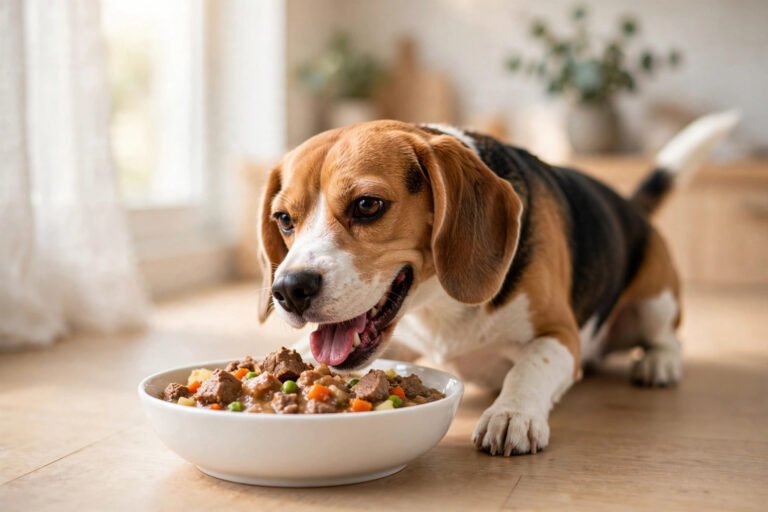
Wet food sits in the middle. A canned puppy food such as Purina Pro Plan Development Canned Puppy Food gives picky puppies a softer texture and extra moisture, and it can work as a topper over kibble for a puppy that turns away from a dry bowl. It still needs the same checks as any puppy food: a named protein first, DHA for brain development, and an AAFCO statement for growth, including growth of large-breed dogs.
Whichever format you pick, the rules in this guide still apply. Keep the food made for large-breed puppies, keep portions measured, and ask your vet before you switch formats.
Conclusion: Which German Shepherd Puppy Food Should You Buy?
For most German Shepherd puppies, Royal Canin German Shepherd Puppy is the best choice: it’s the only formula here designed for the breed from kibble shape to digestion to joints, and owner reviews consistently back it up. If you want a large-breed formula with strong digestion support, Purina Pro Plan Large Breed Puppy is the runner-up. On a budget, Iams ProActive Health Smart Puppy Large Breed covers the essentials at a fraction of the cost. Whichever you choose, feed for steady, controlled growth, keep your puppy lean, and check in with your vet at every vaccination visit. Good feeding and diet in year one pays off for the next twelve. For adult feeding too, see our best dog food for German Shepherds guide, and if you share your home with another working breed, see our guides to the best puppy food for German Shorthaired Pointers and the best puppy food for Doberman Pinschers. Before you buy any brand, ask the WSAVA questions: does the maker employ vets who specialize in feeding and run feeding trials? We have not claimed feeding-trial status for any brand here where we could not verify it.
This guide is for information only. Check with your vet for your dog’s specific needs.
Frequently Asked Questions
How much should I feed my German Shepherd puppy?
Feed three meals a day until 6 months, then drop to two meals daily. Feed by body condition rather than the bag. You should be able to feel (not see) your puppy’s ribs. Measure food with a proper cup instead of free-pouring, and keep fresh water available at all times.
When should I switch my German Shepherd puppy to adult food?
Between 12 and 18 months, since Shepherds keep growing longer than most breeds. Ask your vet at a vaccination visit for the right timing. Switching too early means missing the DHA levels and calcium-to-phosphorus ratios puppies need.
Do German Shepherd puppies need large-breed puppy food?
Yes. Large-breed puppy formulas control calcium and phosphorus so bones grow at the right pace, lowering the risk of developmental orthopedic disease. Regular puppy food can run too high in calcium for a growing Shepherd.
Is grain-free food good for German Shepherd puppies?
Not necessarily. The FDA has investigated a potential link between some grain-free diets and canine heart disease (DCM). There is no proven benefit for a healthy Shepherd puppy without a diagnosed grain sensitivity, so discuss it with your vet first.
What is the best puppy food for a German Shepherd with a sensitive stomach?
Look for highly digestible proteins, moderate fiber, and added prebiotics or probiotics. Breed-specific formulas such as Royal Canin German Shepherd Puppy are designed around the breed’s famously delicate digestion.
How big will my German Shepherd puppy get?
Most adults reach 50 to 90 pounds. Because they grow fast and large, steady controlled growth matters more than maximum growth, so keep your puppy lean and avoid excess calcium.
4 Comments