
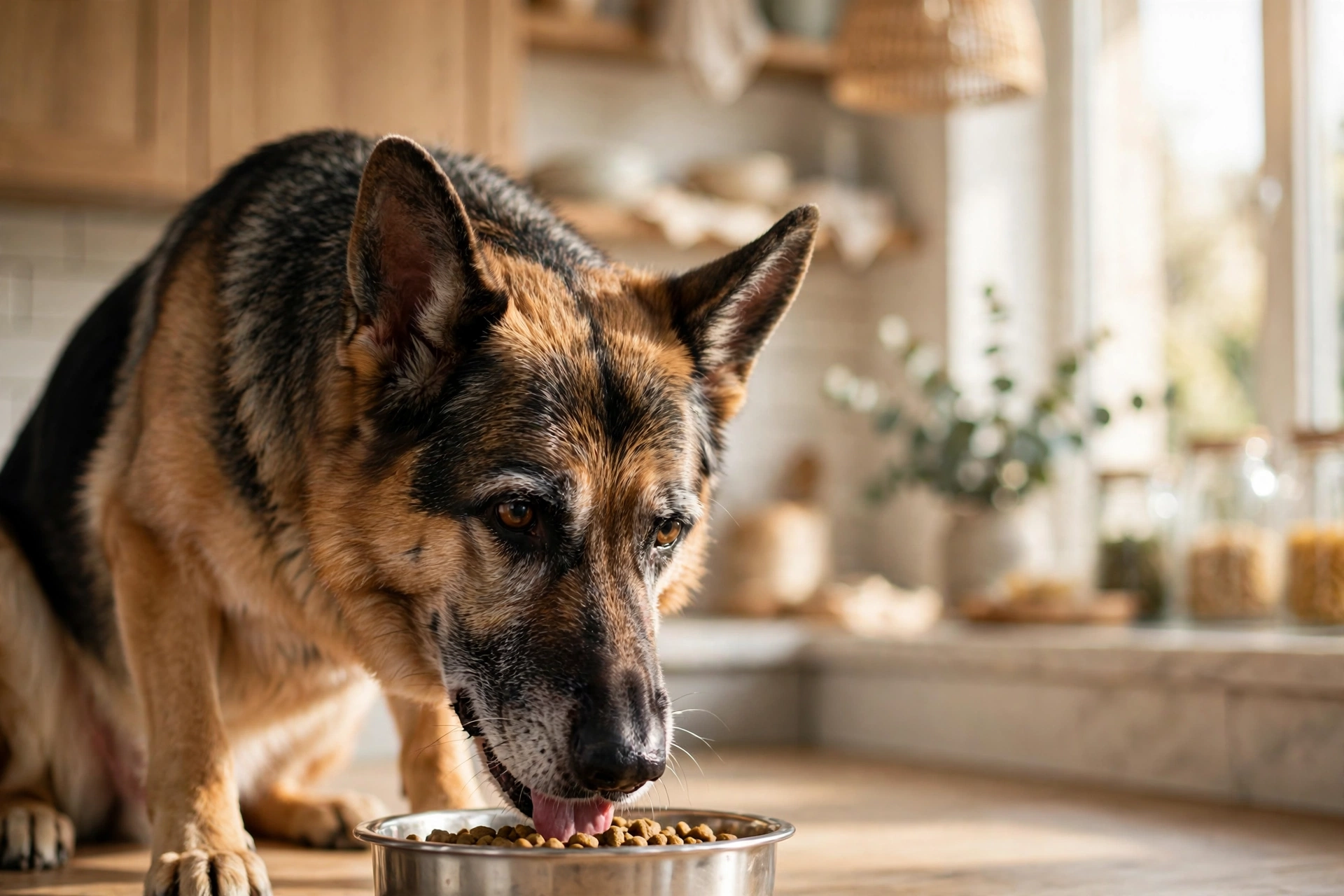
Best Senior German Shepherd Dog Food: 6 Top Picks (2026)
Finding the best senior German Shepherd dog food gets harder once your dog hits that gray-muzzle stage. German Shepherds age faster than smaller breeds — most are considered seniors by age 7 — and the food that powered their adult years often stops cutting it. Stiff joints, a slowing metabolism, and a fussier stomach all show up around the same time.
In this guide, I’ll walk you through six solid senior formulas for German Shepherds, based on ingredient analysis, brand reputation, and what real owners report. You’ll find breed-specific picks, high-protein options, a fresh-food choice, and the key nutrients that actually matter for an aging GSD: joint support, lean protein, fiber, and omega-3s. I’ll also cover what to look for on the label, what to avoid, and how to make the switch without upsetting your dog’s stomach.
Key Takeaways
- Senior German Shepherds need joint support (glucosamine, chondroitin, omega-3s), lean protein to hold muscle, and fewer calories than they ate as adults.
- Royal Canin German Shepherd 5+ is the standout pick for breed-specific nutrition starting at age 5, with kibble shaped for the breed’s long muzzle.
- For dogs 8 and older, Royal Canin Large Aging 8+ targets very senior large breeds with easy-to-chew, rehydratable kibble.
- Switch to a senior formula around age 7 (earlier if joint stiffness or weight gain shows up), and transition gradually over 7–10 days.
Best Senior German Shepherd Dog Food: Quick Comparison
| Product | Best For | Key Feature |
|---|---|---|
| Royal Canin Breed Health Nutrition German Shepherd 5+ (Dry, 28 lb) | Best overall breed-specific senior pick | Kibble shaped for GSD muzzle; collagen, EPA & DHA |
| Royal Canin Size Health Nutrition Large Aging 8+ (Dry, 30 lb) | Best for very senior dogs (8+) | Easy-to-chew rehydratable kibble; antioxidants & prebiotics |
| Blue Buffalo Wilderness High-Protein Senior Chicken Recipe (Dry) | Best high-protein grain-inclusive senior food | ~33% protein with glucosamine & chondroitin |
| Hill’s Science Diet Adult 7+ Healthy Mobility Large Breed (Dry) | Best for joint mobility | Natural sources of glucosamine & chondroitin; vet-recommended brand |
| Just Food For Dogs Pantry Fresh Joint & Skin Support (Fresh) | Best fresh option for joints and skin | Whole-food pork recipe designed for joint & skin health |
| Ollie Lamb Dish with Cranberries (Fresh) | Best human-grade fresh food | Lean lamb protein, omega fatty acids, customizable portions |
Royal Canin Breed Health Nutrition German Shepherd 5+
When it comes to the best senior German Shepherd dog food with the breed’s name literally on the bag, Royal Canin Breed Health Nutrition German Shepherd 5+ is hard to beat. Formulated for German Shepherds aged 5 and older, it’s one of the few foods that treats 5 as the start of the senior years — which suits this breed, since GSDs age faster than average.
The standout feature is the breed-specific kibble shape, designed around the German Shepherd’s long muzzle and scissor bite. Older dogs with worn teeth or a weaker bite genuinely seem to manage it more comfortably than generic kibble. The formula also includes collagen plus EPA and DHA to support joints and skin — two areas where senior GSDs tend to struggle first.
Key ingredients: chicken by-product meal, brown rice, oat groats, brewers rice, fish oil (source of EPA/DHA), glucosamine and chondroitin sources, and an antioxidant complex.
Who it’s for: German Shepherd owners who want a single bag that accounts for the breed’s joints, digestion, and coat from age 5 onward. It’s premium-priced, but the breed-specific tailoring is the point.
Keep in mind: some owners balk at by-product meal as the first ingredient. Royal Canin grades and tests these ingredients heavily, and the brand’s feeding-trial and AAFCO nutritional adequacy record is among the strongest in the industry — but if rendered meals are a deal-breaker for you, one of the picks below may fit better.
Royal Canin Size Health Nutrition Large Aging 8+
Once a German Shepherd reaches 8, the aging curve steepens. Royal Canin Large Aging 8+ is designed for large dogs (56–100 lbs) in this stage, and it’s the pick I’d point to for a dog that’s visibly slowing down.
Its signature feature is the kibble: exclusive, easy-to-chew pieces that can be rehydrated with warm water — a genuine help for seniors with dental wear or missing teeth. The formula balances an antioxidant blend for immune support with prebiotics and easy-to-digest proteins for the older gut, plus joint-supporting nutrients.
Key ingredients: brown rice, chicken by-product meal, oat groats, brewers rice, fish oil, dried beet pulp (prebiotic fiber), glucosamine, chondroitin, and vitamins C and E.
Who it’s for: owners of very senior German Shepherds (8+) whose main worries are stiffness, digestion, and keeping weight on or off as needed.
Keep in mind: it’s not breed-specific, so you lose the muzzle-shaped kibble of the German Shepherd 5+ formula, and it’s positioned at a premium price.
Blue Buffalo Wilderness High-Protein Senior Chicken Recipe
Senior dogs still need plenty of protein — arguably more than ever, since muscle mass is what keeps an aging dog mobile. Blue Buffalo Wilderness Senior Chicken Recipe delivers roughly 33% protein (dry matter) from deboned chicken, chicken meal, and dried chicken, making it one of the most protein-forward senior options that’s widely available in the US.
It also includes glucosamine and chondroitin for joints, omega-3 and omega-6 fatty acids for skin and coat, and comes in at relatively low calories for a senior formula — helpful for German Shepherds that gain weight as their activity drops. It’s grain-inclusive (oatmeal, barley), which suits owners who want to avoid the DCM concerns that have shadowed grain-free diets.
Key ingredients: deboned chicken, chicken meal, dried chicken, oatmeal, barley, flaxseed, glucosamine, chondroitin, and Blue Buffalo’s “LifeSource Bits” antioxidant blend.
Who it’s for: active-ish senior German Shepherds that still need serious protein to maintain muscle, and owners who prefer a grain-inclusive recipe at a mid-range price.
Keep in mind: the higher protein isn’t ideal for seniors with kidney issues — if your vet has flagged kidney function, ask before going high-protein.
Hill’s Science Diet Adult 7+ Healthy Mobility Large Breed
If creaky joints are the number-one concern, Hill’s Science Diet Adult 7+ Healthy Mobility Large Breed deserves a look. Hill’s is one of the most vet-recommended brands in the US, and this formula uses natural sources of glucosamine and chondroitin — the building blocks of healthy cartilage — with nutrition the brand says supports mobility.
Beyond joints, it carries balanced minerals for bone strength, high-quality chicken protein for lean muscle, and natural fibers for digestion. Omega-6 fatty acids and vitamin E support the skin and coat, which often dulls with age in German Shepherds.
Key ingredients: chicken meal, whole grain wheat, brewers rice, whole grain sorghum, cracked pearled barley, fish oil, flaxseed, dried beet pulp, glucosamine and chondroitin sources.
Who it’s for: senior German Shepherds showing early stiffness or diagnosed arthritis, and owners who value a brand with deep clinical-nutrition roots.
Keep in mind: like most senior formulas it leans on grains, and the calorie density means careful portioning for weight-prone seniors.
Just Food For Dogs Pantry Fresh Joint & Skin Support
Some senior German Shepherds turn picky, and a fresh, whole-food recipe can win them back to the bowl. Just Food For Dogs Pantry Fresh Joint & Skin Support is a shelf-stable fresh food built around pork, quinoa, kale, carrots, and apples, formulated specifically for joint health and skin condition — two classic senior GSD issues.
The Dog Food Advisor’s analysis puts it at about 32.5% protein (dry matter) with a very low fat-to-protein ratio, and it’s rated for adult and senior German Shepherds. Because it’s a complete fresh meal rather than a topper, you can feed it as the whole diet or mix it with kibble for palatability and extra moisture.
Key ingredients: pork, quinoa, kale, carrots, apples, fish oil, and a full vitamin-mineral nutrient pack.
Who it’s for: owners who want fresh, minimally processed nutrition with targeted joint and skin support, and dogs that have gone off dry food.
Keep in mind: fresh food costs substantially more per day than kibble, and you’ll need pantry or fridge space for the packs.
Ollie Lamb Dish with Cranberries
Ollie is a US fresh-food subscription brand, and its Lamb Dish with Cranberries is a strong fit for senior German Shepherds. Lamb is a lean, highly digestible protein that helps maintain muscle without piling on fat — useful for weight control, which directly eases pressure on aging joints. The recipe also brings omega-3 and omega-6 fatty acids for skin and coat plus fiber for digestion.
Analysis shows roughly 38.5% protein (dry matter) from lamb, lamb liver, butternut squash, chickpeas, and kale. Portions are customized to your dog’s age, weight, and activity level, which takes the guesswork out of feeding a senior whose calorie needs keep shifting.
Key ingredients: lamb, lamb liver, butternut squash, chickpeas, kale, cranberries, fish oil.
Who it’s for: owners who want human-grade, portion-controlled fresh food and don’t mind the subscription model or the premium price.
Keep in mind: it’s the priciest way to feed a large senior dog, and delivery requires freezer space.
What to Look For in Senior German Shepherd Dog Food
Senior German Shepherds have a predictable set of needs. Use this checklist when comparing labels:
Joint-supporting nutrients
Glucosamine, chondroitin, omega-3 fatty acids (EPA and DHA), and collagen support cartilage and help with the stiffness that plagues aging large breeds. German Shepherds are especially prone to hip dysplasia and arthritis, so these should be non-negotiable on a senior label.
Quality protein at the right level
Look for a named animal protein (chicken, lamb, fish) as the first ingredient and an overall protein level around 25–35% on a dry-matter basis. Seniors need protein to hold onto muscle — but dogs with kidney disease may need restriction, so follow your vet’s guidance there.
Moderate fat and calories
A slower metabolism plus less activity means weight gain creeps up fast, and extra pounds punish bad hips. Senior formulas typically run leaner; pair the right food with measured portions. For portion sizes by age and activity, see our german shepherd feeding guide page.
Digestible fiber and prebiotics
Beet pulp, chicory root, and similar fibers feed gut bacteria and firm up stools. Senior German Shepherds are famous for sensitive stomachs, so gentle, digestible ingredients matter more with age. If digestion is your dog’s main issue, see our guide to sensitive stomach food for German Shepherds.
AAFCO statement for maintenance
Check the label for an AAFCO nutritional adequacy statement covering adult maintenance (or all life stages). It’s the baseline proof the food is complete and balanced — never buy a senior food that lacks one.
What to Avoid
- Excessive fat and calories: calorie-dense “performance” formulas will pack weight onto a slowing senior fast.
- Vague protein sources: “meat and bone meal” or “animal digest” as primary proteins tell you nothing about quality — prefer named sources.
- Artificial colors, flavors, and preservatives: they add nothing for an aging dog and can bother sensitive stomachs.
- Foods without joint support: a generic adult formula may be fine short-term, but a senior GSD benefits measurably from added glucosamine, chondroitin, and omega-3s.
- Grain-free without a reason: unless your dog has a diagnosed grain allergy (uncommon), grain-inclusive senior foods are well-supported; discuss grain-free choices with your vet given the ongoing DCM research.
- Sudden diet changes: switching cold turkey is the fastest route to digestive upset in an older dog — always transition over 7–10 days.
When to Switch to Senior Food
Most veterinarians suggest moving large breeds to a senior formula around age 7, though German Shepherds — who age a bit faster than average — often benefit from the switch between 6 and 7. Royal Canin’s breed-specific German Shepherd 5+ formula even starts at 5. Watch for the signals rather than the birthday: graying muzzle, slower stairs, weight gain on the same portions, or a duller coat. If your German Shepherd is still in the puppy stage, stick with a growth formula like the ones in our German Shepherd puppy food guide until 12–18 months.
Conclusion: Our Top Recommendation
The best senior German Shepherd dog food for most owners is Royal Canin Breed Health Nutrition German Shepherd 5+. It’s the only widely available formula built specifically for this breed’s senior years — muzzle-shaped kibble for easier eating, plus collagen, EPA, and DHA for the joints and skin that age first in German Shepherds.
That said, match the pick to your dog: choose Royal Canin Large Aging 8+ for dogs 8 and older with dental or digestion issues, Blue Buffalo Wilderness Senior for a protein-forward budget-friendlier option, Hill’s Science Diet Healthy Mobility when joints are the priority, and a fresh option like Just Food For Dogs or Ollie for picky eaters or owners who want whole-food nutrition.
Whatever you choose, transition slowly, keep portions measured, and schedule regular vet checkups — food is one piece of healthy aging, not the whole puzzle. This guide is for information only — check with your vet for your dog’s specific needs. For a broader look at feeding the breed at every life stage, see our best dog food for German Shepherds guide.
When should I switch my German Shepherd to senior dog food?
Most vets suggest moving large breeds to a senior formula around age 7, though German Shepherds age a little faster than average, so many owners switch between 6 and 7. Watch for graying around the muzzle, slower stairs, weight gain on the same portions, or a duller coat rather than waiting for a birthday.
How much food should a senior German Shepherd eat per day?
Most senior German Shepherds do well on 3–4 cups of quality dry food per day, split into two meals — but activity level, weight, and the food’s calorie density all change the number. Seniors typically need fewer calories than they did as adults, so measure portions and adjust based on body condition, not the bag’s maximum.
What ingredients help senior German Shepherds’ joints?
Glucosamine, chondroitin, omega-3 fatty acids (EPA and DHA), and collagen support cartilage and ease the stiffness common in aging large breeds. Look for these named on the label of any senior formula you consider.
Is breed-specific food worth it for a senior German Shepherd?
Breed-specific formulas tailor kibble shape and nutrient levels to a German Shepherd’s muzzle, joints, digestion, and coat — and Royal Canin even makes one that starts at age 5. They cost more than generic large-breed food, but many owners find the fit worthwhile for a breed with such predictable aging issues.
Can a senior German Shepherd eat regular adult dog food?
Adult food works in a pinch, but senior formulas adjust calories, fiber, and joint nutrients for aging bodies. Puppy food is a definite no — it’s far too calorie-dense for a slowing senior and will cause rapid weight gain.
What should I avoid in senior dog food?
Skip excessive fat and calories, vague protein sources like ‘meat and bone meal,’ artificial colors, flavors, and preservatives, and any food without an AAFCO statement for maintenance. Grain-free formulas are only worth it with a diagnosed grain allergy — discuss the choice with your vet given the ongoing DCM research.
Should I add wet or fresh food for my senior German Shepherd?
Yes — mixing in wet or fresh food adds moisture and palatability, which helps picky older dogs and seniors with worn teeth. Just reduce the kibble portion so total daily calories stay the same, and introduce the change gradually.
How do I switch my senior dog to a new food safely?
Transition over 7–10 days: mix a small amount of the new food into the old, increasing the new portion every couple of days. Senior German Shepherds often have sensitive stomachs, so go slower if you see loose stools — and never switch cold turkey.




One Comment