
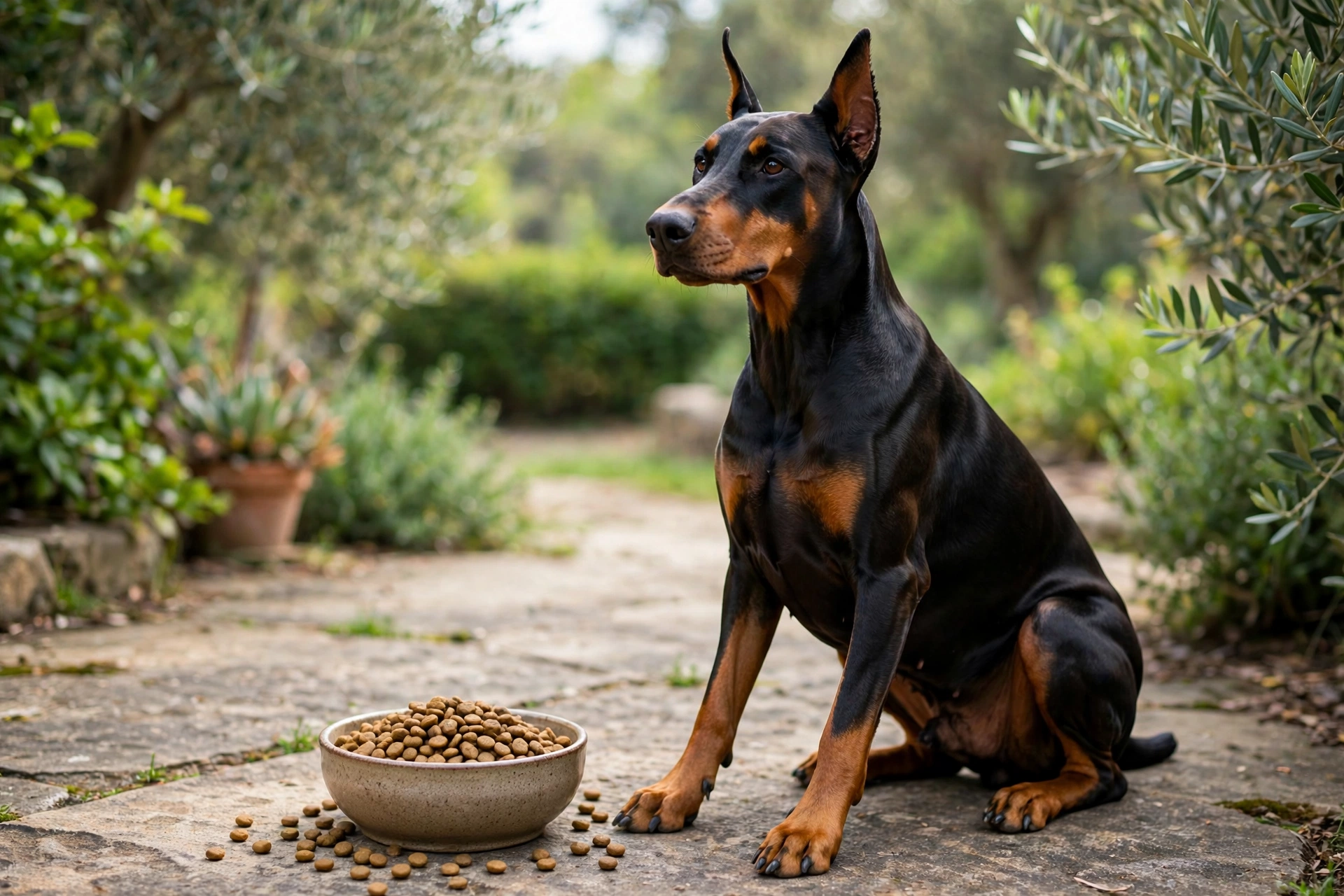
Best Dog Food for Doberman Pinschers: 6 Top Picks (2026)
Finding the best dog food for Doberman Pinschers is about more than picking a bag with a big dog on the front. Dobermans are large, athletic, and powerfully built, with a deep chest, lean muscle, and an energy level that can surprise first-time owners. They need food that supports strong muscles and healthy joints, keeps their short coat glossy, and does not upset a stomach that can be surprisingly sensitive. In this guide, we compare six real, widely available US formulas for adult Dobermans, explain what makes each one a good fit, and walk you through exactly what to look for on the label so you can choose with confidence.
Whether your Doberman is a couch-loving companion, a running partner, or a dog-sport prospect, the right food should match their activity level, weight, and any sensitivities. A highly active Doberman may need more calories and fat than a quieter senior, while a dog that gains weight easily needs portion control more than a “light” label. Below, you will find our top picks, a comparison table, a practical buying guide, and answers to the questions Doberman owners ask most.
Key Takeaways
- Adult Dobermans do best on a large-breed adult formula with a named animal protein first, around 25-32% protein, and joint support from glucosamine.
- Purina Pro Plan Large Breed Chicken & Rice is our best overall pick for healthy adult Dobermans because it is large-breed specific, affordable, and easy to find.
- For sensitive stomachs or itchy skin, a salmon-based formula such as Purina Pro Plan Sensitive Skin & Stomach Large Breed Salmon & Rice is often the simplest switch.
- Measure food, feed twice a day, and watch body condition rather than free-feeding — Dobermans gain and lose weight quickly, and bloat risk makes meal routine important.
- Always transition over 7-10 days, and check the AAFCO statement to confirm the food is complete and balanced for adult maintenance.
Our Top Picks at a Glance
| Product | Best For | Key Feature |
|---|---|---|
| Purina Pro Plan Large Breed Chicken & Rice | Best overall | Large-breed formula with glucosamine and EPA for joints |
| Taste of the Wild High Prairie Grain-Free | High-protein, grain-free option | Roasted bison and venison, 32% protein, probiotics |
| Purina Pro Plan Sensitive Skin & Stomach Large Breed Salmon & Rice | Sensitive stomachs and skin | Salmon first, prebiotic fiber, no corn, wheat, or soy |
| Diamond Naturals Large Breed Adult Lamb Meal & Rice | Value large-breed pick | Pasture-raised lamb meal, joint and digestive support, 40 lb bag |
| IAMS Proactive Health Adult Large Breed | Everyday large-breed feeding | Chicken first, tailored for large breeds, good value |
| Blue Buffalo Life Protection Formula Beef & Brown Rice | Grain-inclusive beef option | Real beef first, LifeSource Bits, antioxidant support |
Purina Pro Plan Large Breed Chicken & Rice
Purina Pro Plan Large Breed Chicken & Rice is the most straightforward choice for a healthy adult Doberman, and that is exactly why it leads this list. It is formulated specifically for dogs weighing 50 lb and over, which covers most adult Dobermans, and it pairs chicken as the first ingredient with rice for steady, digestible energy. At around 26% protein and 12% fat, it sits in the sweet spot for a muscular but not overweight large dog: enough protein to maintain lean muscle, without the very high calorie density that can pile weight onto a less active dog.
What sets it apart for Dobermans is the joint support. Glucosamine and EPA (an omega-3 fatty acid) are included to support joint health and mobility, which matters for a large, active breed that puts real force through its hips, elbows, and shoulders every day. Natural prebiotic fiber supports digestion, and the formula includes vitamins and minerals for skin and coat. Based on ingredient analysis, brand reputation, and owner reviews, this is a reliable everyday kibble that is easy to buy in a large 34 lb bag.
Who it is for: adult Dobermans of a healthy weight who do well on chicken and grains. Who should skip it: puppies, dogs with a confirmed chicken sensitivity, and owners who specifically want a grain-free or salmon-based recipe.
Taste of the Wild High Prairie Grain-Free
If your Doberman thrives on a richer, meat-heavy diet, Taste of the Wild High Prairie is a strong grain-free contender. Its first ingredients are water buffalo, lamb meal, and chicken meal, followed by sweet potatoes and peas, giving it around 32% protein and 18% fat — noticeably richer than most large-breed maintenance kibbles. That higher protein and fat level suits very active Dobermans, working dogs, and dogs that struggle to hold weight on a standard formula.
The formula is free from corn, wheat, grains, artificial flavors, colors, and preservatives, and it includes species-specific probiotics to support digestion, plus antioxidants from fruits and vegetables. Buffalo is a novel protein for many dogs, which can help Dobermans that seem sensitive to more common meats, although it is not a limited-ingredient diet and does contain chicken meal further down the list. Based on ingredient analysis, brand reputation, and owner reviews, this is a good pick for owners who want a grain-free, high-protein food at a mid-range price.
Watch the portions: at 370 kcal per cup, it is easy to overfeed. Measure carefully, especially if your Doberman is less active in winter or after neutering, and transition slowly, as richer foods can loosen stools during a fast switch.
Purina Pro Plan Sensitive Skin & Stomach Large Breed Salmon & Rice
Dobermans can be prone to sensitive stomachs and skin irritation, and when chicken or grains seem to be part of the problem, a salmon-based large-breed formula is often the first sensible switch. Purina Pro Plan Sensitive Skin & Stomach Large Breed Salmon & Rice leads with salmon as the first ingredient, uses rice as a gentle, digestible carbohydrate, and includes prebiotic fiber and live probiotics to support digestive health.
It is made without corn, wheat, or soy, and the omega fatty acids from fish help support skin and coat — useful for Dobermans whose short coat shows dullness or flaking quickly. Because it is still a large-breed formula, it keeps the joint-supporting nutrients that matter for a dog of this size, rather than asking you to choose between a sensitive-stomach recipe and a large-breed recipe. Based on ingredient analysis, brand reputation, and owner reviews, this is the pick we would try first for a Doberman with recurring loose stools, gas, or itchy skin that is not explained by something else.
A note of honesty: a sensitive-stomach label is not a diagnosis. If vomiting, diarrhea, or itching persists for more than a few days, or your dog is losing weight, see your vet before cycling through more foods.
Diamond Naturals Large Breed Adult Lamb Meal & Rice
Diamond Naturals Large Breed Adult Lamb Meal & Rice is the value pick in this lineup, and it does not feel like a compromise. Pasture-raised lamb meal is the first ingredient, giving a red-meat alternative for Dobermans that do not do well on chicken, and the formula includes glucosamine and chondroitin for joint support, plus probiotics for digestion. The large 40 lb bag keeps the per-cup cost down, which matters when you are feeding a 70-90 lb dog every day.
The recipe uses rice and other digestible carbohydrates rather than corn, wheat, or soy fillers, and it includes omega fatty acids for skin and coat. Based on ingredient analysis, brand reputation, and owner reviews, it is a solid everyday large-breed kibble for healthy adult Dobermans, particularly for multi-dog households or owners watching the monthly food bill.
Keep in mind that it is an adult large-breed formula, not an all-life-stages food, so it is not the right choice for Doberman puppies. Puppies need a large-breed puppy formula with controlled calcium and calorie levels for steady growth — see our guide to the best puppy food for large breeds if you are feeding a young Doberman.
IAMS Proactive Health Adult Large Breed
IAMS Proactive Health Adult Large Breed is another dependable, widely available large-breed option, and it earns its place here on consistency and value. Chicken is the first ingredient, the formula is tailored to large-breed adults, and it includes natural glucosamine and chondroitin sources to support joints, along with a blend of fibers and prebiotics for digestion. It is the kind of food that suits a Doberman with no special dietary needs who simply needs a balanced, affordable daily diet.
Compared with the Pro Plan large-breed formula, IAMS is often a little cheaper per bag and just as easy to find in grocery and pet stores, which makes it a practical choice if you buy food week to week rather than in bulk online. Based on ingredient analysis, brand reputation, and owner reviews, it is a safe, no-drama pick for healthy adult Dobermans. If your dog has a chicken sensitivity or needs a fish-based diet, skip to the salmon pick above instead.
For owners comparing large breeds, the feeding principles here are similar to those for other powerful breeds — our Rottweiler guide and German Shepherd guide cover the same large-breed joint, weight, and portion questions in more depth.
Blue Buffalo Life Protection Formula Beef & Brown Rice
Not every Doberman does best on chicken, and not every owner wants a grain-free food. Blue Buffalo Life Protection Formula Adult Beef & Brown Rice fills that gap: real beef is the first ingredient, followed by wholesome grains including brown rice, barley, and oatmeal, which provide steady energy and fiber. The formula is free from corn, wheat, soy, and poultry by-product meals, and it includes Blue Buffalo’s LifeSource Bits — a blend of antioxidants, vitamins, and minerals designed to support immune health.
It also includes glucosamine for joint support and omega fatty acids for skin and coat, so it covers the same Doberman priorities as the large-breed-specific picks, even though it is an all-breed adult formula rather than a large-breed one. Based on ingredient analysis, brand reputation, and owner reviews, it is a good choice for a Doberman that prefers beef, tolerates grains well, and needs a straightforward adult diet. Try a smaller bag first: some dogs pick around the darker LifeSource Bits, and a trial bag avoids waste if yours does.
If you are feeding an older Doberman, the priorities shift toward joint comfort, weight control, and easily digestible protein — our best senior dog food guide explains how senior formulas differ from the adult picks here.
What to Look for in Doberman Food: A Buying Guide
Named animal protein first. Look for “chicken,” “salmon,” “lamb meal,” or “beef” as the first ingredient, not “meat meal” or a grain. Protein in the 25-32% range suits most adult Dobermans; very active dogs may do better toward the top of that range.
Large-breed formulation. Large-breed adult foods typically include joint-supporting nutrients and calorie levels suited to a bigger frame. They are not magic, but they are a useful shortcut when comparing otherwise similar kibbles.
Fat and calories matched to activity. A typical adult Doberman needs roughly 1,400-2,000 calories a day depending on weight and activity, but the bag’s feeding guide is only a starting point. Adjust by body condition: you should be able to feel ribs with light pressure but not see them prominently.
Digestible carbohydrates and fiber. Rice, barley, oatmeal, sweet potatoes, and peas are all reasonable carbohydrate sources. Prebiotic fiber and probiotics can help Dobermans with sensitive digestion, but they do not replace a vet visit for persistent stomach problems.
Omega fatty acids for skin and coat. Fish oil, flaxseed, and salmon-based recipes supply omega-3 and omega-6 fatty acids that support the short, sleek Doberman coat. Dullness, excessive shedding, or flaking can sometimes improve with a diet change, but rule out parasites and allergies first.
AAFCO statement. Check the back of the bag for a statement that the food is “complete and balanced” for adult maintenance (or all life stages) according to AAFCO nutrient profiles or feeding trials. This is the minimum quality check every food on this list passes.
Joint support. Glucosamine and chondroitin are worth prioritizing in a large, athletic breed. They are not a treatment for arthritis, but they are a sensible part of a large-breed diet, especially for older or very active Dobermans.
What to Avoid
Avoid foods where the first ingredient is corn, wheat, or an unnamed “meat meal,” and be wary of long lists of artificial colors, flavors, and preservatives — Dobermans gain nothing from them. Avoid free-feeding a large, deep-chested breed: measured meals, twice a day, help with weight control and reduce the risk factors associated with bloat. Avoid sudden food switches, which are one of the most common causes of a few days of loose stools, and avoid feeding a puppy formula to an adult Doberman (or vice versa) — growth and maintenance needs are genuinely different. Finally, avoid grain-free diets by default: grain-free is a useful tool for a dog with a genuine grain sensitivity, but it is not automatically healthier, and the FDA’s investigation into diet-associated dilated cardiomyopathy (DCM) — a heart condition Dobermans are already predisposed to — is a reason to discuss any grain-free choice with your vet, especially for this breed.
How Much Should You Feed a Doberman?
Most adult Dobermans eat 3-4 cups of dry food per day, split into two meals, but the right amount depends on the food’s calorie density, your dog’s weight, and their activity level. A 70 lb moderately active Doberman on a 360 kcal/cup food needs roughly 3.5-4 cups daily; a very active dog may need more, and a dog that is gaining weight needs less, regardless of what the bag suggests. Weigh food with a measuring cup or kitchen scale rather than guessing, and reassess every few weeks: weight creeps up quietly in this breed.
Feed at consistent times, avoid vigorous exercise for an hour before and after meals, and consider a slow-feeder bowl if your Doberman inhales food — eating too fast increases swallowed air, which is one of the suspected contributors to bloat. Fresh water should always be available, and treats should stay under 10% of daily calories. This guide is for information only — check with your vet for your dog’s specific needs, especially if your Doberman has a heart condition, kidney issues, or a history of bloat.
How to Switch Foods Safely
Switch over 7-10 days: days 1-2, feed 25% new food and 75% old; days 3-4, move to 50/50; days 5-6, 75% new; day 7 onward, 100% new. If stools loosen, hold at the current ratio for an extra day or two before moving on. Keep a small amount of the old food on hand until the transition is complete, in case the new food clearly does not agree with your dog and you need to step back.
Conclusion: Our Recommendation
For most healthy adult Doberman Pinschers, Purina Pro Plan Large Breed Chicken & Rice is the best starting point: large-breed specific, joint-supporting, affordable, and easy to find. If your Doberman has a sensitive stomach or itchy skin, try Purina Pro Plan Sensitive Skin & Stomach Large Breed Salmon & Rice instead. If you want a high-protein, grain-free option for a very active dog, Taste of the Wild High Prairie is the strongest pick, and if budget matters most, Diamond Naturals Large Breed Adult Lamb Meal & Rice gives you large-breed nutrition at a lower price. Whichever you choose, measure portions, transition slowly, and let your Doberman’s weight, coat, energy, and stools tell you whether the food is working — those four signs are more honest than any bag claim.
Later, when your Doberman reaches senior age, see our guide to best senior doberman pinscher food for age-appropriate picks.
What is the best dog food for Doberman Pinschers?
For most healthy adult Dobermans, Purina Pro Plan Large Breed Chicken & Rice is the best overall pick because it is large-breed specific, includes joint support, and is affordable and easy to find.
How much food should a Doberman eat per day?
Most adult Dobermans eat 3 to 4 cups of dry food per day, split into two meals, but the exact amount depends on the food’s calorie density, your dog’s weight, and activity level. Adjust by body condition and measure food rather than guessing.
Is grain-free dog food good for Dobermans?
Grain-free food is not automatically healthier. It suits dogs with a genuine grain sensitivity, but because Dobermans are predisposed to dilated cardiomyopathy, discuss any grain-free choice with your vet first.
How much protein do Dobermans need?
Most adult Dobermans do well on 25 to 32 percent protein from a named animal source, with very active dogs toward the top of that range and less active dogs toward the middle.
What is the best food for a Doberman with a sensitive stomach?
A salmon-based large-breed formula such as Purina Pro Plan Sensitive Skin and Stomach Large Breed Salmon & Rice is a good first switch, thanks to its gentle rice base, prebiotic fiber, and probiotics. See your vet if stomach problems persist.
Do Dobermans need large-breed dog food?
A large-breed adult formula is recommended for most adult Dobermans because it includes joint-supporting nutrients and calorie levels suited to a larger frame, though an all-breed adult food can work if it meets the same nutritional standards.
Can Dobermans eat chicken-based dog food?
Yes, most Dobermans do well on chicken-based food, and chicken is the first ingredient in several top picks here. Switch to a fish or lamb recipe only if your dog shows signs of a chicken sensitivity.
How often should I feed my Doberman?
Feed adult Dobermans twice a day at consistent times, and avoid vigorous exercise for an hour before and after meals. Measured meals help with weight control and reduce bloat risk factors.





4 Comments