
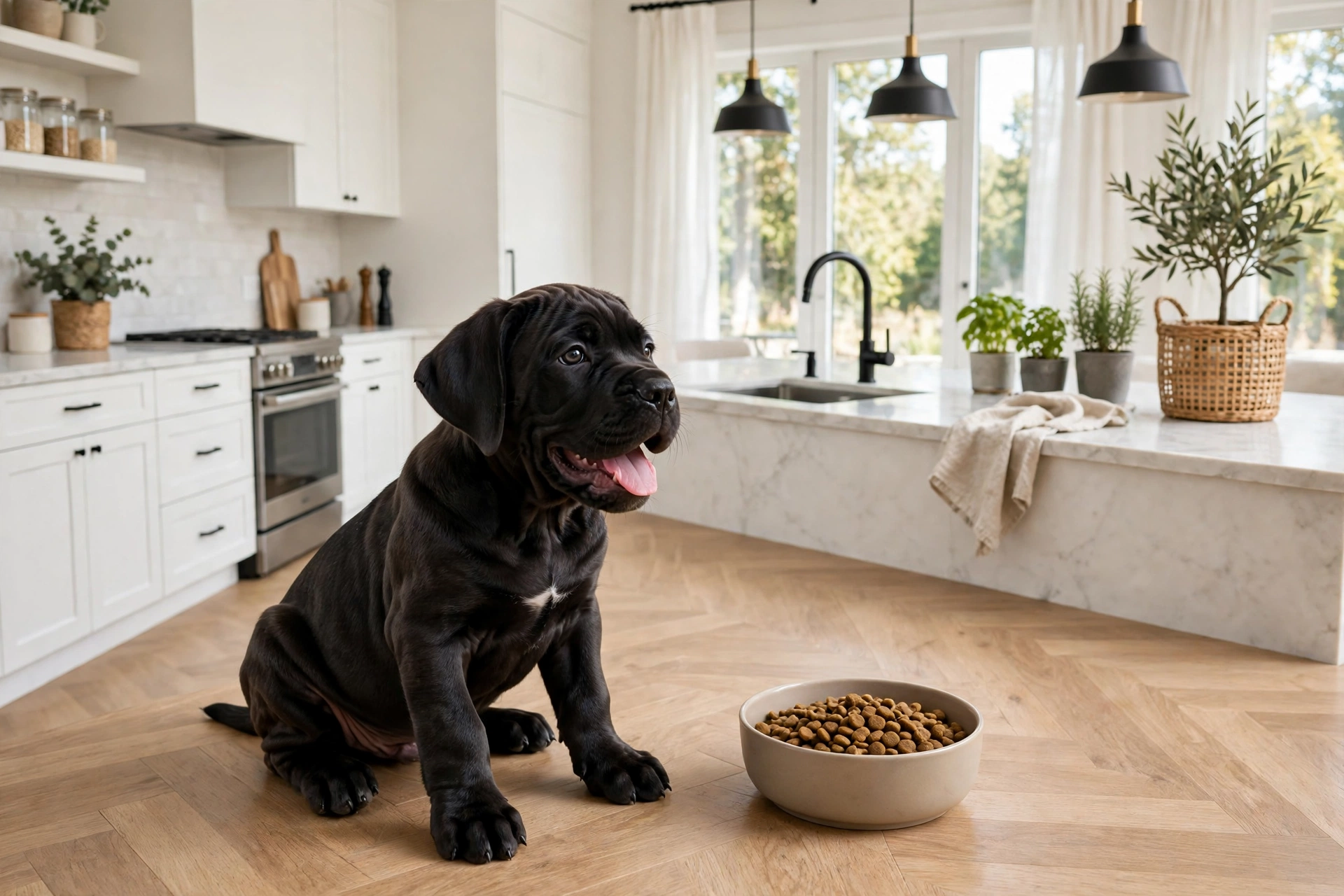
Best Puppy Food for Cane Corsos: Giant-breed growth over 18 to 24 months (6 Picks 2026)
A Cane Corso puppy is not just a big puppy. He is a giant-breed puppy on a very long growth curve, and the food you choose in his first two years helps set up his joints, muscles, and adult weight for life. The best puppy food for Cane Corsos is therefore not the richest, highest-protein puppy food on the shelf. It is a large-breed puppy formula built for slow, steady growth, with controlled calcium, moderate fat, DHA for brain development, and joint-supporting nutrients. The Cane Corso is also one of the deep-chested breeds named for bloat (gastric dilatation-volvulus) risk by the AKC and the Cane Corso Association of America, so how you feed matters as much as what you feed.
In this guide, we compare six real, widely sold US puppy foods that fit a growing Cane Corso, explain what makes a large-breed formula different from a regular puppy food, and answer the practical questions most guides skip: how much to feed at each age, how long to stay on puppy food, and how to switch foods without upsetting a sensitive stomach. Picks are based on ingredient analysis, brand reputation, and owner reviews, not on feeding trials by this site.
Key Takeaways
- Choose a large-breed puppy formula, not a regular puppy food. Cane Corsos need controlled calcium and energy for steady, not maximum, growth.
- Look for a named meat or meat meal first, a calcium-to-phosphorus ratio near 1.2:1, DHA from fish oil, and glucosamine or chondroitin for joint support.
- Feed 3 to 4 small meals a day when young, then 2 to 3 meals as your puppy grows. Measure food and watch body condition rather than feeding for size.
- Most Cane Corsos stay on puppy food for 18 to 24 months, switching to adult food only when growth has mostly finished.
- Our top overall pick is Hill’s Science Diet Puppy Large Breed, with Diamond Naturals Large Breed Puppy as the best-value alternative.
Our Top Picks at a Glance
| Product | Best for | Key feature | kcal/cup | Price | Cost/month |
|---|---|---|---|---|---|
| Hill’s Science Diet Puppy Large Breed Chicken & Brown Rice Recipe | Best overall | Large-breed mineral balance, DHA, and proven large-breed formulation | 391 | $78.99 / 27.5 lb | ~$103/mo |
| Blue Buffalo Life Protection Formula Large Breed Puppy Chicken & Brown Rice Recipe | Best for brain and eye development | DHA and ARA plus a correct large-breed calcium-to-phosphorus ratio | 385 | $79.97 / 34 lb | ~$58/mo |
| Diamond Naturals Large Breed Puppy Formula | Best value | Lamb-based, probiotics, and large-breed vitamins at a lower price | 414 | $54.99 / 40 lb | ~$50/mo |
| Wellness Complete Health Large Breed Puppy | Best budget-friendly premium pick | Chicken-first, grain-inclusive, rich in omega fatty acids | 367 | $69.98 / 30 lb | ~$102/mo |
| Fromm Large Breed Puppy Gold | Best for steady growth | Moderate protein, fat, and calories with DHA-rich salmon oil | 384 | $61.99 / 33 lb | ~$51 to $67/mo |
| Purina Pro Plan Puppy Large Breed Sensitive Skin & Stomach Salmon & Rice Formula | Best for sensitive stomachs | Salmon-first, oat-based, with live probiotics | 418 | $74.98 / 24 lb | ~$92 to $130/mo |
Prices checked on 2026-11-14: Chewy, except Fromm (pet-go-round.com). Cost per month is based on a 6-month-old Cane Corso puppy expected to reach 99 lb as an adult; the feeding table below shows the daily amounts behind each figure.
Also considered: VICTOR, ORIJEN and NutriSource appear on other Cane Corso lists. They are not in our six because we only list foods we checked against the label values in this guide, and we did not run that check on those three. If one of them fits your puppy, check its label the same way before you switch.
Why Cane Corso Puppies Need a Large-Breed Formula
An adult Cane Corso typically weighs 88 to 110 pounds, with large males at the top of that range, and lives 9 to 12 years. That size does not arrive overnight. Cane Corsos grow for 18 to 24 months, much longer than a small breed that may finish growing before its first birthday. During that long growth period, bones, cartilage, and joints are still forming, and too-rapid growth is a real risk factor for developmental orthopedic problems such as hip and elbow dysplasia. The Cane Corso is also one of the deep-chested breeds named for bloat (gastric dilatation-volvulus) risk by the AKC and the Cane Corso Association of America, so feeding routines matter here, not just the food.
Large-breed puppy foods are designed around that risk. Compared with many regular puppy foods, they usually contain slightly less protein and fat, less calcium, and a carefully balanced calcium-to-phosphorus ratio, around 1.2 parts calcium to 1 part phosphorus. The goal is not to starve growth. It is to keep growth steady so bones can keep up with muscle.
That is why the most expensive or highest-protein food is not automatically the best choice here. A formula with 30 percent or more protein and very high calories may suit a highly active adult dog, but for a growing giant puppy it can push growth too fast. Most of the picks below sit in the mid-20s for protein, with moderate fat and calories, which is a better match for controlled growth.
This guide is for information only, check with your vet for your dog’s specific needs, especially if your puppy is growing unusually fast or slowly, has loose stools, or has a diagnosed joint or digestive problem.
Hill’s Science Diet Puppy Large Breed Chicken & Brown Rice Recipe
Hill’s Science Diet Puppy Large Breed is our top pick because it is built from the ground up for puppies like a Cane Corso: large-breed specific, with balanced minerals for controlled bone growth and DHA from fish oil for brain and eye development. It is also one of the most widely recommended large-breed puppy foods in the US, which means it is easy to find and easy to keep buying consistently for 18 months or more.
Chicken leads the ingredient list, with brown rice and other grains giving a digestible, grain-inclusive recipe that suits most puppies. The mineral balance is the real selling point: it is formulated to support steady skeletal growth rather than rapid weight gain. Antioxidants support a developing immune system, and the kibble size is made for larger jaws. Because this is a deep-chested breed with a real bloat risk, the routine matters too: split the daily amount into 2 to 3 meals, keep your puppy calm for an hour either side of meals, and use a slow feeder if he gulps.
Who it is for: first-time Cane Corso owners who want a safe, well-studied default, and any puppy without a specific protein sensitivity. If you want one food you can trust and not overthink, start here.
Blue Buffalo Life Protection Formula Large Breed Puppy Chicken & Brown Rice Recipe
Blue Buffalo’s large-breed puppy formula stands out for its DHA and ARA content, two nutrients that support brain and eye development in puppies. It also carries the correct calcium-to-phosphorus ratio for large-breed puppies and is free of corn, wheat, soy, and poultry by-product meals.
Deboned chicken and chicken meal lead the ingredient list, followed by brown rice, oatmeal, and barley, a grain-inclusive, fiber-rich base that most puppies digest well. The formula also includes DHA and ARA, which help support healthy eye development and learning, and a correct large-breed calcium-to-phosphorus ratio.
The trade-off is price and peas: Blue Buffalo formulas tend to cost more than budget brands, and peas appear fairly high on the ingredient list, which some owners prefer to limit. For most Cane Corso puppies, though, this is a strong, complete large-breed option.
Diamond Naturals Large Breed Puppy Formula
If you are feeding a dog who will eat several cups a day for two years, price matters, and Diamond Naturals Large Breed Puppy Formula delivers large-breed feeding and diet at a noticeably lower cost than the premium brands above. Lamb and lamb meal appear early on the ingredient list, and the formula includes the vitamin and mineral ratios large-breed puppies need, plus probiotics, antioxidants, and prebiotics for digestive and immune support.
It is grain-inclusive, using whole grains, and is designed specifically for large-breed puppies rather than being a generic puppy food relabelled for big dogs. That specificity matters for calcium control and growth rate.
Who it is for: owners who want a genuine large-breed formula on a budget, and puppies who do well on lamb. It is a good reminder that a higher price does not always mean a better fit. Consistency and the right mineral balance matter more than a premium label.
Wellness Complete Health Large Breed Puppy
Wellness Complete Health Large Breed Puppy is a good middle ground: premium ingredients at a price below the most expensive brands. The first two ingredients are both chicken, the recipe is grain-inclusive with brown rice, and it is rich in omega fatty acids that support skin, coat, and joint health.
It contains no GMOs, fillers, or artificial preservatives, which appeals to owners who read labels closely. The formula is made specifically for large-breed puppies, so it carries the controlled mineral profile a Cane Corso needs.
One honest note: peas sit fairly high on the ingredient list, as they do in several popular formulas. If your puppy has a known sensitivity or your vet has advised limiting legumes, discuss this pick with them first. For most puppies, this is a well-balanced, good-value large-breed choice.
Fromm Large Breed Puppy Gold
Fromm Large Breed Puppy Gold is a favourite among breeders of large dogs, and it is easy to see why. The first ingredients are duck, chicken meal, and chicken, protein and fat are moderate (around 26 percent protein and 14 percent fat), and calories are moderate too, all of which help a Cane Corso puppy grow slowly and steadily rather than in bursts.
Added DHA-rich salmon oil supports brain and eye development, and the formula contains no corn, wheat, or soy. The protein and fat are moderate (around 26 percent protein and 14 percent fat), and calories are moderate too, all of which help a Cane Corso puppy grow slowly rather than in a burst.
Who it is for: owners who want a moderate, steady-growth formula from a brand with a strong large-breed track record, and puppies who do well on a multi-protein recipe. It is not the cheapest option, but for a two-year feeding period, steady growth is worth paying for.
Purina Pro Plan Puppy Large Breed Sensitive Skin & Stomach Salmon & Rice Formula
Some Cane Corso puppies have sensitive stomachs or itchy skin during growth, and pushing through loose stools on the wrong food can make things worse. Purina Pro Plan Puppy Large Breed Sensitive Skin & Stomach uses salmon as its first ingredient, giving a fish-based protein that many sensitive puppies tolerate well, plus omega fatty acids that support skin and coat health.
The recipe is grain-inclusive with rice and oat-based ingredients, and it is formulated with live probiotics. That combination, a single main animal protein, gentle grains, and probiotics, is exactly what many owners look for in a food for a sensitive puppy, and the salmon flavour suits puppies who refuse chicken.
Who it is for: Cane Corso puppies with loose stools, gas, or skin irritation on a chicken-based food, and owners who want a sensitive-stomach formula that is still complete for growth. If digestive problems persist for more than a few days, or your puppy is losing weight, see your vet rather than cycling through foods on your own. For more on this breed’s adult options, see our guide to best dog food for Cane Corsos.
How Much to Feed a Cane Corso Puppy
Feeding amounts vary by age, weight, activity, and the calorie density of the food you choose, so always start with the feeding guide on your bag and adjust from there. As a rough framework, most Cane Corso puppies do well on the following pattern:
- 8 to 12 weeks: 4 meals a day, in small, measured portions. This is the transition from milk and weaning food, so digestibility matters more than volume.
- 3 to 6 months: 3 meals a day. This is a peak growth period, but resist the urge to overfeed. Steady growth beats fast growth.
- 6 to 12 months: 2 to 3 meals a day, moving toward 2 meals as your puppy approaches a year old.
- 12 to 24 months: 2 meals a day on a large-breed puppy formula, until your vet agrees growth is mostly complete.
Measure every meal with a standard cup, and skip free-feeding. Leaving food down all day makes it hard to track intake, encourages grazing, and can contribute to excess weight gain and bloat risk in a deep-chested breed like the Cane Corso. Learn to check body condition: you should be able to feel ribs under a thin layer of fat but not see them prominently, and your puppy should have a visible waist when viewed from above. Bloat rules for a deep-chested Corso: feed 2 to 3 smaller meals a day rather than one large meal, avoid vigorous exercise for an hour before and after meals, and use a slow feeder if your puppy gulps. Know the emergency signs too: a swollen or distended belly, retching without bringing anything up, and restlessness mean a vet visit immediately, day or night.
For a detailed age-by-age framework, our puppy feeding schedule covers portion sizes, meal frequency, and the signs that you need to adjust up or down. For a Corso-specific schedule, see our Cane Corso Feeding Guide
| Product | kcal/cup | Price | Daily feeding at basis | Cost/month |
|---|---|---|---|---|
| Hill’s Science Diet Puppy Large Breed Chicken & Brown Rice Recipe | 391 | $78.99 / 27.5 lb | 5.0 cups/day (540 g) | ~$103/mo |
| Blue Buffalo Life Protection Formula Large Breed Puppy Chicken & Brown Rice Recipe | 385 | $79.97 / 34 lb | 3.5 cups/day (371 g) | ~$58/mo |
| Diamond Naturals Large Breed Puppy Formula | 414 | $54.99 / 40 lb | 4.88 cups/day (551 g) | ~$50/mo |
| Wellness Complete Health Large Breed Puppy | 367 | $69.98 / 30 lb | 6.38 cups/day (664 g) | ~$102/mo |
| Fromm Large Breed Puppy Gold | 384 | $61.99 / 33 lb | 3.84 to 5.06 cups/day (407 to 536 g) | ~$51 to $67/mo |
| Purina Pro Plan Puppy Large Breed Sensitive Skin & Stomach Salmon & Rice Formula | 418 | $74.98 / 24 lb | 4 to 5.67 cups/day (444 to 629 g) | ~$92 to $130/mo |
Basis: 6-month-old Cane Corso puppy, expected adult weight 99 lb (the AKC 88 to 110 lb midpoint), weighing about 55 lb now. Prices checked on 2026-11-14: Chewy, except Fromm (pet-go-round.com). Cost per month assumes 30 days. Grams use each label’s cup weight. Once your Corso is grown (88 to 110 lb), the daily amount rises with body weight, so budget for a higher monthly cost than the puppy figures above; the adult bag’s feeding chart gives the exact amount for the food you choose.
Buying Guide: What to Look for in Cane Corso Puppy Food
Large-breed puppy statement. Look for an AAFCO statement for growth, including growth of large-size dogs (70 lb or more as an adult). A generic “puppy” or “all life stages” claim without that large-breed wording is not the same thing.
Named protein first. The first ingredient should be a named meat or meat meal (chicken, lamb, salmon, duck), not a vague “meat meal” or “animal by-product.” Meat meals are concentrated protein and are perfectly good ingredients when named.
Controlled calcium and phosphorus. Aim for a calcium-to-phosphorus ratio near 1.2:1, and avoid adding calcium supplements on top of a complete food unless your vet tells you to. Extra calcium does not build stronger bones in a growing giant puppy; it can disrupt bone development.
Moderate fat and calories. Fat should be moderate, not minimal and not excessive. Very high-fat, very high-calorie foods can push growth too fast and add fat before the skeleton is ready to carry it.
DHA and omega fatty acids. DHA from fish oil supports brain and vision development, and omega-3 fatty acids support joint and skin health. Look for fish oil, salmon oil, or flaxseed on the label.
Joint support. Glucosamine and chondroitin are useful additions for a breed prone to hip and elbow problems, though they are not a substitute for controlled growth, healthy weight, and appropriate exercise.
Digestive support. Probiotics, prebiotics, and digestible grains such as rice, oats, and barley help many puppies keep firm stools during rapid growth. If your puppy has a sensitive stomach, a fish-based or limited-ingredient puppy formula may be worth trying.
What to Avoid
- Regular (non-large-breed) puppy food for the full growth period. It is often too energy- and calcium-dense for a giant puppy.
- Adult dog food too early. Cane Corsos are still growing at 12 months, and adult food can shortchange that development.
- Calcium supplements, bone meal, or “growth boosters” added to a complete food. They can unbalance the calcium-to-phosphorus ratio.
- Feeding for maximum size or the fastest weight gain. Rapid growth is linked to joint problems in giant breeds.
- Free-feeding, and vigorous exercise immediately before or after meals. Both raise bloat risk in this deep-chested breed, and the Cane Corso is one of the breeds named for GDV risk, so keep meals calm and use a slow feeder if your puppy gulps food.
- Frequent food switching. If a food is working, stick with it. Change foods gradually over 7 to 10 days if you do switch.
When to Switch From Puppy to Adult Food
Most Cane Corsos should stay on a large-breed puppy formula until 18 to 24 months, not 12 months like a smaller breed. Switching at 12 months is one of the most common mistakes with giant breeds: the puppy is still growing, and adult food may not provide the same growth support.
Let your puppy’s growth guide the timing, not the calendar alone. When weight gain has slowed markedly, height has plateaued, and your vet is happy with body condition and joint development, that is the time to plan a gradual switch over 7 to 10 days: start with mostly puppy food and a little adult food, then shift the ratio each few days until you are fully on adult food.
If you are already thinking ahead to adult feeding, our best puppy food for large breeds guide compares more large-breed options, and our adult breed guide covers what comes next.
Conclusion: Our Recommendation
For most Cane Corso puppies, Hill’s Science Diet Puppy Large Breed is the best starting point: it is large-breed specific, mineral-balanced for controlled growth, rich in DHA, and easy to buy consistently for two years. If budget is the deciding factor, Diamond Naturals Large Breed Puppy gives you a genuine large-breed formula at a lower price, and if your puppy has a sensitive stomach, Purina Pro Plan Puppy Large Breed Sensitive Skin & Stomach Salmon & Rice is the pick to try first.
Whichever food you choose, the habits around it matter just as much as the bag: measure meals, feed on a schedule, keep growth steady rather than fast, avoid extra calcium, and stay on puppy food until growth is truly finished. Do that, and you give your Cane Corso the best start in feeding and diet for a long, active adult life. If you are comparing giant breeds, our guides to the best puppy food for Bernese Mountain Dogs and the best puppy food for Rottweilers follow the same slow-growth approach.
Later, when your Corso reaches senior age, see our guide to best senior cane corso food for age-appropriate picks.
Frequently Asked Questions
What is the best puppy food for a Cane Corso?
A large-breed puppy formula is the best starting point, because it is made for controlled growth with balanced calcium and moderate calories. Hill’s Science Diet Puppy Large Breed is our top overall pick, with Diamond Naturals Large Breed Puppy as the best-value alternative. Always check the AAFCO statement for growth of large-size dogs.
How long should a Cane Corso eat puppy food?
Most Cane Corsos should stay on a large-breed puppy formula for 18 to 24 months, much longer than a small breed. Switching at 12 months is a common mistake, as the puppy is usually still growing. Let slowed weight gain, a plateau in height, and your vet’s advice guide the timing.
How much should I feed a Cane Corso puppy?
Start with the feeding guide on your food bag and adjust for age, weight, and activity, measuring every meal. Young puppies usually eat 4 meals a day, moving to 3 meals at 3 to 6 months and 2 meals by about a year old. Check body condition regularly: you should feel ribs under a thin layer of fat but not see them prominently.
What calcium level is right for a large-breed puppy?
Look for a calcium-to-phosphorus ratio near 1.2 to 1, as found in a proper large-breed puppy formula. Skip calcium supplements, bone meal, or growth boosters in a complete food unless your vet tells you to, as extra calcium can disrupt bone development.
When should I switch my Cane Corso puppy to adult food?
Plan the switch for around 18 to 24 months, when growth has mostly finished. Switch gradually over 7 to 10 days, starting with mostly puppy food and a little adult food and shifting the ratio every few days. If digestive upset appears, slow the transition and check with your vet.
Can I feed my Cane Corso puppy regular puppy food?
Regular puppy food is not ideal for the full growth period, as it is often too energy- and calcium-dense for a giant breed. A large-breed puppy formula is designed for slower, steadier growth and joint protection. If you have already started a regular puppy food, switch gradually to a large-breed formula and discuss timing with your vet.



2 Comments