
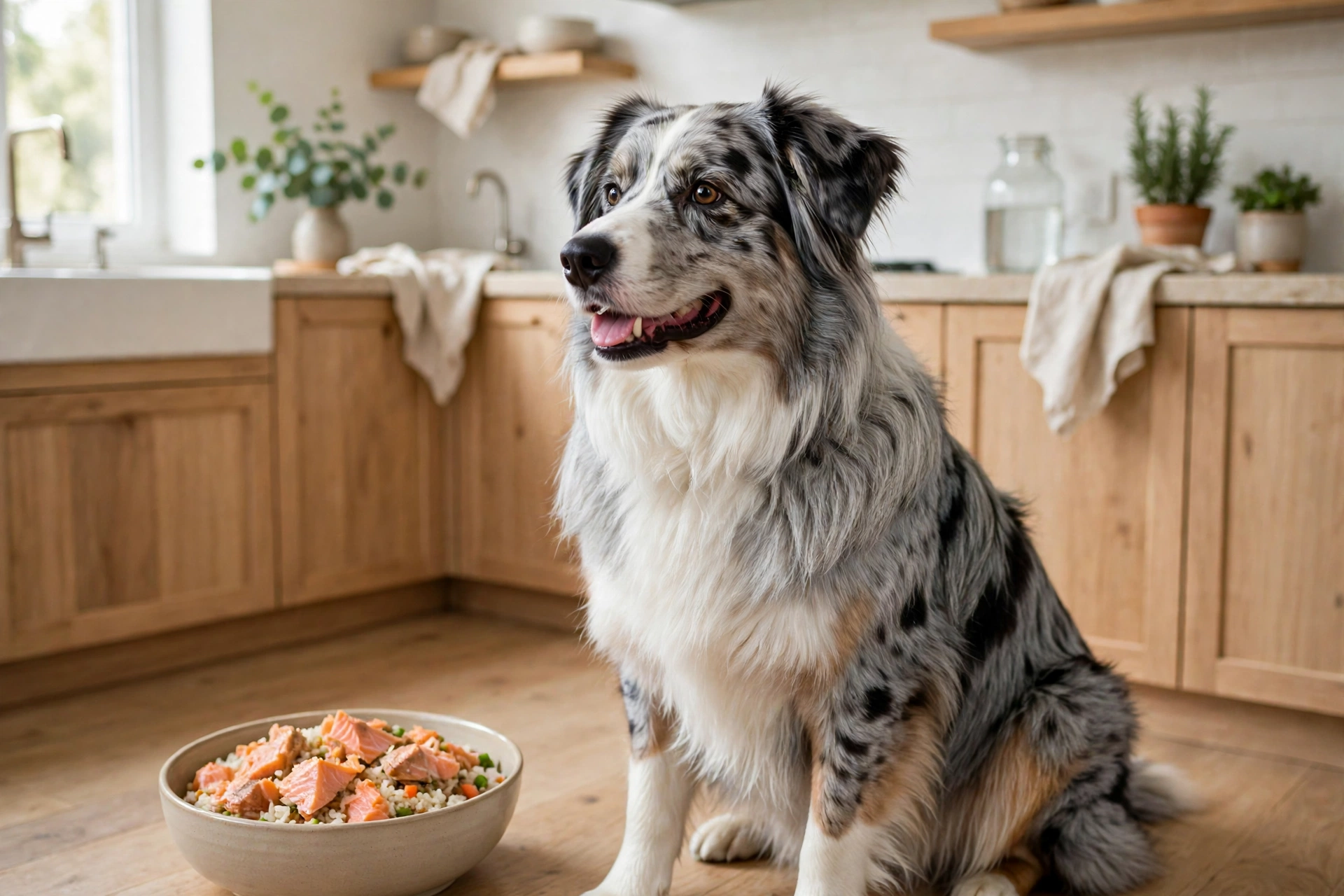
Best Food for Australian Shepherd Sensitive Stomach: Salmon-based Picks for high-energy feeding
The best food for an Australian Shepherd with a sensitive stomach is not just a gentler recipe, it has to keep up with a herding dog that burns serious energy, needs strong muscle support, and often has a coat that shows nutritional gaps quickly. That is why this guide sticks to salmon-based picks that are easy on digestion and still feed an active dog properly. For the general picture, start with our hub guide to the best dog food for sensitive stomachs, then use this page for the Aussie-specific detail.
Aussies are also one of the breeds predisposed to exocrine pancreatic insufficiency, or EPI, a condition where the pancreas does not make enough digestive enzymes. If your dog has chronic loose stools and keeps losing weight even though it eats well, ask your vet to rule out EPI before you blame the food. No kibble can fix a pancreas problem, and trying food after food can waste months.
Key Takeaways
- Salmon is the safest first protein to try for most sensitive Aussies. It is easy to digest, rich in omega-3 fats, and it sidesteps the chicken and beef proteins that cause trouble most often.
- Look for a short ingredient list with one main animal protein, added probiotics, and no artificial colors or by-product meat.
- An active adult Aussie needs energy, not a diet food. The picks below run from 365 to 496 kcal per cup, so match the cup count to your dog, not to the bag.
- Switch over 7 to 10 days, keep treats plain, and change only one thing at a time so you know what helped.
- Loose stools plus weight loss despite a good appetite is a vet visit, not a food trial. Ask about EPI first.
Our Top Picks at a Glance
Prices below are from Chewy, checked on November 12, 2026. Monthly costs are for a 52 lb adult eating the amounts in the feeding table further down the page.
| Food | Best For | Price | Cost per Month |
|---|---|---|---|
| Purina Pro Plan Sensitive Skin and Stomach, Salmon and Rice | Salmon-first recipe with an active-dog energy level | $77.48 / 30 lb | ~$49 to $64 |
| Hill’s Science Diet Adult Sensitive Stomach and Skin, Chicken and Barley | Gentle chicken and barley recipe with steady digestion | $89.99 / 30 lb | ~$64 |
| Purina ONE +Plus Skin and Coat Formula, Salmon | Strong value salmon recipe for owners who want coat support | $49.98 / 31.1 lb | ~$28 to $37 |
| Diamond Naturals Skin and Coat Formula | Lowest-cost salmon and potato pick that still feeds well | $43.99 / 30 lb | ~$32 |
| Taste of the Wild Pacific Stream, Smoke-Flavored Salmon | Grain-free salmon recipe with a steady fish and potato base | $58.99 / 28 lb | ~$45 |
| Natural Balance L.I.D. Salmon and Sweet Potato | Limited-ingredient salmon recipe when you are cutting variables | $72.99 / 24 lb | ~$60 to $82 |
Specs at a Glance
Protein and fat are minimums from the label. Energy is kcal per cup from the label.
| Food | Protein | Fat | kcal per Cup | Bag Size |
|---|---|---|---|---|
| Purina Pro Plan Sensitive Skin and Stomach, Salmon and Rice | 26% | 16% | 449 | 30 lb |
| Hill’s Science Diet Adult Sensitive Stomach and Skin, Chicken and Barley | 20% | 13% | 391 | 30 lb |
| Purina ONE +Plus Skin and Coat Formula, Salmon | 30% | 16% | 496 | 31.1 lb |
| Diamond Naturals Skin and Coat Formula | 27% | 15% | 408 | 30 lb |
| Taste of the Wild Pacific Stream, Smoke-Flavored Salmon | 25% | 15% | 408 | 28 lb |
| Natural Balance L.I.D. Salmon and Sweet Potato | 24% | 10% | 365 | 24 lb |
Why Australian Shepherds Get Sensitive Stomachs
No major veterinary source lists the Australian Shepherd as a breed prone to sensitive stomachs, so a loose stool in an Aussie is not just the breed. Two facts matter more than any breed label. First, Aussies are predisposed to exocrine pancreatic insufficiency (EPI). A dog with EPI cannot digest food properly even on a good diet, so chronic loose stools with weight loss despite a healthy appetite should send you to the vet for testing before you start swapping kibble. Second, Aussies are extremely active and tend to stay in good weight, which means this is a high-energy feeding question, not a weight-control one. A food that is gentle but too light on calories will leave a working Aussie hungry and thin, even if the stools look fine.
Coat trouble is the other early warning. An Aussie coat shows feeding gaps fast, so dullness or flaking alongside stomach trouble points to a diet that is not covering the dog, not just to a sensitive gut. If the main problem is itchy skin rather than the stomach, read our guide to the best food for Australian Shepherd skin allergies instead, because the fix for skin is not always the fix for the gut.
Purina Pro Plan Sensitive Skin and Stomach: Best Salmon Pick for Aussies
Purina Pro Plan Sensitive Skin and Stomach, Salmon and Rice, leads this list because it covers both sides of the Aussie problem: it is gentle, and it carries enough energy for a herding dog. Salmon is the first ingredient, rice is easy on the gut, and the recipe includes live probiotics that suit dogs whose stools go soft during a food change. If your Aussie is losing weight while eating well, sort out EPI with your vet first, because no food on this list can replace missing digestive enzymes.
At $77.48 for a 30 lb bag on Chewy and roughly 2.5 to 3.25 cups a day for a dog in the 51 to 75 lb band, most 52 lb adults land near $49 to $64 a month. The bag lasts, the recipe is easy to find, and the probiotic support is built in rather than added on top.
Specs: Protein 26%, fat 16%, 449 kcal per cup, 30 lb bag.
Pros: Salmon first, with rice that is easy to digest. Live probiotics included. Energy level suits a busy Aussie. Easy to find in most stores.
Cons: Priced above the budget picks. The 30 lb bag is heavy to carry if you buy it in a store.
Hill’s Science Diet Sensitive Stomach and Skin: Best Chicken and Barley Option
Hill’s Science Diet Adult Sensitive Stomach and Skin, Chicken and Barley, is the steady option for Aussies that do fine on chicken. It is built around prebiotic fiber for gut health and vitamin E and omega-6 fats for skin and coat, and it feeds a little lighter than the salmon picks, which suits a less frantic Aussie.
It costs $89.99 for a 30 lb bag on Chewy, the highest price on this list, and a 52 lb adult needs about 3.07 cups a day, working out near $64 a month. You pay for a consistent recipe and a brand with long feeding trials behind it.
Specs: Protein 20%, fat 13%, 391 kcal per cup, 30 lb bag.
Pros: Prebiotic fiber for gut health. Omega-6 and vitamin E for skin and coat. Consistent recipe from a brand with long feeding trials.
Cons: Chicken is the protein, so it will not help if chicken is the trigger. The highest price on this list. The minerals tend to leave your dog drinking more water, so plan on more trips outside.
Purina ONE Plus Skin and Coat: Best Value Salmon Pick
Purina ONE +Plus Skin and Coat Formula, Salmon, is the same salmon recipe this page used to list as Purina ONE Sensitive Stomach. There is no separate Purina ONE Sensitive Stomach product, so if you searched for that name, this is the bag you want. It is the cheapest way to feed a salmon-based sensitive formula, and the omega-6 fats and vitamin E give the coat a visible lift.
At $49.98 for a 31.1 lb bag on Chewy and 2.25 to 3 cups a day for a 52 lb adult, it runs about $28 to $37 a month. The trade-off is a recipe with more corn and corn gluten meal than the premium picks, and some owners report softer stools at first, so give it a full week before you judge it.
Specs: Protein 30%, fat 16%, 496 kcal per cup, 31.1 lb bag.
Pros: Lowest price on this list. Salmon first. Omega-6 and vitamin E for the coat. At 496 kcal per cup, smaller meals cover the day.
Cons: More corn and corn gluten meal than the premium picks. Some dogs need a week to settle on it. Not the pick if your dog has a corn sensitivity.
Diamond Naturals Skin and Coat: Best Budget Salmon and Potato Pick
Diamond Naturals Skin and Coat Formula puts salmon and potato together with added probiotics, and it does it at the lowest price here. It is a good fit for owners who know their Aussie does well on fish and potato and want a simple recipe without extras.
Who it is for: multi-dog homes, owners who want strong value in a large bag, and Aussies that do well on salmon and potato but do not need a grain-inclusive recipe.
It costs $43.99 for a 30 lb bag on Chewy, and a 52 lb adult needs about 2.88 cups a day, which works out near $32 a month. Watch for inconsistent quality between batches, so check the bag when you open it and keep your receipt.
Specs: Protein 27%, fat 15%, 408 kcal per cup, 30 lb bag.
Pros: Salmon and potato with added probiotics. Lowest price on this list. Good for multi-dog homes.
Cons: Quality can vary between batches. Small kibbles can lose flavor faster if stored poorly.
Taste of the Wild Pacific Stream: Best Grain-Free Salmon Pick
Taste of the Wild Pacific Stream, Canine Recipe with Smoke-Flavored Salmon, is a grain-free salmon recipe with sweet potato, pea protein, and probiotics. It suits Aussies that do better without grains and owners who want a single fish protein story.
It costs $58.99 for a 28 lb bag on Chewy, and a 52 lb adult needs about 2.88 cups a day, working out near $45 a month. The recipe is rich, so measure carefully: overfeeding a rich grain-free recipe is a fast route back to loose stools.
Specs: Protein 25%, fat 15%, 408 kcal per cup, 28 lb bag.
Pros: Grain-free salmon recipe with sweet potato. Smoke-flavored salmon appeals to picky eaters. Probiotics included.
Cons: Rich recipe, so overfeeding can loosen stools. Costs more than the value picks.
Natural Balance L.I.D. Salmon and Sweet Potato: Best Limited-Ingredient Pick
Natural Balance L.I.D. Limited Ingredient Diets, Salmon and Sweet Potato, keeps the ingredient list short: salmon is the main animal protein, with sweet potato as the only grain-free carbohydrate. That makes it the easiest recipe here to keep clean while you sort out a trigger.
It costs $72.99 for a 24 lb bag on Chewy, and a 52 lb adult needs 2.75 to 3.75 cups a day, which runs about $60 to $82 a month, the highest monthly cost here. At 24% protein it is modest next to the meatier picks, and the sweet potato loads up the fiber, so work out how the cost and the amounts fit before you commit.
Specs: Protein 24%, fat 10%, 365 kcal per cup, 24 lb bag.
Pros: Single animal protein and a short ingredient list. Salmon and sweet potato only, which keeps trials clean. Grain-free.
Cons: Highest monthly cost on this list. Protein is the lowest of the six. Sweet potato makes it fiber-heavy.
What to Look For on the Label
A named protein first, such as salmon or another single meat, no meat by-product, limited filler with no more than three starches, added probiotics or prebiotic fiber, and omega-3 fats for skin. If a bag lists chicken or beef meal in the ingredients and your Aussie reacted to chicken, skip it and pick another protein. Buy a bag size you will use within a month of opening it.
How Much to Feed a Sensitive Aussie
Amounts are for a 52 lb adult dog, the middle of the AKC range for the breed (males 50 to 65 lb, females 40 to 55 lb). Treats are not counted here, so keep them under 10% of daily calories. Daily feeding figures come from the label feeding bands, interpolated where the label does not list 52 lb exactly. If your dog is a puppy or a senior, our Australian Shepherd feeding guide covers age-specific amounts.
| Food | kcal per Cup | Daily Feeding | kcal per Day | Price | Cost per Month |
|---|---|---|---|---|---|
| Purina Pro Plan Sensitive Skin and Stomach, Salmon and Rice | 449 | 2.5 to 3.25 cups | 1,123 to 1,459 | $77.48 / 30 lb | ~$49 to $64 |
| Hill’s Science Diet Adult Sensitive Stomach and Skin, Chicken and Barley | 391 | 3.07 cups | about 1,200 | $89.99 / 30 lb | ~$64 |
| Purina ONE +Plus Skin and Coat Formula, Salmon | 496 | 2.25 to 3 cups | 1,116 to 1,488 | $49.98 / 31.1 lb | ~$28 to $37 |
| Diamond Naturals Skin and Coat Formula | 408 | 2.88 cups | about 1,175 | $43.99 / 30 lb | ~$32 |
| Taste of the Wild Pacific Stream, Smoke-Flavored Salmon | 408 | 2.88 cups | about 1,175 | $58.99 / 28 lb | ~$45 |
| Natural Balance L.I.D. Salmon and Sweet Potato | 365 | 2.75 to 3.75 cups | 1,004 to 1,369 | $72.99 / 24 lb | ~$60 to $82 |
Feeding Schedule for Aussies
Feed adults twice a day and keep the portions measured, not poured, since Aussies eat like they train: fast, and then more. Puppies from around 8 weeks to 6 months need 3 to 4 small meals, and seniors usually hold steady on 2 meals. Give your dog 20 to 30 minutes to rest after meals, and do not feed right before exercise. For puppy and senior food picks, see our puppy and senior Australian Shepherd guides on this site.
Pumpkin and Probiotics
Plain canned pumpkin, not pumpkin pie filling, can help firm loose stools. A common starting point is 1 to 4 tablespoons per meal depending on the dog’s size, so start low and ask your vet what fits your Aussie. A standalone probiotic helps most during a food transition, when the gut bacteria are adjusting to the new recipe. Pick a probiotic made for dogs, follow the label dose, and do not use a human probiotic, since the strains and doses are not made for dogs.
Prescription Food: When Over the Counter Is Not Enough
If your Aussie keeps struggling after two careful food trials, talk to your vet about prescription diets before you try a third bag. Hill’s Prescription Diet i/d, z/d and GI Biome are made for dogs that fail over-the-counter sensitive formulas, and they cover different problems: i/d for gut upset, z/d for food sensitivities, and GI Biome for the gut microbiome. These are not buyable picks, and you cannot order them without a vet conversation.
How to Switch Foods
Use the 7 to 10 day transition below, and give the food more than two days before you judge it. Start with a quarter new food and work up over the week, and change nothing else during the trial: same treats, same routine, same exercise. That is why consistency matters: if you change food, routine, treats, and exercise all at once, you will never know which change helped. This guide is for information only. Your vet knows your Australian Shepherd’s history, so check with them before you switch foods. For the full switching method, see our hub guide to the best dog food for sensitive stomachs.
- Days 1 to 2: 25% new food, 75% old food
- Days 3 to 4: 50% new food, 50% old food
- Days 5 to 6: 75% new food, 25% old food
- Days 7 to 10: 100% new food
When to Call the Vet
Call the vet if your Aussie vomits more than once in a day, has bloody or black stools, refuses food for more than a day, keeps losing weight, or seems lethargic or in pain. Loose stools alone can wait for a food trial. Weight loss with a good appetite cannot, so ask the vet to test for EPI before you buy another bag.
What to Avoid
Skip foods heavy on meat by-products, artificial colors or flavors, and added sugar or glycerin, and keep table scraps out of the bowl. Do not give your dog dairy or spicy food, and keep treats small and plain, without sweeteners. Leave oils, supplements, and medications out unless your vet has approved them; some common human remedies are unsafe for dogs. Keep the feeding routine boring: same food, same amounts, same times. If the stools stay loose no matter which food you buy, stop shopping and ask your vet to rule out EPI. If you feed another high-energy breed too, our guides to the best food for German Shorthaired Pointer sensitive stomach and the best food for Pembroke Welsh Corgi sensitive stomach follow the same rules for a slightly different dog.
Conclusion
Start with Purina Pro Plan Sensitive Skin and Stomach if you want the safest all-round pick for a busy Aussie, and use the feeding table above to keep the cups honest. If salmon does not suit your dog, Hill’s chicken and barley recipe is the most reliable next step, and anything you try deserves a full 7 to 10 day switch and a week of steady feeding before you call it. Here is the part worth repeating: if your dog is losing weight while eating well, ask your vet about EPI before you buy another bag.
Frequently Asked Questions
What is the best food for an Australian Shepherd with a sensitive stomach?
Purina Pro Plan Sensitive Skin and Stomach, Salmon and Rice, is the lead pick here. Salmon is easy to digest, the energy level suits a herding dog, and the recipe includes live probiotics. If your dog is losing weight while eating well, ask your vet to rule out EPI before you blame the food.
Is salmon or lamb better for a sensitive Australian Shepherd?
Salmon is usually the safer first try. It is gentler on the stomach than lamb and richer in omega-3 fats, which suits the Aussie coat. Lamb is worth trying later if you need another protein, but salmon is the better first step.
Should I feed grain-free food to my sensitive Aussie?
Not as a rule. Grain-free helps when grains are the specific trigger, and many Aussies do fine on grain-inclusive rice or barley. If you do go grain-free, pick a limited-ingredient grain-free recipe such as Blue Buffalo Basics, which lists 352 kcal per cup, so measure carefully because a low-calorie food does not feed a high-energy herding dog well. Talk to your vet about what fits your dog.
How much should I feed an Australian Shepherd with a sensitive stomach?
A 52 lb adult Aussie eats roughly 2.25 to 3.75 cups a day depending on the recipe, which works out near 1,000 to 1,500 kcal a day. Use the feeding table above for your exact pick, since a 496 kcal per cup recipe needs fewer cups than a 365 kcal per cup one. Keep treats under 10% of daily calories and adjust from there.
What ingredients should I avoid for a sensitive Australian Shepherd?
Common triggers include meat by-products, artificial colors, and dairy. Keep it simple: chicken, fish, and a single starch work best for most dogs. Avoid artificial colors and flavors, added sugars, and dairy. If your Aussie reacts to chicken, pick a fish-first recipe and read the fine print, since some fish recipes still list chicken or chicken meal among the ingredients.
Is a sensitive stomach the same as a food allergy in Aussies?
No. A sensitive stomach means the gut reacts to a recipe with gas or loose stools, while a true food allergy is an immune reaction that usually shows up partly as itchy skin. If your dog loses weight while eating well, ask your vet to rule out EPI, since that looks like a food problem but is not one.
How often should I feed an Aussie with a sensitive stomach?
Two meals a day is the usual setup, and splitting the daily amount into three smaller meals helps a dog that gets loose stools after a big meal. Keep the total the same and stick to the same times each day.
Can pumpkin help my Aussie’s stomach?
Yes, plain canned pumpkin can. Mix 1 to 4 tablespoons into meals depending on your dog’s size, and use plain pumpkin, not pumpkin pie filling. It helps firm loose stools and adds soluble fiber, but it will not fix a food that does not suit your dog. If the stools do not improve within a week, talk to your vet.






3 Comments