
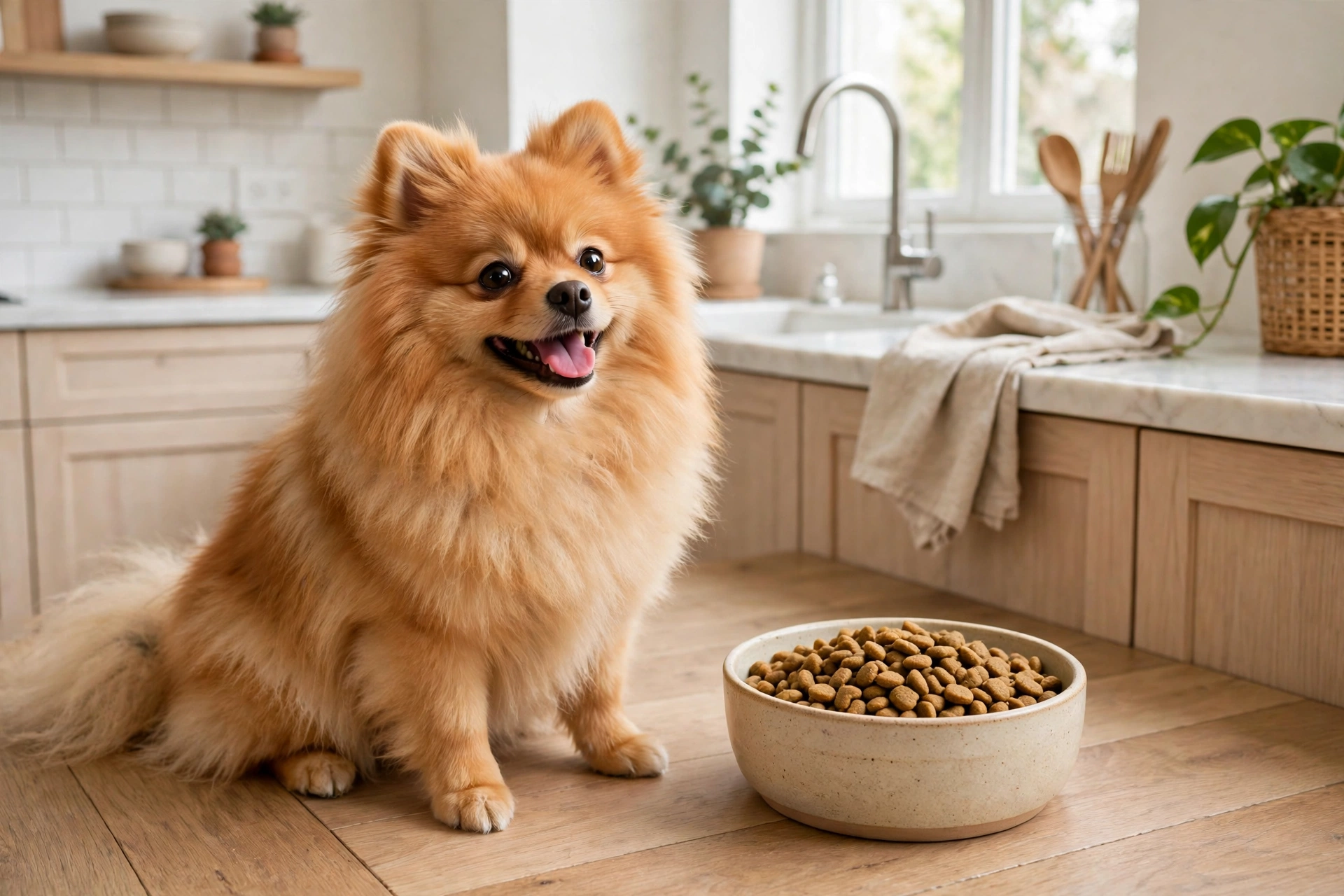
Best Dog Food for Pomeranians: 6 Top Picks (2026)
Finding the best dog food for Pomeranians is not as simple as grabbing the smallest bag on the shelf. A Pomeranian may weigh only 3 to 7 pounds, but that tiny frame runs a fast metabolism, burns calories quickly, and comes with a crowded little mouth, a thick double coat, and a famously picky attitude to food. Feed too much and the weight creeps on; feed too little, or the wrong formula, and you can see dull coat, loose stools, or a dog that simply refuses the bowl.
This guide covers what Pomeranians actually need from their food, compares six strong US formulas side by side, and answers the questions other guides skip: exact portions by body weight, how kibble size affects dental health, what to do with a picky Pom, and how food choices connect to tear stains and joint health. Every pick below is judged on ingredient analysis, brand reputation, and owner reviews — never on claims of testing we did not do.
Key Takeaways
- Choose a small-breed or toy-breed formula with tiny kibble: Pomeranians have crowded teeth and small jaws, so kibble size matters as much as the recipe.
- Look for real meat as the first ingredient, an AAFCO statement for adult maintenance (or the right life stage), and omega-3 fatty acids for skin and coat.
- Most adult Pomeranians need only about 1/4 to 3/4 cup of dry food per day, split into two meals — measure it, because a few extra kibbles a day add up fast on a 5-pound dog.
- Picky eating is common in the breed: texture, freshness, and a calm routine often matter more than switching brands every week.
- If your Pom has ongoing vomiting, diarrhea, itchy skin, or sudden weight loss, see your vet before changing food — diet alone does not diagnose those problems.
Best Dog Food for Pomeranians: Quick Comparison
| Product | Best For | Key Feature |
|---|---|---|
| Royal Canin Pomeranian Adult Dry Dog Food | Breed-specific nutrition | Tailor-made small kibble with EPA and DHA for skin and coat |
| Blue Buffalo Life Protection Formula Small Breed Chicken & Oatmeal | Best overall small-breed pick | Real chicken first plus LifeSource Bits antioxidants |
| Purina Pro Plan Small Breed Shredded Blend Chicken & Rice | Picky eaters | Crunchy kibble mixed with tender shredded pieces and live probiotics |
| Wellness Complete Health Small Breed Deboned Turkey & Oatmeal | Everyday balanced feeding | Deboned turkey first with probiotics and no corn, wheat, or soy |
| Natural Balance Limited Ingredient Small Breed Lamb & Brown Rice | Sensitive stomachs | Single animal protein (lamb) with a short, simple ingredient list |
| Cesar Small Breed Dry Chicken & Spring Vegetables | Dogs that refuse plain kibble | Tender pieces mixed with crunchy kibble in a small-breed size |
Royal Canin Pomeranian Adult Dry Dog Food
Royal Canin is the only pick here made specifically for Pomeranians, and that shows in the details. The kibble is shaped and sized for a Pom’s small jaw and is designed to encourage chewing, which helps reduce tartar formation — a real plus for a breed prone to dental crowding. The formula is enriched with EPA and DHA to support skin health and that thick, fluffy coat, and it includes glucosamine to support fragile knees and joints. At about 352 calories per cup, with 24% protein and 14% fat, it suits most adult Poms at maintenance.
The honest caveat: this is not a “real meat first” recipe. The US formula leads with brewers rice and corn, followed by chicken by-product meal, so owners who prefer meat-first ingredient panels may prefer one of the picks below. What you are paying for here is breed tailoring — kibble size, digestibility, and coat support — rather than a premium ingredient list.
Who it is for: Adult Pomeranians (over 8 months) whose owners want a breed-specific formula, especially Poms with dull coats or early tartar buildup.
Blue Buffalo Life Protection Formula Small Breed Chicken & Oatmeal
Blue Buffalo’s small-breed recipe is the most balanced all-rounder in this guide. Real deboned chicken is the first ingredient, followed by chicken meal, and the recipe includes the brand’s LifeSource Bits — a cold-formed blend of antioxidants, vitamins, and minerals. Omega-3 and omega-6 fatty acids support skin and coat, and added glucosamine gives joints a little backup. The kibble is genuinely small, which matters for toy-breed mouths.
Owner reviews consistently praise palatability, which is no small thing with Pomeranians, and many report visible coat improvement within a few weeks of switching. The main downsides are practical: some owners report bags arriving torn in transit, so decanting into an airtight container is a good habit, and chicken-sensitive Poms will need a different protein. This is an adult maintenance formula, so puppies need a puppy-specific recipe instead.
Who it is for: Adult Pomeranians that need a complete, widely available small-breed diet without fillers or by-product meals as the main protein.
Purina Pro Plan Small Breed Shredded Blend Chicken & Rice
If your Pomeranian eats around the kibble, texture may be the problem — and this is the pick built for that. Crunchy kibble is mixed with tender shredded pieces in the same bag, so a bored Pom gets variety without you switching formulas. Real chicken is the first ingredient, protein levels suit active small dogs, and guaranteed live probiotics support digestion and immune health, which helps during food transitions.
For a 6-pound adult Pom, expect roughly 3/4 to 1 cup per day split across two meals, and a 6-pound bag lasts about a month at that rate. The shredded pieces can scatter more than uniform kibble, so a heavier bowl or a slow-feeder bowl helps messy eaters. As with most chicken-based picks, it is not suitable for Poms with a confirmed chicken allergy.
Who it is for: Picky Pomeranians, and owners who want a US-made small-breed formula with a strong track record for digestion and coat condition.
Wellness Complete Health Small Breed Deboned Turkey & Oatmeal
Wellness Complete Health Small Breed is a solid, no-drama everyday choice. Deboned turkey is the first ingredient, followed by chicken meal and oatmeal, and the formula includes guaranteed probiotics for digestion plus omega-6 and omega-3 fatty acids for skin and coat. There is no corn, wheat, or soy, and no meat meals as the first ingredient — a combination many owners look for in a mainstream, vet-friendly brand.
It is a good fit for Poms that do well on a straightforward turkey-based kibble, and the small-breed size is genuinely toy-friendly. The trade-off is that it lacks the breed-specific tailoring of Royal Canin and the texture variety of a shredded blend, so very picky dogs may still prefer the Purina or Cesar options below.
Who it is for: Adult Pomeranians that need a balanced, everyday small-breed diet with probiotics and a clean, mainstream ingredient list.
Natural Balance Limited Ingredient Small Breed Lamb & Brown Rice
When a Pom has a sensitive stomach, fewer ingredients make it easier to spot what helps and what hurts. Natural Balance Limited Ingredient uses lamb as the single animal protein source, with brown rice as a digestible carbohydrate, and it avoids common triggers such as chicken, corn, wheat, and soy. The small-breed kibble size is suited to small jaws, and the recipe is designed to be gentle on digestion.
Because the ingredient list is short, this is also a useful starting point for an elimination-style approach under vet guidance: if symptoms settle, you have a clear baseline to work from. The trade-off is less variety — some dogs find lamb-based diets less exciting than chicken or turkey, so a slow transition and a little warming can help with acceptance.
Who it is for: Pomeranians with sensitive stomachs, suspected food sensitivities, or owners who want a short ingredient list to simplify troubleshooting.
Cesar Small Breed Dry Chicken & Spring Vegetables
Cesar’s small-breed dry food takes a different approach to pickiness: it mixes tender, meaty pieces with crunchy kibble in the same bag, so a dog that picks at plain kibble gets texture and aroma in every bite. The small-breed size is made for tiny mouths, and the chicken and spring vegetable recipe is widely available in small bags — handy if you want to test acceptance before committing to a large bag.
The honest trade-off is that this is a more treat-like, mixed-texture food than a single-formula kibble, so it is best used as a main diet only if it meets your dog’s nutritional needs and your vet is happy with the overall balance. For dogs that truly refuse plain kibble, it can be the difference between eating and skipping meals — but portion control matters even more with a highly palatable food.
Who it is for: Pomeranians that refuse plain kibble, and owners who want a small-bag, texture-led option to test before buying in bulk.
How Much Should a Pomeranian Eat Per Day?
Portion size is where small-breed feeding goes wrong most often, because a tablespoon is a large percentage of a Pom’s daily intake. Use the guide on your bag as a starting point, then adjust by body condition: you should be able to feel the ribs under a thin layer of fat, and see a waist from above.
| Weight | Daily Dry Food (approx.) | Notes |
|---|---|---|
| 3 pounds | 1/4 to 1/3 cup | Split into two meals; measure, do not free-feed |
| 4 to 5 pounds | 1/3 to 1/2 cup | The most common adult range |
| 6 to 7 pounds | 1/2 to 3/4 cup | Adjust down if treats are a large part of the day |
Remember that these amounts are for dry food only. If you add wet food, toppers, or treats, reduce the kibble so the total stays the same. A dental chew, a training treat, and a spoonful of wet food can easily add 10 to 20% to a small dog’s day.
Puppies, pregnant or nursing dogs, and very active Poms need more than adult maintenance amounts, and senior Poms often need fewer calories. Your vet can fine-tune the amount at a routine visit — bring the bag and tell them how much you actually feed, treats included.
Buying Guide: How to Choose Dog Food for Pomeranians
Use this checklist when you compare labels, rather than relying on the front of the bag alone.
Real meat first — but read the whole panel
A named meat (chicken, turkey, lamb, or fish) as the first ingredient is a good sign, but it is not the whole story. Check the next few ingredients too: a meat meal (such as chicken meal) is a concentrated protein source and is not a red flag, while a long list of fillers after the first ingredient can dilute the quality of the recipe.
Size and dental health matter
Pomeranians are prone to crowded teeth, tartar, and gum disease, so kibble size is a health feature, not just a convenience. Small, crunchy kibble encourages chewing and helps scrape the teeth, while oversized kibble can be swallowed whole or ignored. Pair the right kibble with regular dental care — brushing, dental chews, and vet cleanings as needed.
Calories and weight control
Small dogs gain weight quickly, and a single extra pound is a large percentage of a Pom’s body weight. Look for a calorie density around 340 to 400 kcal per cup for most adult formulas, measure every meal, and keep treats to no more than 10% of daily calories.
Coat and skin support
That double coat needs omega-3 and omega-6 fatty acids, and many small-breed formulas add fish oil or flaxseed for this reason. If your Pom has a dull coat, dry skin, or heavy shedding, a formula with named fish oil and a clear omega profile is worth prioritizing — but persistent skin problems still need a vet check.
Joint support
Pomeranians are prone to luxating patellas (slipping kneecaps), so glucosamine and chondroitin in the food are a useful bonus, especially for adults over a few years old. They are not a treatment for a diagnosed joint problem, but they support joint health as part of a complete diet.
Digestive health
Probiotics, prebiotic fiber, and digestible carbohydrates such as rice and oatmeal help many small dogs maintain firm stools. If your Pom has frequent loose stools, a limited-ingredient or probiotic-inclusive formula — and a vet check — should come before trying a long string of different brands.
Wet, dry, or a mix?
Dry kibble is the best default for most Pomeranians: it supports dental health, is easy to measure, and is usually more economical. Wet food can help picky dogs, dogs with few teeth, and dogs that drink too little water. A mix works well if you reduce the kibble to keep total calories the same.
What to avoid
In general, steer clear of:
- Large-breed kibble, which is too big for small jaws and wrongly balanced for a 3 to 7 pound dog.
- Formulas without an AAFCO nutritional adequacy statement for the right life stage.
- Foods where the first ingredients are vague (“meat meal” with no animal named) or dominated by fillers.
- Raw or home-cooked diets without vet or nutritionist guidance — small dogs are easy to unbalance.
- Frequent brand switching without a transition period, which often causes the very stomach upset owners are trying to fix.
None of these are absolute bans for every dog, but each one is a reason to pause and check with your vet, especially if your Pom has a health condition.
Feeding a Picky Pomeranian
Picky eating is one of the most common Pomeranian complaints, and it is rarely about hunger. Pomeranians learn quickly that holding out can produce a tastier topper, a treat, or a different bowl — and owners, understandably, worry when a 4-pound dog skips a meal.
- Keep set meal times: put the bowl down for 15 to 20 minutes, then pick it up, even if it is untouched. Do not leave food out all day.
- Warm the food slightly or add a spoonful of warm water to release aroma, especially with dry kibble.
- Try texture before brand: a shredded blend, a wet-food topper, or a small amount of warmed wet food mixed in can change acceptance without a full switch.
- Do not add endless toppers: if the topper becomes the meal, the balanced diet underneath is not being eaten.
- Watch for red flags: refusal for more than 24 hours, vomiting, diarrhea, lethargy, or drooling and pawing at the mouth should prompt a vet visit, not just a new bag.
Pomeranians and Sensitive Stomachs
Sensitive stomachs in Pomeranians often show up as intermittent loose stools, gas, or vomiting after a food change, a new treat, or a stressful event. The first step is always to rule out parasites, infections, and other medical causes with your vet, especially if symptoms persist beyond a few days or include weight loss.
If your vet agrees food is the likely trigger, a limited-ingredient diet with a single protein, a slow 7 to 10 day transition, and a simple treat routine make it much easier to identify what helps. Keep a short food diary for two weeks — what was fed, how much, and how the stools looked — and bring it to your vet appointment. It is far more useful than trying to remember a month of changes.
Related Guides
- Pomeranian Feeding Guide: How Much and How Often
- Best Puppy Food for Pomeranians
- Best Dog Food for Small Breeds
The Bottom Line
For most adult Pomeranians, Blue Buffalo Life Protection Formula Small Breed Chicken & Oatmeal is a strong starting point, with real chicken first, small kibble, and coat-supporting omegas. Royal Canin Pomeranian Adult is the breed-specific alternative, and Purina Pro Plan Shredded Blend suits picky eaters. Natural Balance Limited Ingredient is the best first try for sensitive stomachs, while Wellness offers a balanced everyday option and Cesar helps dogs that refuse plain kibble.
Whichever formula you choose, measure it, split it into two meals, and give it at least two to three weeks before judging it — unless your vet advises otherwise. A Pomeranian’s diet is a small daily decision with an outsized effect on coat, weight, teeth, and energy, and the right small-breed formula makes that decision easier, not harder.
Sources and Further Reading
- AAFCO Dog Food Nutrient Profiles
- Merck Veterinary Manual: Nutritional Requirements of Dogs
- PetMD: How Much to Feed a Dog
- WSAVA Global Nutrition Guidelines
What is the best dog food for Pomeranians?
For most adult Pomeranians, Blue Buffalo Life Protection Formula Small Breed Chicken & Oatmeal is a strong starting point, with real chicken first, small kibble, and coat-supporting omegas. Royal Canin Pomeranian Adult is the breed-specific alternative, and Purina Pro Plan Shredded Blend suits picky eaters.
How much food should a Pomeranian eat per day?
Most adults need about 1/4 to 3/4 cup of dry food daily, split into two meals — roughly 1/4 to 1/3 cup for a 3-pound Pom, 1/3 to 1/2 cup at 4-5 pounds, and 1/2 to 3/4 cup at 6-7 pounds. Always follow the guide on your bag and adjust by body condition.
Can Pomeranians eat any dog food?
No. They need a small-breed or toy-breed formula with tiny kibble for their small jaws and crowded teeth, plus calorie levels suited to a 3 to 7 pound dog. Large-breed kibble is too big and wrongly balanced for them.
Is wet or dry food better for Pomeranians?
Dry kibble is the best default for dental support, cost, and convenience. Wet food helps picky dogs, dogs with few teeth, and dogs that drink too little. A mix works well if you cut the kibble portion so total calories stay the same.
Why is my Pomeranian such a picky eater?
Picky eating is common in the breed, and texture is often the real objection. Try set meal times with the bowl removed after 15-20 minutes, warming the food slightly, or a different texture such as a shredded blend before switching brands. Refusal over 24 hours, or with lethargy or vomiting, needs a vet visit.
What food is best for a Pomeranian with a sensitive stomach?
A limited-ingredient recipe such as Natural Balance Limited Ingredient Small Breed Lamb & Brown Rice keeps the ingredient list short, which makes it easier to spot triggers. Switch gradually over 7-10 days, and see your vet if vomiting, diarrhea, or weight loss persist.
Do Pomeranians need grain-free food?
No, most do not. Grain-free is not automatically healthier, and it should be discussed with your vet rather than assumed. Digestible grains such as rice and oatmeal suit most Pomeranians fine.
How do I switch my Pomeranian’s food safely?
Mix the foods over 7-10 days: about 25 percent new food for days 1-3, 50 percent for days 4-6, 75 percent for days 7-9, then fully switched. If stools loosen, hold at the current ratio for a few extra days.

4 Comments