
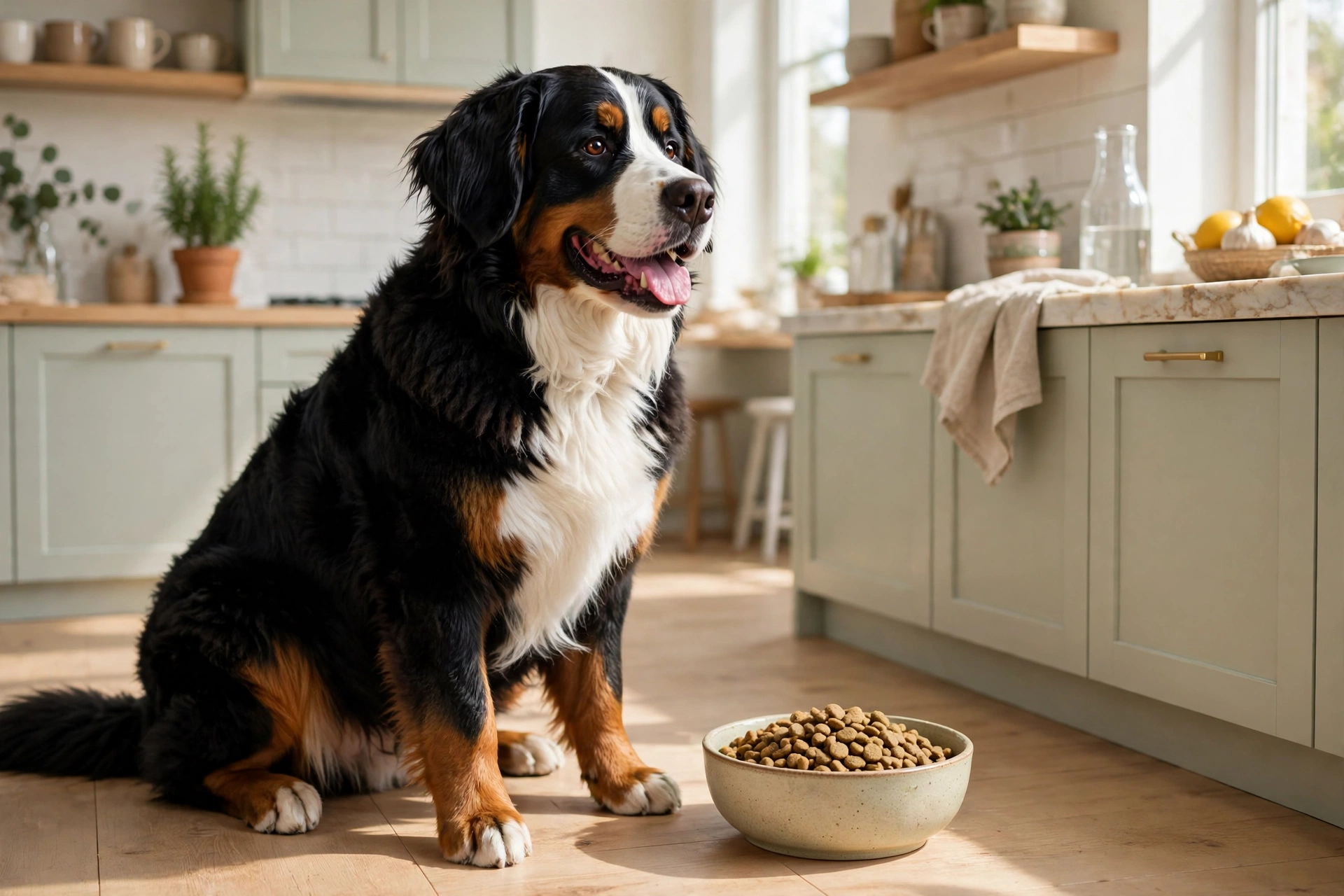
Best Dog Food for Bernese Mountain Dogs: 6 Top Picks (2026)
A Bernese Mountain Dog is not a dog you can feed like any other large breed. Berners grow fast, carry a lot of weight on their joints, and are prone to bloat, weight gain, and sensitive stomachs. The food you choose can help with those risks, or make them worse.
The wrong food doesn’t just mean a bigger bag. It can mean loose stools, a dull coat, extra weight that strains hips and elbows, or a dog that eats too fast and is then at higher risk of bloat. This guide compares six large-breed foods that fit a Berner’s needs, explains what to look for, and covers feeding amounts, bloat risk, and switching safely.
Key Takeaways
- Choose a large-breed adult formula with a named meat first — chicken, lamb, salmon, or bison — and controlled calcium and phosphorus, plus glucosamine and chondroitin for joints.
- Most adult Berners do well on about 3.5–5 cups of dry food a day, split into two meals.
- Feed smaller, split meals, use a slow feeder, and rest about an hour after eating to lower bloat risk.
- Grain-free is not automatically better — a good grain-inclusive large-breed food is equally sound for most Berners.
- Switch foods over 7–10 days, and check your dog again after the change for weight, stools, and coat.
Top Picks at a Glance
| Product | Best for | Key feature |
|---|---|---|
| Hill’s Science Diet Adult Large Breed Chicken & Barley Recipe | Overall | Glucosamine and chondroitin, controlled minerals |
| Purina Pro Plan Large Breed Adult Chicken & Rice Formula | Weight control | Higher protein, live probiotics |
| Taste of the Wild Ancient Prairie Roasted Bison & Venison | Grain-free | Roasted bison and venison, probiotics |
| Blue Buffalo Life Protection Formula Large Breed Adult Chicken & Brown Rice | Everyday value | Deboned chicken, LifeSource Bits |
| Nutro Natural Choice Large Breed Adult Lamb & Brown Rice Recipe | Sensitive stomach | Lamb first, easy to digest |
| Merrick Grain Free Large Breed Real Chicken & Sweet Potato Recipe | Grain-free high-protein | Chicken first, sweet potato for energy |
Hill’s Science Diet Adult Large Breed Chicken & Barley Recipe
Hill’s Science Diet Adult Large Breed Chicken & Barley Recipe is the safest all-round pick for most Berners. It is built around chicken as the first ingredient, with a controlled calcium-to-phosphorus ratio for large-breed bone growth and added glucosamine and chondroitin for hips and elbows.
The formula is not the highest in protein, but it is consistent, easy to digest, and widely recommended by vets for large breeds. If your Berner is already on a vet-recommended diet or has had joint concerns, this is the least risky starting point.
Who it is for: adult Berners who need steady weight and joint support without a fussy formula.
Purina Pro Plan Large Breed Adult Chicken & Rice Formula
Purina Pro Plan Large Breed Adult Chicken & Rice Formula is a strong choice if weight is the main concern. It is higher in protein than many large-breed foods, includes live probiotics for digestion, and uses chicken as the first ingredient.
The higher protein helps preserve lean muscle while you control calories, which matters for a breed that gains weight easily once it slows down. It also tends to be more affordable per bag than premium grain-free options.
Who it is for: Berners who need to lose a little weight or stay lean — see also our guide to the best dog food for weight loss for more calorie-controlled options.
Taste of the Wild Ancient Prairie Roasted Bison & Venison
Taste of the Wild Ancient Prairie Roasted Bison & Venison is a grain-free option for active Berners that do well without grains. It uses roasted bison and roasted venison as the main proteins, with sweet potatoes and peas for energy.
The protein level is higher than a typical grain-inclusive large-breed food, which suits a dog that is working, hiking, or otherwise burning a lot of calories. It also includes species-specific probiotics to support digestion.
Who it is for: active, healthy adult Berners that tolerate grain-free diets well and need more calories.
Blue Buffalo Life Protection Formula Large Breed Adult Chicken & Brown Rice
Blue Buffalo Life Protection Formula Large Breed Adult Chicken & Brown Rice is a solid everyday pick. Deboned chicken is first, followed by brown rice and oatmeal, with the brand’s LifeSource Bits for antioxidants, vitamins, and minerals.
It is not the most specialized formula here, but it covers the basics well: named meat first, a grain-inclusive recipe, and added glucosamine for large-breed joints. Many owners find it a good middle ground on price and quality.
Nutro Natural Choice Large Breed Adult Lamb & Brown Rice Recipe
Nutro Natural Choice Large Breed Adult Lamb & Brown Rice Recipe is the best pick here for sensitive stomachs. Lamb is the first ingredient, which is often easier to tolerate than chicken for dogs with food sensitivities, and the recipe is designed to be highly digestible.
It includes natural fiber for digestion and added glucosamine and chondroitin for joints, so you do not have to trade joint support for stomach comfort. The calorie level is moderate, which helps with weight control.
Merrick Grain Free Large Breed Real Chicken & Sweet Potato Recipe
Merrick Grain Free Large Breed Real Chicken & Sweet Potato Recipe is a high-protein, grain-free option for Berners that need a lot of energy or do better on a chicken-based diet. Deboned chicken is first, with sweet potato as a digestible carbohydrate source.
The protein level is higher than most grain-inclusive large-breed foods, so it suits very active dogs, but it can be too rich for a couch-potato Berner. Watch portions closely and adjust if weight creeps up.
Who it is for: very active Berners, or dogs that do better on chicken than beef — see also our guide to the best dog food for Golden Retrievers for another large-breed comparison.
Buying Guide: What to Look for in Bernese Mountain Dog Food
A Bernese needs more than a bag that says “large breed” on the front. The right food has the right protein, joint support, and mineral balance for a dog that can reach 70–115 pounds and is prone to hip and elbow problems.
Protein: named meat first, 22–30% for most adults
The first ingredient should be a named animal protein — chicken, lamb, salmon, or bison — not an unnamed meat meal and not a plant protein. Adult large-breed foods typically run about 22–30% protein. Puppies need a large-breed puppy formula, not an adult food, until they are close to full size.
Joints: glucosamine and chondroitin help
Look for glucosamine and chondroitin on the label. They will not fix a bad hip, but they support cartilage and help a heavy dog stay mobile. Omega-3 fatty acids from fish oil also help with joint inflammation and coat health.
Calcium and phosphorus: controlled for large breeds
Too much calcium during growth is linked to skeletal problems in large breeds, so a large-breed puppy formula with controlled calcium is important. For adults, a balanced calcium-to-phosphorus ratio in a large-breed adult formula is safer than a high-calcium all-life-stages food.
Grains: grain-free is not automatically better
Grain-free is not automatically healthier. Some dogs genuinely do better without grains, and grain-free foods can be higher in protein and calories, but a good grain-inclusive food with brown rice, oatmeal, or barley is equally sound for most Berners. Choose based on how your dog does — stools, coat, weight, and energy — not on the marketing.
Life stage: puppy, adult, and senior are different foods
Bernese puppies grow fast and need a large-breed puppy formula until about 18–24 months, when most vets recommend switching to a large-breed adult formula. Switching too early can short-change growth, and switching too late can add unnecessary calories once growth slows. Seniors need fewer calories and more joint support, so a senior formula is worth considering from about age 7 — see our best senior dog food guide for more on senior diets.
How Much to Feed a Bernese Mountain Dog
Most adult Berners do well on about 3.5–5 cups of dry food a day, split into two meals. That is a starting point, not a rule — calorie density varies a lot between brands, so always check the feeding guide on the bag and adjust for your dog’s weight and activity.
| Dog | Typical daily amount | Meals per day |
|---|---|---|
| Puppy (2–6 months) | 2–3 cups | 3–4 |
| Puppy (6–12 months) | 3–5 cups | 2–3 |
| Adult | 3.5–5 cups | 2 |
| Senior | 3–4.5 cups | 2 |
Use the rib test: you should be able to feel the ribs with light pressure but not see them clearly. If you cannot feel them, cut back by about 10% and re-check in two weeks. If ribs are very prominent, add a little food and check again.
Bloat: How Feeding Habits Lower the Risk
Bloat is a serious risk for deep-chested breeds like the Bernese. It happens when the stomach fills with gas and can twist, cutting off blood flow. It is an emergency, and it can become life-threatening in hours.
You cannot eliminate the risk, but you can lower it. Feed two or three smaller meals instead of one large meal, use a slow feeder or puzzle bowl if your dog eats fast, and avoid vigorous exercise for about an hour before and after meals. Some vets also recommend avoiding raised bowls unless your vet advises otherwise for a specific reason.
Know the warning signs and act fast: a swollen or tight belly, retching or trying to vomit without producing anything, restlessness, drooling, and a hunched or prayer-like posture. If you see those signs, go to an emergency vet immediately.
What to Avoid in a Bernese Mountain Dog’s Food
Not every food labeled for large breeds is a good fit for a Berner. Watch for these red flags:
- Unnamed meat meals or by-products as the first ingredient
- Very high calcium in a puppy food, or a generic all-life-stages food for a growing large breed
- Excessive fillers with little nutritional value, such as corn, wheat, and soy as the main ingredients
- Artificial colors, flavors, and preservatives
- A food that is very high in fat with no portion control, which makes weight gain almost inevitable in a less active Berner
None of these automatically makes a food bad, but together they are a sign that the formula was not designed for a large, joint-prone breed.
Wet, Dry, or Fresh Food for a Berner?
Dry food is the practical default for most Berners: it is easier to measure, cheaper per calorie, and helps with dental health. Wet food is higher in moisture, which can help dogs that do not drink enough, and it is often more palatable for picky eaters. Fresh food can be excellent, but it is expensive for a dog this size and must be complete and balanced for large breeds.
How Much Does Feeding a Bernese Mountain Dog Cost?
Feeding a Berner is not cheap. A large adult can eat 35–45 pounds of dry food a month, so a 24-pound bag may last only about two to three weeks. Expect roughly $60–$120 a month for a mid-range large-breed food, and more for premium or grain-free options.
Switching Foods Safely
Switch over 7–10 days: start with about 25% new food and 75% old food for two to three days, then move to 50/50, then 75% new, then 100% new. If stools loosen, hold at the current ratio for an extra day or two before moving on. If loose stools, gas, or vomiting persist for more than a few days after the switch, or if you see blood in the stool, stop and talk to your vet.
Conclusion: Our Recommendation
For most Berners, the starting point is Hill’s Science Diet Adult Large Breed Chicken & Barley Recipe. It is the safest all-round pick, with a named meat first, controlled calcium and phosphorus, and glucosamine and chondroitin for joints. It is also easy to digest and widely recommended by vets for large breeds.
If your dog needs to lose weight, Purina Pro Plan Large Breed Adult Chicken & Rice Formula is the better starting point, and Nutro Natural Choice Large Breed Adult Lamb & Brown Rice Recipe is the pick if chicken is the problem.
Whatever you choose, feed measured, split meals, and watch weight, stools, and coat in the first two weeks.
What is the best food for a Bernese Mountain Dog?
A large-breed adult formula with a named meat first, controlled calcium and phosphorus, and glucosamine and chondroitin for joint support, matched to your dog’s age and activity.
How much should a Bernese Mountain Dog eat per day?
Most adults eat 3.5–5 cups of dry food daily, split into two meals, adjusted by calorie density and body condition using the rib test.
Are Bernese Mountain Dogs prone to bloat?
Yes, as a deep-chested breed; feed smaller split meals, use a slow feeder, rest about an hour after eating, and seek emergency vet care immediately for a swollen belly, retching without vomiting, or restlessness.
Is grain-free food better for Bernese Mountain Dogs?
Not automatically; grain-free suits dogs that genuinely do better without grains, but a good grain-inclusive large-breed formula is equally sound for most Berners.
What protein is best for a Bernese Mountain Dog?
A named animal protein first, such as chicken, lamb, salmon, or bison; lamb is a practical alternative if chicken seems to cause problems.
When should a Bernese puppy switch to adult food?
Usually around 18–24 months, moving from a large-breed puppy formula to a large-breed adult formula, with your vet’s guidance.
What food helps a Bernese with a sensitive stomach?
A digestible formula with probiotics or prebiotic fiber, or a lamb-based or limited-ingredient recipe, switched over 7–10 days; persistent problems need a vet check.
How often should I feed an adult Bernese Mountain Dog?
Twice a day as a rule, with treats kept to about 10% of daily calories.




4 Comments