

Best Low Fat Dog Food for Dogs: 6 Top Picks (2026)
If your vet has ever said the words “low fat diet,” you know how quickly a simple bag of kibble turns into a research project. Low fat dog food is not just for dogs trying to slim down. It is also one of the main ways vets help manage pancreatitis, chronic digestive trouble, and several other conditions where fat is hard on the body. The problem is that “low fat” on a label does not always mean what you think it means, and the right choice for a healthy overweight dog is very different from the right choice for a dog recovering from pancreatitis.
In this guide, we break down the best low fat dog food for dogs in 2026: six real, widely available options, split clearly between everyday over-the-counter formulas and prescription diets that need your vet’s authorization. You will learn what “low fat” actually means on a label, how much fat is appropriate for different situations, and exactly what to check before you buy. Whether your dog needs to lose a few pounds or needs a therapeutic diet for a medical condition, you will leave knowing which food fits, and why.
This guide is for information only. Check with your vet for your dog’s specific needs.
SquarePet VFS Low Fat Formula is the best no-prescription pick, with 6 to 8 percent fat and no chicken. Dogs with pancreatitis need a prescription diet like Hill’s i/d Low Fat or Royal Canin Gastrointestinal Low Fat. For plain weight loss, try Purina Pro Plan Weight Management. Compare fat on a dry matter basis and always ask your vet first.
In This Guide
- Key Takeaways
- Best Low Fat Dog Food for Dogs: Quick Comparison
- SquarePet VFS Low Fat Formula
- Hill’s Prescription Diet i/d Low Fat Digestive Care
- Royal Canin Veterinary Diet Gastrointestinal Low Fat Loaf
- Purina Pro Plan Weight Management Adult Dry
- Wellness CORE Reduced Fat
- Natural Balance Fat Dogs
- What Counts as “Low Fat” Dog Food?
- Buying Guide: What to Look For in a Low Fat Dog Food
- What to Avoid
- How to Switch Your Dog to a Low Fat Food
- Low Fat vs Low Calorie: What Is the Difference?
- Pros and Cons
- Conclusion: Our Top Pick
- Which Health Conditions Call for a Low Fat Diet?
Key Takeaways
- A food generally counts as low fat when it contains 10% crude fat or less on a dry matter basis, but dogs with pancreatitis often need 8% or less, so the number matters.
- Prescription low fat diets (Hill’s i/d Low Fat, Royal Canin Gastrointestinal Low Fat) are the standard choice for pancreatitis and serious GI disease; over-the-counter options suit weight management and milder needs.
- SquarePet VFS Low Fat is the standout no-prescription pick: veterinarian-formulated, 6 to 8% fat, and chicken-free.
- Always compare fat on a dry matter basis, not the as-fed label number. Wet food percentages look far lower than they really are.
- Never put a dog on a strict low fat diet without talking to your vet first, especially puppies, underweight dogs, or dogs with a diagnosed condition.
Best Low Fat Dog Food for Dogs: Quick Comparison
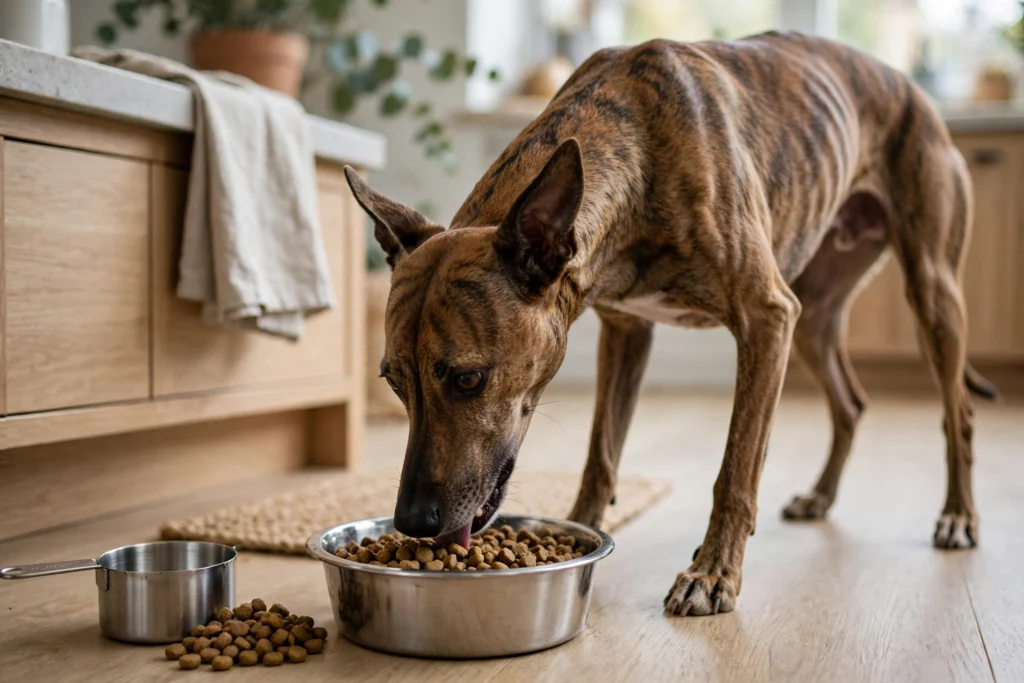
| Product | Best For | Key Feature |
|---|---|---|
| SquarePet VFS Low Fat Formula | Best overall (no prescription) | 6 to 8% fat, wild-caught whitefish, chicken-free |
| Hill’s Prescription Diet i/d Low Fat | Best for pancreatitis | Prescription GI diet, highly digestible, ActivBiome+ technology |
| Royal Canin Veterinary Diet Gastrointestinal Low Fat | Best GI prescription (wet) | Very low fat wet loaf, highly digestible proteins |
| Purina Pro Plan Weight Management Adult | Best everyday low fat dry food | 15% less fat than the standard formula, live probiotics |
| Wellness CORE Reduced Fat | Best grain-free low fat food | 25% less fat than CORE Original, no by-products or fillers |
| Natural Balance Fat Dogs | Best budget low fat food | Reduced-calorie chicken meal recipe, batch-tested for safety |
SquarePet VFS Low Fat Formula
SquarePet’s VFS Low Fat Formula is the pick we keep coming back to for owners who need a genuinely low fat food without a prescription. It is veterinarian-formulated (developed with input from a board-certified veterinary nutritionist) and carries a guaranteed fat range of 6% minimum to 8% maximum. That puts it in the same fat range as many prescription GI diets, which is rare for an over-the-counter food.
The first ingredients are ocean whitefish meal and ocean whitefish, naturally lean proteins that are easy to digest. The recipe is chicken-free, which is a real bonus if your dog also has a chicken sensitivity, one of the most common food sensitivities in dogs. A proprietary GI Health blend of dietary fiber, prebiotics (chicory root), and a Bacillus coagulans probiotic supports digestion, and EPA and DHA omega-3 fatty acids support skin, coat, and a normal inflammatory response.
At roughly 420 kcal per cup, it is not the lowest-calorie food on this list, so portion control still matters for weight loss. But for dogs whose vet has recommended a low fat diet (for fat sensitivity, digestive support, or weight management), this is the most capable no-prescription option we found. It is made in the USA with no artificial ingredients, chemical preservatives, or fillers, and it comes in 4.4 lb and 22 lb bags.
Best for: Owners who need prescription-level fat restriction without a prescription, and dogs with chicken sensitivities.
Keep in mind: It costs more than standard kibble, and the small bag is best for trial runs.
Hill’s Prescription Diet i/d Low Fat Digestive Care
When a dog has pancreatitis, vets reach for Hill’s i/d Low Fat more than any other diet, and for good reason. This prescription formula is built specifically for dogs with digestive disorders: it is highly digestible, so the gut has less work to do, and it uses Hill’s ActivBiome+ technology (a blend of prebiotic fibers designed to support a healthy gut microbiome).
The fat content sits around 6% crude fat (minimum), comfortably in the therapeutic range for pancreatitis management. The recipe also includes omega-3 and omega-6 fatty acids for skin and coat, plus clinically proven antioxidants for immune support. Based on ingredient analysis, brand reputation, and owner reviews, it is one of the most consistently well-tolerated GI diets available, and many owners report firmer stools within the first week of switching.
The trade-offs are real: you need your vet’s authorization to buy it, and it is priced like a medical diet. But for a dog with chronic or recurring pancreatitis, a prescription diet is not the place to cut corners. If your vet has prescribed i/d Low Fat, this is the food to feed. Do not substitute a “reduced fat” grocery-store kibble and assume it is equivalent.
Best for: Dogs with pancreatitis, chronic GI upset, or fat malabsorption under veterinary care.
Keep in mind: Prescription required; more expensive than over-the-counter foods.
Royal Canin Veterinary Diet Gastrointestinal Low Fat Loaf
Some dogs do better on wet food: picky eaters, dogs who need extra hydration, or dogs recovering from a GI flare-up. For those cases, Royal Canin’s Gastrointestinal Low Fat wet food is the prescription standard. It comes as a soft loaf in a can, with extremely low fat levels (around 1.4% crude fat as fed, which translates to a low dry matter fat level once water is accounted for) and highly digestible proteins that are gentle on a sensitive gut.
The formula includes prebiotics for digestive health and omega-3 fatty acids, and its adapted fiber levels help dogs stay energized despite the restricted fat intake. It is designed for both short-term digestive upsets and long-term management of conditions like pancreatitis and inflammatory bowel disease.
Wet food does cost more per day than kibble, especially for large dogs who may need several cans daily. But for dogs who refuse dry food, struggle to stay hydrated, or need the softest possible diet during recovery, this is the wet low fat food vets trust most.
Best for: Dogs who need a prescription low fat diet in wet form, and dogs recovering from GI episodes.
Keep in mind: Prescription required; feeding a large dog entirely on canned food gets expensive.
Purina Pro Plan Weight Management Adult Dry
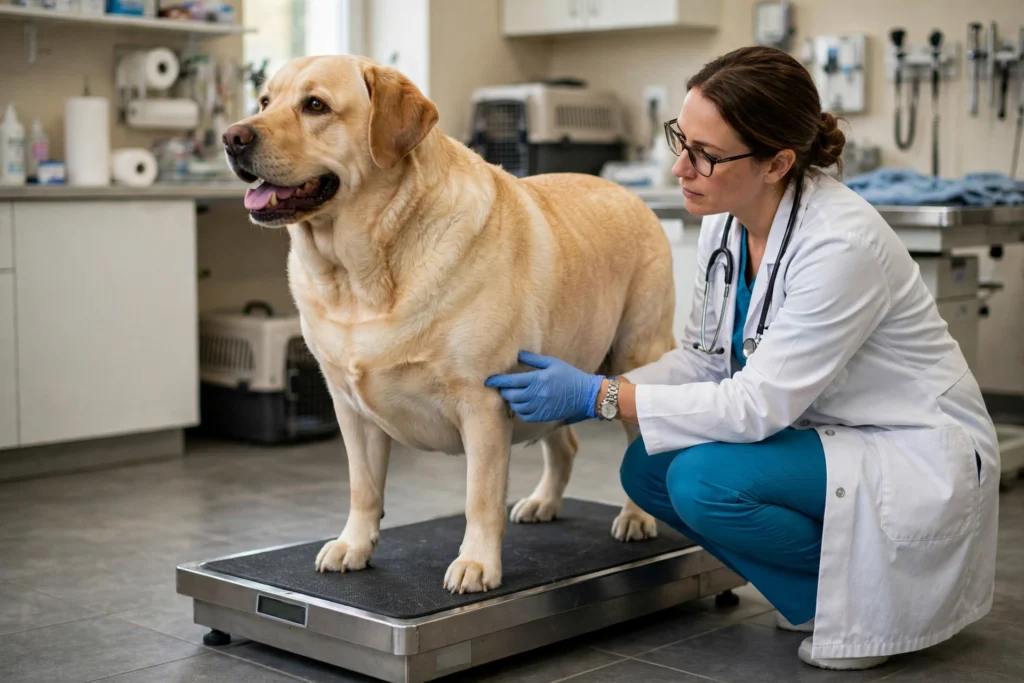
Not every dog on a low fat diet has a medical condition. If your dog is simply overweight or less active than he used to be, Purina Pro Plan Weight Management is one of the most practical everyday choices. It contains 15% less fat than Purina’s standard adult formula, with a protein-to-fat ratio designed to help dogs lose weight while keeping muscle mass.
Real chicken is the first ingredient, and the recipe includes prebiotic fiber and live probiotics for digestive health, plus omega fatty acids for skin and coat. At around 9% crude fat (minimum), it qualifies as low fat by the standard 10% threshold, but it is not low enough for dogs with pancreatitis or strict therapeutic fat restriction. That is an important distinction.
What makes this food stand out is the combination of wide availability, reasonable price, and a feeding guide that includes portions for both maintenance and weight loss. If your vet has told you your dog needs to drop a few pounds but has not prescribed a medical diet, this is a sensible, affordable starting point. For more on the weight-loss side of the equation, see our guide to the best dog food for weight loss.
Best for: Overweight or less active dogs who need a moderate fat reduction without a prescription.
Keep in mind: Fat content is too high for dogs with pancreatitis or other conditions needing strict restriction.
Wellness CORE Reduced Fat
Wellness CORE Reduced Fat is the go-to for owners who want a grain-free low fat kibble. It contains 25% less fat than Wellness CORE Original, landing around 10% crude fat (minimum), right at the low fat threshold. The recipe is built on premium protein to support lean body mass, with no meat by-products, fillers, corn, soy, wheat-gluten, or artificial preservatives, colors, or flavors.
It also includes a solid supporting cast: omega fatty acids, antioxidants, glucosamine for joint support, prebiotics and probiotics for digestion, and taurine for heart health. That makes it a good fit for dogs who are carrying extra weight and are also a bit stiff or gassy.
One honest caveat: grain-free diets have been under scrutiny since the FDA began investigating a possible link between grain-free diets and dilated cardiomyopathy (DCM) in dogs. The evidence is inconclusive, but if your dog is on a grain-free diet long term, it is worth discussing with your vet. For most dogs, a grain-inclusive low fat food is the safer default. Grain-free is best reserved for dogs with a genuine grain sensitivity.
Best for: Dogs who need a grain-free, moderately low fat food for weight management.
Keep in mind: Sits at the upper edge of “low fat”; discuss grain-free feeding with your vet.
Natural Balance Fat Dogs
Natural Balance Fat Dogs (officially the Original Ultra Fat Dogs formula) has been a budget-friendly weight-management staple for years, and it earns its place here. Chicken meal is the first ingredient, providing solid protein for muscle maintenance, and fiber-rich ingredients like peas, oat groats, and barley help dogs feel full on fewer calories. The reduced-calorie recipe is designed to help dogs maintain a healthy weight without feeling deprived.
What we like beyond the price: Natural Balance runs a “Feed with Confidence” program that batch-tests every bag, and owners can look up their bag’s test results online. For a budget food, that transparency is unusual and reassuring.
Fat Dogs is a weight-management food, not a therapeutic one. Its fat level is moderate rather than ultra-low, so it is not the right choice for pancreatitis. But if your dog needs to trim down and you want a dependable, affordable low fat food, it is hard to beat for the price. Pair it with measured portions and regular weigh-ins, and it does the job.
Best for: Budget-conscious owners whose dogs need a lower-fat, lower-calorie food for weight control.
Keep in mind: Not suitable for dogs needing strict therapeutic fat restriction.
What Counts as “Low Fat” Dog Food?
The most common rule of thumb: a dog food is considered low fat when it contains 10% crude fat or less on a dry matter basis. But that number needs unpacking, because the guaranteed analysis on the bag reports fat “as fed” (including water).
Dry kibble is roughly 10% moisture, so its as-fed fat percentage is close to its dry matter percentage. Wet food is roughly 75 to 80% moisture, so a canned food labeled 2% fat as fed may actually be around 8 to 10% fat on a dry matter basis. That is why a wet food can look dramatically lower in fat than kibble while being roughly equivalent. To compare fairly, convert: divide the as-fed fat percentage by the dry matter fraction (100% minus moisture%), then multiply by 100. For example, a canned food with 2% fat and 78% moisture is 2 ÷ 22 × 100 ≈ 9% fat on a dry matter basis.
There is also a difference between “reduced fat” and “low fat.” “Reduced fat” usually means the food has less fat than the brand’s standard formula (a 15% or 25% reduction), but it may still sit above the 10% line. “Low fat” should mean the food meets the 10%-or-less threshold. And “therapeutic low fat” diets for pancreatitis typically go further, landing in the 6 to 8% dry matter range. When your vet says “low fat,” ask for a target number. It makes shopping far simpler.
Buying Guide: What to Look For in a Low Fat Dog Food
Fat content on a dry matter basis
This is the single most important number. For general weight management, look for 10% or less. For pancreatitis or vet-directed fat restriction, look for 8% or less, and confirm the number with your vet. Prefer foods that state a maximum fat guarantee (like SquarePet’s 8% max) over foods that only list a minimum. A minimum tells you the floor, not the ceiling.
Protein quality and amount
Cutting fat should not mean cutting protein. Dogs losing weight or recovering from illness need protein to preserve muscle. Look for a named animal protein (chicken, whitefish, turkey, pork meal) as the first ingredient, and a crude protein level of at least 20 to 25% for adult dogs. Be cautious of foods that replace fat with cheap starches and drop protein along the way.
Fiber for fullness
Fiber is what keeps a dog satisfied on fewer calories. Ingredients like beet pulp, pumpkin, oat groats, barley, and chicory root slow digestion and help with stool quality. A crude fiber level around 3 to 5% is typical for weight-management foods. If your dog also has a sensitive stomach, prioritize soluble fiber and gentle ingredients over high-fiber formulas that can cause gas.
Digestibility
For dogs with GI disease, digestibility matters as much as fat percentage. Prescription GI diets are formulated for high digestibility. The nutrients are easy to absorb, so less undigested material reaches the gut. Signs a food agrees with your dog: firm, formed stools, minimal gas, and a healthy appetite.
AAFCO statement
Every complete food should carry an AAFCO nutritional adequacy statement on the label, confirming it is formulated to meet AAFCO nutrient profiles for a stated life stage (adult maintenance, growth, or all life stages). If the statement says “for intermittent or supplemental feeding only,” it is a topper or treat, not a complete diet. Do not use it as your dog’s main food.
Prescription vs. over-the-counter
Prescription diets are formulated for diagnosed conditions and sold with veterinary authorization. Over-the-counter low fat foods are fine for weight management and general lower-fat feeding, but they are not substitutes for a prescribed therapeutic diet. If your vet prescribed a specific diet, feed that diet. Swapping to a cheaper “low fat” kibble can undo the treatment.
What to Avoid
- Treating “reduced fat” as “low fat”: A food can be reduced in fat and still exceed 10%. Check the dry matter number, not the marketing claim.
- Fatty treats and table scraps: A low fat diet fails if treats undo it. Cheese, fatty meat trimmings, and many commercial treats are high in fat. Keep treats to 10% of daily calories or less, and choose low fat options like plain green beans, apple slices, or small pieces of plain boiled chicken breast.
- Sudden food switches: Changing food overnight can trigger the exact digestive upset you are trying to prevent. Transition over 7 to 10 days: 25% new food for a few days, then 50%, then 75%, then fully switched. For dogs with sensitive stomachs and diarrhea, go even slower.
- Putting puppies on a strict low fat diet without veterinary guidance: Puppies need more fat for growth and brain development than adult dogs. A low fat diet for a puppy should only happen under a vet’s direction.
- Homemade low fat diets without a plan: A plain chicken-and-rice diet is fine for a few days of recovery, but it is not nutritionally complete long term. If you want to cook for your dog, work with your vet or a veterinary nutritionist on a balanced recipe with the right supplements.
- Ignoring the underlying cause: Weight gain, chronic soft stools, and recurring pancreatitis all have causes worth diagnosing: thyroid issues, food sensitivities, or food allergies among them. Diet manages symptoms; your vet finds the cause.
How to Switch Your Dog to a Low Fat Food
Switch gradually over 7 to 10 days. Days 1 to 3: mix 25% new food with 75% old food. Days 4 to 6: go to 50/50. Days 7 to 9: 75% new, 25% old. Day 10: fully switched. If stools loosen at any step, hold at that ratio for an extra day or two before moving on. Feed measured meals on a consistent schedule (free-feeding makes calorie control nearly impossible) and weigh your dog every 2 to 4 weeks so you can tell whether the plan is working. If your dog refuses the new food for more than a day, or shows vomiting, lethargy, or bloody stool, stop and call your vet.
Low Fat vs Low Calorie: What Is the Difference?
Low fat and low calorie sound like the same thing, but they measure different things, and confusing them can lead to the wrong choice. Low fat describes the share of fat in the food, which this guide measures on a dry matter basis, with 10 percent crude fat or less as the usual low-fat threshold. Low calorie, or low calorie density, describes how much energy is in each cup or kilogram of food. A food can be low in fat yet still fairly high in calories if it is rich in carbohydrate or protein, and a food can be lower in calories per cup without meeting a strict low-fat target.
That distinction matters because the goal decides which number to prioritize. If your vet has set a fat limit for pancreatitis or another fat-sensitive condition, the fat percentage on a dry matter basis is the number that matters most, even if the food is not the lowest in calories. If the main goal is weight loss, total calories and portion size matter more, since a dog gains or loses weight based on total energy eaten, not fat alone. In practice, check both numbers on the label: fat on a dry matter basis and calories per cup. Then measure portions, count treats, and ask your vet which target fits your dog, rather than assuming a low-fat label automatically means a low-calorie food.
Pros and Cons
These six picks cover the main low fat needs, but none of them fits every dog. Here is the honest balance.
Pros
- SquarePet gives prescription-level fat restriction (6 to 8 percent) without a prescription, and it is chicken-free.
- Two prescription diets cover pancreatitis and serious gut disease with proven formulas.
- Everyday picks like Purina Pro Plan Weight Management and Natural Balance Fat Dogs keep weight loss affordable.
- All six picks are real formulas sold in the United States, with clear fat numbers on the label.
Cons
- Prescription diets need vet authorization and cost more per bag than regular food.
- Wellness CORE Reduced Fat sits right at the 10 percent line, so it is too high in fat for pancreatitis.
- Natural Balance Fat Dogs is a weight food, not a therapeutic diet, so it cannot replace a prescription.
- Grain-free feeding needs a vet talk first, since the link to heart disease is still unclear.
Conclusion: Our Top Pick
For most owners who need a genuinely low fat food without a prescription, SquarePet VFS Low Fat Formula is our top pick: veterinarian-formulated, 6 to 8% fat, chicken-free, and widely available. If your dog has pancreatitis or a diagnosed GI condition, follow your vet’s prescription. Hill’s i/d Low Fat (dry) or Royal Canin Gastrointestinal Low Fat (wet) are the proven standards. And if the goal is straightforward weight loss, Purina Pro Plan Weight Management or Natural Balance Fat Dogs will get you there at a fair price.
Whatever you choose, remember that the number on the label only matters if you also measure portions, control treats, and check in with your vet. Low fat food is a tool. Used consistently, it is one of the most effective tools you have for your dog’s health.
This guide is for information only. Check with your vet for your dog’s specific needs.
Which Health Conditions Call for a Low Fat Diet?
Pancreatitis is the best known reason for a low fat diet, and this guide already covers it, but it is far from the only one. Hyperlipidemia means too much fat in the blood, and it can show up as milky looking blood on a vet test, or as repeat bouts of pancreatitis. Dogs with this problem need a strict low fat diet and regular blood tests, and some also need medicine, so food alone is not the whole plan. Liver disease changes the diet in a different way: a hepatic support diet controls more than fat, keeping protein, copper, and phosphorus at set levels, and it is sold with vet authorization. A plain weight loss kibble does not do that job. Dogs with inflammatory bowel disease, lymphangiectasia, or exocrine pancreatic insufficiency (EPI) also struggle with fat, because their gut cannot absorb it well. For them the diet needs to be low in fat and easy to digest, with low residue and added probiotics, and some dogs need vitamin B12 support too. The point is that each condition calls for a different diet, not just any bag marked low fat. If your vet names a condition, ask which diet fits that exact problem, and keep the vet checks going, since blood work is how you know the food is working.
What is considered low fat dog food?
A dog food is generally considered low fat when it contains 10% crude fat or less on a dry matter basis. For dogs with pancreatitis, vets often recommend 8% or less. Always compare foods on a dry matter basis, since wet food percentages look much lower than they really are because of water content.
How much fat should a dog with pancreatitis eat?
Most vets recommend 8% fat or less on a dry matter basis for dogs with pancreatitis, and therapeutic diets typically land in the 6 to 8% range. Prescription diets like Hill’s i/d Low Fat are formulated for this. Never manage pancreatitis with diet alone. Work closely with your vet.
Is low fat dog food good for weight loss?
Yes. Low fat foods are usually lower in calories, which helps dogs lose weight when combined with measured portions and regular exercise. For the best results, feed measured meals on a schedule, keep treats under 10% of daily calories, and weigh your dog every few weeks.
Can I feed my dog low fat food long term?
Yes, as long as the food is complete and balanced for your dog’s life stage and your vet agrees. Many dogs stay on low fat diets permanently, especially after pancreatitis. Your vet may recommend periodic blood work to confirm the diet is still meeting your dog’s needs.
Do low fat diets need a prescription?
Some do, some don’t. Prescription diets like Hill’s i/d Low Fat and Royal Canin Gastrointestinal Low Fat require veterinary authorization. Over-the-counter options like SquarePet VFS Low Fat, Purina Pro Plan Weight Management, and Natural Balance Fat Dogs do not. But always confirm with your vet which category your dog needs.
What human foods are low fat and safe for dogs?
Plain boiled skinless chicken breast, plain canned pumpkin, green beans, apple slices, and blueberries are all low fat and generally safe as occasional treats. Avoid fatty meats, cheese, fried foods, and anything containing xylitol, onion, garlic, grapes, or chocolate.
Can puppies eat low fat dog food?
Puppies should only eat a low fat diet if your vet recommends it. Growing puppies need more fat for brain development and growth than adult dogs, so a strict low fat diet can cause deficiencies. If a puppy needs fat restriction for a medical reason, your vet will guide the choice.
How do I switch my dog to low fat food?
Transition gradually over 7 to 10 days: 25% new food for a few days, then 50%, then 75%, then fully switched. If stools loosen, hold at the current ratio for an extra day or two. If your dog refuses food for more than a day or shows vomiting or bloody stool, call your vet.
Is a low-fat dog food always low in calories?
No. Low fat refers to the fat percentage, usually 10 percent crude fat or less on a dry matter basis in this guide, while calories depend on the total recipe, including protein and carbohydrate. A low-fat food can still be fairly high in calories per cup, so check the calories per cup, measure portions, and count treats. If weight loss is the goal, total calories matter at least as much as fat percentage.
Should I choose a low-fat food or a low-calorie food for my dog?
Choose based on your dog’s main need, and ask your vet if you are unsure. If your vet has set a fat limit for pancreatitis or another fat-sensitive condition, prioritize the dry-matter fat percentage. If your dog simply needs to lose weight, prioritize total calories and measured portions, and check that the food still provides enough protein and fiber. Many foods help with both, but the label numbers tell you which goal each food serves best.
What health conditions besides pancreatitis need a low fat diet?
Hyperlipidemia (too much fat in the blood), liver disease, inflammatory bowel disease, lymphangiectasia, and exocrine pancreatic insufficiency (EPI) can all call for a low fat diet. Each one needs a different diet: liver disease diets also control protein, copper, and phosphorus, while gut conditions need food that is low in fat and easy to digest. All of these need a vet diagnosis and vet checks, so do not pick a diet for them on your own.
What is the lowest fat dog food I can buy without a prescription?
SquarePet VFS Low Fat Formula is the lowest fat no-prescription pick in this guide, at 6 to 8 percent fat, which sits in the same range as many prescription diets. The Royal Canin Gastrointestinal Low Fat wet loaf is lower in fat, but it needs a prescription. If your vet has set a fat limit, check the dry matter fat number on the bag before you buy, since the as-fed number on wet food looks far lower than it really is.


3 Comments