
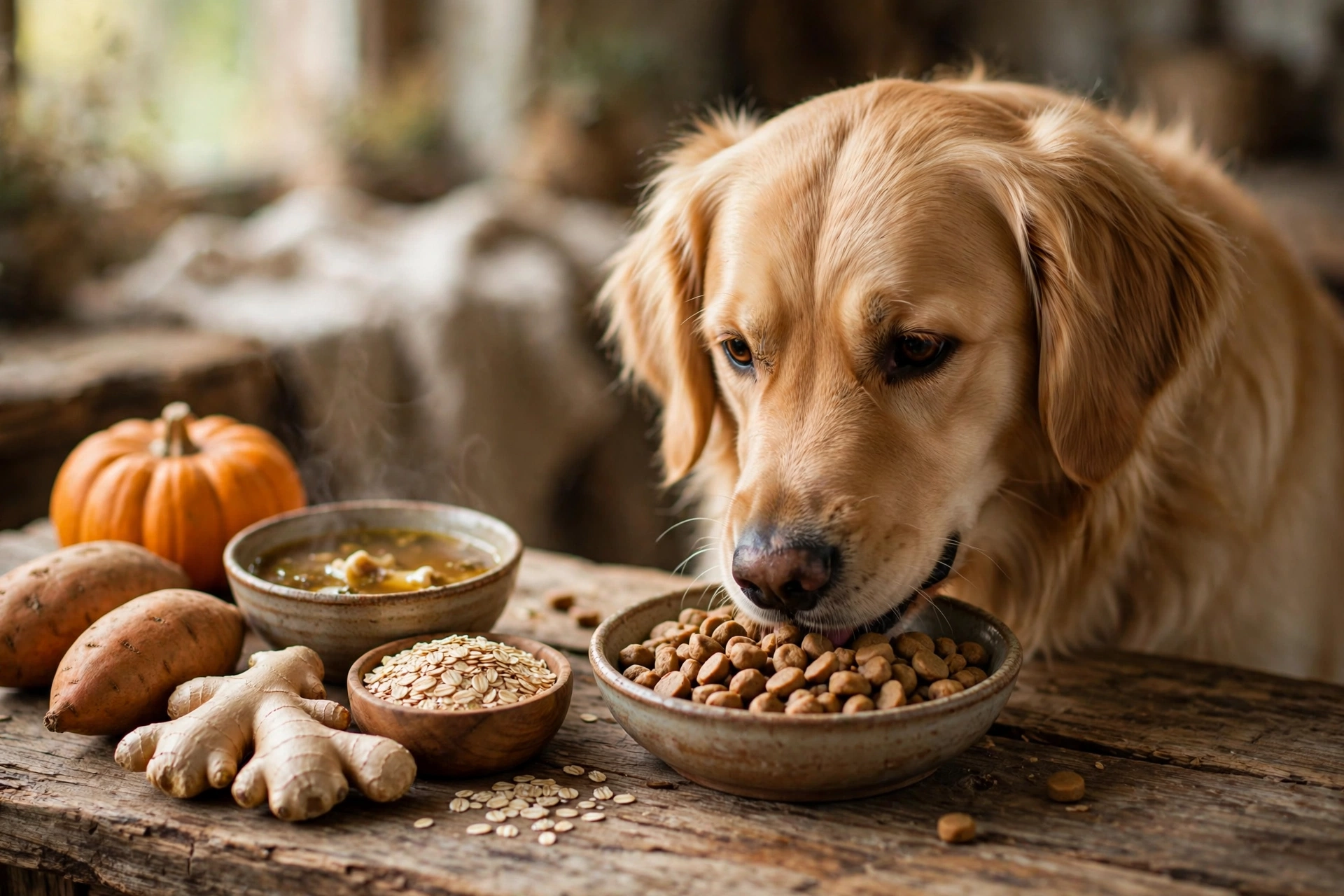
Ingredients Good for Sensitive Stomachs: Pumpkin, Oats & More
If your dog deals with gas, loose stools, occasional vomiting, or a general reluctance to eat, the answer often starts in the bowl. Dogs with sensitive stomachs need food built from gentle, digestible ingredients that support healthy digestion rather than challenge it. Knowing what ingredients are good for sensitive stomach dogs changes how you shop for dog food, so you can read labels like an expert, pick smarter toppers at home, and give your dog’s gut exactly what it needs to settle down.
In this guide, I’ll walk you through the most stomach-friendly ingredients out there: fiber-rich foods like pumpkin and sweet potato, gut-soothing bone broth and ginger, probiotic foods that rebalance digestion, and the prebiotic fibers smart dog food brands put on their labels. You’ll also learn which ingredients to avoid, how to introduce new foods safely, and when a sensitive stomach means it’s time to see the vet. This guide is for information only, so check with your vet for your dog’s specific needs. If you are comparing complete foods rather than single ingredients, start with our guide to the best dog food for sensitive stomachs.
Key Takeaways
- Pumpkin is the single most useful gut ingredient: its soluble fiber absorbs excess water to firm up loose stools, and the same fiber helps move things along when a dog is constipated.
- Lean, simple proteins and bland carbohydrates (boiled chicken, turkey, white fish, white rice, and sweet potato) form the classic easy-to-digest base that vets and owners reach for during stomach upset.
- Fermented foods like plain yogurt and kefir deliver live probiotics that help rebalance gut bacteria after illness, antibiotics, or stress.
- Bone broth soothes and hydrates, ginger eases nausea, and both are gentle in small, pet-safe amounts.
- Read the fine print: use 100% pure pumpkin (not pie filling), pet-safe low-sodium broth with no onion or garlic, and unsweetened dairy with absolutely no xylitol.
The Best Ingredients for Sensitive Stomachs at a Glance
| Ingredient | Best For | Key Feature | Caution |
|---|---|---|---|
| Pumpkin (100% pure puree) | Firming loose stools & easing constipation | Soluble fiber that regulates digestion speed | Use only 100% pure pumpkin, not pie filling. |
| Sweet potato (cooked, mashed) | Gentle energy and stool regulation | Digestible fiber plus beta-carotene and B vitamins | Cook thoroughly and remove the skins. |
| Bone broth (pet-safe, low-sodium) | Hydration and gut lining support | Gelatin and amino acids like glycine | Only pet-safe broth with no onion or garlic. |
| Plain yogurt / kefir | Rebalancing gut bacteria | Live probiotic cultures such as Lactobacillus | Only if your dog tolerates dairy. |
| Ginger (small amounts) | Nausea, gas, and motion sickness | Natural anti-nausea and anti-inflammatory action | A tiny amount only, and check with your vet if your dog takes blood thinners. |
| Prebiotic fibers (chicory root, inulin, FOS, beet pulp) | Feeding beneficial gut bacteria | Non-digestible fibers that nourish the microbiome | Add slowly, since extra fiber can loosen stools. |
| Slippery elm (powder) | Soothing intestinal inflammation | Mucilage that coats the digestive lining | Only in the small amounts a vet advises, away from medicines. |
| Lean protein + white rice | Recovering from acute stomach upset | Highly digestible, low-fat bland base | Bland diet only for a few days, not a long-term diet. |
Pumpkin: The Fiber Hero
If you add one ingredient to a sensitive stomach dog’s diet, make it pumpkin. Plain pumpkin is rich in soluble fiber, which acts like a sponge in the digestive tract: when stools are loose, it absorbs excess water and firms them up; when a dog is slightly constipated, the same fiber helps move things along. It’s one of the few ingredients that helps at both ends of the spectrum, which is why it shows up in so many digestive support formulas.
Pumpkin also brings beta-carotene, vitamin A, and a mild, palatable flavor most dogs accept happily. A tablespoon mixed into meals is a sensible starting amount for a medium-sized dog (a teaspoon for small breeds, two tablespoons for large ones). The critical rule: use only 100% pure pumpkin puree. Pumpkin pie filling contains spices, sugars, and sometimes xylitol, all of which can make a stomach problem worse. Check the ingredient list and make sure the only ingredient is pumpkin.
Sweet Potato: Gentle Energy in Orange
Sweet potatoes are a close second to pumpkin for sensitive stomachs. They’re loaded with dietary fiber that regulates digestion speed and helps normalize stool consistency, plus beta-carotene, vitamin B6, vitamin C, and manganese. Unlike their name suggests, they’re gentle on the stomach and provide steady, slow-burning energy rather than sharp blood sugar spikes.
Cook them well: steam or boil, remove the skins, and mash before mixing into your dog’s food. Raw sweet potato is hard to digest, and skins can be tough on a delicate gut. Sweet potatoes are also a common ingredient in limited-ingredient commercial diets, so dogs that do well on fresh sweet potato often tolerate sweet-potato-based kibble too. Because they’re naturally higher in sugar than pumpkin, treat them as a side dish rather than a main course.
Bone Broth: Liquid Support for the Gut
Bone broth is one of the most soothing things you can offer a dog with an unsettled stomach. Slow simmering bones and connective tissue releases gelatin, collagen, and amino acids like glycine and proline that support the integrity of the gut lining, the mucosal barrier that keeps digestion running smoothly. It’s also easy to digest and adds hydration, which matters when a dog has had loose stools or has been reluctant to drink.
The safest option is pet-specific bone broth or homemade broth made without onion, garlic, excess salt, or heavy seasoning, since most grocery-store broths contain onion or garlic, both of which are toxic to dogs. Pour warm broth over kibble to make meals more appealing for dogs with reduced appetite, or freeze it into ice cubes for a hydrating, gut-friendly treat on warm days. Dogs recovering from stomach bugs or dietary indiscretion often accept broth when they’ll refuse everything else.
Plain Yogurt and Kefir: Probiotics From the Kitchen
A healthy dog’s gut contains billions of beneficial bacteria, and illness, antibiotics, stress, or a diet change can knock that community out of balance. Probiotics, live friendly bacteria, help restore it, reducing gas, supporting healthy stools, and strengthening the immune system, since so much of a dog’s immunity lives in the digestive tract.
Plain, unsweetened yogurt with live active cultures is the most accessible source; look for Lactobacillus or similar cultures on the label and choose non-fat or low-fat varieties. Kefir, a fermented milk drink, is often even more potent, since it carries a wider range of bacterial strains and beneficial yeasts, and because fermentation breaks down much of the lactose, many dogs that don’t tolerate yogurt do fine with kefir. Start with a teaspoon for small dogs and a tablespoon for larger ones over meals. Two non-negotiable rules: avoid all sweeteners, because xylitol (birch sugar) is highly toxic to dogs and even regular sugar feeds harmful gut bacteria, and introduce dairy slowly, since some dogs are lactose intolerant.
Ginger: Nature’s Anti-Nausea Remedy
Ginger has been used for centuries to settle upset stomachs in people, and it works for dogs too. It’s a natural anti-inflammatory and anti-nausea ingredient that soothes the stomach lining and encourages normal movement of food through the digestive tract. It’s particularly useful for dogs prone to car sickness, occasional nausea, or gas and bloating after meals.
A tiny pinch of freshly grated ginger or a small amount of ginger powder mixed into food is all you need, since ginger is potent, and more is not better. You can also steep thin slices of fresh ginger in warm water, let it cool, and offer it as a mild tea mixed with food. Some commercial digestive chews include ginger for exactly this reason. As with any supplement, check with your vet first if your dog takes medication, since ginger can interact with blood thinners.
Prebiotic Fibers: Feeding the Good Bacteria
Here’s a distinction most guides gloss over: if probiotics are the “seeds” for a healthy gut, prebiotics are the fertilizer. Prebiotics are types of plant fiber that dogs can’t digest but that beneficial gut bacteria thrive on. Without prebiotics, probiotics, whether from yogurt or a supplement, struggle to survive and colonize the gut.
You don’t need to buy these as supplements; they appear on commercial dog food labels under names like chicory root, inulin, fructooligosaccharides (FOS), mannan-oligosaccharides (MOS), beet pulp, and dried chicory. When you’re comparing foods for a sensitive stomach dog, these are exactly the label ingredients to look for, since they feed the good bacteria and promote a balanced digestive ecosystem. From the kitchen, bananas offer a gentle source of natural prebiotics (FOS): a few thin slices once or twice a week are plenty, since bananas are naturally high in sugar.
Slippery Elm: Soothing the Intestinal Lining
Slippery elm is tree bark that has been used for centuries to calm digestive inflammation. When mixed with water, it forms a mucilage, a slippery, gel-like substance, that coats the stomach and intestinal lining, reducing irritation. This makes it particularly helpful for dogs dealing with ulcers, inflammatory bowel discomfort, or lingering irritation after a bout of gastroenteritis.
It’s sold as a powder you can mix into a small amount of food or water. Because it’s a concentrated botanical, use it under veterinary guidance rather than experimenting on your own, and give it away from medications since the mucilage can slow absorption. Not every sensitive stomach needs slippery elm, so think of it as a specialist tool for dogs whose guts need active soothing, not an everyday topper.
Lean Protein + White Rice: The Bland Diet Base
When a sensitive stomach flares into actual upset, vomiting or diarrhea, most dogs do best on a short-term bland diet: plain boiled protein plus plain cooked white rice. Skinless boneless chicken breast, lean turkey, or well-cooked white fish provide the protein a dog needs without the fat that triggers symptoms. White rice is bland, highly digestible, and binds the stool gently.
Cook everything plain, with no butter, oil, seasoning, or skin. Serve small, frequent meals rather than one or two big ones. This bland combination is a temporary measure for a few days while the gut settles, not a long-term diet, since it isn’t nutritionally complete. If symptoms don’t improve within 48 hours, or you see blood in the stool, repeated vomiting, lethargy, or signs of dehydration, it’s time for the vet. A bland diet is support, not treatment.
How Much of Each Ingredient, and When to Skip It
These amounts are starting points for a healthy adult dog, not a prescription. Start low, watch your dog for 48 hours, and ask your vet before you add anything new, especially if your dog takes medicine or has a diagnosed condition.
- Pumpkin: about 1 teaspoon per 10 lb of body weight, up to about 1 tablespoon per 10 lb per day, mixed into food. Skip it if stools get looser instead of firmer, and never use pie filling.
- Sweet potato: a few spoonfuls of mashed sweet potato with a meal, as a side dish, not the main course. Skip the skins, and skip it if your vet has your dog on a low-sugar diet.
- Bone broth: a little warm broth poured over kibble, or a frozen cube or two as a treat. Skip grocery-store broth, since it often contains onion or garlic.
- Plain yogurt or kefir: a teaspoon for a small dog and a tablespoon for a larger dog, over meals. Skip dairy if your dog is lactose intolerant or reacts to it.
- Ginger: only a tiny pinch of fresh grated ginger or a small amount of powder. Skip it if your dog takes blood thinners, and ask your vet first.
- Prebiotic fibers: from the food itself, such as chicory root, inulin, FOS, MOS, or beet pulp on the label, or a few thin slices of banana once or twice a week. Skip extra fiber if your vet has your dog on a low-residue diet.
- Slippery elm: powder mixed into a small amount of food or water, only in the small amounts a vet advises, away from medicines. Skip it as an everyday topper.
- Lean protein and white rice: plain boiled protein plus plain cooked white rice, in small, frequent meals, for a few days only. Skip it once the gut settles; it is not a long-term diet.
- Oats: a spoonful or two of plain cooked oatmeal, with nothing added. Skip oats for a grain-sensitive dog and use rice instead.
- Eggs: one plain cooked egg, scrambled or boiled with no butter, oil, or seasoning. Skip eggs if your dog is sensitive to them.
- White fish: plain cooked white fish as the bland diet protein, in the same plain portions as chicken or turkey. Skip high-mercury fish.
Not all fiber does the same job. Soluble fiber, such as pumpkin, beet pulp, chicory root, and psyllium, dissolves in water and forms a gel that firms loose stool. Insoluble fiber, such as cellulose, pea fiber, and bran, adds bulk and passes through quickly, which can make loose stool worse. For a sensitive stomach, look for soluble fiber on the label and go easy on foods whose fiber comes mostly from cellulose or bran.
Fat is the other dial to watch. Most adult dogs with sensitive stomachs do best on moderate fat, roughly 10 to 15% on a dry-matter basis, since rich, fatty food is the fastest way to trigger a flare. Protein matters too: eggs and white fish are among the easiest proteins to digest, while beef and dairy are among the most common triggers, so if your dog reacts to a food, its protein is the first thing to question.
If your dog reacts to every protein you try, ask your vet about a hydrolyzed diet. Hydrolyzed food breaks protein into pieces so small that the immune system usually does not recognize them, which is why vets prescribe it for a confirmed food allergy or inflammatory bowel disease. It is a prescription diet, not an over-the-counter ingredient, so you will only get it through your vet.
What to Look For on a Dog Food Label
If you’d rather buy a food than build meals from scratch, the same ingredient principles apply at the store. Here’s how to read a label for a sensitive stomach dog:
- A named animal protein first: chicken, turkey, salmon, lamb, or beef, not “meat meal” or “animal digest.” Clearly named proteins are easier to digest and let you avoid a specific protein if your dog reacts to it.
- A short, recognizable ingredient list: the fewer ingredients, the easier it is to pinpoint a problem if your dog reacts. Limited-ingredient diets exist for exactly this reason, and they work well for many sensitive dogs. For a deeper look at this approach, see my guide to the best limited ingredient dog food.
- Prebiotic fibers on the label: chicory root, inulin, FOS, MOS, or beet pulp signal a formula designed to support the microbiome.
- Probiotic support: look for “dried fermentation products” (like dried Lactobacillus fermentation product), which are the probiotic strains added to kibble.
- Gentle carbohydrates: rice, oatmeal, or sweet potato as the primary carb rather than heavy corn, wheat, or soy.
- Omega-3 fatty acids: fish oil or flaxseed supports gut health and calms inflammation.
- An AAFCO nutritional adequacy statement: this confirms the food is formulated to meet established nutrient profiles for your dog’s life stage.
A Worked Label Decode: Purina Pro Plan Salmon & Rice
Take Purina Pro Plan Sensitive Skin & Stomach, Salmon & Rice, as printed on Chewy. Protein comes first: salmon leads, with fish meal and salmon meal behind it, and the fat is beef fat, not chicken fat. Fiber comes from oat meal and barley, plus dried chicory root, the prebiotic fiber that feeds good gut bacteria. Fat sits at 16% minimum, a moderate level that suits most sensitive stomachs. Calories run 449 kcal per cup, or 3,903 kcal per kg, with 1 1/3 to 2 cups a day for a 21 to 35 lb dog. Probiotics are promised on the bag, but the printed ingredient list does not name a strain, which is a gap worth asking the maker about. The last check is on the bag itself: look for its AAFCO nutritional adequacy statement, the line that confirms the food is complete and balanced for your dog’s life stage.
If you need help choosing a complete food rather than individual ingredients, start with my roundup of the best dog food for sensitive stomachs. Every pick is chosen with the ingredient principles in this guide.
How to Introduce New Ingredients Safely
Even a healthy ingredient can cause a temporary upset if it’s introduced too fast. Follow these rules whenever you add something new to a sensitive stomach dog’s bowl:
- One ingredient at a time. Don’t add pumpkin, kefir, and bone broth on the same day. Pick one and watch your dog for 48 hours before adding the next.
- The teaspoon rule. Start with a single teaspoon, observe stool consistency, and only increase slowly over a week if everything stays normal.
- Keep the 10% rule. Toppers and treats should make up no more than 10% of daily calories. The bulk of the diet should come from a balanced base diet.
- Transition commercial foods over 7 to 10 days. Start with 25% new food mixed into the old for a couple of days, then increase gradually. If stools loosen, hold at the current ratio for a few extra days instead of pushing forward.
- Watch for individual sensitivities. Every dog is different. Itching, paw licking, increased gas, or loose stools after an addition mean that ingredient isn’t right for your dog, so stop it and try another.
Ingredients to Avoid for Sensitive Stomachs
- Onion and garlic: toxic to dogs and present in many human broths and seasonings.
- Xylitol (birch sugar): highly toxic, so check yogurt, peanut butter, and any “sugar-free” product.
- Excessive fat and table scraps: bacon grease, chicken skin, and rich leftovers can trigger pancreatitis, a painful and dangerous condition.
- Pumpkin pie filling: not the same as pure pumpkin, and the spices, sugar, and additives will make gut problems worse.
- Artificial preservatives: BHA, BHT, and ethoxyquin can be harsh on the digestive lining.
- Artificial colors and flavors: unnecessary chemicals that add nothing but potential irritation.
- Highly processed sugars: these feed harmful yeast and bacteria in the gut, driving inflammation.
- Heavy fillers: large amounts of corn, wheat, or soy can be hard for sensitive dogs to break down, leading to large, frequent, unformed stools.
- Dairy in large amounts: some dogs are lactose intolerant, so treat all dairy as a test-first ingredient.
- Spicy foods and heavy seasonings: irritants with no place in a sensitive stomach dog’s bowl.
- Raw bones and raw meat: bacterial contamination and splintering risks outweigh any supposed digestive benefit.
For a broader look at what doesn’t belong in any dog’s bowl, read my guide to dog food for sensitive stomach and diarrhea, which covers trigger ingredients in more depth.
Cooking for your dog instead? See our guide to homemade dog food for sensitive stomachs. And if chicken is the trigger, see our picks for sensitive-stomach dog food without chicken.
Frequently Asked Questions
Can pumpkin help a dog with diarrhea?
Yes, plain 100% pumpkin puree is one of the most effective home remedies for loose stools. Its soluble fiber absorbs excess water in the digestive tract, which firms up stool. Start with a teaspoon for small dogs, a tablespoon for medium dogs, and two tablespoons for large dogs, mixed into food. Use only pure pumpkin, not pumpkin pie filling.
What’s the difference between probiotics and prebiotics?
Probiotics are live beneficial bacteria that help rebalance your dog’s gut, found in plain yogurt, kefir, and probiotic supplements. Prebiotics are non-digestible plant fibers (like chicory root, inulin, and FOS) that feed those good bacteria so they can survive and thrive. Think of probiotics as the seeds and prebiotics as the fertilizer for a healthy gut.
Is bone broth safe for dogs?
Yes, when it’s pet-safe. Choose broth made without onion or garlic (both toxic to dogs), low in sodium, and free of heavy seasonings. Pet-specific bone broth is the safest choice, or make your own by simmering bones without seasoning. Bone broth soothes the gut lining, adds hydration, and encourages picky or unwell dogs to eat.
How do I introduce a new food to a dog with a sensitive stomach?
Introduce one new ingredient at a time, starting with just a teaspoon, and watch your dog for 48 hours before adding more. Keep toppers and treats under 10% of daily calories, and transition commercial foods gradually over 7 to 10 days. If stools loosen, pause at the current amount for a few extra days rather than pushing forward.
Are eggs good for dogs with sensitive stomachs?
Yes, plain cooked eggs are highly digestible and a great source of protein for most dogs, including those with sensitive stomachs. Serve them scrambled or boiled without butter, oil, or seasoning. Some dogs are sensitive to eggs specifically, so introduce them the same way as any new food: start small and watch for a reaction.
Should I feed grain-free food for a sensitive stomach?
Not necessarily. Many dogs with sensitive stomachs do perfectly well on grains, rice and oatmeal are among the gentlest carbohydrates for dogs. Unless your vet has identified a specific grain allergy, there’s no need to go grain-free. In fact, grain-free diets that rely on legumes can be harder on some sensitive stomachs, and some have been linked to heart concerns.
The Bottom Line
For dogs with sensitive stomachs, simple is better. Build meals around gentle, digestible ingredients, pumpkin, sweet potato, bone broth, lean proteins, and bland carbohydrates, and support the gut with probiotic foods and prebiotic fibers. Read labels with these principles in mind, introduce every new ingredient slowly, and steer clear of the common irritants and toxins listed above. With the right ingredients and a little patience, most sensitive stomachs settle down into a comfortable routine. If symptoms persist, your vet is the best partner for getting to the root of the problem.






4 Comments