
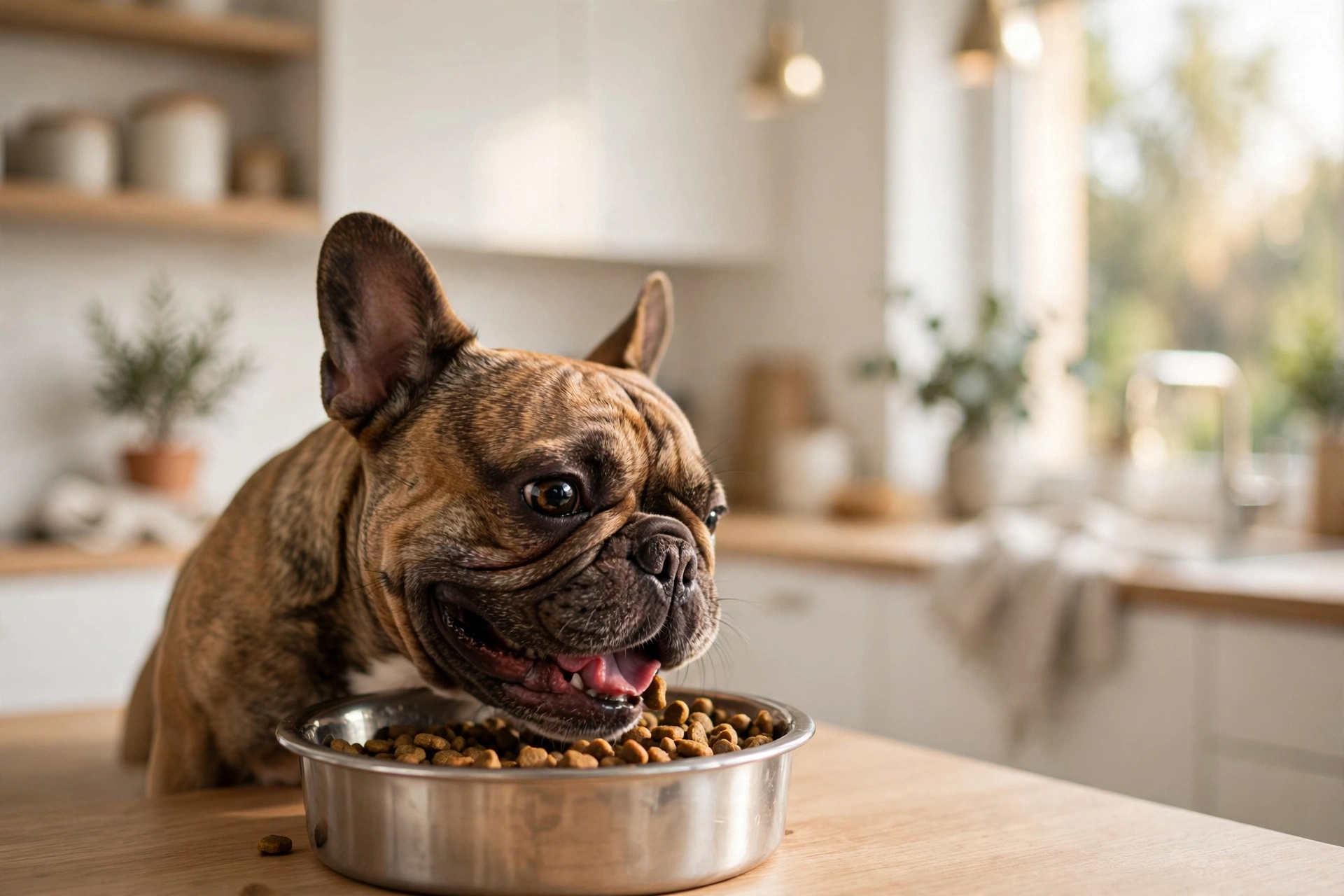
French Bulldog Feeding Schedule: How Much & How Often (2026)
Figuring out the right French Bulldog feeding schedule feels confusing when you first bring your pup home. How many meals a day? How much per meal? When do you drop from four meals to two? Feed too little and your Frenchie won’t grow properly; feed too much and you’ll end up with an overweight dog struggling to breathe, and French Bulldogs, with their flat faces and food-obsessed personalities, are masters at both extremes.
This guide lays out the complete French Bulldog feeding schedule by age, from the four-meals-a-day puppy stage through adult maintenance and senior years. You’ll get portion sizes, calorie targets, sample daily timetables, and the feeding mistakes Frenchie owners make most often. Based on ingredient and nutrition analysis from leading breeder and nutrition guidance: no guesswork, no fluff.
Quick Answer: A Frenchie puppy needs 4 meals a day at 8 to 12 weeks, 3 at 3 to 6 months, and 2 from 6 months on. An adult needs 1 to 1.5 cups of kibble, 25 to 30 calories per pound, split over two meals. Seniors keep 2 meals of senior formula, and treats stay under 10 percent of daily calories.
In This Guide
- Key Takeaways
- French Bulldog Feeding Schedule at a Glance
- Feeding a French Bulldog Puppy (8-12 Weeks)
- Feeding a French Bulldog Puppy (3-6 Months)
- Feeding a French Bulldog Puppy (6-12 Months)
- Feeding an Adult French Bulldog (1-7 Years)
- Feeding a Senior French Bulldog (7+ Years)
- When and How to Drop a Meal
- Water and Feeding Go Together
- What to Look for in a French Bulldog’s Food
- Feeding Mistakes French Bulldog Owners Make
- Helpful Feeding Gear for Frenchies
- Signs the Schedule or Food Needs Adjusting
- Pros and Cons
- Conclusion
- How to Tell If You Are Feeding the Right Amount
Key Takeaways
- Puppies (8-12 weeks): 4 small meals a day, about 1-1.5 cups total daily.
- At 3-6 months: drop to 3 meals a day; at 6-12 months, most Frenchies do fine on 2 meals.
- Adults (1-7 years): 2 meals a day, roughly 1-1.5 cups of quality kibble total, about 25 to 30 calories per pound of body weight.
- Seniors (7+): keep 2 meals but switch to a senior formula with fewer calories; soften food if teeth are a problem.
- Never free-feed a Frenchie. Scheduled meals at consistent times protect their digestion, weight, and house-training routine.
French Bulldog Feeding Schedule at a Glance
If you want the quick answer, here it is. The sections below explain the “why” behind every row, including how to adjust portions as your individual dog grows.
| Age | Meals per Day | Total Daily Amount | Approx. Daily Calories |
|---|---|---|---|
| 8-12 weeks | 4 | 1-1.5 cups | 400-600 |
| 3-6 months | 3 | 1.25-1.75 cups | 500-700 |
| 6-12 months | 2-3 | 1.5-2 cups | 600-800 |
| Adult (1-7 years) | 2 | 1-1.5 cups | 450-750 |
| Senior (7+ years) | 2 | 1-1.25 cups | 400-600 |
These are starting points for an average-size Frenchie (16-28 lbs). Calorie content varies between brands, so always check the feeding chart on your food bag and adjust from there.
Feeding a French Bulldog Puppy (8-12 Weeks)
This is usually the age when a Frenchie first comes home, and when feeding structure matters most. Puppies this young have tiny stomachs, burn energy fast, and can crash (getting tired, shaky, or cranky) if they go too long between meals. Four small meals spaced through the day keeps blood sugar steady and digestion calm.
A typical daily rhythm looks like this:
- 7:00 AM: Breakfast (1/4 cup)
- 11:30 AM: Midday meal (1/4 cup)
- 3:30 PM: Afternoon meal (1/4 cup)
- 7:00 PM: Dinner (1/4 cup)
At this stage, prioritize a high-quality small-breed puppy formula with real meat as the first ingredient. Because French Bulldogs are prone to sensitive digestion, many owners do best with a puppy food made for sensitive stomachs (you can find options in our Best French Bulldog Puppy Food guide). If your puppy turns up their nose at dry kibble, try soaking it in warm water first; most Frenchie pups were raised on soaked kibble and recognize the texture.
Pick the bowl up 15-20 minutes after each meal. This teaches your puppy that mealtimes are events, not all-day buffets, a habit that pays off for years.
Feeding a French Bulldog Puppy (3-6 Months)
Around 3 months, growth accelerates and your Frenchie’s appetite does too. This is when begging behavior usually starts, and when portion discipline becomes critical. Drop to 3 meals a day (breakfast, lunch, and dinner) and increase each portion slightly as the puppy grows.
- 8:00 AM: Breakfast (1/3 to 1/2 cup)
- 1:00 PM: Lunch (1/3 to 1/2 cup)
- 6:00 PM: Dinner (1/3 to 1/2 cup)
Weigh your puppy weekly during this phase. Frenchies gain weight easily even as pups, and a puppy that’s “a little chunky” at 5 months is already developing habits (and joint stress) that are hard to reverse. You should be able to feel (but not prominently see) the ribs under a light layer of fat.
Treats start counting now. Training is in full swing at this age, so those rewards add up fast. Keep treats under 10% of daily calories and lean on low-calorie options like baby carrots or green beans. Never hand out table scraps: fatty human food is a top trigger for the digestive flare-ups Frenchies are famous for (see our French Bulldog sensitive stomach food guide if gas and loose stool are already a theme in your house).
Feeding a French Bulldog Puppy (6-12 Months)
Between 6 and 12 months, most Frenchies transition to the adult pattern: 2 meals a day, morning and evening. If your puppy has a sensitive stomach, you can keep 3 smaller meals a little longer (smaller, more frequent meals are easier on Frenchie digestion) but by 9 to 10 months, two meals should be the goal.
- 7:30 AM: Breakfast (3/4 to 1 cup)
- 6:00 PM: Dinner (3/4 to 1 cup)
This is the danger zone for weight gain. Your puppy looks nearly grown, their puppy pudge is gone, and every skipped workout or extra scoop shows up on the ribs within a week or two. Even when your Frenchie performs their most dramatic starving-puppy routine, stick to measured portions. A measuring cup or kitchen scale beats eyeballing every time.
Around the 12-month mark, plan the switch from puppy to adult food. Transition gradually over 7 to 10 days by mixing increasing amounts of the new food into the old, because a sudden swap is practically guaranteed to cause gas and diarrhea in this breed.
Feeding an Adult French Bulldog (1-7 Years)
Adult Frenchies thrive on routine: 2 meals a day, 12 hours apart, at the same times every day. Consistency regulates digestion and makes house training and potty predictability almost automatic, and most adult Frenchies will need a bathroom break 20 to 30 minutes after eating.
- 7:00 to 8:00 AM: Breakfast (1/2 to 3/4 cup)
- 6:00 to 7:00 PM: Dinner (1/2 to 3/4 cup)
How much food does an adult French Bulldog need?
The widely used rule of thumb is 25-30 calories per pound of body weight per day. Here’s what that means in practice:
| Adult Weight | Activity Level | Daily Calories |
|---|---|---|
| 16 lbs | Less active | 400-480 |
| 20 lbs | Average | 500-600 |
| 24 lbs | Average | 600-720 |
| 28 lbs | Active | 700-840 |
Since kibble calorie density varies (usually 320-420 kcal per cup), convert using your bag’s label rather than relying on cup measurements alone. And adjust for real life: a Frenchie that mostly naps needs less than one that goes on two daily walks. Seasonal shifts matter too: dogs often eat a bit less in hot weather, which is worth knowing since Frenchies overheat easily and should never be fed right before or after exercise in the heat.
Feeding a Senior French Bulldog (7+ Years)
Senior Frenchies slow down, and their metabolism slows with them. Most can stay on 2 meals a day, but portions usually need trimming and the formula should change to a senior recipe: fewer calories, added fiber, and joint-supporting nutrients like glucosamine, plus omega fatty acids for aging skin.
- 7:30 AM: Breakfast (1/2 cup senior formula)
- 5:30 to 6:00 PM: Dinner (1/2 cup senior formula)
If dental issues make kibble painful, soak the food in warm water or mix in a spoonful of wet food to soften it. Watch appetite closely in seniors: a gradual decrease is normal, but a sudden drop, especially paired with weight loss or lethargy, deserves a vet visit rather than a feeding-schedule tweak.
When and How to Drop a Meal
Moving from 4 meals to 3, or 3 to 2, shouldn’t happen on a birthday. It should happen when your Frenchie is ready. Look for these signals:
- Skipping or ignoring a meal: if your puppy consistently walks away from the midday meal for a week, they’re telling you they don’t need it anymore.
- Steady weight gain and good energy: a thriving puppy on fewer, slightly larger meals is doing fine.
- Age milestones as backup: around 3 months for the 4-to-3 drop, around 6 months for the 3-to-2 drop.
Make the change gradually: shift a quarter of the dropped meal’s portion into the remaining meals over 3-4 days rather than cutting it cold. And when in doubt, keep the extra meal a little longer. An extra small meal never hurt a growing puppy, but cutting calories too early can stall growth.
Water and Feeding Go Together
A feeding schedule only works with fresh water available at all times. French Bulldogs drink more than you’d expect for their size, especially in warm weather, and brachycephalic breeds overheat faster than most, so dehydration can sneak up quickly. Wash the water bowl daily (biofilm builds up fast in warm kitchens) and consider a second bowl in another room if your Frenchie tends to camp in one spot. The one exception: many trainers lift the water bowl about an hour before bedtime for young puppies to help with overnight house training, putting it back down first thing in the morning.
What to Look for in a French Bulldog’s Food
A schedule is only half the battle: what goes in the bowl matters just as much. When choosing food to pair with this French Bulldog feeding schedule, look for:
- Real meat or fish as the first ingredient. Frenchies need quality animal protein (22-32% for adults, higher for puppies) to maintain their compact muscle mass.
- An AAFCO statement. The bag should say the food is formulated to meet AAFCO nutrient profiles for the right life stage (growth, maintenance, or all life stages). This is the single fastest quality check on any bag.
- Small, flat kibble pieces. French Bulldogs’ flat faces and short jaws make large round kibble hard to pick up and chew. Small-breed formulas are shaped with them in mind.
- Digestive support. Given the breed’s gassy reputation, formulas with probiotics, prebiotic fiber, or limited ingredients tend to sit better. Our food for French Bulldogs with allergies guide covers chicken-free and limited-ingredient options if sensitivities are part of the picture.
- Omega-3 and omega-6 fatty acids. Frenchies are prone to skin and coat issues; fish oil and flaxseed in the formula help keep skin calm.
- Controlled calcium and phosphorus (puppies). Proper mineral balance supports healthy bone growth during the fast-growing months.
Feeding Mistakes French Bulldog Owners Make
Most Frenchie feeding problems aren’t about the schedule. They’re about these five traps:
Free-feeding all day
Leaving the bowl down 24/7 is the fastest route to an overweight Frenchie. Scheduled meals let you monitor appetite (a sudden appetite change is an early illness signal you’d miss with free feeding) and make potty training predictable.
Overfeeding “just a little extra”
French Bulldogs are professional beggars and will happily convince you they’re starving. Extra weight on a Frenchie isn’t cosmetic. It worsens breathing (already compromised by their flat faces), stresses joints, and shortens lifespan. If the ribs are hard to feel, cut portions by 10% and reassess in two weeks.
Switching foods overnight
Sudden food changes cause gas, loose stool, and vomiting in this breed more reliably than almost anything else. Transition over 7-10 days, mixing the old and new food in gradually increasing ratios.
Too many treats and table scraps
Treats should stay under 10% of daily calories, and table scraps don’t belong in the budget at all. Chocolate, grapes, raisins, onions, garlic, and anything with xylitol are toxic to dogs and should never be offered.
Feeding right before or after exercise
A full stomach plus exertion raises the risk of bloating and makes breathing harder for brachycephalic dogs. Wait at least 30-60 minutes after a walk before serving a meal, and keep post-meal activity calm.
Helpful Feeding Gear for Frenchies
A few inexpensive tools make the schedule easier to stick to:
- Slow feeder bowl: most Frenchies inhale food, which causes gas and vomiting. A slow feeder can cut gulping dramatically.
- Measuring cup or kitchen scale: the only reliable way to keep portions consistent day to day.
- Stainless steel bowls: hygienic, chew-proof, and easy to wash daily. Plastic bowls can harbor bacteria that irritate sensitive Frenchie skin.
- Elevated feeder (for some dogs): a slightly raised bowl can make swallowing easier for flat-faced dogs, though it’s optional rather than essential.
Signs the Schedule or Food Needs Adjusting
Your Frenchie’s body will tell you when the routine needs a tweak. Watch for:
- Constant gas or loose stool: try smaller, more frequent meals first; if it persists, the formula may not suit them.
- Visible weight gain or loss: adjust portions by about 10% and recheck in two weeks.
- Leaving food in the bowl: portions may be too big, or the food isn’t appealing; don’t automatically add tastier toppers.
- Begging between meals is usually habit, not hunger. Stick to the schedule and redirect with play or training.
- Low energy or dull coat can signal the food isn’t delivering, especially if paired with weight changes. Time for a vet check and possibly a better formula: see our Best Dog Food for French Bulldogs roundup for quality options.
Pros and Cons
Two measured meals a day sound simple, but the routine has real trade-offs for a Frenchie household. Here is the honest balance.
Pros
- Two measured meals a day keep portions under control, which matters most in a breed that gains weight fast.
- A fixed feeding routine makes potty training predictable, since most Frenchies need a bathroom break soon after eating.
- Small, frequent puppy meals keep blood sugar steady and suit tiny stomachs that cannot handle big meals.
- A senior formula with fewer calories, plus softened food for sore teeth, lets older Frenchies stay on the same two-meal routine.
Cons
- A strict timetable is hard to keep if you work long hours away from home and cannot serve a midday puppy meal.
- Frenchies beg hard, so keeping treats under 10 percent of daily calories takes real discipline.
- Cup measures vary between brands, so the same scoop can mean a different number of calories after a food switch.
- One schedule does not fit every dog: activity, age, and neuter status can all push calorie needs up or down.
Conclusion
The ideal French Bulldog feeding schedule is simple once you internalize it: 4 meals a day under 12 weeks, 3 meals from 3-6 months, 2 meals from 6 months onward, with portions built around 25-30 calories per pound of body weight. Feed at the same times daily, measure every portion, keep treats under 10% of calories, and transition foods slowly.
Get the schedule right and everything else gets easier: digestion settles, weight stays in check, potty training clicks, and your Frenchie learns the best routine of all: dinner is always on time.
This guide is for information only. Check with your vet for your dog’s specific needs.
How to Tell If You Are Feeding the Right Amount
Cups and calories are only a starting point. Your Frenchie’s body tells you if the amount is right, and you can check it at home in under a minute. Run your hands along the ribs. You should feel them with light pressure under a thin layer of fat, but you should not see them from across the room. Stand above your dog and look down. You should see a waist that tucks in behind the ribs. From the side, the belly should slope up toward the back legs. A straight belly line or a sausage shape means extra weight is building up. Vets score this on a 1 to 9 scale called the Body Condition Score, and a Frenchie should sit at 4 to 5. Weigh your dog once a month too. In a breed that weighs 20 to 28 lb, even 2 to 3 lb of gain puts extra strain on breathing and joints. One more thing the bag never tells you: a spayed or neutered Frenchie often needs 20 to 30 percent fewer calories than before the operation. If your dog is already overweight, work out portions from the weight your vet wants your dog to reach, not the weight on the scale today.
How many times a day should I feed my French Bulldog?
Puppies 8-12 weeks old need 4 meals a day, puppies 3-6 months old need 3 meals, and from 6-12 months most Frenchies do well on 2 meals a day. Adult French Bulldogs (1-7 years) and seniors (7+ years) both thrive on 2 meals a day at consistent times, roughly 12 hours apart.
How much food should a French Bulldog eat per day?
Most adult French Bulldogs need about 1 to 1.5 cups of quality kibble per day, split between two meals. A more precise target is 25 to 30 calories per pound of body weight daily, so a 20 lb Frenchie needs roughly 500 to 600 calories. Always check your food bag’s feeding chart, since calorie density varies between brands.
When should I switch my French Bulldog from puppy to adult food?
Most French Bulldogs transition to adult food around 12 months of age. Switch gradually over 7 to 10 days by mixing increasing amounts of the new food into the old. A sudden change often causes gas and diarrhea in this breed.
Can I leave food out all day for my French Bulldog?
No. Free-feeding is not recommended for French Bulldogs. This breed gains weight very easily, and scheduled meals make it easier to control portions, monitor appetite, and keep house training on track.
Should I feed my French Bulldog wet or dry food?
Either can work well. Dry kibble is affordable, convenient, and comes in small-breed pieces suited to flat faces; wet food is easier to chew and adds hydration. Many owners mix the two. Choose a formula with real meat first and an AAFCO statement for the right life stage either way.
How many calories does a French Bulldog need per day?
About 25-30 calories per pound of body weight. A less-active 16 lb Frenchie needs roughly 400-480 calories daily, while an active 28 lb dog needs about 700-840. Adjust for age, activity level, and whether your dog is gaining or losing weight.
When should I drop from 3 meals to 2 meals a day?
Around 6 months of age for most French Bulldog puppies. The best signal is your puppy consistently skipping or ignoring a meal for a week. That means they no longer need it. Shift a quarter of the dropped meal into the remaining meals over 3 to 4 days to ease the transition.
Is it bad to feed my French Bulldog once a day?
Yes, one meal a day is not ideal for French Bulldogs. Large single meals strain their sensitive digestion and increase bloat risk. Two meals a day keeps blood sugar stable and is much easier on a Frenchie’s stomach.
How can I tell if my French Bulldog is overweight?
Feel the ribs with light pressure. You should find them under a thin layer of fat without pressing hard. Look down at your dog from above: you should see a waist behind the ribs, and from the side the belly should tuck up toward the back legs. If the ribs are hard to find or the body looks straight from above, cut portions by about 10 percent and recheck in two weeks. Weigh your dog monthly, since 2 to 3 lb of gain matters in a dog that weighs 20 to 28 lb.
Does my French Bulldog need fewer calories after being spayed or neutered?
Yes. Most spayed or neutered Frenchies need about 20 to 30 percent fewer calories than before, because the operation slows metabolism. If you keep the same portion after neutering, your dog will slowly gain weight. Cut the daily amount by about 10 percent at first, watch the ribs and waist for a few weeks, and ask your vet for a target weight to aim for.


2 Comments