
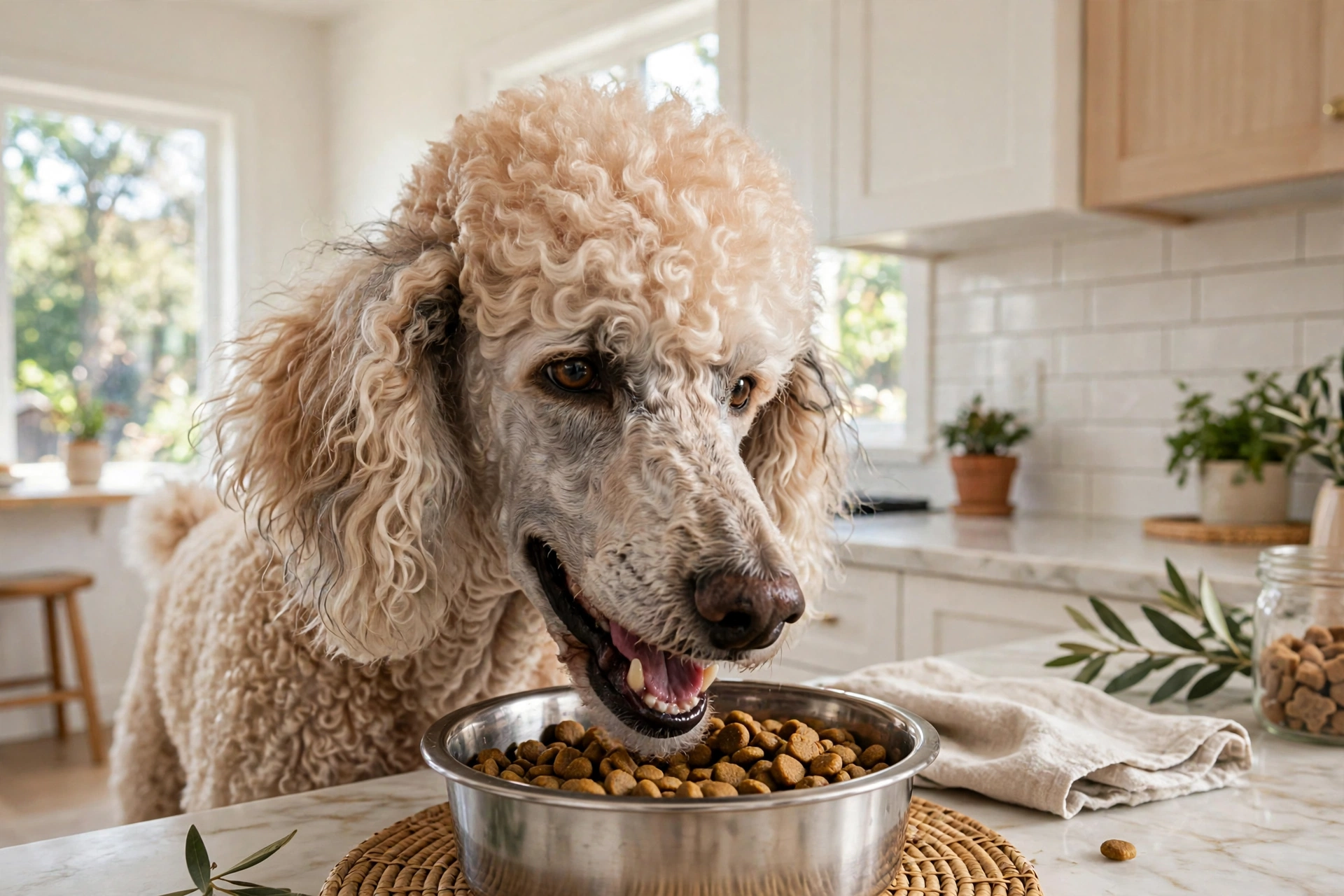
Best Senior Poodle Food: 6 Top Picks for Aging Poodles (2026)
When your Poodle starts graying around the muzzle and napping a little longer after walks, their bowl deserves a rethink. The best senior poodle food strikes a careful balance: enough high-quality protein to protect aging muscles, joint-supporting nutrients for creaky hips, and fewer calories to match a slower metabolism. Poodles are famously long-lived — Toy and Miniature Poodles often reach 14–16 years — so getting the senior diet right can add real quality to those bonus years.
In this guide, I researched the senior formulas most recommended for aging Poodles in 2026, from the breed-specific Royal Canin Poodle 8+ to widely recommended picks like Hill’s Science Diet, Blue Buffalo, Nutro, Canidae, and Spot & Tango. Each pick is evaluated on ingredients, kibble design, and senior-specific benefits — based on ingredient analysis, brand reputation, and owner reviews. You’ll also get a buying guide covering protein levels, fiber, fat, and AAFCO statements, plus what to avoid. Let’s make your senior Poodle’s bowl work as hard as they do.
Key takeaways
- Senior Poodles (age 7+) need fewer calories but steady, high-quality protein to protect muscle.
- Look for glucosamine and chondroitin for joints, omega-3 fatty acids for the curly coat, and small, easy-chew kibble.
- Royal Canin Poodle 8+ is the only breed-specific senior Poodle formula — the purist’s pick.
- Toy and Miniature seniors benefit most from small-bite kibble; Standards may need extra joint support.
- Transition to any new food over 7–10 days to avoid stomach upset.
Quick Answer: The best senior poodle food balances protein for aging muscles, joint support for hips, and fewer calories for a slower metabolism. Royal Canin Poodle 8+ is the top breed-specific pick, while Hill’s Science Diet Adult 7+ Small Bites suits Toy and Miniature Poodles. Switch over a week, and check with your vet if kidney or heart issues are in play.
In This Guide
- Our 6 Best Senior Poodle Foods at a Glance
- Royal Canin Poodle 8+ Adult Dry Dog Food
- Hill’s Science Diet Adult 7+ Small Bites
- Blue Buffalo Life Protection Formula Senior
- Nutro Ultra Senior Dry Dog Food
- Canidae All Life Stages Less Active
- Spot & Tango Chicken & Brown Rice Unkibble
- Buying Guide: What to Look for in Senior Poodle Food
- What to Avoid
- Signs Your Senior Poodle Needs a Diet Change
- Pros and Cons
- The Bottom Line: Our Top Recommendation
Our 6 Best Senior Poodle Foods at a Glance
| Product | Best For | Key Feature |
|---|---|---|
| Royal Canin Poodle 8+ Adult Dry Dog Food | Poodles aged 8+ needing breed-specific nutrition | Heart & coat support, rehydratable easy-chew kibble |
| Hill’s Science Diet Adult 7+ Small Bites | Toy & Miniature senior Poodles | Brain, mobility & heart support, small kibble |
| Blue Buffalo Life Protection Formula Senior | Immune & joint support at a fair price | LifeSource Bits antioxidants, real chicken first |
| Nutro Ultra Senior Dry Dog Food | Seniors that do well on varied proteins | Chicken, lamb & salmon trio plus antioxidants |
| Canidae All Life Stages Less Active | Less-active seniors & multi-dog homes | Fewer calories, no corn, wheat, or soy |
| Spot & Tango Chicken & Brown Rice Unkibble | Gentle digestion & fresh-style feeding | Low-temp dried whole foods, ginger for stomachs |
Royal Canin Poodle 8+ Adult Dry Dog Food
Why it fits senior Poodles
This is the only formula on the list designed exclusively for senior Poodles — specifically those aged 8 and above. Royal Canin’s breed-specific line is built around the traits that matter most for aging Poodles: heart health, the signature curly coat, and joints. The kibble is engineered for easy picking-up and chewing, which matters when senior jaws get tired, and it can be rehydrated with warm water to soften it further or boost palatability for picky eaters.
Key ingredients and nutrients
The formula centers on precise protein content to maintain muscle tone, with added EPA and DHA omega-3 fatty acids from fish oil to support skin and coat health. An exclusive antioxidant complex supports healthy aging, while the tailored mineral balance supports heart function — a real consideration, since Poodles can be prone to heart issues in old age.
Who it’s best for
Poodle purists who want a formula built for their breed’s aging profile. It works for all three sizes (Toy, Miniature, Standard), though the 3 lb bag size means Standard Poodle owners will go through bags quickly. Owners consistently report their senior Poodles find it highly palatable, and it’s frequently recommended by vets. The main drawback is price — it’s noticeably more expensive than general senior formulas.
Hill’s Science Diet Adult 7+ Small Bites
Why it fits senior Poodles
Hill’s Science Diet Adult 7+ Small Bites is formulated for dogs from age 7 onward and is a strong match for Toy and Miniature senior Poodles, the most common Poodle sizes. The small-bite kibble is gentle on older mouths, and the formula targets the three systems that tend to decline first in senior dogs: brain function, mobility, and heart health. Hill’s is one of the most vet-recommended brands in the US, which counts for a lot when you’re choosing food for a dog in their golden years.
Key ingredients and nutrients
Real chicken meal leads the ingredient list, with natural sources of glucosamine and chondroitin for joint support. Balanced minerals support heart and kidney health — the latter being important since senior dogs can develop kidney strain. Controlled sodium and phosphorus levels help here, and natural fiber supports the easy digestion older dogs need.
Who it’s best for
Toy and Miniature senior Poodles aged 7+. If your senior Poodle is slowing down cognitively — less responsive, more anxious — the brain-supporting nutrient profile is a genuine plus. Standard Poodle seniors can eat it too, though the small kibble may feel more like a snack than a meal to a big dog.
Blue Buffalo Life Protection Formula Senior
Why it fits senior Poodles
Blue Buffalo’s Life Protection Senior formula brings senior-specific nutrition at a more accessible price than the breed-specific options. It starts with real deboned chicken, adds the brand’s signature LifeSource Bits — a blend of antioxidants, vitamins, and minerals selected to support immune health — and includes glucosamine and chondroitin for joint support. The recipe contains no corn, wheat, soy, artificial flavors, or preservatives.
Key ingredients and nutrients
Deboned chicken and chicken meal supply the protein, while whole grains like brown rice and oatmeal provide steady, digestible energy. Flaxseed and fish oil contribute omega-3 and omega-6 fatty acids for coat condition — always a priority for Poodle owners. L-carnitine helps maintain lean muscle, and the antioxidant blend (from ingredients like blueberries and cranberries) supports immune function as it naturally weakens with age.
Who it’s best for
Owners who want solid senior nutrition without the premium price tag of breed-specific formulas. It’s a good all-rounder for seniors of all three Poodle sizes. Some owners note their dogs pick around the LifeSource Bits at first, but most adjust quickly.
Nutro Ultra Senior Dry Dog Food
Why it fits senior Poodles
Nutro Ultra Senior stands out with a trio of lean proteins — chicken, lamb, and salmon — rather than relying on a single source. That variety can help maintain palatability for senior Poodles whose appetites are fading, and the “superfood” blend of coconut, chia, kale, and blueberries delivers antioxidants for immune support. The formula avoids chicken by-product meal, corn, wheat, and soy, and uses non-GMO ingredients.
Key ingredients and nutrients
The protein trio provides a broad amino acid profile for muscle maintenance. Omega fatty acids from salmon and flaxseed support the Poodle coat. Added glucosamine and chondroitin care for joints, while calcium supports bone strength — relevant for Standards, who carry more weight on aging joints. The antioxidant package targets cellular health in older dogs.
Who it’s best for
Senior Poodles that get bored with single-protein foods, or that have thrived on varied diets their whole lives. The lean-protein approach suits seniors prone to weight gain. As with any food, check the protein variety against any known sensitivities — a dog sensitive to lamb, for example, should look elsewhere.
Canidae All Life Stages Less Active
Why it fits senior Poodles
Not every senior Poodle needs a “senior” bag — some do best on a less-active adult formula. Canidae’s All Life Stages Less Active is formulated with fewer calories and less fat than standard adult food, which directly addresses the number-one senior Poodle problem: gradual weight gain from a slowing metabolism. With no corn, wheat, or soy, it suits Poodles with common sensitivities, and because it’s an all-life-stages formula, it’s convenient for multi-dog households — you adjust portions per dog rather than buying separate bags.
Key ingredients and nutrients
Chicken meal, brown rice, white rice, rice bran, and peas form the base — digestible and steady. Omega-6 and omega-3 fatty acids support skin and coat, and the formula includes probiotics to support digestive health, which tends to get fussier with age. Antioxidants round out the senior-friendly profile.
Who it’s best for
Senior Poodles that are gaining weight but otherwise healthy, and homes with dogs of different ages sharing one bag. Because it’s not a dedicated senior formula, pair it with a vet check if your Poodle has joint, heart, or kidney concerns that a targeted senior recipe would address better.
Spot & Tango Chicken & Brown Rice Unkibble
Why it fits senior Poodles
Spot & Tango’s Unkibble takes a different approach: whole ingredients (chicken, brown rice, sweet potatoes, carrots, apple) gently dried at low temperatures instead of heavily processed into traditional kibble. For senior Poodles with sensitive stomachs, the simple recipe plus ginger root for digestion can be easier to tolerate than conventional extruded food. The whole fruits and vegetables provide natural antioxidants to support an aging immune system.
Key ingredients and nutrients
Real chicken leads, followed by brown rice and sweet potatoes for digestible energy. Carrots and apples contribute fiber and antioxidants. The low-temperature drying process preserves more of the natural enzymes and nutrients in the ingredients compared to high-heat extrusion. There are no synthetic fillers, flavors, or colors.
Who it’s best for
Senior Poodles with touchy digestion, picky eaters who’ve gone off traditional kibble, and owners who like the idea of fresher-style feeding without the hassle (and fridge space) of fully fresh food. It’s a subscription-style product with premium pricing, so factor cost into your decision — especially for Standard Poodles, who eat a lot more of it.
Buying Guide: What to Look for in Senior Poodle Food
Protein: steady and high-quality
Older dogs need adequate protein — not less. Muscle wasting is a real risk in senior Poodles, so look for a named animal protein (chicken, chicken meal, lamb, salmon) as the first ingredient and a minimum protein level around 25%. “Meal” (like chicken meal) is fine — it’s simply concentrated protein with water removed.
Fat: moderate, not minimal
Senior formulas typically land around 10–14% fat. Too little and the coat suffers and palatability drops; too much and weight creeps on. If your Poodle is already overweight, lean toward the lower end or a “less active” formula like Canidae’s.
Fiber: the digestion helper
Look for 3–5% crude fiber from sources like beet pulp, pumpkin, or brown rice. Senior digestion slows down, and adequate fiber keeps things moving comfortably.
Joint support
Glucosamine and chondroitin are the headline joint nutrients. Standard Poodles carry the most weight on their joints and benefit most; Toy and Miniature seniors still benefit, especially if they love jumping off furniture.
Omega fatty acids for the coat
Poodles’ curly, continuously growing coats need EPA and DHA (omega-3s) plus omega-6s to stay soft and avoid flaking. Fish oil, flaxseed, and salmon are the sources to look for.
The AAFCO statement
Every food should carry an AAFCO nutritional adequacy statement. AAFCO doesn’t define a “senior” category. Reputable senior foods are typically labeled for “adult maintenance” or “all life stages.” Either is legitimate; what matters is that the statement exists and the nutrient profile fits an older dog.
Kibble size and texture
Small, easy-chew kibble suits Toy and Miniature seniors, especially those with dental wear. For Poodles with missing teeth or very picky appetites, mix in warm water or a quality wet food (Royal Canin’s Poodle Loaf in Sauce is designed to pair with the dry line) to boost aroma and softness.
When kidney or heart issues are in play
Senior Poodles are prone to both. If your vet has flagged either, controlled phosphorus and sodium matter more than any marketing claim — and this is where a vet-directed diet (possibly prescription) beats any over-the-counter pick.
What to Avoid
- Grain-free formulas without a vet’s direction. Unless your vet has diagnosed a specific grain issue, grain-free isn’t better for seniors — and the FDA’s ongoing investigation into a link between grain-free diets and dilated cardiomyopathy (DCM, a heart condition) makes caution the right default.
- Puppy or “all life stages” high-calorie foods. Feeding a senior Poodle a calorie-dense growth formula is the fastest route to obesity.
- Unlimited treats. Treats should stay under 10% of daily calories — use low-calorie training treats or small pieces of the kibble itself.
- Vague ingredient names. “Meat meal” or “animal digest” without a named source is a red flag; named proteins are the standard for quality food.
- Sudden diet switches. Transition over 7–10 days (25/75, 50/50, 75/25, then full new food) to avoid digestive upset — senior stomachs are less forgiving.
- Ignoring dental health. If your senior Poodle is dropping kibble or chewing on one side, get the teeth checked before blaming the food.
Signs Your Senior Poodle Needs a Diet Change
Watch for gradual weight gain despite the same portions, a duller or flakier coat, stiffness after rest, smaller appetite, or increased pickiness. Senior Poodles may also start drinking more water or having softer stools — both worth a vet visit alongside a diet review. If your Poodle is thriving on their current food, don’t fix what isn’t broken: a vet check at the 7-year mark is the right time to discuss whether a senior formula makes sense. Our Poodle feeding guide covers portion sizes by age and size if you’re recalibrating.
Pros and Cons
Senior Poodle food is built for aging bodies, but no single formula fits every old dog. Here is the honest balance.
Pros
- Steady, high-quality protein helps protect aging muscles.
- Joint nutrients such as glucosamine and omega fatty acids support creaky hips.
- Small kibble suits Toy and Miniature Poodles and is easy to chew.
- Controlled calories match a slower senior metabolism.
Cons
- Senior formulas cost more than regular adult food.
- A very thin senior may need more calories, not fewer, so a senior label is not right for every old dog.
- Rich formulas can upset a sensitive stomach during the switch.
- Breed-specific senior foods can be hard to find in smaller shops.
The Bottom Line: Our Top Recommendation
For most senior Poodles, Royal Canin Poodle 8+ Adult Dry Dog Food is the standout — it’s the only formula engineered specifically for aging Poodles, with heart, coat, and easy-chew kibble built in. If you have a Toy or Miniature senior, Hill’s Science Diet Adult 7+ Small Bites is the vet-favored alternative with excellent brain and mobility support. On a budget, Blue Buffalo Life Protection Senior delivers genuine senior nutrition for less. And if your senior Poodle is gaining weight rather than slowing down in other ways, Canidae All Life Stages Less Active is the smart calorie-conscious pick.
Whichever you choose, pair the switch with a vet check, transition slowly, and keep an eye on weight, coat, and energy over the first month. For more Poodle-specific nutrition, see our best dog food for Poodles, food for Poodles with sensitive stomachs, and general best senior dog food guides.
This guide is for information only — check with your vet for your dog’s specific needs.
When is a Poodle considered a senior?
Poodles are generally considered seniors around age 7, though Toy and Miniature Poodles age more slowly than Standards and may not show senior traits until 8 or 9. Watch for a graying muzzle, longer naps, and stiffness after rest. A vet check around age 7 is the right time to discuss a senior diet.
How many calories does a senior Poodle need?
It depends on size and activity, but most senior Poodles need about 20–30% fewer calories than in their prime. Toy Poodles may need only 200–300 calories daily, while senior Standards may need 1,200–1,500. Your vet can calculate the right target from your dog’s weight and body condition.
Do senior Poodles need grain-free food?
No, unless your vet has diagnosed a specific grain sensitivity. Grains like brown rice and oatmeal are digestible energy sources for most seniors, and the FDA is investigating a possible link between grain-free diets and heart disease (DCM). Do not go grain-free on your own.
Is wet or dry food better for senior Poodles?
Both can work. Dry kibble supports dental health and is convenient; wet food adds hydration and aroma for picky eaters. Many owners mix the two. If your senior has dental issues, wet or softened food is kinder.
How often should I feed my senior Poodle?
Two meals a day is the standard for adult and senior Poodles, split morning and evening. Seniors with small appetites or sensitive stomachs may do better on two smaller meals plus a light midday snack.
Can my senior Poodle keep eating regular adult food?
If your Poodle is maintaining a healthy weight, has a good coat, and your vet is happy, there is no rule forcing a switch. But purpose-made senior formulas offer joint support, controlled calories, and brain-supporting nutrients that generic adult food does not — worth considering from age 7–8.
What nutrients help a senior Poodle’s joints?
Glucosamine and chondroitin are the most studied joint-support nutrients in dog food. Omega-3 fatty acids (EPA/DHA from fish oil) help with inflammation too. Standard Poodles, who carry more weight, benefit most — but all senior Poodles can use the support.
How do I switch my senior Poodle to a new food?
Transition over 7–10 days: mix 25% new with 75% old for a few days, then 50/50, then 75/25, then fully new. Senior stomachs are less forgiving of sudden changes, so slow down further if you see soft stools.
3 Comments