
Best Puppy Food for Great Danes: 6 Top Picks (2026)
The best puppy food for Great Danes is a large breed puppy formula made for slow, steady growth, with balanced calcium and phosphorus, moderate protein, and DHA for brain development. Royal Canin Giant Puppy is our top pick. Feed measured meals three to four times a day, and keep your puppy lean while those long bones grow.
A Great Dane puppy looks like a regular puppy that someone stretched in a photo editor. Those long legs, that deep chest, those paws the size of your palm. Then you watch one grow. In a few short months your little pup turns into a dog that can rest its chin on your kitchen counter. That speed is the whole problem with feeding one. A Great Dane puppy can put on 3 to 5 pounds in a single week during a growth spurt, and fed the wrong way, the bones pay for it, sometimes for life.
This guide covers why giant puppies need their own kind of food, how much to feed at each age, and which six foods do the job best. Every pick below is a real product sold in the US, picked from ingredient quality, brand reputation, and owner reviews. This guide is for information only. Check with your vet for your dog’s specific needs.
Table of Contents
- Why Great Dane Puppies Need Food Made for Giants
- How Much to Feed a Great Dane Puppy
- The Best Puppy Foods for Great Danes at a Glance
- Wet, Dry, or Fresh: Which Format Fits a Giant Puppy
- How to Switch Your Puppy to a New Food
- When to Move From Puppy Food to Adult Food
- What to Look For on the Label
- What to Avoid
- Common Mistakes Great Dane Owners Make
- Expert Tips for Feeding a Great Dane Puppy
- Pros and Cons of Large Breed Puppy Food
- Key Takeaways
- The Bottom Line
Why Great Dane Puppies Need Food Made for Giants
Most puppy foods are built for a dog that will top out near 30 or 40 pounds. A Great Dane puppy passes that weight before it is four months old, and adult Danes often weigh 110 to 175 pounds. They keep growing for up to two years, and that changes everything about what goes in the bowl.
Growth that never seems to slow down
Your Dane puppy grows faster than almost any other breed. During peak spurts, 3 to 5 pounds a week is normal, and food sets the pace. Push growth too fast with a rich, high calorie food and the skeleton struggles to keep up, which can lead to panosteitis, a painful bone condition that makes puppies limp, or knuckling, where weak wrists bend under the pup’s own weight.
Slow and steady wins here. A lean puppy with a visible waist grows into a sounder adult than a chubby puppy that looks cute at four months. Weigh your puppy every week, and write the number down. A steady climb is what you want, not a spike.
Calcium and phosphorus: the balance that shapes bones
Calcium builds bones, so more calcium must be better, right? For a Great Dane puppy, no. Too much calcium, or the wrong ratio of calcium to phosphorus, can trigger bone problems in large and giant breeds, which is why large breed puppy formulas control these minerals so carefully.
Never add a calcium supplement to your puppy’s food unless your vet tells you to. The bag already has the minerals balanced. Extra calcium from a bottle or a bone meal powder can undo that balance fast. This is one of the few places in dog feeding where more is plainly worse.
Joints under pressure from day one
Every pound your puppy gains lands on joints that are still forming, in a breed already prone to hip dysplasia. Food cannot fix bad genetics, but it can keep the load fair. A large breed puppy formula with glucosamine and chondroitin supports joints while they develop, and keeping your puppy lean takes real weight off them every single day.
Takeaway: feed for slow, steady growth. The goal is a tall, lean adult with sound bones, not the biggest puppy in the class at five months.
How Much to Feed a Great Dane Puppy
New Dane owners ask this question more than any other. The table below gives starting points for most large breed puppy foods, but every bag prints its own feeding guide, and that guide plus your vet beat any table on the internet, including this one. Use these numbers to start, then adjust by what the scale and your hands tell you.
| Age | Meals per day | Daily amount (starting point) |
|---|---|---|
| 2 to 3 months | 4 | 3 to 4 cups |
| 4 to 6 months | 3 | 4 to 6 cups |
| 7 to 12 months | 3 | 6 to 8 cups |
| 12 to 18 months | 2 | 7 to 9 cups |
| 18 to 24 months | 2 | 6 to 8 cups |
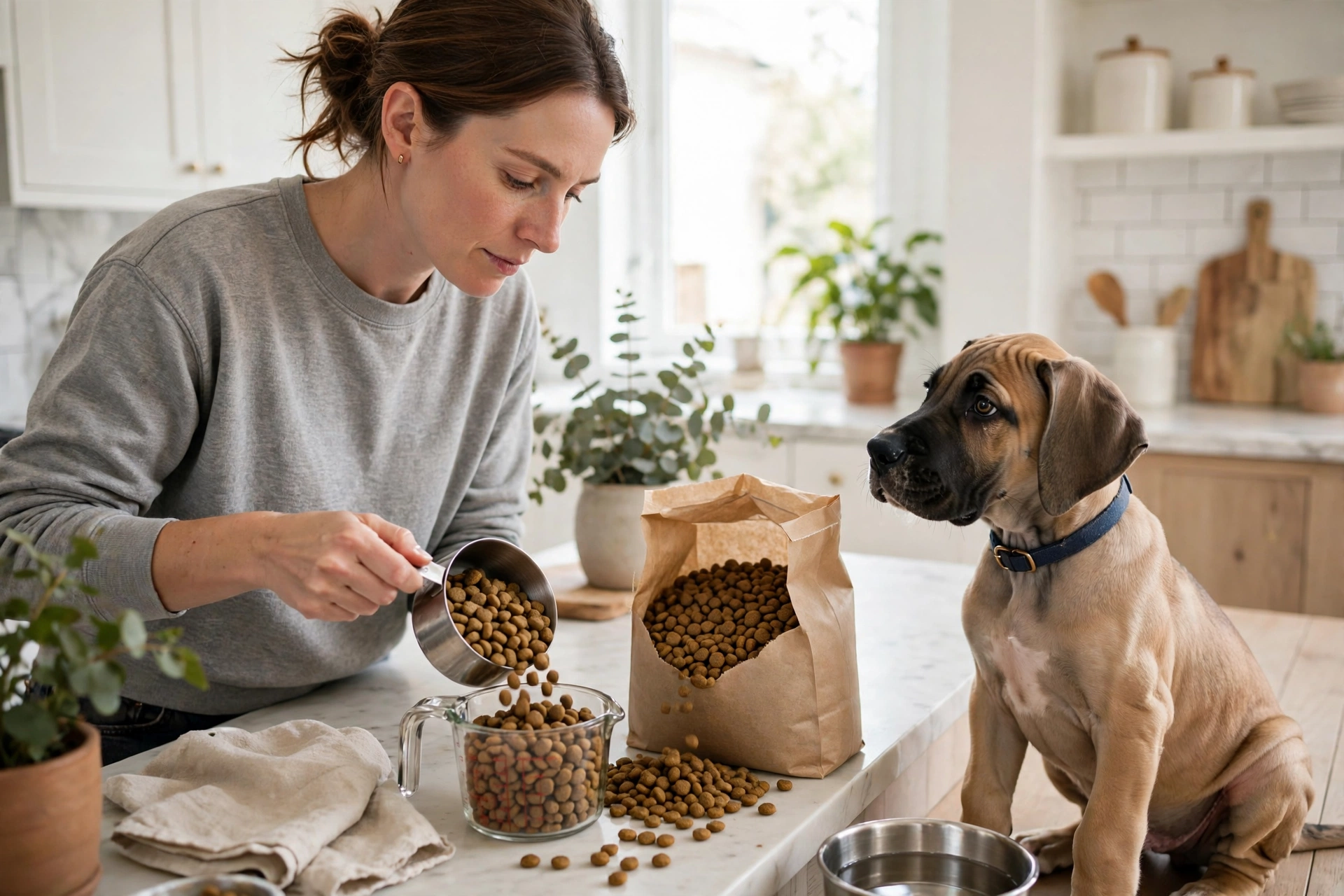
Measure every meal with a real measuring cup, not a scoop or a guess. A small error at each meal adds up to a big error by the end of the week. Split the daily amount across the meals so the stomach never takes a huge load at once, which matters twice over in this breed, because a full stomach and a deep chest are the setup for bloat.
How to tell if your puppy is growing too fast
Watch the body, not just the scale. Run your hands along your puppy’s ribs. You should feel them under a thin layer of fat without pressing hard, and you should see a waist from above. If the ribs vanish under padding, cut back by about a quarter cup per meal and weigh again in a week. If the ribs stick out sharply and the hip bones show, add a little and talk to your vet.
Loose stools, a limp that comes and goes, or front legs that look bowed are all reasons to call your vet soon. Growing pains can be a normal phase, but they can also be the first sign of a diet problem, and an early visit costs far less than a late one.
Takeaway: measure the food, weigh the puppy weekly, and trust your hands on the ribs. The bag gives you a starting point. The puppy tells you the rest.
The Best Puppy Foods for Great Danes at a Glance
Each food below is a large breed puppy formula or an all life stages recipe that fits a giant puppy, judged on ingredient quality, brand reputation, and owner reviews. No food here was tested by us, and none of these picks is a vet prescription.
| Product | Best For | Key Feature |
|---|---|---|
| Royal Canin Giant Puppy | Controlled growth | 32% protein with joint support |
| Hill’s Science Diet Large Breed Puppy | Vet-recommended pick | DHA and balanced minerals |
| Eukanuba Puppy Large Breed | Brain development | DHA and tailored calcium and phosphorus |
| Diamond Naturals Large Breed Puppy | Budget | Lamb first, 27% protein |
| Orijen Puppy Large | High protein | 38% protein from fresh poultry and fish |
| Wellness Complete Health Just for Puppy | Wet food | Easy to digest, made for puppies |
Royal Canin Giant Puppy Dry Dog Food
Royal Canin Giant Puppy is the best overall pick, built for exactly this dog. The formula carries 32% protein and 12% fat, a moderate mix that fuels growth without pushing it. Calcium, glucosamine, and chondroitin support growing joints, and DHA from fish oil supports brain and eye development.
Royal Canin thinks in giant breed time. Most puppies move to adult food near their first birthday, but a Great Dane is nowhere near done at twelve months, so Royal Canin pairs this formula with its Giant Junior recipe for the 8 to 24 month stretch. The weak spots are honest ones. It costs more than most large breed puppy foods, and a Dane puppy eats a big bag fast. Some owners also note the recipe leans on corn and wheat more than grain free fans would like.
Hill’s Science Diet Large Breed Puppy Chicken and Brown Rice
Hill’s Science Diet is the pick most vets reach for first, and that track record counts for a lot with a first time Dane owner. The Large Breed Puppy recipe uses chicken first with brown rice, and it adds DHA from fish oil for brain development. Minerals are balanced for controlled bone growth, which is the whole game with a giant puppy.
Feeding trials back the recipe, and Hill’s runs more of them than most brands. The food is easy to find, and the price sits in the middle. Some puppies get a little gassy in the first week, which usually settles as the gut adjusts. Bag sizes top out smaller than some rivals, so buy the big bag.
Eukanuba Puppy Large Breed Dry Dog Food
Eukanuba has spent decades studying large breed skeletons, and it shows in this recipe. Chicken leads the ingredient list, and the calcium and phosphorus levels keep bone growth steady rather than fast. DHA is in the mix too, and Eukanuba links its DHA levels to trainability in puppies, which is handy when you are teaching a dog that will soon weigh more than you do.
The trade off is corn and brewers rice in the recipe, which rules it out if your puppy is grain sensitive. Small bags also disappear fast with a Dane puppy eating 3 to 5 cups a day, so buy the larger bag. For owners who want science backed food at a fair price, Eukanuba is a strong choice.
Diamond Naturals Large Breed Puppy Lamb and Rice
Diamond Naturals is the budget pick that refuses to act like one. Lamb is the first ingredient, and the recipe carries 27% protein with 15% fat, numbers that hold up next to foods costing twice as much. Review sites rate this range highly, and owners keep coming back to it because it works and the bag does not empty the wallet.
Probiotics are added after cooking to support digestion, which helps in a breed known for touchy stomachs, and the lamb and rice recipe suits puppies that do not do well on chicken. It is not as widely stocked as Hill’s or Royal Canin, so you may need to order it online. A sudden switch can loosen stools, so move over slowly. For a Dane puppy that will eat a mountain of food before its first birthday, the savings here are real.
Orijen Puppy Large
Orijen Puppy Large is the richest food on this list, and that is both its strength and its warning label. The recipe runs 38% protein and 16% fat from fresh chicken, turkey, salmon, and herring, with no fillers in sight. For a very active puppy that burns through calories, that density can be a real plus.
Rich food and a giant puppy need a steady hand. Overfeed this one and the extra calories can push growth faster than those young bones want, so measure carefully and weigh weekly. It also costs more per pound than any other pick here, and a Dane puppy’s appetite makes that hurt. Pick Orijen if your puppy is lean and active, and skip it if your puppy already runs heavy.
Wellness Complete Health Just for Puppy Canned Dog Food
Not every Dane puppy takes to dry kibble right away, and a good wet food earns its place. Wellness Complete Health Just for Puppy is made for puppies only, with a soft texture that suits young teeth and a mix of meats, fruits, and vegetables that digests easily. It works on its own for small meals, or as a topper for a picky pup.
Wet food brings moisture with it, which helps a puppy that does not drink enough. The catch is cost, since canned food runs more per calorie than kibble and a Dane puppy eats a lot of calories. Open cans need the fridge and a quick use by date. Use it as a full diet while your puppy is very young, then as a mixer once the kibble habit sticks.
Wet, Dry, or Fresh: Which Format Fits a Giant Puppy
Dry kibble is the workhorse for most Dane owners. It stores well, costs less per meal, and the crunch helps keep teeth clean. Large kibble also slows down a puppy that inhales food, which matters in a breed where bloat is a real risk.
Wet food wins on taste and moisture, and puppies that turn away from kibble often eat it without a fuss. The cost is the problem, since feeding a growing Dane on cans alone gets expensive fast. A common middle path is kibble with a spoonful of wet food mixed in, which keeps the bowl interesting without doubling the bill.
Fresh food from services like Nom Nom and Spot and Tango is the newest option, and the quality is high. Meals arrive portioned for your puppy’s age and weight, and the recipes use human grade ingredients. The price is the highest of the three formats, and a Dane puppy’s appetite makes the monthly cost hard to ignore. If the budget allows, fresh food is a fine choice. If it does not, a good kibble feeds your puppy just as well. For the adult side of this breed, see our guide to the best dog food for Great Danes.
Takeaway: kibble is the sensible default for a giant puppy. Add wet food for taste, and treat fresh food as a premium upgrade rather than a must have.
How to Switch Your Puppy to a New Food
Never swap your puppy’s food overnight. A giant puppy’s gut is sensitive, and a sudden change can mean days of loose stools. Take 7 to 10 days and mix the old food with the new one in stages. If stools stay firm, move on. If they loosen, stay where you are for an extra day or two. Keep treats small during a switch, and use the puppy’s own kibble as training rewards while the gut settles.
| Days | Old food | New food |
|---|---|---|
| Days 1 to 2 | 75% | 25% |
| Days 3 to 4 | 50% | 50% |
| Days 5 to 6 | 25% | 75% |
| Day 7 onward | 0% | 100% |
If diarrhea lasts more than two days, or your puppy stops eating or drinking, call your vet.
When to Move From Puppy Food to Adult Food
This is where most owners get it wrong with a Great Dane. Small breeds move to adult food near their first birthday. A Great Dane is still a growing puppy at twelve months, and many Danes keep filling out until they are 18 to 24 months old. Switch too early and you pull the extra nutrition away while the bones are still forming.
The usual window for a Dane is 18 to 24 months, and the right moment depends on the dog in front of you. A tall, lean Dane still gaining height should stay on puppy or junior food longer, while a Dane that has stopped growing taller and is starting to thicken up is ready to move. Your vet can check growth plates and body condition and give you a date, which beats any calendar rule. When the time comes, use the same slow 7 to 10 day mix to move over, and pick an adult food made for large or giant breeds. Our best puppy food for large breeds guide covers the wider large breed picture if you want to compare.
Takeaway: plan on 18 to 24 months of puppy food, not twelve. A Dane grows up slowly, and the food should keep up with that.
What to Look For on the Label
The bag tells you most of what you need to know, if you know where to look. Start with the first ingredient. It should be a named meat like chicken, lamb, or salmon, not a vague word like meat meal or poultry by product meal. A named meat first is a good sign. Two named meats in the top three ingredients is better.
Check the AAFCO statement, usually printed near the feeding guide. It should say the food is complete and balanced for growth or for all life stages. A food without that statement has no place in a giant puppy’s bowl. Look for DHA from fish oil for brain development, and glucosamine or chondroitin for joint support. Protein near 26 to 32% and fat near 12 to 18% suit most Dane puppies.
Skip foods that hide behind corn, wheat, or soy as the first ingredients, and skip any recipe with artificial colors or flavors. Your puppy does not care what color the kibble is.
What to Avoid
Regular puppy food made for small and medium breeds is the biggest trap. It is built for fast growth, with more calories and calcium than a giant puppy should get. A bag that says puppy food but never says large breed is the wrong bag for a Dane. All life stages food can work, but only if the calcium and phosphorus levels fit a giant puppy, so check the label rather than trusting the front of the bag.
Calcium supplements, bone meal, and extra vitamin D have no place in a Dane puppy’s diet unless your vet prescribes them. The food is already balanced, and extras break that balance. Cooked bones can splinter and raw bones can crack puppy teeth. Table scraps are another quiet problem. A Dane puppy that learns to beg at the table will keep begging at 150 pounds, and fatty scraps can upset the stomach and add weight where it is not wanted.
Free feeding, leaving a full bowl down all day, is also worth skipping. It makes it hard to know how much your puppy ate, and it lets a greedy puppy eat too much in one sitting. Measured meals at set times keep intake under your control.
Common Mistakes Great Dane Owners Make
- Feeding adult dog food too early. Adult food lacks the extra nutrition a growing giant needs. Keep puppy food until 18 to 24 months.
- Feeding a small breed puppy food. It is made for fast growth in small dogs, and it pushes a Dane puppy too hard.
- Overfeeding because the puppy always looks hungry. Dane puppies act starving most of the time. The measuring cup is the boss, not the puppy’s eyes.
- Adding calcium supplements. Extra calcium can harm growing bones. Trust the food and your vet, not the supplement aisle.
- Skipping the weekly weigh in. A puppy can gain a lot in a month. Weekly weights catch a problem while it is still small.
- Switching foods too fast. A one day swap means a week of loose stools. Take 7 to 10 days every time.
- Exercising hard right after meals. A full stomach and wild play are a bad pair in a deep chested breed. Keep meals calm, and wait an hour before rough play or a run.
- Treating food as the only growth lever. Sleep, gentle exercise, and vet visits matter too.
Expert Tips for Feeding a Great Dane Puppy
Use a slow feeder bowl if your puppy inhales food. Eating too fast can gulp air into the stomach, and in a deep chested breed that is a risk you can cut with a ten dollar bowl. A slow feeder also turns dinner into a small puzzle, which keeps a smart puppy busy.
Feed in a quiet spot and leave the puppy alone while it eats. A puppy that feels rushed will bolt its food. Keep fresh water down at all times, and wash the bowls daily. A Dane puppy drinks a lot, and a dirty bowl can put a puppy off its water.
Keep a simple food diary for the first few months. Note the brand, the daily amount, the weight each week, and any loose stools or skipped meals. When something changes, the diary tells you what changed first, and it gives your vet useful facts at checkups instead of guesses. Build training around the food itself, using a handful of the daily kibble as rewards, so training never adds extra calories on top of meals.
Takeaway: calm meals, measured portions, and a slow feeder bowl do more for a Dane puppy than any single ingredient on the label.
Pros and Cons of Large Breed Puppy Food
Large breed puppy food is not a marketing trick. It changes the recipe in ways that matter for a giant puppy, but it has real trade offs too.
Pros: controlled calcium and phosphorus for sound bone growth; moderate protein and fat so growth stays steady; DHA for brain development; glucosamine and chondroitin for joints; feeding guides written for big appetites, so the amounts make sense.
Cons: costs more per bag than regular puppy food; fewer flavors and recipes to choose from; some recipes still use corn or wheat as fillers; the big bags are heavy, and a Dane puppy goes through them fast.
Key Takeaways
- A Great Dane puppy needs a large breed puppy formula made for slow, steady growth, not regular puppy food.
- Calcium and phosphorus must stay balanced. Never add calcium supplements unless your vet tells you to.
- Feed measured meals three to four times a day, and weigh your puppy every week.
- Royal Canin Giant Puppy is the best overall pick. Hill’s Science Diet is the vet favorite, and Diamond Naturals is the best value.
- Keep your puppy on puppy food until 18 to 24 months, and switch to adult food slowly over 7 to 10 days.
- Calm meals, a slow feeder bowl, and no hard play for an hour after eating all cut the bloat risk.
The Bottom Line
Feeding a Great Dane puppy comes down to one idea: grow slow, grow sound. Pick a large breed puppy food that controls calcium, keeps protein moderate, and adds DHA and joint support. Measure every meal, weigh your puppy every week, and keep the food going until 18 to 24 months. Royal Canin Giant Puppy is our top pick, Hill’s Science Diet is the safe vet backed choice, and Diamond Naturals keeps the monthly bill in check.
Your puppy will be a giant before you know it, and the food you choose now shapes the dog you live with for the next eight to ten years. If you are still planning the early weeks, our puppy feeding schedule guide covers meal times and portions in more detail, and our best dog food for puppies roundup compares the wider puppy food market.
Start with the food that fits your puppy and your budget, switch slowly, and enjoy watching that long legged pup grow into the gentle giant it is meant to be.
What is the best puppy food for a Great Dane?
Royal Canin Giant Puppy is our top pick because it is made for giant puppies, with controlled calcium and phosphorus, moderate protein, and DHA for brain development. Hill’s Science Diet Large Breed Puppy is the vet favorite, and Diamond Naturals Large Breed Puppy is the best value. Any large breed puppy formula beats regular puppy food for a Dane.
How much should I feed my Great Dane puppy?
Start with 3 to 4 cups a day at 2 to 3 months, 4 to 6 cups at 4 to 6 months, 6 to 8 cups at 7 to 12 months, and 7 to 9 cups at 12 to 18 months, split across the day’s meals. These are starting points only, so adjust by body condition and your vet’s advice. Always follow the feeding guide on your bag.
When should a Great Dane switch from puppy food to adult food?
Most Great Danes should stay on puppy food until 18 to 24 months old, much later than smaller breeds. A Dane is still growing at twelve months, and switching too early pulls away nutrition while the bones are still forming. Ask your vet to check growth plates and body condition before you switch.
Can I feed my Great Dane puppy regular puppy food?
No, regular puppy food is made for fast growth in small and medium breeds, with more calories and calcium than a giant puppy should get. It can push growth too fast and raise the risk of bone problems. Always pick a formula that says large breed or giant breed on the bag.
How many times a day should I feed a Great Dane puppy?
Feed four meals a day at 2 to 3 months, three meals a day from 4 to 12 months, and two meals a day from 12 months onward. Measured meals at set times keep intake under control and lower the bloat risk. Never leave a full bowl down all day for a Dane puppy.
Is grain free food better for Great Dane puppies?
Not necessarily. Grain free food is only needed if your puppy has a grain sensitivity your vet has confirmed. What matters far more is a large breed puppy formula with balanced calcium and phosphorus. Pick the recipe your puppy digests well and your budget can sustain.
Should I add calcium supplements to my Great Dane puppy’s food?
No, never add calcium supplements unless your vet tells you to. Large breed puppy food already has calcium and phosphorus balanced for slow, steady bone growth. Extra calcium can undo that balance and harm growing bones.
How do I switch my Great Dane puppy to a new food?
Mix the old food with the new food over 7 to 10 days, starting with 25 percent new food and moving up in steps. If stools stay firm, keep going, and if they loosen, hold at the same mix for an extra day or two. If diarrhea lasts more than two days, or your puppy stops eating or drinking, call your vet.
One Comment