

Rottweiler Feeding Guide: How Much, How Often & What to Feed (2026)
Rottweilers are big, powerful, and surprisingly sensitive dogs when it comes to food. This Rottweiler feeding guide answers the questions every Rottie owner asks: how much should a Rottweiler eat, how often should you feed one, and what food keeps a large, muscular breed like this healthy from puppyhood through the senior years.
Inside, you’ll find a clear feeding chart by age, portion ranges in cups and calories, the meals-per-day schedule that works for puppies, adults, and seniors, what to look for in a good Rottweiler food, and the mistakes (overfeeding, gobbling, bloat risk) that catch new owners off guard. Whether you’ve just brought home an 8-week-old puppy or you’re adjusting portions for a slowing-down senior, this guide has you covered.
Quick Answer: An adult Rottweiler eats 4 to 6 cups of large-breed food a day, split into two meals 12 hours apart, never one meal. Puppies need 4 meals at 8 to 12 weeks, dropping to 2 by 12 months on a puppy formula. Keep your Rottie lean, measure every meal, and rest your dog around meals to lower bloat risk.
In This Guide
- Key Takeaways
- Rottweiler Feeding Chart: Amounts by Age
- Feeding a Rottweiler Puppy (8 Weeks to 12 Months)
- Feeding an Adult Rottweiler (1 to 7 Years)
- Feeding a Senior Rottweiler (7+ Years)
- What to Feed a Rottweiler: Choosing the Right Food
- What to Avoid: Foods and Feeding Mistakes
- Healthy Treats and Supplements
- A Sample Rottweiler Feeding Day
- Pros and Cons
- Conclusion: Feed Lean, Feed Consistently
- Grain-Free Food and Your Rottweiler’s Heart
Key Takeaways
- Feed adult Rottweilers 2 meals a day (never one), totaling roughly 4 to 6 cups of large-breed food depending on weight, food calorie density, and activity.
- Rottweiler puppies need 4 meals at 8 to 12 weeks, dropping to 3, then 2 by 12 months, always a large-breed puppy formula with controlled calcium and calories.
- Keep your Rottie lean: this breed gains weight easily, and extra pounds hammer the joints. You should be able to feel the ribs without pressing hard.
- Two smaller meals, no hard exercise for an hour before or after eating, and feeding at floor level, not from a raised bowl, help lower the breed’s bloat risk.
- Treats should stay under 10% of daily calories. Cut meal portions on heavy training days.
Rottweiler Feeding Chart: Amounts by Age
Every dog is different. A lean 80-pound female who naps all day needs less than a working 120-pound male. Use this Rottweiler feeding chart as your starting point, then adjust every two weeks based on body condition.
| Life stage | Meals per day | Daily amount (kibble) | Approx. daily calories |
|---|---|---|---|
| Puppy 8 to 12 weeks | 4 | 2 to 3 cups | 800 to 1,100 kcal |
| Puppy 3 to 6 months | 3 | 3 to 4 cups | 1,100 to 1,600 kcal |
| Puppy 6 to 12 months | 2 to 3 | 4 to 6 cups | 1,600 to 2,400 kcal |
| Adult 1 to 7 years | 2 | 4 to 6 cups | 1,800 to 2,800 kcal |
| Senior 7+ years | 2 | 3 to 5 cups | 1,500 to 2,200 kcal |
Calorie needs track roughly 20 to 30 calories per pound of body weight for a typical adult. A 100-pound Rottweiler therefore needs about 2,000 to 3,000 kcal daily. Active, working, or lactating dogs can push past 30 cal/lb, while couch-heavy seniors may need fewer than 20. Always check the kcal/cup on your food’s label. Calorie-dense premium foods need less volume than budget brands, which is why “cups” is only half the story.
Feeding a Rottweiler Puppy (8 Weeks to 12 Months)
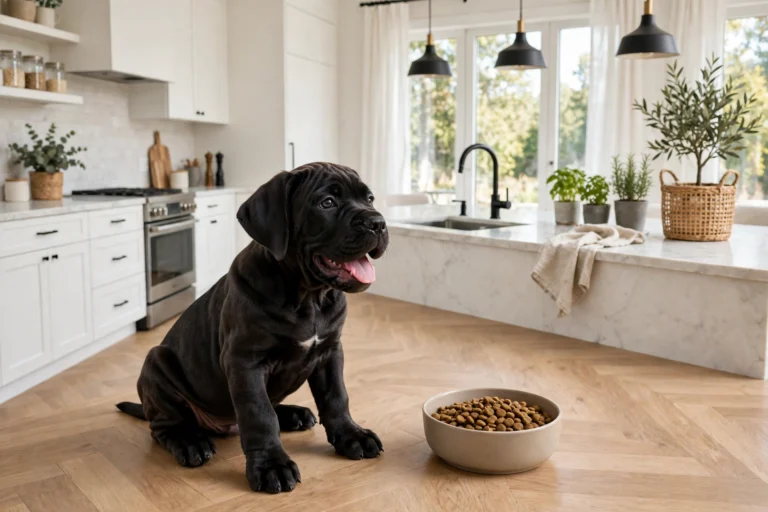
Puppyhood is where feeding a Rottweiler matters most. Rotties are a giant-prone large breed, and growing too fast is the single biggest dietary risk they face. Rapid growth from excess calories or too much calcium raises the odds of orthopedic problems like hip and elbow dysplasia later in life.
The only formula to use: large-breed puppy food
Not just any puppy food: a formula labeled for large-breed puppies. These diets are engineered with slightly fewer calories per cup, controlled calcium levels, and the right calcium-to-phosphorus ratio (around 1.2:1) so your puppy grows at a steady, healthy pace instead of ballooning. Growing Rottweiler puppies do well on roughly 26% protein, plenty for muscle development without pushing overly fast growth.
Never add calcium supplements to a large-breed puppy diet unless your vet specifically tells you to. Excess calcium in a growing giant-breed puppy can interfere with healthy skeletal development, the opposite of what most owners assume.
Puppy feeding schedule
- 8 to 12 weeks: 4 small meals a day (roughly 7 am, 12 pm, 5 pm, 9 pm). At this age the stomach is small and blood sugar drops fast, so spread the food out.
- 3 to 6 months: 3 meals a day. Drop the late-night meal and watch body condition. This is the age puppies start looking either lean or chubby, and lean wins.
- 6 to 12 months: 2 to 3 meals a day. Move to 2 meals when growth steadies, usually around 10 to 12 months.
Keep your puppy lean, not plump. A roly-poly Rottweiler puppy is not cute long-term. It’s joint damage in the making. You should always be able to feel the ribs easily under a thin layer of fat.
When to switch to adult food
Rottweilers mature slowly. Most stay on large-breed puppy food until 12 to 18 months of age, and your vet’s advice should be the final word. When you do switch, transition gradually over 7 to 10 days: mix increasing amounts of the new food into the old, roughly 25/75, then 50/50, then 75/25, to avoid stomach upset.
Feeding an Adult Rottweiler (1 to 7 Years)
Adult Rotties do best on a stable, consistent routine. The headline numbers: two meals a day, split morning and evening, totaling 4 to 6 cups of quality large-breed adult food (or whatever volume hits your dog’s calorie target on that food’s label).
Why two meals, never one
Rottweilers are a deep-chested breed, which makes them prone to gastric dilatation-volvulus (bloat), a life-threatening stomach twist. Feeding two smaller meals instead of one large one reduces the amount of food sitting in the stomach at once. Equally important: no hard exercise, rough play, or excited romps for 60 minutes before or after a meal. A calm walk is fine; a sprint session is not.
Portions by weight
| Adult weight | Typical daily amount |
|---|---|
| 70 to 85 lbs (smaller females) | 3 1/2 to 4 1/2 cups |
| 85 to 100 lbs (average) | 4 to 5 cups |
| 100 to 115 lbs (large males) | 5 to 6 cups |
| 115+ lbs or very active | 6+ cups (with vet guidance) |
Start with the food bag’s feeding guide for your dog’s weight, then fine-tune. Weigh monthly and adjust: if ribs disappear under padding, cut 10 to 15%; if the spine and hip bones start showing, add 10 to 15%.
Consistency beats variety
Adult Rotties thrive on routine: same food, same amounts, same times every day. A consistent feeding schedule keeps digestion steady and reduces begging. A dog that knows dinner lands at 6 pm sharp begs less at 5. Keep meal times roughly 10 to 12 hours apart (e.g., 7 am and 6 pm) and always have fresh water available. A big adult Rottweiler can drink several liters a day, especially after exercise or in warm weather, so wash the bowls daily and refill often.
Feeding a Senior Rottweiler (7+ Years)
Around age 7, a Rottweiler’s metabolism slows while joint wear accelerates. The feeding strategy shifts from fueling growth to protecting joints and preserving muscle:
- Switch to a senior or weight-management large-breed formula, typically fewer calories, higher fiber, added glucosamine/chondroitin, and extra omega-3s for joints.
- Reduce portions 10 to 20% if activity has dropped. Seniors gain weight fast because the calorie burn plummets, and every extra pound on aging joints hurts.
- Keep 2 meals a day, but some seniors digest better on 3 smaller ones. Watch stool quality as your guide.
- Prioritize highly digestible protein. Older dogs digest protein less efficiently, so quality matters more than quantity. Named animal proteins (chicken, salmon, beef) beat vague “meat meals.”
- Move to twice-yearly vet visits. Kidney function, weight trends, and mobility changes are easier to catch early.
Watch for the quiet signals: drinking noticeably more water, leaving food in the bowl, struggling to stand after naps, or a dull coat. Any persistent change in appetite or digestion deserves a vet visit, not a food change.
What to Feed a Rottweiler: Choosing the Right Food
Skip the marketing and read the panel. Based on ingredient analysis, brand reputation, and owner reviews, a good Rottweiler food (for the right life stage) checks these boxes:
- Large-breed formula for the right life stage. Puppy, adult, or senior large-breed food, not a generic “all life stages” bag for a breed this size.
- A named animal protein first. Chicken, beef, lamb, salmon: a specific animal, not “meat and bone meal” or “poultry by-products.”
- 26 to 30% protein for adults, with moderate fat (12 to 16%). Rotties carry a lot of muscle; they need protein, not filler calories.
- Controlled calcium and phosphorus (roughly 1.2:1 ratio), especially in puppy formulas, protects developing bones and joints.
- Joint support built in. Added glucosamine, chondroitin, and EPA/DHA omega-3s are a real plus for a breed this heavy.
- AAFCO statement. Look for “formulated to meet the nutritional levels established by the AAFCO Dog Food Nutrient Profiles” for the appropriate life stage.
- Digestible carbs and fiber. Brown rice, oats, barley, sweet potato, and beet pulp or other fiber sources keep the gut moving and stools firm.
For specific product picks matched to each life stage, see our best dog food for Rottweilers roundup (adults), best puppy food for Rottweilers, and best senior Rottweiler food guides. Each evaluates 6 real US-available options.
What to Avoid: Foods and Feeding Mistakes
Toxic foods: Never feed these
Chocolate, grapes, raisins, onions, garlic, xylitol (birch sugar in “sugar-free” products), alcohol, cooked bones (they splinter), and macadamia nuts are all dangerous for dogs. If your Rottweiler eats something potentially toxic, contact your veterinarian immediately.
Feeding mistakes Rottie owners keep making
- Free-feeding. Leaving food out all day invites obesity in a breed that already gains weight easily. Measured meals, picked up after 20 minutes.
- Overfeeding “because he’s big.” Big dogs don’t need endless food. They need the right amount. An overweight Rottweiler is at higher risk for hip dysplasia, elbow dysplasia, arthritis, heart strain, and diabetes.
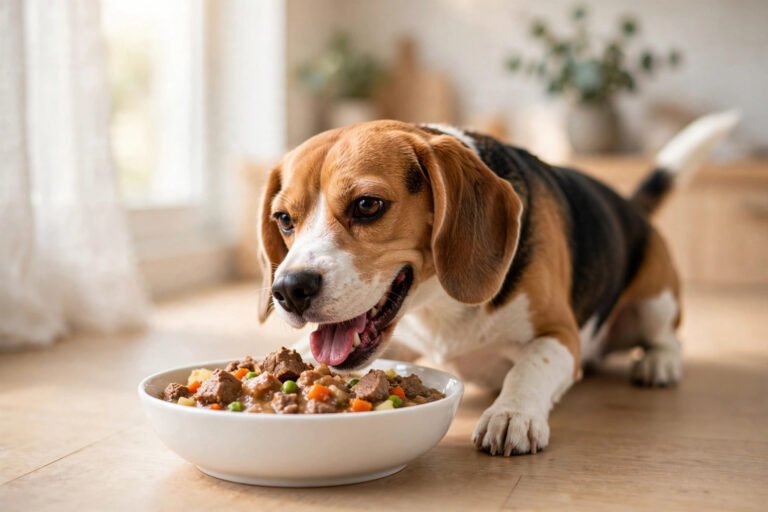
- Ignoring gobbling. Rotties are notorious inhalers of food. A slow-feeder bowl tames the gulping, which also helps with the breed’s bloat risk.
- Too many table scraps. Dogs shouldn’t eat the same food we eat. Salty, spicy, fatty human food upsets their stomachs and packs on pounds. No feeding “from the table.”
- Sudden food switches. Changing foods overnight is a diarrhea guarantee. Always transition over 7 to 10 days.
- Extra calcium for puppies. As covered above, extra calcium in a large-breed puppy diet can interfere with healthy skeletal development. Don’t add it without a vet’s order.
- Feeding right before or after exercise. The bloat rule: calm for an hour on either side of the meal.
Healthy Treats and Supplements
Treats should make up no more than 10% of daily calories. For a Rottweiler on 2,200 kcal, that’s just 220 kcal, which disappears fast during training. Smart, low-calorie options: small single-ingredient training treats, carrot sticks, apple slices (no seeds), blueberries, cooked pumpkin, and green beans. On heavy training days, reduce meal portions to compensate.
Supplements are a “maybe, ask your vet first” category. Many Rottie owners use joint supplements (glucosamine + chondroitin) and omega-3 fish oil for the coat and joints, but a dog on a complete, balanced diet often doesn’t need them. Fish oil and probiotics are the ones worth discussing with your vet; random vitamin stacks are not.
This guide is for information only. Check with your vet for your dog’s specific needs.
A Sample Rottweiler Feeding Day
To pull it all together, here’s what a healthy day looks like for an average adult Rottweiler (around 100 lbs) on a large-breed adult kibble:
| Time | What |
|---|---|
| 7:00 am | 2¼ cups kibble in a slow-feeder bowl + fresh water; calm rest after (no hard play for 60 min) |
| Midday | A few low-calorie training treats or carrot sticks (counted against the daily 10%) |
| 6:00 pm | 2¼ cups kibble + fresh water; calm rest for an hour before the evening walk |
For a puppy, split the daily total across 3 to 4 meals at consistent times (e.g., 7 am, 12 pm, 5 pm, 9 pm for an 8-week-old). For a senior, keep the same two-meal rhythm with slightly smaller portions and consider adding a joint supplement only on your vet’s advice.
Pros and Cons
A steady feeding routine is the best tool a Rottweiler owner has, but it needs daily care. Here is the honest balance.
Pros
- Two measured meals a day lower bloat risk in a deep-chested breed.
- Large-breed puppy formulas protect growing joints with controlled calcium.
- Portion charts by age and weight make feeding easy to track.
- A lean Rottweiler stays easier on its hips, elbows, and knees.
Cons
- Rottweilers gain weight easily, so treats and table scraps add up fast.
- Puppies need food matched to growth, and the wrong formula can harm joints.
- Grain-free diets carry a heart question mark, so label reading matters.
- Seniors lose muscle fast, so portions and protein need regular review.
Conclusion: Feed Lean, Feed Consistently
The best Rottweiler feeding guide comes down to four habits: two measured meals a day (4, 3, or 2 to 3 for puppies depending on age), a large-breed formula matched to the life stage, a body condition you can feel in the ribs, and bloat-smart habits: calm around meals, slow-feeder bowl, no free-feeding.
Rottweilers reward good feeding with long, active, comfortable years. Keep them lean, keep them consistent, and let the vet (not the bag, not the scale, not the puppy eyes) make the final call on changes. For food picks built specifically for this breed, read our best dog food for Rottweilers guide, and if your Rottie is carrying extra weight, our 12-week weight loss plan walks you through trimming down safely.
Grain-Free Food and Your Rottweiler’s Heart
Grain-free sounds healthier on the bag, but for a Rottweiler it can be the wrong call. The FDA is still looking into a possible link between grain-free diets built on boutique brands, exotic proteins, and legumes and a heart condition called dilated cardiomyopathy, and large deep-chested breeds like Rottweilers show up more than most in the reported cases. The link is not proven, but it is enough reason to be careful. Unless your vet has diagnosed a grain allergy, which is rare, pick a grain-inclusive large-breed formula with whole grains like brown rice, oatmeal, or barley. If your dog is already on a grain-free diet, do not panic and do not switch overnight. Talk to your vet about adding taurine and L-carnitine, the two nutrients vets watch for heart support, and ask about a yearly heart check. A food that skips grains is not automatically better, and a food with good grains is not automatically worse. Judge the bag by its protein source, its AAFCO statement, and the company behind it, not by the grain-free label on the front.
How much should a Rottweiler eat per day?
A healthy adult Rottweiler eats roughly 4 to 6 cups of large-breed kibble per day, split into two meals, about 20 to 30 calories per pound of body weight. Puppies eat less in volume but more meals: 4 daily at 8 to 12 weeks, dropping to 3 at 3 to 6 months, then 2 to 3 by one year. Senior Rottweilers often need fewer calories but still split food across two meals.
How often should I feed my Rottweiler?
Adults do best on 2 meals a day, about 10 to 12 hours apart. Puppies need 3 to 4 meals daily, reducing to 2 by around 12 months. Never feed an adult Rottweiler just once a day. Two smaller meals reduce bloat risk.
What is the best food for a Rottweiler?
Look for a named animal protein first, 26 to 30% protein, moderate fat, added glucosamine/chondroitin, and an AAFCO balanced-for-life-stage statement. Avoid foods heavy in fillers and by-products.
When should I switch my Rottweiler puppy to adult food?
Most Rottweilers stay on large-breed puppy food until 12 to 18 months, then transition to an adult large-breed formula over 7 to 10 days. Switch sooner only on your vet’s advice. Early switching can cause fast growth and joint issues.
Can Rottweilers eat once a day?
No. Adults should always eat two smaller meals. Rottweilers are deep-chested and prone to bloat, and one large meal increases that risk. Two meals, plus no hard exercise for an hour before or after eating, is the bloat-smart routine.
Should I give my Rottweiler supplements?
Most healthy Rottweilers on a complete diet don’t need supplements. The ones worth discussing with your vet are fish oil (omega-3s for coat and joints) and joint supplements with glucosamine and chondroitin for seniors. Never add calcium to a large-breed puppy diet without veterinary advice. Excess calcium can harm developing bones.
How can I tell if my Rottweiler is overweight?
You should be able to feel the ribs easily without pressing hard, and your dog should have a visible waist when viewed from above and a tucked belly from the side. Weigh monthly and adjust portions by 10 to 15% based on what you find. Rottweilers gain weight easily, and extra pounds sharply raise the risk of joint problems, arthritis, and heart disease.
What foods are toxic to Rottweilers?
Chocolate, grapes, raisins, onions, garlic, xylitol (in sugar-free products), alcohol, cooked bones, and macadamia nuts are all dangerous. Also avoid salty, spicy, and fatty table scraps, which upset digestion and cause weight gain. If your dog eats something potentially toxic, contact your veterinarian immediately.
Is grain-free food good for Rottweilers?
For most Rottweilers, no. The FDA is still investigating a possible link between grain-free diets and a heart condition called dilated cardiomyopathy, and large breeds show up more than most in the reported cases. Unless your vet has diagnosed a grain allergy, which is rare, choose a grain-inclusive formula with whole grains like brown rice, oatmeal, or barley.
How much does it cost to feed a Rottweiler each month?
Budget about 80 to 200 dollars a month for an adult Rottweiler on quality large-breed kibble, with premium brands at the upper end. Fresh-cooked or raw diets run higher, often 250 dollars or more a month. The exact number depends on your dog’s size, the brand, and where you shop, so add a little for treats and any joint or omega-3 supplement your vet recommends.

3 Comments