
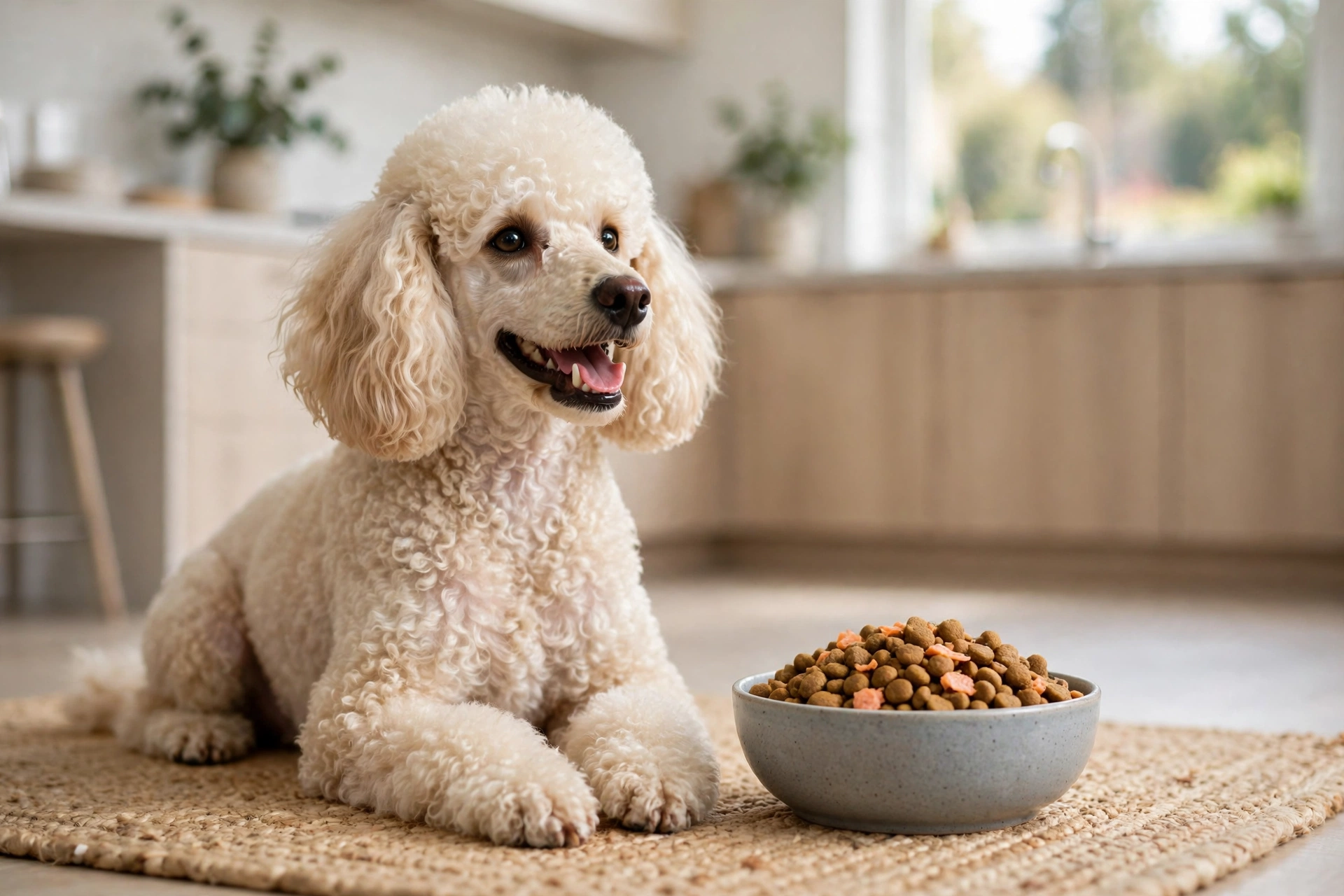
Best Food for Poodle Skin Allergies: Chicken-based Picks for skin sensitivity
Your Poodle scratches all day. The paws get chewed raw, the ears flare up again, and the belly turns pink under that thick curly coat. You change the shampoo, you wash the bedding, and nothing lasts. The food bowl is the place most owners check last, yet food is often the trigger that keeps the itch going.
Poodles are one of the breeds most likely to react to food. Their curly coat traps pollen, dust, and moisture against the skin, so a food reaction and an environmental allergy can look exactly the same from the outside. The fix is often simple: the right food, fed the right way, for long enough to prove it works.
In This Guide
- How to Tell If the Problem Is Food or the Environment
- Why Poodles Get Skin Allergies
- Our Top Picks at a Glance
- Purina Pro Plan Sensitive Skin and Stomach, Salmon and Rice
- Canidae Pure Limited Ingredient, Salmon and Sweet Potato
- Blue Buffalo Basics Limited Ingredient, Turkey and Potato
- Hill’s Science Diet Sensitive Stomach and Skin
- Natural Balance Limited Ingredient, Salmon and Sweet Potato
- Royal Canin Veterinary Diet Hydrolyzed Protein HP
- The 8-Week Elimination Trial, Step by Step
- What to Feed and What to Avoid
- How to Switch Your Poodle to a New Food
- Toy, Miniature, or Standard: Size Changes the Choice
- Grooming Help That Supports the Food Change
- Common Mistakes
- Expert Tips
- Buying Guide: What to Look For
- Key Takeaways
How to Tell If the Problem Is Food or the Environment
Food allergy itch runs all year, often with ear infections and loose stools; environmental itch flares with the seasons. Only a strict eight-week elimination trial proves a food allergy. Our Best Dog Food for Skin Allergies guide explains how to run one, and Food Allergy Symptoms in Dogs and Best Dog Food for Allergies cover the signs and the triggers. For general itch relief, see Best Dog Food for Dogs With Itchy Skin.
Watch where your Poodle itches. Food reactions often show up on the paws, ears, belly, and around the eyes, and they often come with soft stools or gas. When skin trouble and stomach trouble appear together, food is the more likely cause.
Repeat ear infections are a strong hint. Poodle ear canals grow hair and trap moisture, and a food allergy adds swelling inside the ear. If the infections keep coming back, bring up a diet trial with your vet.
| Clue | Points to Food | Points to Environment |
|---|---|---|
| Timing | Steady itch all year round | Worse in spring and summer, better in winter |
| Stomach signs | Soft stools, gas, or vomiting along with the itch | Skin only, stomach stays normal |
| Ears | Repeat ear infections that keep coming back | Ears flare with pollen season |
| Response to a diet change | Itch fades over 4 to 8 weeks on a new food | No change from food, better with baths and medicine |
Takeaway: if the itch never takes a season off and the stomach is unsettled too, start with food.
Why Poodles Get Skin Allergies
Poodles sit near the top of the list for food reactions, and the breed has a few traits that make skin trouble worse. The dense curly coat is the first one. Those curls trap pollen, dust mites, and moisture close to the skin, so a small food reaction can turn into a bigger skin problem.
The second trait is the ears. Poodle ear canals grow hair, hold moisture, and stay warm, which invites yeast and bacteria. A food allergy swells the ear lining, the ear gets infected, and it comes back after treatment because the food never changed.
The third trait is a sensitive gut. Many Poodles have soft stools and gassy stomachs even when their skin looks fine. That is why the same proteins show up again and again in Poodle allergy cases: chicken, beef, and dairy lead the list, with wheat, soy, and egg behind them.
Takeaway: the curly coat, hairy ears, and sensitive gut work together, so a Poodle needs a food fix plus coat and ear care.
Why Poodle Skin Is Not Just Allergies
The Poodle’s defining skin disease is sebaceous adenitis. The immune system attacks the skin’s oil glands, and the coat goes dull, scaly and patchy, starting on the head and spine. Food will not fix it; it needs a vet diagnosis.
Alopecia X is also on the list for Poodles: symmetrical hair loss that does not itch. If the coat thins without itching, think hormones and follicles before food.
The single, curly coat mats fast. Matted curls trap moisture against the skin, so grooming is part of skin care here, not vanity.
Poodles are not on Merck’s atopy list, so this page does not claim a breed allergy. It covers the trial that finds the trigger.
Our Top Picks at a Glance
Every pick below is a real product sold in the US. None of these foods replaces a vet visit, and the prescription pick needs your vet to approve it.
| Product | Best For | Key Feature | Kcal/cup | Cost/month |
|---|---|---|---|---|
| Purina Pro Plan Sensitive Skin and Stomach, Salmon and Rice | Best overall | Salmon first, live probiotics, gentle oatmeal | 449 | ~$49 to $64/mo |
| Canidae Pure Limited Ingredient, Salmon and Sweet Potato | Best limited ingredient | Only 8 key ingredients, single salmon protein | 484 | ~$69 to $92/mo |
| Blue Buffalo Basics Limited Ingredient, Turkey and Potato | Best chicken-free pick | Turkey as the only animal protein, no chicken anywhere | 352 | ~$53 to $72/mo |
| Hill’s Science Diet Sensitive Stomach and Skin | Best everyday vet-backed pick | Prebiotic fiber, vitamin E, omega-6 for coat | 391 | ~$66/mo |
| Natural Balance Limited Ingredient, Salmon and Sweet Potato | Best for Toy and Miniature Poodles | Small-breed kibble, single salmon protein | 365 | ~$60 to $82/mo |
| Royal Canin Veterinary Diet Hydrolyzed Protein HP | Best for elimination trials | Hydrolyzed soy protein, vet prescription only | 324 | ~$98 to $114/mo |
Prices are Chewy ‘buy once’ prices as retrieved Nov 11, 2026; cost/month is for a 55-lb adult Poodle.
Purina Pro Plan Sensitive Skin and Stomach, Salmon and Rice
This is the best starting point for most itchy Poodles. The first ingredient is real salmon instead of chicken, which matters because chicken is the most common trigger in this breed. Oatmeal and rice give gentle fiber, and the formula carries live probiotics that support gut health.
The recipe also brings sunflower oil and fish oil, both rich in omega fatty acids that feed the skin barrier from the inside. It comes in a small-breed size too, which suits Toy and Miniature Poodles that struggle with large kibble.
Pros:
- Salmon first, no chicken as the main protein
- Live probiotics for gut and immune support
- Omega fatty acids for skin and coat
- Easy to find in US stores and online
Cons:
- Contains grains, so it is not a grain-free trial food
- Not strict enough for a full elimination trial
Canidae Pure Limited Ingredient, Salmon and Sweet Potato
When you cannot pin down the trigger, a short ingredient list is the smartest move. Canidae Pure uses only 8 key ingredients plus vitamins and minerals, with real salmon as the single animal protein and sweet potato as the gentle carbohydrate. Fewer ingredients means fewer suspects.
The recipe is free from wheat, corn, and soy, and it adds probiotics and antioxidants for digestive and immune support. The salmon brings omega-3 fats that help the skin barrier rebuild, which is the part that keeps moisture in and irritants out.
Pros:
- Only 8 key ingredients, easy to track in a trial
- Single salmon protein, no chicken, beef, or dairy
- Probiotics and omega-3s included
Cons:
- Costs more per pound than standard foods
- Sweet potato does not suit every Poodle stomach
Blue Buffalo Basics Limited Ingredient, Turkey and Potato
Chicken hides in more foods than owners expect: in the main protein, in chicken fat, in chicken meal, and in flavoring. If your Poodle reacts to chicken, you need a food with no chicken in any form, and Blue Buffalo Basics Turkey and Potato is built exactly that way.
Turkey is the only animal protein here, and it is a novel protein for many Poodles that have eaten chicken-based food all their lives. Potato gives gentle energy, and the recipe skips corn, wheat, soy, dairy, and eggs. It also includes pumpkin, which many owners find firms up soft stools during the switch.
Pros:
- Zero chicken in any form
- Single turkey protein, gentle on the gut
- Pumpkin helps firm up stools
Cons:
- Turkey is less novel than venison or duck, so it may not suit severe cases
- Potato-based recipes are higher in starch than some owners want
Hill’s Science Diet Sensitive Stomach and Skin
Hill’s is the pick vets reach for most often when a Poodle needs an everyday sensitive food rather than a strict trial diet. The recipe uses prebiotic fiber to feed good gut bacteria, plus vitamin E and omega-6 fatty acids that support skin and coat health.
The chicken recipe is the catch. Chicken is the most common Poodle trigger, so this food fits mild sensitivity rather than a proven chicken allergy. If your Poodle has already reacted to chicken, skip this one and choose a salmon or turkey recipe instead.
Pros:
- Prebiotic fiber for gut health
- Vitamin E and omega-6 for coat shine
- Widely stocked and vet-recommended
Cons:
- Chicken-based, so it does not suit chicken-allergic Poodles
- Not a limited-ingredient food for strict trials
Natural Balance Limited Ingredient, Salmon and Sweet Potato
Toy and Miniature Poodles have tiny mouths and fast metabolisms, and a big kibble can put them off their food entirely. Natural Balance makes this recipe in a small-breed size with kibble that fits small jaws.
Salmon is the single animal protein, which keeps chicken, beef, and dairy out of the bowl. Sweet potato gives steady energy and gentle fiber, and the recipe adds omega-3 and omega-6 fatty acids for the skin and coat.
Pros:
- Small-breed kibble suits Toy and Miniature Poodles
- Single salmon protein, no common triggers
- Omega fatty acids for skin barrier support
Cons:
- Not ideal for Standard Poodles, who need larger kibble
- Grain-free, so check with your vet about long-term feeding
Royal Canin Veterinary Diet Hydrolyzed Protein HP
When nothing else gives a clear answer, this is the food vets use to find the truth. The soy protein in it is hydrolyzed, which means it is broken into pieces so small that the immune system cannot recognize it as a trigger. If the itch fades on this food, you know food was the problem.
This is a prescription food, so your vet must approve it, and it costs more than regular dog food. Use it when your Poodle has been through two or three regular foods with no clear result, or when the itch is severe and your vet wants a clean test.
Pros:
- The most reliable food for proving a food allergy
- Hydrolyzed protein slips past the immune response
- Vet-guided trial with a clear result
Cons:
- Prescription only, and pricier than other picks
- Not a long-term food unless your vet advises it
For a fuller picture, see our guide on what to feed a dog with skin allergies, and our best food for Poodles with sensitive stomachs covers the gut side in depth.
The 8-Week Elimination Trial, Step by Step
An elimination trial is the only home test that proves food is the cause. It takes 8 weeks, and it only works if you follow it strictly. A single chicken treat in week six can undo the whole test, so the whole household has to agree to the rules first.
| Week | What to Do |
|---|---|
| Week 1 | Switch to the trial food over 7 days. Take a photo of the skin, ears, and paws so you can compare later. |
| Weeks 2 to 4 | Feed only the trial food and water. No treats, table scraps, chews, or flavored medicine. Keep a short daily note on itching, stools, and ears. |
| Weeks 5 to 8 | Stay strict. Skin heals slowly, so the itch often fades in weeks 6 to 8, not week 2. |
| After week 8 | If the skin is clearly better, add back one old protein for two weeks and watch. If the itch returns, you found a trigger. |
If nothing changes after 8 strict weeks, food is probably not the main cause. That is still a useful answer. Focus on environmental allergies, flea control, and skin care instead of changing foods again.
Takeaway: eight strict weeks beats eight months of guessing.
What to Feed and What to Avoid
The safest proteins for an itchy Poodle are ones your dog has rarely eaten. Salmon, duck, venison, and turkey top that list for most US owners. Pair them with gentle carbohydrates like sweet potato, oatmeal, rice, or potato, and omega-3 fats from fish oil for the skin barrier.
The avoid list is just as important. Chicken, beef, and dairy cause the most Poodle reactions. Wheat, corn, soy, and eggs are common triggers too. Skip artificial colors, flavors, and preservatives, and avoid rawhide and flavored chews during a trial.
| Feed More Often | Avoid During a Trial |
|---|---|
| Salmon, duck, venison, turkey | Chicken, beef, dairy, eggs |
| Sweet potato, oatmeal, rice, potato | Wheat, corn, soy |
| Fish oil, flaxseed, pumpkin | Artificial colors and flavors, rawhide, flavored chews |
| Plain single-ingredient treats that match the trial food | Table scraps, bones, and mixed-protein treats |
How to Switch Your Poodle to a New Food
A sudden switch can upset a sensitive Poodle stomach, so move over 7 days. Mix the old food with the new food in growing amounts, and watch the stools each day. If the stools turn soft, hold the same ratio for two more days before moving on.
| Days | Mix |
|---|---|
| Days 1 to 2 | 25 percent new food, 75 percent old food |
| Days 3 to 4 | 50 percent new food, 50 percent old food |
| Days 5 to 6 | 75 percent new food, 25 percent old food |
| Day 7 | 100 percent new food |
Toy, Miniature, or Standard: Size Changes the Choice
Poodles come in three sizes, and the right food changes with the size. Toy Poodles weigh about 4 to 6 pounds and may need only a third to half a cup a day. Miniature Poodles weigh 10 to 15 pounds and need roughly three quarters to one and a half cups. Standard Poodles weigh 40 to 70 pounds and need about three to five cups.
Small Poodles need small kibble and calorie-dense food, since their stomachs are tiny and their metabolisms run fast. Large Poodles need bigger kibble and moderate fat. Check the kibble size before you buy. A Toy Poodle that cannot chew the kibble will eat less, and a trial fails when the dog will not eat the food.
See our Poodle feeding guide for full portions and schedules, and our best dog food for Poodles roundup for everyday foods across the three sizes.
Takeaway: match the kibble and the calories to the size, not just the breed name on the bag.
Grooming Help That Supports the Food Change
Food fixes the inside, but the coat still needs help on the outside. A Poodle coat traps allergens against the skin, so weekly baths with a gentle hypoallergenic or oatmeal shampoo wash away pollen and dust. Rinse well, and dry the coat fully so moisture does not sit against the skin.
Brush the coat often to stop mats from forming, since mats trap moisture and heat. Keep the hair around the paws trimmed short, and wipe the paws with a damp cloth after walks during high pollen season.
Takeaway: food plus grooming beats food alone, because the coat is where allergens collect.
Common Mistakes
The most common mistake is quitting the trial too soon. Skin takes 6 to 8 weeks to show real change, and many owners give up in week three. The second mistake is sneaking in treats. One chicken jerky treat can restart the reaction and waste weeks of careful feeding.
Another mistake is buying a food because the bag says hypoallergenic without reading the ingredients. That label can still hide chicken meal or beef fat, so read the full ingredient list every time.
The last mistake is skipping the vet. A Poodle with open sores, a bad smell from the ears, or hair loss needs a vet check first, since a skin infection can keep itching even after the food is fixed.
Expert Tips
Keep a simple diary during the trial. Each day, write one line: itch level from 1 to 5, stool quality, and anything unusual. A short diary shows patterns you would miss from memory.
Take photos of the worst spots on day one and again in weeks four and eight. Skin heals slowly, and photos prove progress your eyes miss day to day.
Ask your vet about a fish oil supplement if the food alone is not enough. New supplements mid-trial can blur the result, so check with your vet before adding one.
Buying Guide: What to Look For
Start with the protein. Look for one named protein your Poodle has rarely eaten, listed as the first ingredient. Salmon, duck, venison, and turkey are strong choices. Skip foods where the first protein is chicken or beef.
Check the fat sources next. Fish oil, salmon oil, and flaxseed bring omega-3 fats that feed the skin barrier. Sunflower oil adds omega-6, which supports coat shine.
Look for an AAFCO statement on the bag. It shows the food meets the nutrient profiles for your dog’s life stage. A food without it may not be complete and balanced.
Read the full ingredient list, not just the front of the bag. Watch for chicken meal, beef fat, whey, and egg hiding behind a salmon headline. If the list is long, a shorter limited-ingredient recipe is a better tool for a trial.
Key Takeaways
- Food allergies in Poodles cause steady, year-round itching, often with soft stools and repeat ear infections.
- Chicken, beef, and dairy are the most common triggers. Grains are rarely the real problem.
- Purina Pro Plan Sensitive Skin and Stomach, Salmon and Rice is the best starting point for most itchy Poodles.
- Canidae Pure Limited Ingredient is the best choice when you need a short, clean list for a trial.
- An elimination trial takes 8 strict weeks with no treats, scraps, or flavored chews.
- Match kibble size and calories to Toy, Miniature, or Standard Poodles.
- Weekly baths and paw care support the food change, since the curly coat traps allergens.
- See the vet first if there are open sores, a bad ear smell, or hair loss.
Conclusion
An itchy Poodle is miserable, and watching the scratching go on for months is hard on the owner too. The fix is rarely one magic food. It is a short ingredient list, the right protein, an honest 8-week trial, and steady grooming while the skin heals.
Start with Purina Pro Plan Sensitive Skin and Stomach, Salmon and Rice. If chicken is the suspect, move to Canidae Pure Limited Ingredient or Blue Buffalo Basics Turkey and Potato. If nothing gives a clear answer, ask your vet about Royal Canin Hydrolyzed Protein HP for a proper trial.
This guide is for information only. Check with your vet for your dog’s specific needs.
Frequently Asked Questions
What food is best for a Poodle with skin allergies?
A limited-ingredient or sensitive-skin formula built on one novel protein, such as salmon, with omega-3 fats for the skin barrier. Purina Pro Plan Sensitive Skin and Stomach, Salmon and Rice is the best starting point for most Poodles. If chicken is the trigger, switch to a chicken-free recipe and run an 8-week elimination trial.
How do I know if my Poodle’s itching is caused by food?
Food reactions stay steady all year, while environmental allergies flare with the seasons. If the itch comes with soft stools, gas, or repeat ear infections, food is the more likely cause. Only a strict 8-week elimination trial can prove it.
Is chicken bad for Poodles with skin allergies?
Chicken is the most common food trigger in Poodles, along with beef and dairy. If your Poodle itches year-round, try a chicken-free food such as a salmon or turkey recipe. Check the full ingredient list, since chicken can hide in chicken fat, chicken meal, and flavoring.
How long does an elimination diet trial take for a Poodle?
A proper trial takes 8 weeks of feeding only the trial food, with no treats, table scraps, chews, or flavored medicine. Skin heals slowly, so the itch often fades in weeks 6 to 8, not week 2. Quitting early is the most common reason trials fail.
Should I feed my allergic Poodle grain-free food?
Only if grains are the proven trigger, which is rare in Poodles. Most Poodle food allergies trace back to proteins like chicken, beef, and dairy, not grains. A grain-free bag does not help if the protein inside is still chicken or beef.
What ingredients should I avoid for a Poodle with skin allergies?
Avoid chicken, beef, dairy, eggs, wheat, corn, and soy during a trial, plus artificial colors, flavors, and preservatives. Skip rawhide and flavored chews, since they often contain hidden chicken or beef.

One Comment