
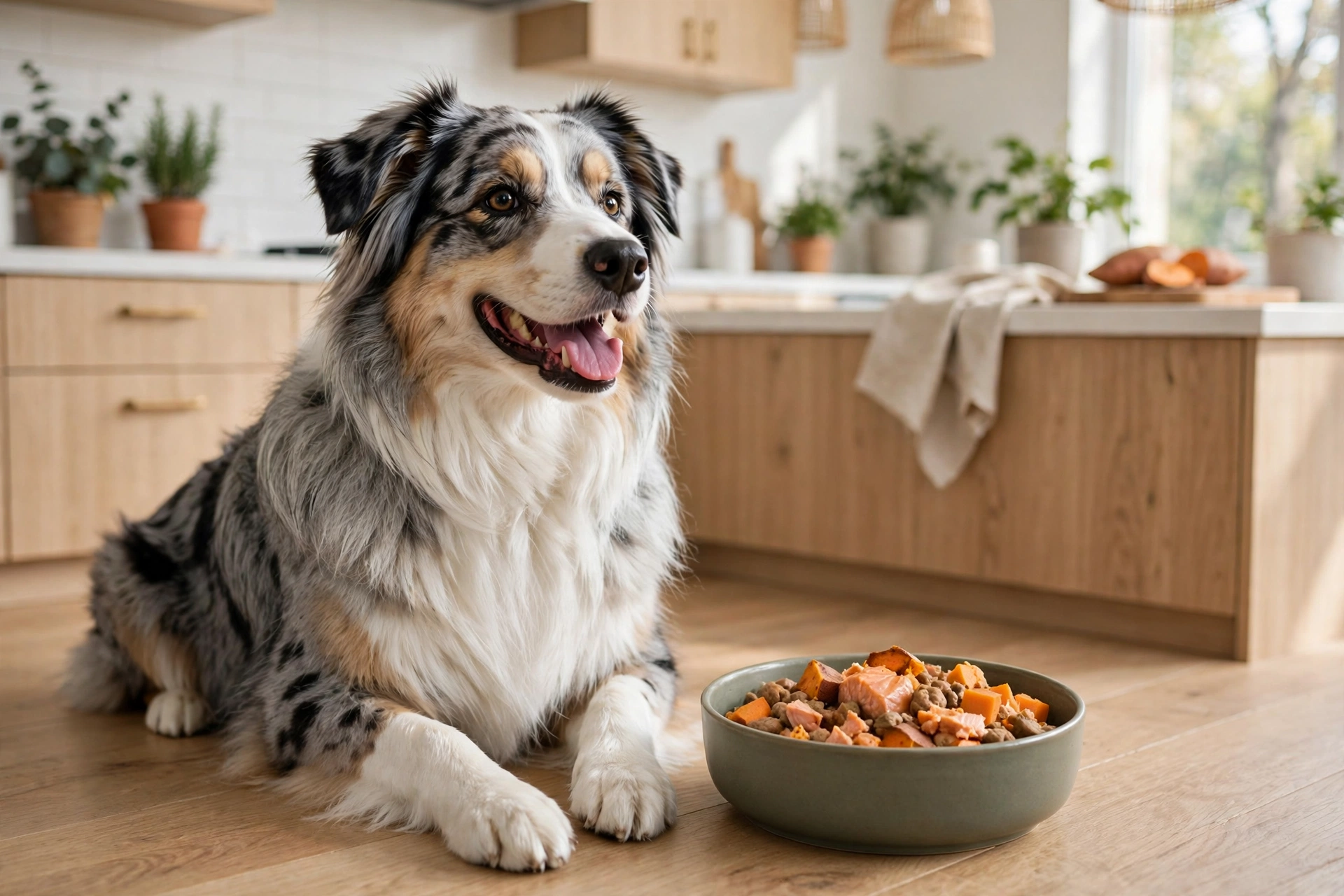
Best Food for Australian Shepherd Skin Allergies: Salmon-based Picks for allergies
Your Aussie scratches, chews her paws, and leaves tufts of fur on the rug. You have changed shampoo, washed her bed, and wiped her paws after every walk, and still the itching comes back. If that sounds familiar, food may be part of the problem. Aussies are smart, active, outdoor dogs with thick double coats, and that lifestyle brings more triggers than most breeds face. The right food can calm a lot of skin trouble, and this guide shows you how to pick it.
Table of Contents
- Why Australian Shepherds Get Skin Allergies
- Food Allergy or Environmental Allergy: How to Tell
- The Elimination Diet: Your 8 to 12 Week Plan
- Best Food for Australian Shepherd With Skin Allergies: 6 Picks Compared
- Purina Pro Plan Sensitive Skin and Stomach Salmon and Rice
- Hill’s Science Diet Sensitive Stomach and Skin
- Natural Balance Limited Ingredient Salmon and Sweet Potato
- Blue Buffalo True Solutions Skin and Coat Care
- Royal Canin Veterinary Diet Hydrolyzed Protein HP
- Taste of the Wild Pacific Stream
- What to Look for in Food for an Aussie With Skin Allergies
- What to Avoid Feeding Your Aussie
- Safe Treats and Toppers During an Allergy Diet
- Coat Care That Helps Itchy Skin Heal
- Common Mistakes Owners Make
- Expert Tips for Managing Aussie Skin Allergies
- Pros and Cons of Switching to Allergy Food
- Key Takeaways
Why Australian Shepherds Itch, and What Food Can (and Can’t) Do
Aussies carry a thick double coat, so itching often hides under the fluff until it is well along. Part the coat and check the skin itself, not just the top layer.
No AKC / Merck / VCA source lists the Aussie as an atopy-predisposed breed, so this page does not claim a breed allergy. It covers the trial that finds the trigger, whatever it is.
If your vet ever treats mange, mention the MDR1 mutation: about half of Aussies carry it, and it changes which drugs are safe.
Omega-3s (EPA/DHA) support the skin barrier in allergic dogs generally. Useful here, but not an Aussie-specific treatment.
Why Australian Shepherds Get Skin Allergies
Australian Shepherds can react to the same skin triggers as other dogs: pollen, dust mites, flea saliva, or a protein in their food. The breed’s thick double coat hides the early signs, so by the time you spot red skin, the itching has often been going on for weeks.
Aussies also spend a lot of time outside. Herding, hiking, and rolling in grass bring them into contact with pollen and other outdoor triggers. An Aussie with sensitive skin needs a two part plan: cut the triggers you can control, and feed a diet that helps the skin barrier stay strong from the inside.
The most common food triggers in dogs are beef, chicken, dairy, wheat, soy, and eggs. Most dogs react to the protein, not the grain, so switching the protein matters more than going grain free. Every pick below is built around a protein most Aussies have never eaten or rarely eat.
Takeaway: An active outdoor life and a thick coat that hides early signs make skin trouble easy to miss in Aussies. Food is one trigger you can fully control.
Food Allergy or Environmental Allergy: How to Tell
Food allergy itch runs all year, often with ear infections and loose stools; environmental itch flares with the seasons. Only a strict eight-week elimination trial proves a food allergy. Our Best Dog Food for Skin Allergies guide explains how to run one, and Food Allergy Symptoms in Dogs and Best Dog Food for Allergies cover the signs and the triggers. For general itch relief, see Best Dog Food for Dogs With Itchy Skin.
The Elimination Diet: Your 8 to 12 Week Plan
An elimination diet is the surest way to find out which food triggers your Aussie. It is simple in theory and hard in practice, because it only works if you follow it strictly. One stolen treat can undo weeks of work. If your Aussie’s stomach is as touchy as her skin, see our Best Food for Australian Shepherd Sensitive Stomach guide. The full method is in our Best Dog Food for Skin Allergies guide and in What to Feed a Dog with Skin Allergies.
Start with one new food from the list below, built on a protein and a carbohydrate your dog has never eaten. Salmon and potato is a common starting point, as is duck and pea. Feed only that food for 8 to 12 weeks. That means no treats, no table scraps, no rawhide, and no flavored medication unless your vet says it is safe.
Keep a simple daily log while you do it. Note the itching on a scale of 1 to 10, any ear redness, stool quality, and coat condition. Most owners see the first real change between week 4 and week 6. Skin heals slowly, so quitting at week 3 will not tell you whether the food works. Give it the full 8 to 12 weeks.
Once symptoms have calmed, your vet may ask you to feed the old food again for a week or two. If the itching comes back, you have your answer. That step is called a challenge, and it is the only way to be sure the new food deserves the credit.
Takeaway: One new food, nothing else, for 8 to 12 weeks. Log symptoms weekly.
Best Food for Australian Shepherd With Skin Allergies: 6 Picks Compared
Every pick below is a real product sold in the US, chosen based on ingredient analysis, brand reputation, and owner reviews. Each one skips the most common triggers and adds skin support through omega fats.
| Product | Best For | Key Feature | Kcal/cup | Cost/month |
|---|---|---|---|---|
| Purina Pro Plan Sensitive Skin and Stomach Salmon and Rice | Best overall pick | Real salmon first, live probiotics, omega 6 for skin and coat | 449 | ~$49 to $64/mo |
| Hill’s Science Diet Sensitive Stomach and Skin | Sensitive stomach plus skin | Prebiotic fiber, vitamin E, omega 6, easy to digest | 391 | ~$64/mo |
| Natural Balance Limited Ingredient Salmon and Sweet Potato | Elimination diets | One protein, one carb, short ingredient list, no chicken or soy | 365 | ~$60 to $82/mo |
| Blue Buffalo True Solutions Skin and Coat Care | Skin and coat support | Real salmon first, omega 3 and 6, no corn, wheat, or soy | 363 | ~$52 to $67/mo |
| Royal Canin Veterinary Diet Hydrolyzed Protein HP | Severe or stubborn cases | Hydrolyzed soy protein the immune system cannot recognize, vet prescription only | 324 | ~$94 to $108/mo |
| Taste of the Wild Pacific Stream | Budget friendly grain free | Smoked salmon, probiotics, omega fatty acids, no grains | 408 | ~$46/mo |
Prices are Chewy ‘buy once’ prices as retrieved Nov 11, 2026; cost/month is for a 52-lb adult Australian Shepherd.
Purina Pro Plan Sensitive Skin and Stomach Salmon and Rice
This is the pick most vets reach for first. Real salmon is the first ingredient, oatmeal is gentle on the gut, sunflower oil adds omega 6 for the skin, and live probiotics support digestion and immune health. It comes in a 30 pound bag that suits a medium sized active breed.
Aussie owners report less paw licking and calmer skin within 6 to 8 weeks on this food. It suits dogs whose allergies show up as both itchy skin and a touchy stomach. One thing to watch: it contains rice, so if your vet suspects a grain problem, pick a grain free option from this list.
Takeaway: The safest first choice for most Aussies, with salmon, probiotics, and skin friendly fats in one bag.
Hill’s Science Diet Sensitive Stomach and Skin
Hill’s builds this recipe around prebiotic fiber, which feeds the good bacteria in the gut. A healthy gut helps keep the immune system calm, which means less itching. Vitamin E and omega 6 support the skin barrier, and the kibble is easy to digest.
This food works well for Aussies whose allergy signs include both skin and stomach trouble. It is widely available in pet stores and online. The protein is chicken based in some versions, so read the label and choose the version that matches your trial plan.
Takeaway: A strong pick when skin trouble and stomach trouble show up together.
Natural Balance Limited Ingredient Salmon and Sweet Potato
When you run an elimination diet, a short ingredient list is your best friend. This formula keeps it simple: salmon as the single animal protein and sweet potato as the single carbohydrate. No chicken, no beef, no soy, no artificial colors or flavors.
The food also carries omega 3 and omega 6 fatty acids for skin and coat health. It is a good fit for owners who want full control during a trial, and for Aussies that have reacted to multi protein foods in the past.
Takeaway: The cleanest choice for a strict elimination trial.
Blue Buffalo True Solutions Skin and Coat Care
Blue Buffalo built this recipe for dogs with skin trouble. Real salmon leads the ingredient list, omega 3 and 6 fatty acids support the coat, and the formula skips corn, wheat, soy, and chicken by product meals. It is made in the USA.
This pick suits Aussies whose main problem is a dull coat, flaking, and constant scratching rather than stomach upset. Owners often notice a shinier coat first, then less itching over the following weeks. It comes in an 11 pound bag, which is handy for a trial run.
Takeaway: A solid skin first choice with real salmon and no common fillers.
Royal Canin Veterinary Diet Hydrolyzed Protein HP
Some Aussies keep itching no matter how many limited ingredient foods you try. For those dogs, a hydrolyzed protein diet is the next step. The protein in this food is broken down into pieces so small that the immune system cannot recognize it.
You need a vet prescription to buy it, and it costs more than regular kibble. But for a dog that has failed two or three regular diets, it can end months of guesswork. It is also the diet vets most often use for the elimination trial itself.
Takeaway: The prescription option for dogs that have not improved on regular allergy foods.
Taste of the Wild Pacific Stream
Pacific Stream uses smoked salmon as its main protein, with sweet potatoes and peas for carbs, and it skips grains entirely. It includes species specific probiotics and omega fatty acids for skin and coat.
It fits active Aussies well, since the protein level runs higher than many skin formulas. Most food allergies come from protein, so a grain-free label on its own is not a reason to pick a food.
Takeaway: A budget friendly grain free salmon food for active Aussies.
What to Look for in Food for an Aussie With Skin Allergies
Start with one named protein your Aussie has rarely eaten, a short ingredient list, omega fats for the skin barrier, and an AAFCO complete-and-balanced statement, and read the whole label, since chicken fat and chicken meal hide in foods that do not say chicken on the front. A hydrolyzed diet breaks the protein down further for dogs that keep itching on limited-ingredient foods. Our Best Dog Food for Skin Allergies guide compares the two side by side, and Best Hypoallergenic Dog Food covers when a prescription trial is the next step.
What to Avoid Feeding Your Aussie
During an allergy diet, and honestly for a long time after it, keep these out of the bowl:
- Beef, chicken, and dairy: the three most common food triggers in dogs
- Wheat, corn, and soy: common fillers that some dogs react to, and they add nothing the skin needs
- Artificial colors, flavors, and preservatives: extra chemicals a sensitive system does not need
- Table scraps: a piece of chicken or a spoon of gravy can undo a week of trial work
- Rawhide and mystery chews: many are beef hide with flavoring you cannot identify
- Foods with “natural flavors” on the label: that phrase can hide an unidentified protein
After the trial, you can test foods one at a time to see which ones your Aussie tolerates. Many dogs turn out to be fine with most of these triggers and reactive to only one.
Takeaway: Beef, chicken, and dairy lead the trigger list. During a trial, cut them all, plus scraps and rawhide.
Safe Treats and Toppers During an Allergy Diet
Treats are where most elimination diets fail. Owners do everything right at mealtime, then hand over a biscuit made with chicken meal and wheat. During the trial, treats need to match the trial food exactly: same protein, same carb.
Simple whole foods make the safest treats. Small pieces of cooked salmon, sweet potato, or plain pumpkin work well, and most Aussies love them. Freeze dried single protein treats are another good option, as long as the label lists one protein and nothing else.
For toppers, a spoon of plain canned pumpkin can help digestion, and a small drizzle of fish oil adds omega 3 fats. Ask your vet before adding any supplement, because the dose depends on your dog’s weight. Toppers with chicken broth or beef stock are common hidden triggers, so leave them out during the trial.
Takeaway: treats are part of the trial too, so they need to match the trial food. Single protein treats and plain pumpkin are the safe choices.
Coat Care That Helps Itchy Skin Heal
Food does the inside work, and grooming does the outside work. Brush your Aussie two or three times a week with a slicker brush and an undercoat rake. Brushing spreads the skin’s natural oils and lets you spot red patches early.
Bathe with a gentle oatmeal shampoo once every 3 to 4 weeks, unless your vet says otherwise. Too much washing strips the oils that protect the skin. After baths, dry the undercoat fully, because damp fur trapped against the skin invites yeast and bacteria.
Check the paws, ears, and belly every week. Those are the spots where Aussie allergies show up first. Red paws, a yeasty smell in the ears, or pink skin on the belly are early warnings. Our guide on what to feed a dog with skin allergies covers the diet side of this plan, and our Australian Shepherd feeding guide has portion sizes by age and activity level.
Takeaway: Brush two or three times a week, bathe gently once a month, and check paws, ears, and belly weekly.
Common Mistakes Owners Make
The most common mistake is quitting the trial too early. Skin takes 6 to 8 weeks to show real change, and many owners give up at week 3 because the itching is still there.
The second mistake is the sneaky treat. A neighbor hands your Aussie a biscuit, a family member shares a piece of cheese, and the trial is broken without anyone noticing. Tell everyone in the house the rules, and keep trial safe treats by the door.
Another mistake is changing two things at once. If you switch food and shampoo in the same week, you will never know which one helped. Change one thing at a time, wait, and watch.
Takeaway: Give the trial the full 8 to 12 weeks, guard the treats, and change one thing at a time.
Expert Tips for Managing Aussie Skin Allergies
Feed on a schedule and measure every meal. Aussies gain weight fast when food is left out, and extra weight makes skin inflammation worse. For portions and meal frequency by age and activity, see the Australian Shepherd Feeding Guide.
Wipe paws after walks in pollen season. A damp cloth takes pollen off before your dog licks it off, which matters for Aussies that chew their paws.
Plan for the long term. Food allergies do not go away, so the food that works becomes the food for life.
Takeaway: Measure meals, wipe paws after walks, and pick a long term food you can afford and find easily.
Pros and Cons of Switching to Allergy Food
Pros:
- Less itching, paw licking, and ear trouble once the trigger is gone
- Healthier skin barrier and a shinier coat from omega fats
- Fewer vet visits for hot spots and infections over time
- A clear answer about what your dog can and cannot eat
- Better digestion for dogs whose allergies also upset the stomach
Cons:
- Allergy foods cost more than regular kibble
- The 8 to 12 week trial needs strict discipline from the whole household
- Some dogs refuse the new food at first and need a slow switch
- Prescription diets need a vet visit and a prescription
- You may need to try two or three foods before you find the right one
Takeaway: The switch costs more and needs patience, but most owners find the calmer skin is worth it.
Key Takeaways
- The best food for an Australian Shepherd with skin allergies uses one novel protein, such as salmon, and skips beef, chicken, and dairy.
- Our top pick is Purina Pro Plan Sensitive Skin and Stomach Salmon and Rice, with Natural Balance Limited Ingredient Salmon and Sweet Potato as the best choice for a strict elimination trial.
- An elimination diet needs 8 to 12 weeks of one food only, with no treats or scraps outside the plan.
- Food allergies cause year round itching, while environmental allergies flare with the seasons.
- For severe cases that fail regular diets, ask your vet about Royal Canin Hydrolyzed Protein HP.
- Brush two or three times a week, bathe gently, and check paws, ears, and belly weekly.
Conclusion
Skin allergies can make your Aussie miserable, and they can make you feel helpless. But food is one part of the problem you can control. Start with a salmon based limited ingredient diet, give it the full 8 to 12 weeks, and keep the treats honest. If the itching eases, you have found your answer.
Our recommendation for most Aussies is Purina Pro Plan Sensitive Skin and Stomach Salmon and Rice. It is easy to find, fairly priced, and it covers both skin and stomach in one bag.
This guide is for information only, so check with your vet for your dog’s specific needs. If your Aussie has open sores, a bad skin smell, or hair loss, book a vet visit before you change food. If stomach trouble comes with the itching, see our best food for Australian Shepherds with sensitive stomachs guide.
Frequently Asked Questions
What is the best food for an Australian Shepherd with skin allergies?
A limited ingredient diet built on one novel protein your dog has never eaten, such as salmon, venison, or duck, with omega 3 and omega 6 fats for skin support. Purina Pro Plan Sensitive Skin and Stomach Salmon and Rice is our top pick for most Aussies.
What protein is best for an Aussie with allergies?
Salmon works well for most Aussies because it is a novel protein for many dogs and it brings omega 3 fats. Venison, duck, and lamb are good options too. The best protein is one your dog has never eaten before.
Is grain free better for Aussies with skin allergies?
Not always. Most food allergies come from protein, not grain. A grain free food helps only if your dog reacts to a grain. Switching the protein matters more than removing grain.
What should I avoid feeding my Aussie with skin allergies?
Avoid beef, chicken, dairy, wheat, corn, and soy during a trial, plus table scraps, rawhide, and treats with long ingredient lists. After the trial, test foods one at a time.
Do I need a prescription diet for my Aussie?
Most Aussies improve on a regular limited ingredient diet. A prescription hydrolyzed protein diet, such as Royal Canin Hydrolyzed Protein HP, is for dogs that have failed two or three regular diets. Ask your vet.
When should I see a vet about my Aussie’s skin?
See your vet if your Aussie has open sores, a bad skin smell, hair loss in patches, or ear infections that keep coming back. Those signs can mean a yeast or bacterial infection that needs treatment first.





3 Comments