
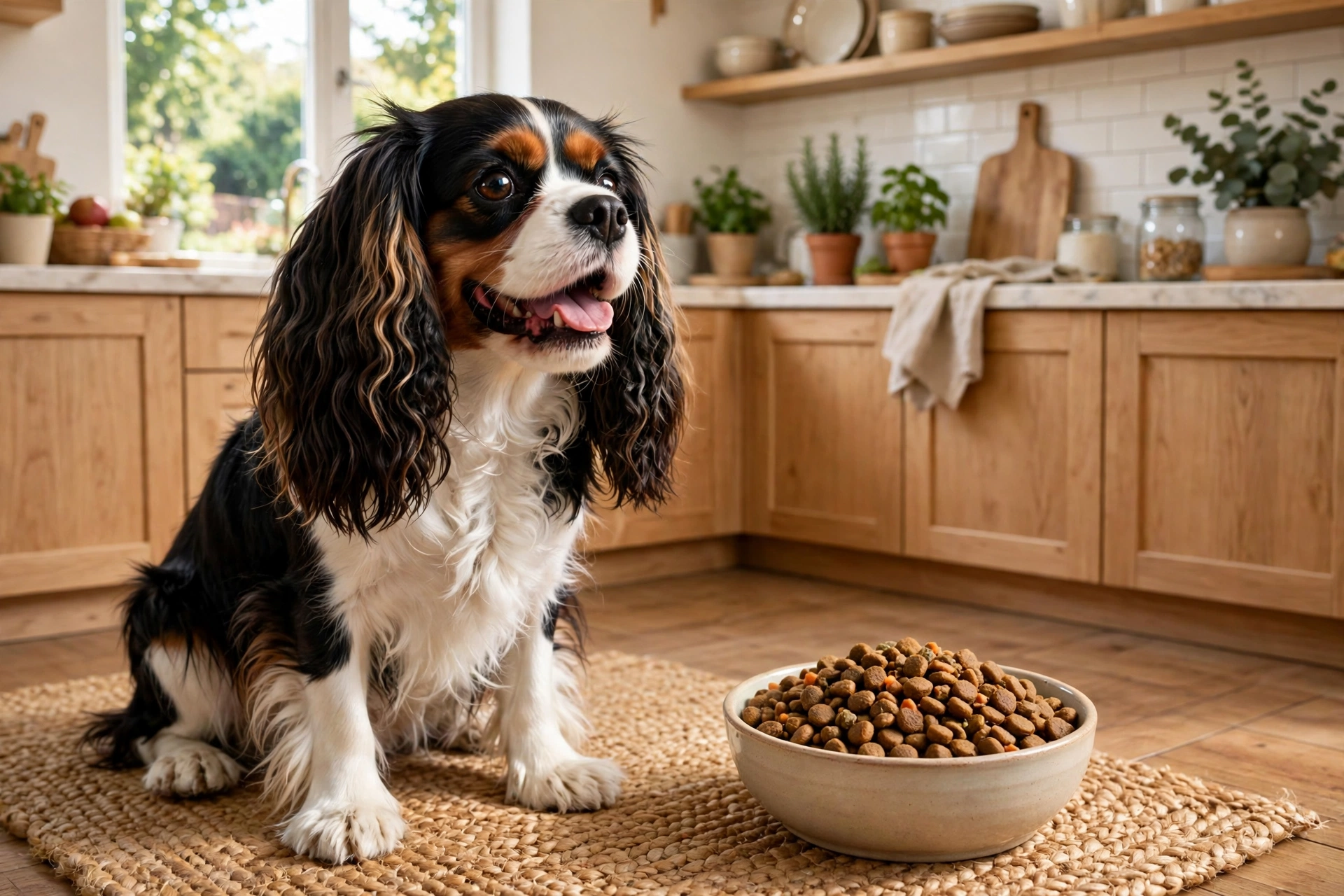
Best Dog Food for Cavalier King Charles Spaniels: 6 Top Picks (2026)
Cavalier King Charles Spaniels are famously easy to love: gentle, affectionate, eager to please, and just the right size for a lap. Feeding one well, though, takes a little more thought than filling a bowl. This small breed is prone to weight gain, and extra pounds put extra strain on a heart that already deserves attention — mitral valve disease is common in Cavaliers. The best dog food for Cavalier King Charles Spaniels therefore does three jobs at once: it keeps calories in check, it supplies heart- and coat-friendly nutrients such as taurine and fish-sourced omega-3 fatty acids, and it comes in a kibble size that suits a small, tapered muzzle.
This guide compares six real, widely sold foods that fit those needs, from a breed-specific formula made for Cavaliers to small-breed recipes built around salmon, chicken, or turkey. It explains what to look for on the label, how much to feed, and what to avoid — so you can pick with confidence rather than guesswork. Picks below are based on ingredient analysis, brand reputation, and owner reviews, not on laboratory testing by this site. This guide is for information only — check with your vet for your dog’s specific needs.
Key Takeaways
- Choose a small-breed or breed-specific recipe with a named animal protein first, controlled calories (roughly 340–420 kcal per cup for most adult kibbles), and an AAFCO statement for your dog’s life stage.
- Look for taurine and fish-sourced EPA and DHA: nutrients that support heart, skin, and coat health in a breed where heart health matters so much.
- Measure every meal. Cavaliers gain weight easily, and even a small daily surplus adds up fast on a 12–18 lb dog.
- Small kibble matters: it is easier for a Cavalier’s small jaws to chew and can encourage slower, more comfortable eating.
- Switch foods gradually over 7–10 days to avoid an upset stomach, and keep treats to no more than 10% of daily calories.
Top Picks at a Glance
| Product | Best For | Key Feature |
|---|---|---|
| Royal Canin Cavalier King Charles Spaniel Adult Dry Dog Food | Best overall breed-specific pick | Formula and kibble shaped for Cavaliers, with heart-supporting nutrients |
| Canidae Pure Petite Salmon | Best salmon recipe | Real salmon first, small kibble, probiotics for digestion |
| Merrick Classic Healthy Grains Small Breed | Best whole-grain small-breed recipe | Deboned chicken, whole grains, glucosamine and chondroitin |
| Wellness Toy Breed Complete Health Adult | Best toy-breed kibble | Extra-small kibble with deboned chicken and omega fatty acids |
| Blue Buffalo Life Protection Formula Small Breed Adult | Best everyday small-breed pick | Real chicken first, antioxidant-rich LifeSource Bits, omega-3 and omega-6 |
| Nulo Frontrunner Ancient Grains Small Breed | Best high-animal-protein pick | 77% animal-based protein, deboned turkey first, added probiotics |
Royal Canin Cavalier King Charles Spaniel Adult Dry Dog Food
If you want a food designed for this breed rather than adapted to it, this is the obvious starting point. Royal Canin built this adult formula around the Cavalier’s known pressure points: heart health, weight control, coat condition, and a small jaw. The kibble itself is shaped to suit a Cavalier’s muzzle, which helps with comfortable chewing and can slow down dogs that inhale their dinner.
The recipe supports heart health with a balanced nutrient profile including taurine and EPA and DHA, and it aims for a healthy weight rather than simply maximum calories. Owners commonly report a shinier coat and steady energy after switching, and the breed-specific design removes much of the guesswork for first-time Cavalier owners. The main trade-offs are price — breed-specific formulas usually cost more per pound than general small-breed foods — and availability, since you may need to order it rather than find it on every supermarket shelf. It is also a chicken-based recipe, so it is not the pick for a Cavalier with a suspected chicken sensitivity; in that case, look at the salmon option below or at a chicken-free food instead.
Who it is for: Adult Cavaliers (10 months and older) whose owners want a no-guesswork, breed-specific daily food with heart and coat support built in.
Canidae Pure Petite Salmon
Canidae Pure Petite Salmon leads with real salmon, which brings two advantages for Cavaliers: a fish-based protein that many dogs find highly palatable, and a natural source of omega fatty acids that support skin and coat health. The small-breed kibble size suits petite mouths, and the recipe includes probiotics to support digestion, plus antioxidants for immune health.
One feature owners either love or barely notice is the freeze-dried raw salmon coating, which adds aroma and flavour — helpful if your Cavalier is a picky eater. The recipe is grain-free, so if you prefer a grain-inclusive diet, one of the whole-grain picks below will suit you better; grain-free is a preference, not a requirement, for most healthy adult dogs, and it is worth discussing with your vet if your dog has any heart concerns. Some owners report digestive upset during the switch, which is a reminder to transition slowly rather than a reason to rule the food out. Keep the bag sealed and stored cool, since some owners have noted the packaging is not resealable.
Who it is for: Cavaliers that do better on fish than poultry, picky eaters that need extra aroma, and owners who want a limited-ingredient style salmon recipe with digestive support.
Merrick Classic Healthy Grains Small Breed
Merrick Classic Healthy Grains Small Breed pairs deboned chicken with whole grains such as brown rice, quinoa, and barley. That combination gives steady energy without relying on corn, wheat, or soy fillers, and the whole grains add fibre that supports healthy digestion and comfortable stools. Omega fatty acids support skin and coat, while added glucosamine and chondroitin support joint health — a useful bonus as Cavaliers age and their joints take more wear.
The small-breed kibble is easy for little jaws to manage, and because this is a mainstream, widely stocked recipe, it is usually easy to find and reasonably priced per pound for a premium food. Merrick foods are made in the USA, which many owners value. The watch-outs are familiar ones: it is chicken-based, so it does not suit a chicken-sensitive dog, and, like any richer premium kibble, it needs careful portioning — a heaped scoop rather than a level one can quietly add 10–20% more calories. For a breed-by-breed comparison of small-dog feeding, see our guide to the best dog food for small breeds.
Who it is for: Owners who want a grain-inclusive, widely available small-breed food with joint support and a straightforward chicken-and-grains profile.
Wellness Toy Breed Complete Health Adult
Cavaliers sit on the border between small and toy breeds, and Wellness Toy Breed Complete Health Adult is built for the smaller end of that range. Its extra-small kibble is one of the easiest to chew in this roundup, which can help older Cavaliers, dogs with dental issues, or puppies graduating to adult food. Deboned chicken is the first ingredient, supported by wholesome grains for balanced energy.
The recipe is rich in protein for an active little dog, and it includes omega fatty acids for skin and coat health. Some owners find the bites almost too small for their dog’s preference, and picky eaters may still turn up their noses at first — no kibble wins over every dog. If your Cavalier is on the larger side (closer to 18 lb) or eats very fast, a standard small-breed kibble such as the Merrick or Blue Buffalo below may be a better physical fit. For toy-breed owners, though, the combination of tiny kibble, quality protein, and balanced nutrition is hard to beat at this price point.
Who it is for: Smaller Cavaliers, seniors with dental wear, and owners who prioritise the smallest, easiest-to-chew kibble.
Blue Buffalo Life Protection Formula Small Breed Adult
Blue Buffalo Life Protection Formula Small Breed Adult is a dependable everyday choice: real chicken first, no corn, wheat, soy, or poultry by-product meals, and a blend of vegetables, fruits, and grains. Its signature LifeSource Bits — small dark kibbles mixed into the bag — carry a blend of antioxidants, vitamins, and minerals chosen to support immune health. Omega-3 and omega-6 fatty acids support skin and coat, which matters for a breed famous for its silky feathering.
This is a well-balanced, widely available food that suits most healthy adult Cavaliers without any special dietary needs, and it is usually priced in the middle of the premium range. Two honest caveats: some dogs pick around the LifeSource Bits and eat the rest first, and, as with any chicken-led recipe, it is not suitable if your dog has a chicken allergy. Calorie density sits in the typical small-breed range, so measuring — not eyeballing — remains essential, especially for Cavaliers that are already carrying a little extra weight.
Who it is for: Healthy adult Cavaliers that need a balanced, easy-to-find daily food with immune and coat support.
Nulo Frontrunner Ancient Grains Small Breed
Nulo Frontrunner Ancient Grains Small Breed stands out for its protein profile: 77% animal-based protein, with deboned turkey as the first ingredient. That high proportion of animal protein supports lean muscle, which helps a Cavalier stay trim and active rather than soft around the middle. Ancient grains such as oats, barley, and millet provide digestible energy and fibre, and the recipe includes probiotics for digestive and immune support.
The formula meets AAFCO nutrient profiles for adult maintenance and is rich in omega-3 and omega-6 fatty acids for skin and coat health. It is also generally well reviewed by small-breed owners and competitively priced for its protein level. The main downside is the same one that follows many premium foods: picky dogs may need a gradual introduction, and a richer, higher-protein recipe can loosen stools during the first week if the switch is rushed. Take the transition slowly and the odds of a smooth change improve a lot.
Who it is for: Active adult Cavaliers, owners who prioritise animal protein, and dogs that need to hold lean muscle while keeping weight steady.
Buying Guide: What to Look for in Cavalier Food
A named animal protein first. The first ingredient should be a named meat or fish — chicken, salmon, turkey, lamb — not a vague “meat meal” or a grain. Protein supports muscle, and on a small dog, muscle is what keeps metabolism and mobility healthy.
Heart-supporting nutrients. Look for taurine and fish-sourced EPA and DHA on the ingredient list or guaranteed analysis. These nutrients are associated with heart, skin, and coat health. No kibble can prevent or treat mitral valve disease, and any dog with a diagnosed heart condition needs veterinary guidance — but choosing a food that includes these nutrients is a sensible baseline.
Controlled calories and fat. Most adult small-breed kibbles run about 340–420 kcal per cup. Check the calorie figure on the bag, not just the feeding chart, and compare foods on that basis. A lower-fat or weight-management recipe may be the right call if your Cavalier is already overweight; our weight-loss food guide explains how those formulas differ.
Small kibble and good digestibility. Kibble sized for small jaws is easier to chew and less likely to be swallowed whole. Digestibility matters too: ingredients such as probiotics, prebiotic fibre, and pumpkin support comfortable digestion, and a food your dog digests well usually means firmer stools and less gas.
An AAFCO statement for the right life stage. The label should state that the food is complete and balanced for adult maintenance, all life stages, or growth, as appropriate. AAFCO does not approve individual foods, but its nutrient profiles are the standard manufacturers formulate to. Puppies, adults, and seniors have different needs — a senior Cavalier, for example, often benefits from joint support and controlled calories, as covered in our senior dog food guide.
For an older Cavalier, choose the best senior cavalier king charles spaniel food for age-appropriate nutrition and joint support.
How much to feed. As a starting point, most adult Cavaliers (12–18 lb) do well on roughly 3/4 to 1 1/4 cups of dry food per day, split into two meals — but the bag’s feeding guide for your dog’s exact weight and activity level is the better starting point, and your vet can fine-tune it. Weigh food with a measuring cup or kitchen scale, reassess every few weeks, and use the rib test: you should be able to feel (not see) the ribs under a thin layer of fat, with a visible waist from above.
What to Avoid
Avoid foods that lead with corn, wheat, or soy, rely on unnamed meat meals or by-products, or pack in artificial colours, flavours, and preservatives — none of these add nutrition, and they often displace better ingredients. Be cautious with very high-calorie, “performance” style recipes for a companion Cavalier that is not working or training hard; extra energy density makes overfeeding easy. Avoid feeding table scraps as a habit, and never give chocolate, grapes or raisins, onions, garlic, xylitol (birch sugar), cooked bones, or macadamia nuts — all are toxic or dangerous for dogs. Finally, avoid switching foods abruptly, over-treating, or free-feeding from a full bowl all day: all three are common routes to weight gain and stomach upset in this breed.
How to Switch Foods Without an Upset Stomach
Mix the new food with the old over 7–10 days: roughly 25% new for days 1–3, 50% for days 4–6, 75% for days 7–9, then fully new on day 10. Picky Cavaliers may need a slower 14-day switch. If loose stools last more than a few days, or you see vomiting, blood, or refusal to eat for over 24 hours, stop and speak to your vet. A bland interim diet of plain boiled chicken and rice is sometimes suggested by vets for a day or two, but follow your own vet’s advice rather than a generic recipe.
If your Cavalier still has digestive trouble, try the best food for cavalier with sensitive stomach for gentler, easy-to-digest recipes.
Conclusion: Our Recommendation
For most adult Cavalier King Charles Spaniels, Royal Canin Cavalier King Charles Spaniel Adult is the safest first choice because it is built around this breed’s heart, weight, coat, and jaw — and it removes the guesswork. If you prefer a fish-based or grain-inclusive alternative, Canidae Pure Petite Salmon and Merrick Classic Healthy Grains Small Breed are both excellent, widely available options, while Nulo Frontrunner suits active dogs that need more animal protein. Whichever you choose, the food itself is only half the plan: measure portions, keep treats small, weigh your dog regularly, and check in with your vet about heart health as your Cavalier ages. Get those habits right, and a good kibble will do the rest.
What is the best dog food for a Cavalier King Charles Spaniel?
A small-breed or breed-specific food with a named animal protein first, controlled calories, taurine and fish-sourced omega-3s, and small kibble suits most adult Cavaliers. Royal Canin Cavalier King Charles Spaniel Adult is a strong breed-specific starting point, while Canidae Pure Petite Salmon and Merrick Classic Healthy Grains Small Breed are good alternatives.
How much should I feed my Cavalier King Charles Spaniel?
Most adults weighing 12–18 lb do well on roughly 3/4 to 1 1/4 cups of dry food per day, split into two meals, but follow the bag’s guide for your dog’s exact weight and activity level. Weigh portions, reassess every few weeks, and check that you can feel (not see) the ribs under a thin layer of fat.
Is Royal Canin good for Cavaliers?
Yes, its breed-specific Cavalier formula is designed around the breed’s heart health, weight control, coat condition, and small jaw, with kibble shaped for a Cavalier’s muzzle. It is chicken-based, so it is not suitable for a Cavalier with a suspected chicken sensitivity.
Do Cavaliers need small-breed food?
Not strictly, but small-breed or toy-breed kibble is easier for their small jaws to chew and is usually portioned for their calorie needs. A standard adult food with appropriate calories and small kibble can also work; the key is controlled portions and an AAFCO statement for the right life stage.
What foods should Cavaliers avoid?
Avoid chocolate, grapes and raisins, onions, garlic, xylitol, cooked bones, and macadamia nuts, which are toxic or dangerous for dogs. Also avoid foods led by corn, wheat, or soy, unnamed meat meals, and artificial colours, flavours, and preservatives.
Are Cavaliers prone to food allergies?
Some Cavaliers do develop food sensitivities, most commonly to proteins such as chicken or beef, but only a veterinary elimination trial can confirm a true allergy. If your dog has persistent itching, ear problems, or digestive upset, ask your vet before switching to a limited-ingredient or hydrolysed diet.
Should I feed my Cavalier grain-free food?
Grain-free is a preference, not a requirement, for most healthy adult dogs. Whole grains can provide useful fibre and energy, and grain-free diets should be discussed with your vet if your dog has any heart concerns.
How do I switch my Cavalier to a new food?
Mix the new food with the old over 7–10 days: about 25% new for days 1–3, 50% for days 4–6, 75% for days 7–9, then fully new on day 10. Picky dogs may need a slower 14-day switch. If loose stools, vomiting, or refusal to eat persist, stop and speak to your vet.


2 Comments