

Best Protein for Dogs With Allergies: 6 Allergy-Friendly Picks (2026)
If your dog scratches constantly, battles recurring ear infections, or has chronic tummy trouble, the culprit may be the protein in their food. Choosing the best protein for dogs with allergies means understanding which meats trigger reactions, and which novel ones your dog’s immune system has never seen before. Food allergies in dogs are almost always triggered by proteins, not grains, and the most common offenders are the same meats found in most commercial kibbles: chicken, beef, and dairy.
The good news? Switching to the right protein source can bring dramatic relief. In this guide, I’ll explain which proteins are safest for allergic dogs, from novel meats like rabbit and venison to prescription hydrolyzed diets, and review 6 real, US-available diet picks built around allergy-friendly proteins for 2026. This guide is for information only. Check with your vet for your dog’s specific needs.
The best protein for a dog with allergies is one your dog has never eaten, such as rabbit, venison, duck, or kangaroo. Chicken, beef, and dairy cause most food allergies in dogs. For dogs allergic to several proteins, a hydrolyzed prescription diet is the safest choice. Give any new protein 6 to 8 weeks before you judge the result.
In This Guide
- Key Takeaways
- Quick Comparison: Best Protein Sources for Allergic Dogs
- Why Protein Causes Most Dog Food Allergies
- Novel Protein vs. Hydrolyzed Protein: Two Strategies
- 6 Best Allergy-Friendly Proteins for Dogs (2026 Picks)
- Buying Guide: What to Look for in an Allergy-Friendly Protein Diet
- What to Avoid
- How to Switch to a New Protein Safely
- Pros and Cons
- Conclusion: Which Protein Should You Choose?
- Which Allergy-Friendly Protein Is Easiest on a Sensitive Stomach?
- The Step Most Owners Skip: The Re-Challenge
Key Takeaways
- The best protein for dogs with allergies is usually a novel protein, a meat your dog has rarely or never eaten before, such as rabbit, venison, duck, or kangaroo.
- Chicken, beef, and dairy are the top protein triggers in dogs, simply because dogs are exposed to them so often.
- For dogs allergic to multiple proteins, hydrolyzed protein diets (like Hill’s Prescription Diet z/d) break proteins down so small the immune system barely notices them.
- Fish proteins like salmon add bonus omega-3 fatty acids that calm inflamed skin while they feed.
- It takes 6 to 8 weeks on one consistent protein to know if the switch is working. Patience is part of the process.
Quick Comparison: Best Protein Sources for Allergic Dogs
| Protein | Best For | Key Feature |
|---|---|---|
| Rabbit (Instinct Limited Ingredient Diet Real Rabbit) | Elimination diet trials | Single protein, no chicken/beef/dairy/eggs |
| Venison (Natural Balance L.I.D. Sweet Potato & Venison) | Red-meat replacements | Lean, lean novel red meat with digestible sweet potato |
| Duck (Natural Balance L.I.D. Duck & Potato) | Start with a novel-protein switch | Affordable, widely available single-protein diet |
| Salmon (Wellness Simple Salmon & Potato) | Itchy skin relief | Omega-3s support skin while the protein feeds |
| Kangaroo (Zignature Limited Ingredient Kangaroo) | Dogs allergic to many proteins | Ultra-rare exotic protein, lean with high B12 |
| Hydrolyzed (Hill’s Prescription Diet z/d) | Severe or multiple allergies | Protein broken into fragments the immune system misses |
Why Protein Causes Most Dog Food Allergies
Proteins are large, complex molecules, and a dog’s immune system learns to “recognize” whatever it eats day after day. After months or years of the same chicken-based kibble, the immune system can misidentify that protein as a threat and launch an inflammatory attack. That’s when you see the classic signs. For a full rundown, see my guide on food allergy symptoms in dogs.
Because chicken is the single most common ingredient in US dog food, chicken allergy is also the most common food allergy. Beef, dairy, wheat, soy, and eggs round out the usual suspects. Grains rarely cause true allergies. Switching to a “grain-free” version of the same chicken recipe won’t fix a chicken allergy. The protein is what matters.
Novel Protein vs. Hydrolyzed Protein: Two Strategies
When vets choose the best protein for dogs with allergies, they pick between two approaches:
- Novel protein diets swap in a protein your dog has never eaten. No prior exposure means no prior sensitization, so the immune system has nothing to react to.
- Hydrolyzed protein diets take a protein (often chicken liver) and break it into tiny fragments so small the immune system can’t recognize them as allergens. These are prescription formulas used when a dog reacts to several proteins at once.
Both are the backbone of an elimination diet: 6 to 8 weeks on one protein, no other treats or table scraps, while symptoms are monitored. It’s the most reliable way to confirm a food allergy, and the starting point behind every protein recommendation in this guide.
6 Best Allergy-Friendly Proteins for Dogs (2026 Picks)
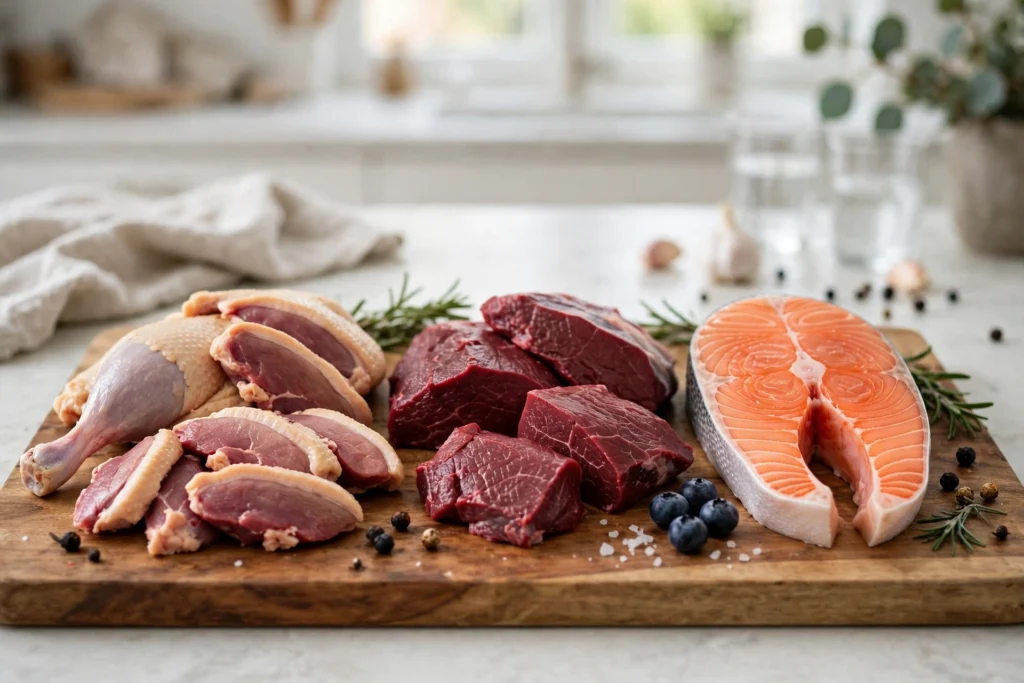
Each pick below pairs a protein with a real, US-available formula built around it. My framing is based on ingredient analysis, brand reputation, and owner reviews, never invented testing or vet claims.
Instinct Limited Ingredient Diet Grain-Free Real Rabbit Recipe
Rabbit is the classic elimination-diet protein: lean, easy to digest, and almost never used in mainstream kibble, so most dogs have zero prior exposure. Instinct Limited Ingredient Diet Grain-Free Real Rabbit Recipe (wet food) is built exactly for this job: one animal protein (farm-raised rabbit) and one vegetable, with no chicken, beef, fish, dairy, eggs, grain, potato, corn, wheat, or soy.
It’s the cleanest possible test diet: if your dog improves on this, you’ve confirmed a protein problem and can build from there. Who it’s for: dogs just starting an elimination trial, or dogs with confirmed chicken/beef allergies whose owners want the simplest possible ingredient list. As a wet food it’s also great for picky eaters. Downside: wet-only format and a shorter shelf life once opened, so pair with proper storage.
Natural Balance L.I.D. Sweet Potato & Venison
Venison (deer meat) is a genuinely novel red meat for most dogs, rich in iron and B vitamins, naturally lean, and easy on digestion. Natural Balance L.I.D. Limited Ingredient Diet Sweet Potato & Venison pairs it with a single-protein, limited-ingredient formula designed for food sensitivities: sweet potatoes for gentle, grain-free energy, and no corn, wheat, soy, or artificial flavors and colors.
Who it’s for: dogs that react to beef or chicken but still do well on red meat, venison is the natural replacement. It works as a full-time diet after a successful elimination trial too, since the kibble is AAFCO-complete for adult maintenance. One honest note: because it’s grain-free, check with your vet about long-term feeding, as with any grain-free formula.
Natural Balance L.I.D. Duck & Potato
Duck is the gentlest first step into novel proteins: flavorful, well tolerated, and easy to find at any big pet retailer, which matters when you’re committing to an 8-week trial. Natural Balance L.I.D. Limited Ingredient Diet Duck & Potato uses duck as the single animal protein with potato as the carbohydrate, and skips the common triggers: no chicken, beef, dairy, or eggs.
Who it’s for: first-time allergy diet switchers who want an affordable, widely stocked option without going exotic. It’s the pick I’d suggest before jumping to kangaroo or prescription diets. Keep in mind: some dogs with strong poultry cross-reactivity can still react to duck, so monitor closely during the trial.
Wellness Simple Limited Ingredient Diet Salmon & Potato
Fish is a protein many allergic dogs tolerate well, and salmon brings a built-in bonus: omega-3 fatty acids that actively calm skin inflammation while the protein feeds. Wellness Simple Limited Ingredient Diet Salmon & Potato uses salmon as the single protein with potato, plus ground flaxseed and a balanced omega-6/omega-3 profile aimed squarely at skin health.
Who it’s for: dogs whose main complaint is itchy, flaky skin. For more on this angle, see best dog food for dogs with itchy skin. The omega support can mean visibly better coats by week six of the trial. Honest caveat: fish is still a protein some dogs react to, so it’s not a universal answer, but for the right dog it’s transformative.
Zignature Limited Ingredient Kangaroo
Kangaroo is the rarest protein in this lineup, sourced from Australia, virtually absent from US dog food history, and almost impossible for your dog to have prior sensitization to. Zignature Limited Ingredient Kangaroo is a grain-free kibble built around it: kangaroo plus kangaroo meal first, with peas and chickpeas, and free of corn, wheat, soy, dairy, and chicken.
Kangaroo is also naturally lean with nearly twice the vitamin B12 of other meats and good omega-3 content. Who it’s for: dogs that have already reacted to several common proteins and need the least-familiar option on the shelf. Downside: it’s pricier than the other picks and can be harder to find locally, so stock up once you commit.
Hill’s Prescription Diet z/d
When a dog reacts to nearly every protein, novel proteins stop helping. That’s where hydrolyzed diets come in. Hill’s Prescription Diet z/d uses hydrolyzed chicken liver broken into fragments too small for the immune system to recognize, combined with refined starches and a single carbohydrate source.
Who it’s for: dogs with confirmed multiple protein allergies, or as the gold-standard elimination diet when nothing else has worked. Important honesty: z/d is a prescription diet (you’ll need your vet’s authorization) and it’s priced accordingly. But for dogs with severe food allergies, owners consistently report it as the turning point. For a broader look at allergy diet types, see my best dog food for allergies guide.
Buying Guide: What to Look for in an Allergy-Friendly Protein Diet
- Single, named animal protein: The first ingredient should be one clear protein (“duck,” “venison,” “salmon”), not “meat and bone meal” or “poultry by-products.” Single-protein diets make triggers easy to identify.
- Novelty for your dog: The best protein for dogs with allergies is one your dog hasn’t eaten before. Check your old food’s ingredient list. If it was chicken-based, duck, rabbit, or venison are genuine switches.
- Complete & balanced (AAFCO): Allergy management diets still need to be nutritionally complete. Look for an AAFCO statement for your dog’s life stage on the label.
- Adequate protein level: Allergy-friendly doesn’t mean low-protein. Aim for a minimum of 22 to 26% crude protein (dry matter) for adults, and don’t accept vague protein percentages below that without a vet’s okay.
- Skin-supporting fats: For itchy dogs, omega-3s (from fish, fish oil, or flaxseed) at around 0.3% or higher help the skin barrier recover.
- Short ingredient list: Limited-ingredient formulas reduce cross-reaction risk and make future trials simpler.
- Label transparency: Read the fine print for hidden poultry derivatives: “natural flavor” or “chicken fat” can be enough to trigger a chicken-allergic dog.
What to Avoid
- Repeating the same protein: Chicken, beef, and dairy are top triggers precisely because they’re everywhere. Rotating to a genuinely new protein matters more than rotating brands.
- Assuming “grain-free” means allergy-safe: True allergies are protein-driven. A grain-free chicken recipe won’t help a chicken-allergic dog. For more myth-busting, see my guide on best hypoallergenic dog food.
- Treats with mystery proteins: During an elimination trial, every treat, dental chew, and flavored medication must use the same protein, or none at all. One chicken-flavored chew can reset the whole trial.
- Switching proteins too fast: Give each new protein a full 6 to 8 weeks. Skin turns over slowly; improvement at week two often hasn’t peaked.
- Unverified “hypoallergenic” claims: “Hypoallergenic” on packaging isn’t a regulated term. Judge by the ingredient list, not the marketing.
- Skipping the vet for hydrolyzed diets: Prescription hydrolyzed foods like z/d need a vet’s diagnosis and authorization. They’re a treatment plan, not just a food choice.
How to Switch to a New Protein Safely
A sudden switch can upset even a settled stomach, so mix the new food in gradually over seven to ten days. Start with roughly one quarter new food and three quarters old food for two or three days, then move to half and half, then three quarters new, watching stools and appetite at each step. If loose stools or gassiness appear, hold at the current mix for an extra day or two instead of pushing ahead.
Keep everything else the same during the switch, especially treats. A new treat with a different protein can undo a careful transition and make it look as if the new food is the problem, so stick to treats that match the new protein or skip treats for a week. The same rule applies to dental chews and flavored medications, so check their ingredients and ask your veterinarian about alternatives if they contain the old protein.
Do not judge the new protein by the transition week alone. Mild digestive wobbles in the first few days are common and usually settle once the old food is fully out of the bowl, while allergy signs such as itching and ear redness take weeks to change. If vomiting, diarrhea, or refusal to eat lasts more than a day or two, pause and contact your veterinarian rather than forcing the switch, since a different formula or a slower plan may be needed.
Pros and Cons
A new protein can end months of itching, but only if the trial is strict and the protein is truly new to your dog. Here is the honest balance.
Pros
- A protein your dog has never eaten gives the immune system nothing familiar to react to.
- Limited ingredient diets make it easy to spot the trigger when symptoms ease.
- Salmon adds omega-3s that calm itchy skin while the new protein does its work.
- A strict 6 to 8 week trial gives a clear yes or no instead of a guess.
Cons
- Novel proteins like rabbit and kangaroo cost more and can be hard to find locally.
- Duck can cross-react in dogs with strong poultry sensitivity, so it is not safe for every dog.
- Hydrolyzed diets need a vet prescription and cost the most of all the options.
- A single slip, one wrong treat or chew, can undo weeks of a careful trial.
Conclusion: Which Protein Should You Choose?
For most allergic dogs, the best protein for dogs with allergies is a novel protein your dog has never eaten: rabbit or duck for a first elimination trial, venison or salmon for a longer-term diet, and kangaroo when the dog has reacted to nearly everything. If your dog is allergic to multiple proteins or nothing else has worked, a hydrolyzed prescription diet like Hill’s z/d (chosen with your vet) is the gold standard.
Start simple, stay consistent for the full 6 to 8 weeks, and keep the treats on-protocol. Track symptoms weekly with a simple journal: note itching level, ear redness, and stool quality. If there’s no improvement by week eight, the trigger may not be food at all. Environmental allergies are common, and your vet can help you sort it out. But in my experience, most food-allergic dogs improve visibly within a month of landing on the right protein, and the relief for both of you is worth the patience.
Which Allergy-Friendly Protein Is Easiest on a Sensitive Stomach?
An allergy and a sensitive stomach are different problems, and they do not always need the same protein. An allergy is an immune reaction to a specific protein; a sensitive stomach is a digestive problem (loose stools, gas, or vomiting) that can happen with any rich or unfamiliar food, even one the dog is not allergic to. A protein can be genuinely novel and still upset a sensitive stomach if it is very fatty or introduced too fast, so judge a new protein on two questions, not one: has my dog eaten it before, and is it gentle to digest?
For most dogs the gentlest starting points among the allergy-friendly proteins are fish and rabbit. Salmon and other fish are usually easy to digest and bring omega-3s that calm irritated skin at the same time; rabbit is lean, simple, and rarely eaten before, which is why it is a classic elimination-diet choice. Duck and venison sit in the middle: well tolerated by many dogs, but richer, so portion and transition matter more. Hydrolyzed diets are also easy on digestion because the protein is already broken down, which is one reason vets use them when a dog has both allergy signs and stomach trouble.
Whatever protein you choose, introduce it the same way: a 7 to 10 day gradual switch, one protein at a time, treats matched to that protein, and a full 6 to 8 weeks before judging the result. If stools stay loose after the transition settles, or vomiting lasts more than a day or two, pause and talk to your vet. The trigger may not be the protein at all, and a different formula or a slower plan may be needed.
What is the safest protein for a dog with a sensitive stomach?
Fish such as salmon and lean rabbit are usually the gentlest starting points, both easy to digest and rarely eaten before, so they suit dogs with allergy signs and stomach trouble at the same time. The protein matters less than how you introduce it: switch gradually over 7 to 10 days, keep treats on the same protein, and give it a full 6 to 8 weeks before deciding it does not work.
Is lamb good for dogs with allergies?
Not automatically. Lamb was once a classic “hypoallergenic” protein, but it is now so common in dog food that many dogs have eaten it for years, and a protein your dog has eaten before is not novel, so it can still trigger a reaction. If your dog has never had lamb, it can work as a novel protein; if lamb was in their old food, pick something they genuinely have not eaten, such as rabbit, venison, or duck.
The Step Most Owners Skip: The Re-Challenge

Getting better on a new protein feels like an answer, but on its own it is not proof. Itching can ease for other reasons: the season changes, a flea treatment starts working, or a skin infection clears up at the same time. Vets confirm a food allergy with one more step, the re-challenge. After your dog has been calm and steady on the new protein for at least eight weeks, your vet may ask you to feed the old protein again for a short, planned period and watch what happens. If the itching, ear redness, or loose stools come back within days, and then settle again once the old protein is removed, you have your answer. If nothing changes, the old protein was probably never the trigger, and your vet can look at other causes instead. Never run a re-challenge on your own. Feed the old food for the exact number of days your vet sets, keep a simple daily note of itching, ears, and stools, and stop and call your vet if the reaction is strong. A planned re-challenge turns a hopeful guess into a clear result, and it stops you from paying for a special diet your dog never needed.
What is the best protein for dogs with allergies?
A novel protein your dog has never eaten (rabbit, venison, duck, or kangaroo) is usually the best choice. Dogs rarely react to proteins they haven’t been exposed to. For severe or multiple allergies, a hydrolyzed prescription diet is the gold standard.
What protein are dogs least allergic to?
The least-reactive proteins are the truly novel ones (kangaroo, rabbit, and venison) because most dogs have zero prior exposure to them. “Least allergic” always depends on your own dog’s dietary history.
Is chicken bad for dogs with allergies?
Chicken isn’t bad for all dogs, but it is the single most common food allergen in dogs simply because it appears in so many foods. If your dog shows allergy symptoms, chicken is the first protein to eliminate during a trial.
Is salmon good for dogs with allergies?
Yes. Salmon is well tolerated by many allergic dogs, and its omega-3 fatty acids actively calm skin inflammation. It isn’t universal, since some dogs react to fish, but it’s an excellent option for itchy dogs.
What is hydrolyzed protein dog food?
Hydrolyzed diets break proteins into tiny fragments too small for the immune system to recognize as allergens. They’re prescription formulas used when a dog reacts to multiple proteins and require your vet’s authorization.
How long does it take for a new protein to help?
Plan on a full 6 to 8 week elimination trial with one consistent protein. Skin turns over slowly, and improvement often peaks around week six to eight.
Can dogs be allergic to multiple proteins?
Yes. Dogs exposed to the same ingredients for years can become sensitized to several proteins. Structured elimination trials and hydrolyzed diets are how vets identify every trigger.
What should I do if my dog’s stomach gets upset during the switch?
Slow down rather than giving up on the new protein. Go back to the last mix your dog tolerated, hold it for a few extra days, and then move forward in smaller steps. If vomiting, diarrhea, or refusal to eat lasts more than a day or two, contact your veterinarian, since a different formula or a slower plan may be needed.
Can I rotate between two safe proteins once my dog is settled?
Yes, once your dog has done well on one protein for several weeks, you can try rotating to another protein you know is safe, using the same gradual seven to ten day switch. Keep treats matched to whichever protein is currently being fed, and if signs return after a rotation, go back to the protein that worked and discuss the reaction with your veterinarian.
Can a blood test or hair test find my dog’s food allergy?
Blood tests and hair analysis are poor tools for food allergies in dogs, and vet dermatology guidance does not rely on them. The only proven way to find a food allergy is a strict elimination trial with one new protein, followed by a re-challenge under your vet’s care. A test result that names a long list of foods can push you toward a diet your dog never needed.
Can a limited ingredient diet contain traces of chicken?
Yes, it can. Over-the-counter limited ingredient foods are often made on shared production lines, so tiny traces of chicken or beef can slip in even when the label lists one protein. That is usually fine for a mild sensitivity, but for a strict elimination trial your vet may prefer a prescription diet made under tighter controls. Check the label and ask your vet if the trial stalls.






3 Comments