
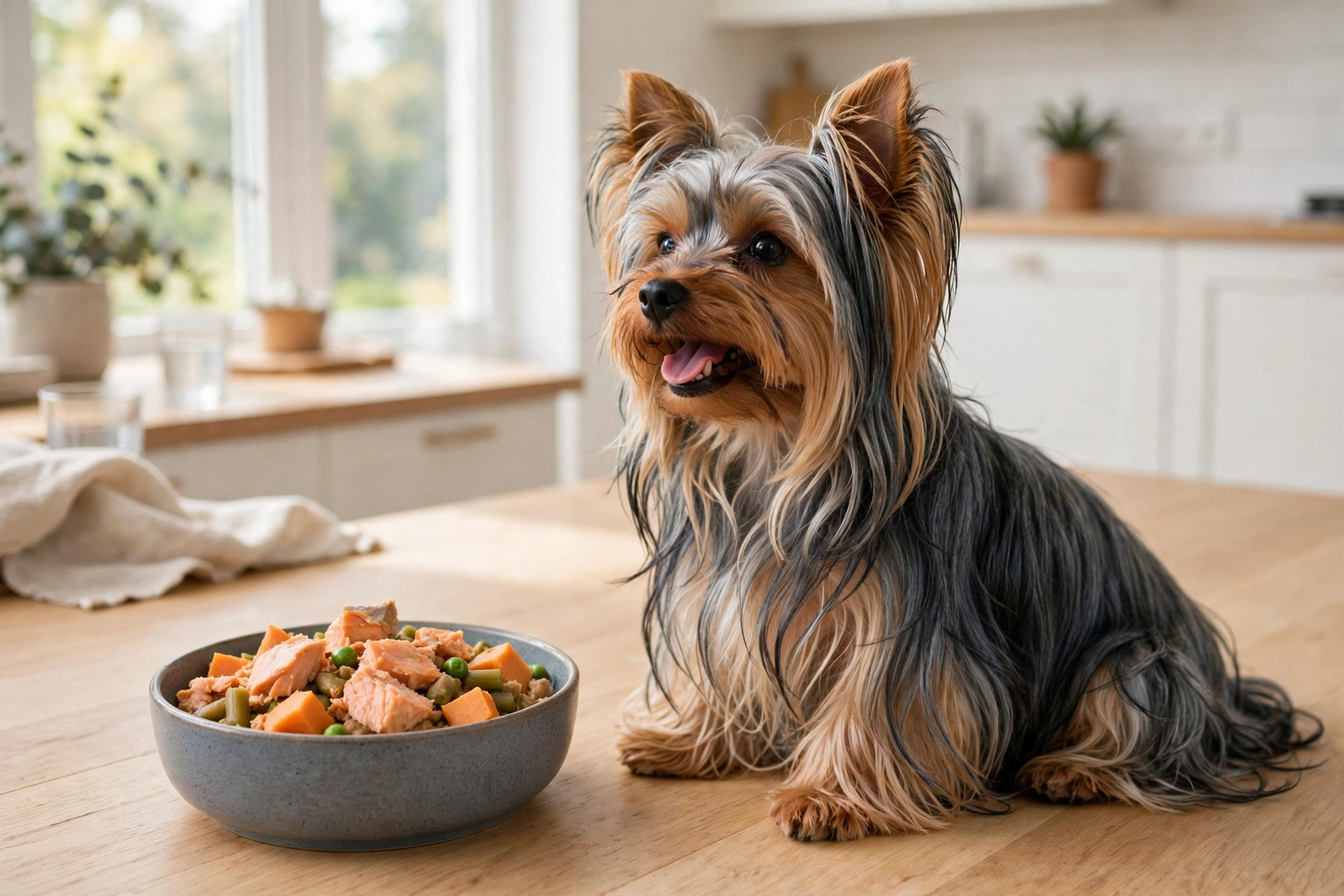
Best Food for Yorkshire Terrier Skin Allergies: Salmon-based Picks for allergies and coat care
Your Yorkie scratches all day. The paws get chewed raw. The ears smell bad again, even though you just had them cleaned. You change the shampoo, you wash the bedding, and nothing really changes. If that sounds like your house, food is the first place to look. Yorkies are small dogs with thin skin and long coats, so a food problem shows up fast and it shows up on the skin. A Yorkie eats a few spoonfuls a day, so every bite counts, and a single wrong treat can undo a whole trial.
What This Guide Covers
- Why Yorkies Get Skin Allergies From Food
- Signs Your Yorkie Has a Food Allergy
- Food Allergy, Intolerance, or Something in the Air
- Foods to Avoid With a Yorkie Skin Allergy
- Foods That Usually Help the Skin
- Best Foods Compared
- Royal Canin Hydrolyzed Protein Small Dog
- Hill’s Prescription Diet z/d
- Natural Balance L.I.D. Small Breed Bites Salmon and Sweet Potato
- Blue Buffalo Basics Skin and Stomach Care Small Breed
- Merrick Lil’ Plates Grain-Free Small Breed Salmon and Sweet Potato
- JustFoodForDogs Fish and Sweet Potato
- How to Run an Elimination Trial With a Yorkie
- Feeding a Tiny Yorkie Through a Food Trial
- Supplements That Help Itchy Skin
- Pros and Cons of Allergy Diets
- Common Mistakes Owners Make
- Tips From Owners Who Got Through It
- Buying Guide: What to Look For
- Key Takeaways
Why Yorkies Get Skin Allergies From Food
About one in five Yorkies deals with allergies at some point in life, and food sits near the top of the list. Their skin is thin and their coat is long and fine, so it traps pollen, dust, and bits of food. When the immune system decides a normal food protein is a threat, the skin pays the price.
Chicken and beef cause the most trouble. They sit in almost every dog food, every biscuit, and every chew, so a Yorkie eats them every single day for years. Dairy, wheat, soy, and eggs cause problems too, just less often.
Size makes it worse. A Yorkie weighs 4 to 7 pounds in most cases, so a tiny amount of an allergen hits a tiny body. A stolen bite of chicken from a plate or one flavored chew can start a flare that lasts days. That is why a food trial with a Yorkie has to be strict. The good news is that food is the one allergy cause you can fully control. You cannot scrub pollen out of the air, yet you can pick every single thing that goes into the bowl.
Signs Your Yorkie Has a Food Allergy
Food allergies in Yorkies rarely look like a stomach bug. They look like skin trouble that never quite goes away. Watch for the pattern, not just one bad day.
Itching That Never Stops
The paws get licked and chewed, the belly gets scratched raw, and the face gets rubbed on the carpet. Itching that goes on for weeks, with no fleas in sight, points toward food or the air around the house. Food itch tends to stay all year, while pollen itch comes and goes with the seasons.
Red Skin in the Same Spots
Look at the belly, the groin, the armpits, and between the toes. Red, warm skin in those spots is a classic sign. The ears often join in, with redness and a smell that comes back soon after cleaning.
Ear Infections That Keep Coming Back
One ear infection is normal. The same ear flaring up every few weeks, right after the drops run out, is a sign the trigger is still in the diet. Yorkies have small ear canals that trap moisture, so any swelling from an allergy turns into an infection fast.
Coat and Skin Changes
The long silky coat turns dull, thin, or patchy. You may see flakes, greasy skin, or small sores where the scratching broke the skin. Some Yorkies also get loose stools or gas right next to the itching. If your Yorkie shows three or more of these signs for more than a few weeks, start a food trial. You do not need to guess the exact trigger first. The trial itself finds it.
Food Allergy, Intolerance, or Something in the Air
Food allergy itch runs all year, often with ear infections and loose stools; environmental itch flares with the seasons. Only a strict eight-week elimination trial proves a food allergy. Our Best Dog Food for Skin Allergies guide explains how to run one, and Food Allergy Symptoms in Dogs and Best Dog Food for Allergies cover the signs and the triggers. Blood tests and skin tests do not pin food allergies down well. For general itch relief, see Best Dog Food for Dogs With Itchy Skin.
A food intolerance is simpler. The gut does not handle a food well, so you see gas, loose stools, or a gurgly belly, yet the skin often stays calm. A gentler food with easy to digest carbs often fixes it without a full trial.
Environmental allergies come from pollen, dust mites, mold, or grass. They flare in spring and fall, they get worse after walks, and they often improve indoors. Flea allergy is its own problem, and one bite can cause weeks of itching near the tail base and back legs. Keep flea control current while you test food, or a flea flare can look like a food failure. Many Yorkies have more than one type at once. Fix the food part first, because it is the part you control. This guide is for information only, so check with your vet for your dog’s specific needs, above all if your Yorkie is a puppy, a senior, or already on medicine.
Foods to Avoid With a Yorkie Skin Allergy
Keep this list on the fridge during the trial. If a food or treat holds any of these, it stays out of the bowl until the trial is done.
- Chicken and chicken meal. The most common trigger, and it hides in foods, treats, chews, and flavored medicines.
- Beef and beef meal. The second most common trigger. Beef broth, beef liver treats, and beef flavored chews all count.
- Dairy. Milk, cheese, yogurt, and whey show up in treats and in some kibble coatings.
- Wheat, soy, and eggs. Less common triggers, yet worth cutting during a trial so the result is clear.
- Artificial colors, flavors, and chemical preservatives. These add nothing and can irritate sensitive skin.
- Vague meat meals. Labels that say meat meal or animal by-product without naming the animal tell you nothing.
- Table scraps and flavored chews. A bite of roast chicken can end a trial.
Read the small print on the back of the bag, not the big words on the front. A bag can say salmon on the front and still hold chicken meal halfway down the ingredient list. That one line is enough to keep the itch going.
Foods That Usually Help the Skin
- Salmon and white fish. Fish is a protein most Yorkies have eaten less often than chicken or beef, so it is less likely to trigger a reaction. It also brings omega-3 fats that calm the skin from the inside.
- Duck, venison, and rabbit. These are called novel proteins, which means new to your dog. A Yorkie that has never eaten duck has no reason to react to it.
- Sweet potato and potato. Gentle carbs that are easy on small stomachs and rarely cause trouble.
- Pumpkin. A spoonful of plain canned pumpkin firms up loose stools and adds fiber. Plain pumpkin only. Pumpkin pie filling has spices and sugar that do not belong in a trial.
- Omega-3 fats from fish oil. EPA and DHA support the skin barrier and help the coat grow back shiny.
- Probiotics. A healthy gut helps the immune system stay calm during a food change.
Keep meals simple. One protein, one carb, and a short ingredient list is the whole idea.
Why Yorkies Itch: Tiny Dog, Long Coat, Real Atopy
VCA lists atopic dermatitis among adult Yorkie health considerations. For a Yorkie, itch that never takes a season off is worth a proper food trial.
At 7 lb, a Yorkie eats almost nothing, so a prescription or limited-ingredient diet costs little per month. Price should not decide the trial here.
The long, silky single coat tangles fast, and tangles trap moisture against the skin. Daily brushing is skin care here, not grooming for looks.
Yorkie puppies need frequent small meals: a tiny puppy should not go long without food, or blood sugar can drop.
Best Foods Compared
| Product | Best For | Key Feature | Kcal/cup | Cost/month |
|---|---|---|---|---|
| Royal Canin Hydrolyzed Protein Small Dog | Severe allergies | Hydrolyzed soy protein, tiny kibble for small jaws | 375 | ~$28 to $34/mo |
| Hill’s Prescription Diet z/d | Elimination trials | Hydrolyzed chicken liver, skin barrier support | 348 | ~$28/mo |
| Natural Balance L.I.D. Small Breed Bites Salmon and Sweet Potato | Mild allergies | Single fish protein, omega-3 fats, small bites | 373 | ~$21/mo |
| Blue Buffalo Basics Skin and Stomach Care Small Breed | Sensitive skin and stomach | Salmon or lamb, pumpkin, no chicken or beef | 362 | ~$11 to $27/mo |
| Merrick Lil’ Plates Grain-Free Small Breed Salmon and Sweet Potato | Picky Yorkies | Deboned salmon first, tiny kibble, grain free | 475 | ~$22/mo |
| JustFoodForDogs Fish and Sweet Potato | Fresh food fans | Whole cod and sweet potato, no fillers or additives | not available | not available |
Prices are Chewy ‘buy once’ prices as retrieved Nov 11, 2026; cost/month is for a 7-lb adult Yorkshire Terrier.
We made these picks by reading the labels, checking the brands, and listening to owners. The two prescription foods need a vet. The other four are sold over the counter in the US.
Royal Canin Hydrolyzed Protein Small Dog
This is the food vets reach for most when a Yorkie has a confirmed food allergy. The protein is hydrolyzed soy, which means it is broken into pieces so small that the immune system cannot spot it. For a dog that reacts to almost everything, that is the point. The kibble is made for small jaws, and it carries omega-3 fats and B vitamins for the skin. The trade off is the price and the prescription. For a Yorkie with severe allergies or reactions to several proteins, it is often the fastest route to a calm dog.
Hill’s Prescription Diet z/d
Hill’s z/d is the other big prescription choice, and it works on the same idea. The protein is hydrolyzed chicken liver, broken down so the immune system does not react to it. The recipe also adds fats and nutrients that support the skin barrier, the layer that keeps moisture in and irritants out. Vets use z/d a lot for elimination trials because the ingredient list is short and clean, so the result is easy to read. If the itch fades on z/d, food was the problem. It comes in dry and wet forms, which helps with Yorkies that turn their nose up at dry kibble.
Natural Balance L.I.D. Small Breed Bites Salmon and Sweet Potato
If your Yorkie has mild allergies and you want a food you can buy without a prescription, this is a strong place to start. The recipe holds one animal protein, salmon, and one main carb, sweet potato. That short list makes it easy to tell what your dog is eating, and it leaves chicken, beef, dairy, and eggs out of the bowl. The bites are sized for small breeds, and salmon brings omega-3 fats that help the coat. Pick the salmon version for a first trial, since fish is the protein most Yorkies have eaten least.
Blue Buffalo Basics Skin and Stomach Care Small Breed
Blue Buffalo Basics is built for dogs with both skin and stomach trouble, which is a common pair in Yorkies. The salmon recipe uses salmon as the single animal protein, with pumpkin and peas for gentle fiber. There is no chicken, no beef, no dairy, no wheat, and no soy in the bag. The small breed kibble suits tiny mouths, and the recipe adds omega-3 and omega-6 fats for the skin and coat. A food trial fails if the dog will not eat the food, and picky Yorkies often eat this one without a fuss. A lamb version exists for dogs that do not do well on fish. Pick one and feed only that one for the whole trial.
Merrick Lil’ Plates Grain-Free Small Breed Salmon and Sweet Potato
Merrick Lil’ Plates is made for small breeds from the ground up, and the salmon recipe is the one to pick for itchy Yorkies. Deboned salmon leads the ingredient list, followed by sweet potato, peas, and potato. It is grain free, it skips chicken and beef, and it carries glucosamine and omega fats for skin and coat health. The kibble pieces are tiny, which suits a Yorkie jaw. The 4 pound bag is a good size for a trial, since a Yorkie eats so little that a big bag would sit open for months. The salmon smell draws picky eaters in.
JustFoodForDogs Fish and Sweet Potato
Some owners want to skip kibble while they sort out a skin problem. JustFoodForDogs Fish and Sweet Potato is a fresh frozen food made with wild cod, sweet potato, and a short list of whole ingredients. There are no fillers, no artificial additives, and no mystery meals. Fresh food suits fussy Yorkies and owners who want full control over what goes in. The portions come prepacked, so you thaw a pack and serve it. The cost is higher than kibble, and it needs freezer space. Yet for a Yorkie that has failed two kibble trials, it is a solid choice. Ask your vet about portion size, since fresh food is less dense than kibble and it is easy to overfeed a tiny dog.
How to Run an Elimination Trial With a Yorkie
An elimination trial sounds hard, and it is simple once you break it down. The whole point is to feed one new food, and nothing else, long enough for the old allergens to clear out of the body.
Pick One Food and Stick With It
Choose one food from the list above. Severe allergies call for a prescription hydrolyzed diet with your vet’s guidance. Mild signs call for a salmon limited ingredient food. Buy enough for 12 weeks so you do not run out halfway through.
Clear the Bowl and the Treat Jar
Feed only the trial food for 8 to 12 weeks. No treats, no chews, no table scraps, and no flavored medicines unless your vet says they are safe. Use the trial kibble as treats. Tell everyone in the house, and tell visitors too. One well meant biscuit can restart the clock.
Keep a Short Daily Diary
Write down the itch level each day, from 1 to 10, plus ear redness and stool quality. Take a photo of the belly and paws once a week in the same light. Photos beat memory.
Judge the Result at Week Eight
By week eight, most Yorkies on the right food show a clear change: less scratching, calmer ears, and a shinier coat. If nothing has changed at all, talk to your vet about testing for environmental allergies or trying a different protein.
Test One Old Food at a Time
Once the skin is calm, test a suspect food by adding it back for one to two weeks. If the itch comes back, you have found a trigger. Test one food at a time.
Feeding a Tiny Yorkie Through a Food Trial
A grown Yorkie usually eats about a quarter to a half cup of dry food a day, split into two meals. Puppies eat more often, with three to four small meals a day. Use the feeding guide on the bag as a starting point, then adjust by watching the waist and ribs. You should feel the ribs under a thin layer of fat, and you should see a waist from above.
Small kibble matters. A Yorkie jaw is tiny, and big pieces get crunched badly or swallowed whole. All six foods in this guide come in small breed sizes. If the pieces still look big, add a spoonful of warm water and let them soften for a few minutes.
Picky eating is the most common trial problem with this breed. Warm the food slightly, add a spoonful of warm water, and serve it at the same times each day. Pick the bowl up after 20 minutes if it is untouched, and offer it again at the next meal. Chicken broth or cheese to tempt them breaks the trial, so skip the extras until the trial is done. Most Yorkies give in within a few days.
Supplements That Help Itchy Skin
Food does most of the work, yet a few extras can help the skin heal faster. Run any supplement past your vet first, above all if your Yorkie takes medicine.
- Fish oil. A daily dose adds EPA and DHA, the omega-3 fats that calm red skin. Use a product made for dogs, and follow the dose on the label for your Yorkie’s weight.
- Probiotics. A dog probiotic supports the gut during a food change. A settled gut often means calmer skin.
- Vitamin E. This vitamin supports skin repair. A complete food should cover it, so only add a supplement if your vet suggests it.
- Oatmeal baths. A gentle oatmeal shampoo soothes itchy skin and washes pollen off the coat. Bathe a Yorkie with skin trouble once a week at most, and use lukewarm water. Too many baths dry the skin out and make the itch worse.
Supplements are helpers, not fixes. If the food still holds the trigger, no amount of fish oil will calm the skin.
Pros and Cons of Allergy Diets
What works in their favor: A limited ingredient or hydrolyzed diet can end years of itching, ear infections, and vet visits. The trial gives you a clear answer instead of guesswork. Once you know the trigger, feeding gets simple, since you buy one food that works and you stop buying foods that do not.
What makes them hard: Trials take 8 to 12 weeks, and the whole house has to follow the rules. Prescription foods cost more, and some Yorkies refuse a plain trial food at first. The strict phase is also dull for the dog, with no treats and no variety. Those weeks feel long, yet they are the price of a clear answer.
Common Mistakes Owners Make
- Quitting the trial too soon. Four weeks is not enough. Allergens take time to leave the body, and the skin takes time to heal. Give it the full 8 to 12 weeks.
- Letting treats slip in. One biscuit, one chew, or one bite from a plate can keep the itch alive. Everyone in the house has to know the rules.
- Switching foods every week. A new food every few days tells you nothing. Pick one food, feed it for two months, then judge it.
- Blaming grains first. Most food allergies come from proteins like chicken and beef, not grains.
- Skipping the vet. Ear infections and open sores need a vet’s eyes. A food change does not replace treatment for an infection that is already there.
- Buying the big bag first. A Yorkie eats so little that a big bag goes stale before it is finished. Buy the small bag for the trial, then buy bigger once you know the food works.
Tips From Owners Who Got Through It
- Start the trial after a vet visit. Get the ears treated and the skin checked first.
- Trim the coat short for the trial. Short hair makes baths easy and red patches easy to spot.
- Wipe the paws after every walk. A quick wipe with a damp cloth pulls pollen and grass off the paws before your Yorkie licks it off.
- Use stainless steel bowls. Some Yorkies react to plastic bowls, with redness around the chin and mouth.
- Keep a photo diary. One photo a week of the belly, paws, and ears shows progress that daily watching misses.
- Plan for holidays and visitors. Tell guests the dog is on a strict food trial, and keep trial treats in a jar by the door.
Buying Guide: What to Look For
A food that passes this checklist is a good trial food.
- One named protein. The first ingredient should name one animal, like salmon or duck.
- Short ingredient list. Fewer ingredients mean fewer suspects.
- Omega-3 fats on the label. Look for fish oil, salmon oil, or flaxseed in the ingredients.
- AAFCO statement. The bag should say the food is complete and balanced under AAFCO standards.
- Small breed kibble size. Check that the recipe is made for small or toy breeds.
- No chicken, beef, dairy, wheat, soy, or eggs. During a trial, all of these stay out. Read the full ingredient list.
- Sealed bag and fresh date. Check the best before date and buy from a store that turns stock over fast.
What to avoid: foods that promise allergy relief on the front yet list chicken meal on the back. The label on the back is the truth.
Key Takeaways
- Chicken and beef cause most food allergies in Yorkies, with dairy, wheat, soy, and eggs behind them.
- Itchy paws, red belly skin, repeat ear infections, and a dull coat are the signs to watch for.
- A limited ingredient diet with one new protein, like salmon or duck, is the best first step for mild allergies.
- Hydrolyzed prescription diets from Royal Canin or Hill’s work best when allergies are severe or cover several proteins.
- Run the trial for 8 to 12 weeks with no treats, chews, or table scraps, and keep a short daily diary.
- Test one old food at a time after the skin calms down, so you learn the exact trigger.
- Small breed kibble, steel bowls, and paw wipes after walks all help a Yorkie through a trial.
Conclusion
A Yorkie with skin allergies is a miserable little dog, and it is a tired owner watching it scratch all night. The fix is rarely a new shampoo or a new spray. It is usually a new food, fed with care for two to three months, with no cheats and no shortcuts.
Start with a salmon limited ingredient food if the signs are mild. Ask your vet about a hydrolyzed diet if the signs are severe or if several foods have already failed. Pick one food, feed only that food, keep a short diary, and judge the result at week eight.
Your Yorkie cannot tell you what hurts. The scratching is the message. Listen to it, change the food, and give the skin time to heal. If you want a wider view of allergy feeding, read our guide to what to feed a dog with skin allergies, and check the Yorkshire Terrier feeding guide for portions and meal times. For the breed in general, see our best dog food for Yorkshire Terriers, and if you are still unsure what the signs mean, read food allergy symptoms in dogs.
Have you found a food that calmed your Yorkie’s skin? Tell us in the comments. Your story could save another owner months of guessing.
Frequently Asked Questions
What is the best food for a Yorkshire Terrier with skin allergies?
A limited ingredient diet built on one new protein, like salmon or duck, with omega-3 fats for the coat. For severe allergies, a hydrolyzed prescription diet from Royal Canin or Hill’s works best. Feed only that food for 8 to 12 weeks and watch the itching fade.
What foods cause skin allergies in Yorkies?
Chicken and beef cause most food allergies in Yorkies. Dairy, wheat, soy, and eggs cause problems less often. Most food allergies trace back to a protein, not a grain.
How long does a food trial take for a Yorkie?
A food trial takes 8 to 12 weeks. Feed only the trial food for the whole time, with no treats, chews, or table scraps. Judge the result at week eight, when most Yorkies on the right food show less scratching and calmer ears.
Is grain free food better for Yorkies with skin allergies?
Not always. Most food allergies in dogs come from proteins like chicken and beef, not grains. A grain free food that still holds chicken will not help a chicken allergic Yorkie. Pick the protein first, then worry about grains.
Can I give my Yorkie fish oil for itchy skin?
Yes, a fish oil made for dogs can help. It adds EPA and DHA, the omega-3 fats that calm red skin and support the coat. Follow the dose on the label for your Yorkie’s weight, and ask your vet first if your dog takes medicine.
What treats can a Yorkie have during a food trial?
Use the trial kibble as treats, or plain bits of the same protein as the trial food. No biscuits, no chews, no table scraps, and no flavored medicines unless your vet says they are safe. One biscuit can restart the trial.



3 Comments