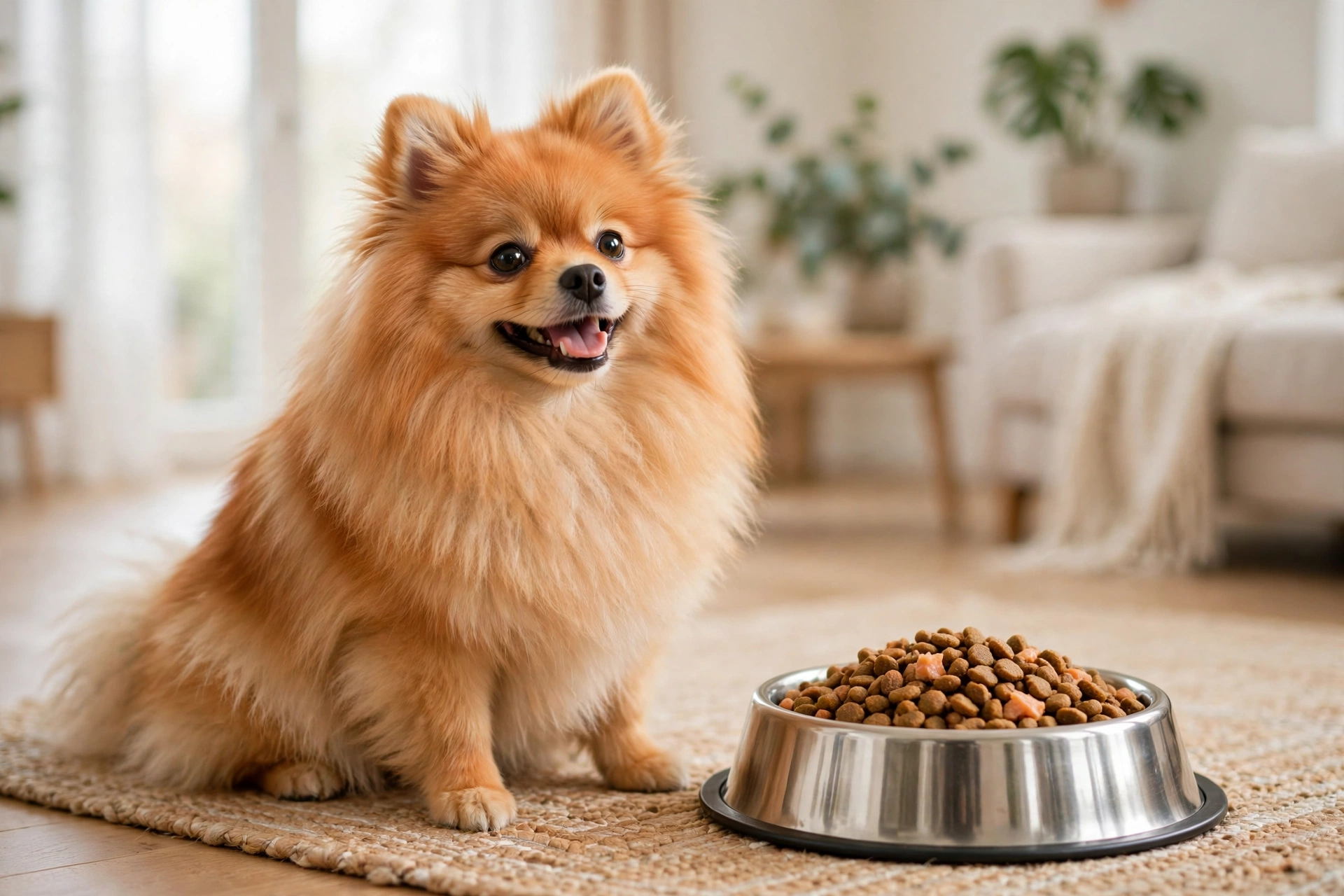
Best Food for Pomeranian Skin Allergies: Salmon-based Picks for coat loss and alopecia
Your Pomeranian scratches all evening. He chews his paws, rubs his belly on the carpet, and wakes you up at night with that constant licking sound. You have tried a new shampoo and checked for fleas, yet the red patches under all that fur keep coming back. When the itch never really stops, the food bowl is often part of the problem.
Pomeranians are prone to skin trouble, and their thick double coat makes it worse in two ways. It traps pollen, dust, and flea dirt close to the skin, and it hides the first red spots until the itch is already bad. This guide sorts out whether food is the cause, which ingredients to feed and which to skip, how to run a proper 8 to 12 week elimination diet for a tiny dog, and which 6 foods work best for this breed.
Table of Contents
- Why Pomeranians Get Itchy Skin
- Food Allergy or Something Else
- What to Feed and What to Avoid
- The Elimination Diet: Your 8 to 12 Week Plan
- Best Food for Pomeranian With Skin Allergies: 6 Picks Compared
- Purina Pro Plan Sensitive Skin and Stomach Small Breed Salmon and Rice
- Royal Canin Breed Health Nutrition Pomeranian Adult
- Natural Balance Limited Ingredient Grain Free Salmon and Sweet Potato Small Breed
- Hill’s Science Diet Sensitive Stomach and Skin Small and Mini Adult 1 to 6
- Wellness Simple Limited Ingredient Diet Grain Free Small Breed Salmon and Potato
- Blue Buffalo Basics Limited Ingredient Diet Small Breed Turkey and Potato
- Pros and Cons
- Common Mistakes
- Expert Tips
- What to Look For When You Buy
- What to Avoid on the Label
- Key Takeaways
Why Pomeranian Skin Is Not Always Allergy
Coat loss in a Pomeranian is often Alopecia X, not allergy: symmetrical hair loss that does not itch, with the coat going dull and thin first. Food will not fix it, and switching foods will not help.
The thick double coat hides the skin. Part it and look, and feel the ribs with your hands, because the fluff hides weight gain too.
At 3 to 7 lb, a Pom eats very little, so a prescription or limited-ingredient diet costs little per month. Price should not decide the trial here.
Pom puppies need frequent small meals: a tiny puppy should not go long without food, or blood sugar can drop.
Why Pomeranians Get Itchy Skin
A full grown Pomeranian weighs just 3 to 7 pounds, yet he carries one of the thickest coats of any toy breed. That double coat is the breed’s trademark, and it is also the reason skin trouble gets missed. Allergens settle deep in the fur, close to the skin, and the first red patches stay hidden under the fluff until the itch is strong enough to make your dog chew and scratch.
Three things drive most Pomeranian skin trouble. Food is one. Fleas are another, and a Pom’s small size gives fleas plenty of warm hiding spots, so flea allergy is common in this breed. The third group is contact and airborne triggers: pollen, grass, dust mites, cheap shampoos, laundry detergent on bedding, and even a plastic food bowl. This guide deals with food, but the other two still matter, and we cover them below.
The Double Coat Hides Early Signs
Part the fur on your Pom’s belly or behind his ears once a week and look at the skin itself. Healthy Pom skin is pale pink and calm. Early allergy signs are faint redness, a few dry flakes, or small pink bumps. By the time you see hair thinning or a hot spot, the problem has been going for weeks.
Brush the coat 2 to 3 times a week with a slicker brush. Brushing pulls trapped pollen and dust out of the fur, spreads the skin’s natural oils, and gives you a weekly look at the skin underneath. Bathe about once every 3 weeks with a gentle, fragrance free dog shampoo. Bathing more often strips the skin and dries it out, which makes itching worse.
Takeaway: part the fur and look at the skin every week. The coat hides the first signs, so you have to go looking for them.
Food Triggers That Show Up Most
When food is the cause, the itch usually shows up on the belly, paws, ears, and around the eyes. Red ears that keep flaring, paws that get chewed raw, and a belly rash that comes and goes with meals all point toward food. Some dogs also get soft stools or a gassy stomach at the same time, which is another clue the bowl is involved.
Pomeranians react most often to food additives, not just to foods themselves. Artificial colors, flavors, and preservatives sit high on the suspect list for this breed, and they hide in cheap kibble and colored treats. The common protein triggers are chicken, beef, dairy, and eggs. Wheat, soy, and corn show up less often as true allergies, but they still appear in cheap fillers. The only way to know your own dog’s trigger is a food trial.
Takeaway: belly, paws, and ears are the food allergy zones. If the itch lives there, start with the food.
Food Allergy or Something Else
Food allergy itch runs all year, often with ear infections and loose stools; environmental itch flares with the seasons. Only a strict eight-week elimination trial proves a food allergy. Our Best Dog Food for Skin Allergies guide explains how to run one, and Food Allergy Symptoms in Dogs and Best Dog Food for Allergies cover the signs and the triggers. For general itch relief, see Best Dog Food for Dogs With Itchy Skin.
What to Feed and What to Avoid
No big competitor lays this out as a straight list, so here it is. During a food trial, and while your Pomeranian’s skin is healing, feed from the first list and skip everything on the second list. One wrong treat can undo weeks of progress.
Feed more of these:
- Novel proteins your dog has rarely eaten, such as salmon, turkey, duck, or lamb
- Omega 3 rich foods such as fish oil and flaxseed for the skin barrier
- Sweet potato and pumpkin, gentle carbs that are easy on the stomach
- Oatmeal and rice, mild grains most dogs handle well
- Plain cooked carrots and green beans as low calorie treats
- Fresh water, kept out all day
Avoid these:
- Beef, chicken, dairy, and eggs, the proteins that trigger most food allergies
- Wheat, corn, and soy, common fillers that add nothing your dog needs
- Artificial colors, flavors, and preservatives, which Poms react to more than most breeds
- Table scraps, which mix unknown proteins into a clean trial
- Flavored treats, rawhide, and chews with mystery meat
- Chicken fat, chicken meal, or beef meal anywhere on the label, even near the end
- Sugary treats and colored biscuits
Takeaway: one protein, one carb, nothing extra. That is the whole rule while the skin heals.
The Elimination Diet: Your 8 to 12 Week Plan
An elimination diet is the only home test that can prove food is the problem. It is slow and strict, and it works when you follow it all the way through. Skin turns over slowly, so results take weeks, not days. Most owners who say the trial failed stopped at week 3. Research on elimination diets backs the long timeline: at least 8 weeks is needed for a full diagnosis and a real drop in symptoms.
Start with one food from the list below, one your dog has never eaten. Switch over 7 days, mixing a little more of the new food into the old food each day. A sudden switch can upset the stomach, and you want the trial to test the food, not the switch.
Then feed only that food and water for 8 to 12 weeks. No treats, no table scraps, no flavored chews, no sharing from your plate. If your dog needs pills, ask your vet about a plain pill pocket that matches the trial protein, or hide the pill in a small ball of the trial food. Keep a short diary: each week, score the itch from 1 to 10 and note red spots, ear redness, and stool quality. A photo of the belly once a week shows progress your memory will miss.
Portions matter more than most Pom owners think. A 3 to 12 pound dog eats only about 1 third to 1 cup of dry food per day, split into 2 meals. A 5 pound Pom eats about half a cup a day. Use a measuring cup, not a scoop by eye, because a tiny dog gains weight on a very small extra amount. Puppies need 3 to 4 small meals a day. A tiny Pom puppy should not go long without food, or blood sugar can drop.
At week 8, judge the result. If the itch has dropped by half or more, the food was part of the problem. Keep feeding it and talk to your vet about the next step. If nothing has changed at all, food is probably not the cause.
Once the skin is calm, test one old protein at a time. Add it back for 1 to 2 weeks and watch. If the itch flares, you have found a trigger. One protein at a time. Two at once and you will not know which one helped.
Takeaway: 8 to 12 weeks, nothing but the trial food, one diary entry a week. That is the test.
Best Food for Pomeranian With Skin Allergies: 6 Picks Compared
These 6 foods cover every stage, from a first try you can buy at any pet store to a breed specific formula built for the Pom coat. All of them are real products sold in the US, and every one comes in a small breed size with kibble a tiny jaw can handle. This guide follows the same method as our best food for Yorkshire Terriers with skin allergies.
| Product | Best For | Key Feature | Kcal/cup | Cost/month |
|---|---|---|---|---|
| Purina Pro Plan Sensitive Skin and Stomach Small Breed Salmon and Rice | Best overall pick | Real salmon first, live probiotics, omega 6 for skin and coat | 478 | ~$9 to $27/mo |
| Royal Canin Breed Health Nutrition Pomeranian Adult | Breed specific care | EPA and DHA for the double coat, heart shaped mini kibble, joint support | 352 | ~$19 to $28/mo |
| Natural Balance Limited Ingredient Grain Free Salmon and Sweet Potato Small Breed | Elimination diets | One protein, one carb, short ingredient list, no chicken or soy | 373 | ~$21/mo |
| Hill’s Science Diet Sensitive Stomach and Skin Small and Mini Adult 1 to 6 | Sensitive stomachs | Prebiotic fiber, omega 6 and vitamin E, gentle on digestion | 380 | ~$14/mo |
| Wellness Simple Limited Ingredient Diet Grain Free Small Breed Salmon and Potato | Novel protein diets | Single salmon protein, no chicken, wheat, corn, dairy, or eggs | 450 | ~$15 to $45/mo |
| Blue Buffalo Basics Limited Ingredient Diet Small Breed Turkey and Potato | Picky eaters | Single turkey protein, pumpkin for digestion, small kibble | 404 | ~$7 to $15/mo |
Prices are Chewy ‘buy once’ prices as retrieved Nov 11, 2026; cost/month is for a 5-lb adult Pomeranian.
Purina Pro Plan Sensitive Skin and Stomach Small Breed Salmon and Rice
This is our top pick for most Pomeranians with skin allergies, and the easiest place to start. Real salmon leads the ingredient list, a protein your dog has likely eaten less often than chicken or beef. Oatmeal and rice are gentle on the stomach, and the formula skips corn, wheat, and soy. It is widely stocked and mid priced, so it works well as the first food in a trial.
Live probiotics support gut health, and the gut and the skin are closely linked in dogs with allergies. Sunflower oil adds omega 6 fatty acids for the skin and coat, and the small breed kibble fits a tiny jaw. Protein runs 28 percent, which suits an active little dog, and the food carries 465 calories per cup.
Takeaway: the best first try for most itchy Poms, with salmon, probiotics, and omega fats in one bag.
Royal Canin Breed Health Nutrition Pomeranian Adult
This is the only food on the list made for this breed alone. The kibble is heart shaped and sized for a Pomeranian jaw, so it crunches clean and helps keep small teeth cleaner. The recipe carries EPA and DHA omega 3 fats tuned for the thick double coat, and owners often see less dry flaking within a few weeks. It also adds nutrients for the knee joints, which matters for a toy breed prone to slipping kneecaps.
The calorie level fits a 3 to 7 pound dog without weight creep. The wet loaf version of the same formula works well as a topper for a picky Pom. One thing to know: the recipe is built on chicken, so if chicken turns out to be your dog’s trigger, move to a salmon or turkey pick instead.
Takeaway: the breed specific pick, built for the Pom coat, jaw, and joints, as long as chicken is not the trigger.
Natural Balance Limited Ingredient Grain Free Salmon and Sweet Potato Small Breed
When you run a strict elimination diet, a short ingredient list is your best friend. This formula keeps it simple: salmon as the single animal protein and sweet potato as the single carbohydrate. No chicken, no beef, no soy, and no artificial colors or flavors.
The kibble is sized for small jaws, and the food carries omega 3 and omega 6 fatty acids for skin and coat health. It meets AAFCO standards for adult maintenance and runs about 373 calories per cup. The 4 pound bag stays fresh for a Pom household.
Takeaway: one protein, one carb, nothing to hide. The cleanest trial food on this list.
Hill’s Science Diet Sensitive Stomach and Skin Small and Mini Adult 1 to 6
This pick suits Poms whose itch comes with a sensitive stomach. A prebiotic fiber blend feeds the good gut bacteria, which firms up stools within about a week for most dogs. Omega 6 fatty acids and vitamin E support the skin barrier.
The kibble is small and easy to chew, and the food is widely stocked, so it is easy to keep on hand. It carries the backing of feeding trials, not just a formula on paper. One thing to know: the protein here is chicken, so this is the wrong pick if your Pom reacts to chicken.
Takeaway: the best pick when itch and a soft stomach show up together, as long as chicken is not the trigger.
Wellness Simple Limited Ingredient Diet Grain Free Small Breed Salmon and Potato
Salmon is a protein most Pomeranians have rarely eaten, which is exactly what you want in a novel protein diet. This recipe starts with real salmon as the single animal protein, then adds potatoes for gentle energy. It skips chicken, wheat, corn, dairy, and eggs.
The kibble is small, which suits a Pom mouth, and the food adds probiotics for gut health plus omega fats for the coat. It is grain free, which suits owners who want to keep grains out of the diet, and the price sits fairly for a limited ingredient food.
Takeaway: salmon and potato for dogs that do better without chicken or beef.
Blue Buffalo Basics Limited Ingredient Diet Small Breed Turkey and Potato
Picky Poms are a real thing, and this pick wins over more of them than most trial foods. Turkey leads as the single animal protein, pumpkin helps digestion, and the recipe skips chicken, beef, corn, wheat, soy, dairy, and eggs.
The kibble size fits a tiny jaw, and the turkey flavor tends to win over dogs that turn away from fish based foods. Keep one thing in mind: this recipe is built on potato, so if your vet suspects potato is part of the problem, pick a sweet potato or oatmeal based food instead.
Takeaway: a true novel protein in turkey, with a short list of ingredients and a taste picky Poms accept.
Pros and Cons
Switching food is the cheapest allergy test you can run, but it is not magic.
Pros:
- A limited ingredient diet can calm itching, red ears, and belly rashes within 8 to 12 weeks
- One protein and one carb make it easy to spot the trigger
- Omega fats in these foods support the skin barrier and coat shine
- Many dogs also get firmer stools and less gas on a simpler diet
- Small breed kibble fits a tiny jaw and helps small teeth stay cleaner
- Costs far less than allergy testing or months of medicated baths
Cons:
- Results take 8 to 12 weeks, which tests every owner’s patience
- One hidden treat can ruin a whole trial
- Some dogs dislike the taste of fish based food at first
- Food will not fix flea allergy, pollen allergy, or contact allergy
- Breed specific and limited ingredient foods cost more per pound than grocery kibble
Takeaway: the pros are real, but only if you give the trial the full 8 to 12 weeks.
Common Mistakes
Most failed food trials fail for the same few reasons.
Quitting at week 3. Skin heals slowly. An owner who stops at 3 weeks never learns whether the food would have worked. Mark week 8 on your calendar on day one.
Sneaking treats. A single biscuit with chicken meal in it can flare the itch and make you think the trial food failed. During the trial, the trial kibble is the treat.
Changing two things at once. New food plus a new shampoo plus a new supplement tells you nothing when the itch improves. Change the food first.
Reading only the front of the bag. A bag can say sensitive skin in big letters and still list beef meal as the third ingredient. Read the full ingredient list every time.
Skipping the vet. Sore ears that keep flaring, open sores, or hair loss in patches need a vet visit, not a new bag of food.
Over bathing. A Pom bathed every week dries out fast. Stick to about once every 3 weeks unless your vet says otherwise.
Takeaway: the trial fails when treats sneak in or when owners quit early. Guard both.
Expert Tips
Keep a photo diary. One photo of the belly and one of the ears each week shows progress that daily watching misses.
Feed measured meals twice a day. Pomeranians gain weight fast, and extra weight makes everything worse, from itch to joints. Use a measuring cup, not a scoop by eye, and keep treats under 10 percent of daily calories.
Ask your vet about an omega 3 supplement before you add one. The right dose helps the skin, but guessing can upset a tiny stomach.
Groom with the skin in mind. Brush the double coat 2 to 3 times a week and check the skin as you go.
Takeaway: measure the food, photo the skin, and ask the vet before adding any supplement.
What to Look For When You Buy
Use this checklist every time you pick up a new bag.
- An AAFCO statement that says complete and balanced for adult maintenance
- A named protein first on the label, such as salmon, turkey, or duck, not a vague meat meal, as we explain in our best hypoallergenic dog food guide
- One protein for a trial, so you always know what your dog ate
- Omega 3 and omega 6 fats listed in the ingredients, from fish oil, flaxseed, or salmon oil
- Small breed kibble that fits a Pomeranian jaw
- A clear feeding guide on the bag, with amounts by weight, ideally down to 3 pounds
- No artificial colors, flavors, or preservatives
- A small bag size, so the food stays fresh for a dog that eats so little
Takeaway: named protein first, AAFCO statement on the bag, small kibble, no additives.
What to Avoid on the Label
The label tells the truth if you read all of it.
- Beef, chicken, or dairy in the first 5 ingredients when your dog is mid trial
- Vague terms such as meat meal, animal fat, or poultry by product meal with no animal named
- Long lists of fillers, such as corn gluten meal, wheat middlings, and soy flour
- Artificial colors such as Red 40 or Yellow 5, which add nothing but risk
- Added sugars such as corn syrup or molasses
- A bag with no AAFCO statement at all
- Kibble sized for medium or large dogs, which a Pom jaw cannot crunch well
Takeaway: if the label hides the protein source behind vague words, the food is not a trial food.
Key Takeaways
- The best food for a Pomeranian with skin allergies is a limited ingredient diet with one gentle protein, such as salmon or turkey, and omega fats for skin support.
- Our top pick is Purina Pro Plan Sensitive Skin and Stomach Small Breed Salmon and Rice, with Natural Balance Limited Ingredient Salmon and Sweet Potato Small Breed as the best choice for a strict elimination trial.
- Run the trial for 8 to 12 weeks with nothing but the trial food, and judge at week 8.
- Part the double coat and check the skin every week, because the coat hides the first signs of trouble.
- Keep flea control current all year, since flea allergy is a top cause of itch in this breed.
- Feed measured meals: a 3 to 12 pound dog eats about 1 third to 1 cup per day, split into 2 meals.
- Bathe about once every 3 weeks, use stainless steel bowls, and read the full label every time.
Your Pomeranian does not need the most expensive food on the shelf. He needs the right food, fed the right way, for long enough to work. Start with one protein, give it 8 to 12 weeks, and let the skin tell you the answer. If the itch stays put after a full trial, your vet can step in with a hydrolyzed diet or allergy testing.
Pick one food from the list above, start the switch this week, and mark week 8 on your calendar today. If you want to compare more options first, our best limited ingredient dog food guide rounds up the simplest recipes on the market.
This guide is for information only, check with your vet for your dog’s specific needs.
Frequently Asked Questions
What is the best food for a Pomeranian with skin allergies?
A limited ingredient diet with one gentle protein, such as salmon or turkey, plus omega fats for skin support. Our top pick is Purina Pro Plan Sensitive Skin and Stomach Small Breed Salmon and Rice, and Natural Balance Limited Ingredient Salmon and Sweet Potato Small Breed is the best choice for a strict elimination trial. If the coat is thinning but your dog is not itchy, ask your vet about Alopecia X. That is a different problem, and food will not fix it.
What foods trigger skin allergies in Pomeranians?
The most common triggers are chicken, beef, dairy, and eggs, plus food additives such as artificial colors, flavors, and preservatives. Wheat, soy, and corn show up less often. The only way to know your dog’s trigger is an 8 to 12 week elimination diet.
How long does an elimination diet take for a Pomeranian?
At least 8 weeks, and 8 to 12 weeks is the full trial. Feed only the trial food and water, keep a weekly itch diary, and judge the result at week 8. Most owners who quit at week 3 never learn whether the food would have worked.
Is grain free better for a Pomeranian with itchy skin?
Not always. Many Poms do fine with gentle grains such as oatmeal and rice. Pick a limited ingredient food first, and go grain free only if grains turn out to be the trigger.
Can I feed my Pomeranian Royal Canin Pomeranian Adult if he has skin allergies?
Yes, if chicken is not his trigger. It is made for the breed, with EPA and DHA for the double coat and mini kibble for tiny jaws. If chicken is the trigger, switch to a salmon or turkey based limited ingredient food.
How much should I feed a Pomeranian with skin allergies?
A 3 to 12 pound dog eats about 1 third to 1 cup of dry food per day, split into 2 meals. A 5 pound Pom eats about half a cup a day. Use a measuring cup and follow the feeding guide on the bag.
One Comment