
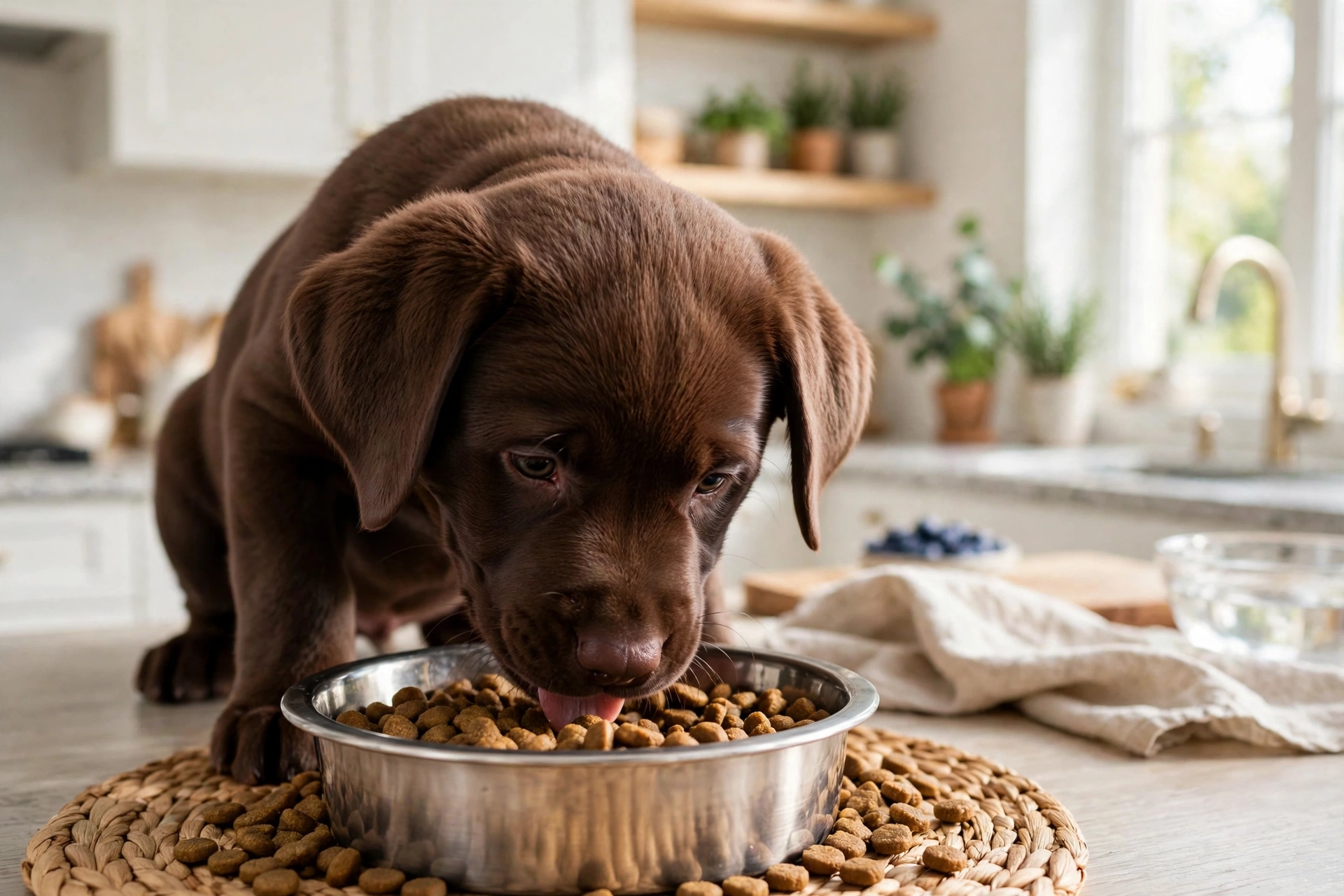
Best Puppy Food for Labradors: Slow-growth feeding for fast-growing joints (6 Picks 2026)
A Labrador puppy is a blur of energy, bouncing around the house, chewing everything in sight, and tripling in size before you have had time to puppy-proof the garden furniture. Finding the best puppy food for Labradors is not just about picking a bag with a puppy on the label. Because Labs are a large breed, what you feed during the first year directly shapes how their bones, joints, and muscles develop. Adult Labs weigh 55 to 80 lb and live about 12 to 13 years, and this is a breed that will overeat if you let it: Labradors carry a gene variant that increases appetite, so measured portions are joint protection, not just weight control. The Purina lifetime study found lean Labradors lived about 1.8 years longer, with later onset of hip dysplasia. Exercise-induced collapse is another verified Lab risk, so keep exercise sensible while your puppy grows. This guide covers six puppy foods that are well suited to growing Labradors, what to look for on the label, and the feeding mistakes new Lab owners make most often. For the general large-breed background, see our best puppy food for large breeds guide.
The best puppy food for Labradors is a large-breed puppy formula with controlled calcium, DHA for brain development, and calories measured for growth. Top pick: Royal Canin Labrador Retriever Puppy, with kibble that slows fast eaters. Purina Pro Plan is the best value. Feed three to four meals a day, and switch to adult food at 12 to 15 months.
In This Guide
- Key Takeaways
- 6 Best Puppy Foods for Labradors (2026)
- How to Choose Puppy Food for Your Labrador
- How Much and How Often to Feed Your Lab Puppy
- What to Avoid
- Pros and Cons
- When Your Lab Puppy Gets Loose Stools: What to Do First
- The Bottom Line
Key Takeaways
- Always choose a large breed puppy formula. It has controlled calcium and phosphorus levels that support slow, steady skeletal growth.
- Look for DHA from fish oil. It supports your Lab puppy’s brain and vision development in the early months, when it matters most.
- Named meat first: chicken, lamb, or fish should top the ingredient list, not a by-product meal or filler.
- Joint support matters early: glucosamine and chondroitin in the formula help protect hips and elbows for the long run.
- Manage calories carefully. Labrador puppies gain weight fast, and extra pounds stress developing joints.
| Product | Best For | Key Feature | Kcal/Cup | Cost/Month |
|---|---|---|---|---|
| Royal Canin Labrador Retriever Puppy | Breed-specific feeding and diet | Kibble engineered to slow fast eaters + controlled growth | 307 | ~$84/mo |
| Purina Pro Plan Large Breed Puppy | Active, high-energy puppies | High protein with DHA for brain development | 419 | ~$57 to $82/mo |
| Hill’s Science Diet Puppy Large Breed (Lamb Meal & Brown Rice) | Puppies needing a poultry alternative | Lamb-based recipe with natural glucosamine and chondroitin | 382 | ~$88/mo |
| Diamond Naturals Large Breed Puppy | Best value | Balanced calcium/phosphorus from lamb at a budget price | 414 | ~$39/mo |
| Wellness Complete Health Large Breed Puppy | Nutrient-dense natural formula | Deboned chicken, DHA, and vitamins A and E | 367 | ~$75/mo |
| Blue Buffalo Life Protection Large Breed Puppy | Holistic feeding and diet | LifeSource Bits with antioxidants plus DHA | 385 | ~$43/mo |
Prices checked on Chewy on November 14, 2026. Cost per month is for a 6-month-old Labrador puppy expected to reach 67 lb as an adult.
6 Best Puppy Foods for Labradors (2026)
Royal Canin Labrador Retriever Puppy
When it comes to the best puppy food for Labradors, the most precisely tailored option on the market is Royal Canin’s breed-specific formula, made for Labrador puppies up to 15 months of age. It is formulated with targeted levels of protein, calcium, and phosphorus to support healthy bone and joint development at a controlled pace, exactly what a fast-growing Lab needs.
One standout feature is the exclusive kibble shape, size, and texture, designed to encourage chewing and slow down eating. Labrador puppies are notorious for inhaling their food, and slower eating supports better digestion and a feeling of fullness. The recipe also includes ingredients to support your puppy’s natural immune defenses and digestive health.
Who it’s for: Lab owners who want zero guesswork. Every aspect of the formula is designed around the Labrador physique and growth pattern. The main trade-off is the price: it costs more than all-breed or general large breed puppy foods, and the first ingredient is chicken by-product meal rather than a named whole meat.
Purina Pro Plan Large Breed Puppy
Purina Pro Plan Large Breed Puppy is one of the most recommended large breed puppy foods among owners of working and sporting breeds, and Labs fit right in. Formulated with DHA from omega-rich fish oil for brain and vision development, it also contains antioxidants to support the developing immune system and calcium plus phosphorus for strong bones and teeth.
The Chicken & Rice formula leads with real chicken as the first ingredient, delivering the high-quality protein a growing Lab needs to build lean muscle. The large breed puppy formulation keeps mineral levels in the safe range for large breeds, so growth stays steady rather than explosive.
Who it’s for: Energetic puppies with big appetites and active households. It is also widely available across US pet retailers, which makes staying on one food through the whole first year easy. If your Lab puppy seems to gain weight quickly, portion carefully. The calorie density is on the higher side.
Hill’s Science Diet Puppy Large Breed (Lamb Meal & Brown Rice)
If you would rather not lead with poultry, Hill’s Science Diet Puppy Large Breed (Lamb Meal & Brown Rice) is a strong alternative. Lamb meal is the first ingredient, and the recipe includes natural sources of glucosamine and chondroitin for joint health, a real plus for a breed prone to hip and elbow issues later in life.
Based on ingredient analysis, brand reputation, and owner reviews, this formula earns its place through consistency: a stable, predictable nutrient profile with balanced minerals for controlled bone growth, DHA from fish oil for eye and brain development, and no artificial colors, flavors, or preservatives. The lamb base also suits puppies that seem to do better on a break from chicken-heavy diets.
Who it’s for: Puppies with mild chicken sensitivity, or owners who simply prefer rotating proteins. It does contain some corn gluten meal, so it is not the pick for puppies with grain sensitivities.
Diamond Naturals Large Breed Puppy
Diamond Naturals Large Breed Puppy is the standout pick for owners who want proper large-breed feeding and diet without the premium price tag. It receives the bulk of its meat protein from fresh lamb and lamb meal, and the recipe is designed with the calcium-to-phosphorus balance that large breed puppies need, the single most important nutrient ratio for growing Labs.
The formula is free of anonymous meat by-products, generic fillers, and artificial preservatives, which is rare at this price point. It also carries an AAFCO “all life stages” nutrient profile, so it remains suitable as your Lab transitions toward adult food. Like our adult Labradors guide covers, consistency through the growth period pays off.
Who it’s for: Budget-conscious owners who refuse to compromise on the basics. Feed strictly by the package guidelines for expected adult weight. The food is reasonably priced, but overfeeding is still the number-one risk.
Wellness Complete Health Large Breed Puppy
Wellness Complete Health Large Breed Puppy takes a nutrient-dense, natural approach: deboned chicken and chicken meal lead the ingredient list, and the recipe includes DHA alongside vitamins A and E for immune support and a glossy coat. Vegetables like spinach and carrots contribute antioxidants and natural minerals, including calcium for bone development.
With around 29% protein and moderate fat levels, it sits in the sweet spot for Labrador puppy growth, enough fuel for a puppy that gains roughly two pounds a week, without pushing excess calories. The formula is made in the USA and avoids artificial flavors and preservatives.
Who it’s for: Owners who want a natural-leaning, whole-food-style recipe with recognizable ingredients. It sits at the pricier end, but the concentrated nutrient profile means you may feed slightly less per meal.
Blue Buffalo Life Protection Large Breed Puppy
Blue Buffalo Life Protection Formula Puppy Large Breed (Chicken & Oatmeal) pairs deboned chicken with wholesome whole grains like oatmeal, plus the brand’s signature LifeSource Bits (a blend of antioxidants, vitamins, and minerals cold-formed to preserve potency). DHA from fish oil supports cognitive development, and the formula includes calcium and phosphorus balanced for large breed growth.
The recipe contains no poultry by-product meals, corn, wheat, soy, artificial flavors, or preservatives. The kibble size is designed for larger jaws, which helps Lab puppies chew properly instead of gulping.
Who it’s for: Owners who want a holistic-style formula with broad vitamin and mineral coverage. Like all calorie-dense puppy foods, it needs careful portioning for a breed that is famous for begging.
How to Choose Puppy Food for Your Labrador
Start with a large breed puppy formula
This is the single most important rule: large breed puppy formulas control calcium and phosphorus to keep skeletal growth slow and steady, and most aim for about 1.0 to 1.5% calcium. Feeding a standard puppy food with calcium levels meant for smaller breeds raises the risk of developmental orthopedic disease in Labs, including elbow dysplasia, which affects roughly 17 to 21% of the breed. Our guide to the best dog food for Labradors explains the same principle for adult Labs, and the large-breed hub covers the calcium detail in full.
Check protein quality and amount
Look for a named meat (chicken, lamb, beef, or fish) as the first ingredient, and a total protein level of around 25 to 30% for Lab puppies. Protein builds the lean muscle that carries a Lab’s active frame. Minimize foods that list by-product meals, meat meals of unnamed origin, or fillers like corn and wheat near the top of the label. If label reading feels like a foreign language, our complete guide to reading dog food labels walks through every line.
Make sure DHA is included
Omega-3 fatty acids, specifically DHA from fish oil or algae, support brain and eye development during the first months of life. Most quality large breed puppy formulas include it, but check the guaranteed analysis or ingredient list rather than assuming. A DHA-rich diet during puppyhood is one of the simplest investments in a trainable, focused adult Lab.
Look for joint support ingredients
Labradors are one of the breeds most susceptible to hip and elbow dysplasia. Foods that include glucosamine and chondroitin from natural sources (like chicken meal) give growing joints a head start. These compounds work best as prevention, so starting them during puppyhood (not after problems appear) is the smart move.
Control calories and measure portions
Labs are famous for their endless appetites, and Labrador puppies can pile on weight alarmingly fast. Excess weight during growth stresses developing joints and raises the lifetime risk of orthopedic problems. Choose a food with moderate calorie density, weigh portions with a kitchen scale for accuracy, and follow the feeding amounts for your puppy’s expected adult weight, not their current weight. Our puppy feeding schedule guide covers how much and how often to feed by age.
Confirm the AAFCO statement
Every bag should carry an AAFCO statement confirming the food is formulated for “growth” or “all life stages.” This is your baseline guarantee that the recipe meets established nutrient profiles for puppies. If a food lacks this statement, don’t feed it to your growing Lab.
How Much and How Often to Feed Your Lab Puppy
One of the questions new Lab owners ask most is how much to actually put in the bowl. Labrador puppies grow from a few ounces at birth to around 70 pounds at maturity, so portions change quickly. These are general guidelines. Always check the feeding chart on your specific food and confirm with your vet:
| Product | Kcal/Cup | Price | Price/lb | Daily Feeding | Cost/Month |
|---|---|---|---|---|---|
| Royal Canin Labrador Retriever Puppy | 307 | $104.99 / 30 lb | $3.50/lb | 4.23 cups/day | ~$84/mo |
| Purina Pro Plan Large Breed Puppy | 419 | $74.98 / 34 lb | $2.21/lb | 3.67 to 5.25 cups/day | ~$57 to $82/mo |
| Hill’s Science Diet Puppy Large Breed (Lamb Meal & Brown Rice) | 382 | $86.99 / 30 lb | $2.90/lb | 4.5 cups/day | ~$88/mo |
| Diamond Naturals Large Breed Puppy | 414 | $54.99 / 40 lb | $1.37/lb | 3.75 cups/day | ~$39/mo |
| Wellness Complete Health Large Breed Puppy | 367 | $69.98 / 30 lb | $2.33/lb | 4.7 cups/day | ~$75/mo |
| Blue Buffalo Life Protection Large Breed Puppy | 385 | $79.97 / 34 lb | $2.35/lb | 2.6 cups/day | ~$43/mo |
Amounts are for a 6-month-old Labrador puppy expected to reach 67 lb as an adult, at an assumed current weight of about 37 to 40 lb. Feed 4 meals a day at 8 to 12 weeks, 3 meals at 3 to 6 months, and 2 meals at 6 to 12 months, then transition to adult food at 12 to 15 months. Prices checked on Chewy on November 14, 2026. For the full feeding schedule, see our Labrador Feeding Guide. Fresh food is not one of the 6 picks: for a puppy heading for 67 lb, fresh food costs several times more than kibble, so we have not priced it as a pick.
A healthy Lab puppy should have a visible waist when viewed from above and ribs you can feel (but not see) under a thin layer of fat. Labradors are experts at convincing you they are starving. Chewing on shoes, counter-surfing, and dramatic sighing at the empty bowl are behavioral quirks, not hunger signals. Feeding extra “because he seems hungry” is how Lab puppies become overweight juveniles with stressed joints.
When you eventually move to adult food at 12 to 15 months, transition over 7 to 10 days by mixing increasing amounts of the new food into the old. Some slow-maturing Labs are not ready for adult food until 15 to 18 months. Your vet can confirm based on growth and body condition. For the later years, see our senior labrador food guide.
What to Avoid
- Standard (non-large-breed) puppy food: often too high in calcium for large breeds, which can cause skeletal growth problems.
- Adult dog food before 12 months: Lab puppies need the extra calories, protein, and minerals of a puppy formula until 12 to 15 months of age.
- Overfeeding and free-feeding: a Lab puppy that is allowed to graze all day will almost certainly become overweight. Stick to measured meals.
- Too many treats: treats should make up no more than about 10% of daily calories. Lab puppies will happily eat far more than that if allowed.
- Grain-free without a reason: unless your puppy has a diagnosed grain sensitivity, there is no benefit, and grain-free diets have been associated with heart concerns in large breeds, so don’t switch on a trend.
- Switching foods abruptly: sudden changes cause digestive upset. Transition over 7 to 10 days using our safe food transition schedule.
- Supplements you don’t need: extra calcium or vitamin D on top of a complete puppy food can do more harm than good.
Pros and Cons
Large-breed puppy food is the right call for most Lab puppies, but it is not perfect for every home. Here is the honest balance.
Pros
- Controlled calcium and calories support steady bone growth and protect young joints.
- DHA in most large-breed puppy formulas supports brain and eye development.
- Larger kibble and breed-specific shapes slow down fast eaters.
- Clear feeding charts by age and weight make portions easy to measure.
Cons
- Large-breed puppy food costs more than standard puppy food.
- Labs are food-driven, so overfeeding is easy even on a good formula.
- Not every bag labelled “large breed” controls calcium, so read the label before you buy.
- Switching to adult food too early can upset steady growth.
When Your Lab Puppy Gets Loose Stools: What to Do First
Loose stools are the most common food worry in the first months with a Lab puppy, and most cases come from a food switch that moved too fast, too many treats, or food stolen off the floor. A Lab puppy that gulps meals, begs at the table, and raids the bin will test every rule here, so check the basics before you blame the bag. Keep the same food and the same measured portions for a few days, cut treats back to the 10% limit, and stop table scraps. If the loose stools started right after a food change, go back one step on the mix and hold there for two or three days. Plain boiled chicken and rice for a day or two can settle a mild upset stomach, then mix the regular food back in. Watch the water bowl too: a puppy with loose stools needs fresh water at all times, and one that stops drinking needs a vet the same day. Call your vet if the diarrhea lasts more than a day or two, if you see blood, if it vomits, or if it turns dull and tired. Puppies lose water fast, so act quickly when more than one warning sign shows up. A food that still causes loose stools after a slow switch is the wrong food for your puppy, and a lamb-based pick is worth trying next.
The Bottom Line
The best puppy food for Labradors is a large breed puppy formula with a named meat first, DHA for brain development, controlled calcium and phosphorus for steady bone growth, and joint-supporting nutrients. Diamond Naturals Large Breed Puppy is our top value pick. It nails the large-breed mineral balance at a friendly price. If you want a formula built specifically around the breed, Royal Canin Labrador Retriever Puppy removes all guesswork, and Purina Pro Plan Large Breed Puppy is the go-to for high-energy puppies that burn through calories.
Whichever you choose, measure every meal, keep your pup lean through the growth phase, and plan to transition to adult food at around 12 to 15 months. This guide is for information only. Check with your vet for your dog’s specific needs. If you share your home with another large breed, see our guides to the best puppy food for Golden Retrievers and the best puppy food for Rottweilers. Also considered, but not among our 6: Nutro Ultra Large Breed Puppy and Purina ONE SmartBlend Large Breed Puppy both appear on competitor lists, and we have not verified their label values for this guide, so they stay out of the picks. Before you buy any brand, ask the WSAVA questions: does the maker employ vets who specialize in feeding and run feeding trials? We have not claimed feeding-trial status for any brand here where we could not verify it.
Frequently Asked Questions
When should I switch my Labrador puppy to adult food?
Most Labs transition at 12 to 15 months, once skeletal growth is mostly complete. Some slow-maturing Labs are not ready until 15 to 18 months. Switch gradually over 7 to 10 days by mixing increasing amounts of adult food into the puppy food, and ask your vet to confirm the timing.
How much should I feed my Lab puppy each day?
Feed for your puppy’s expected adult weight, not their current weight, using the feeding chart on the bag. Most Lab puppies need 3 to 4 measured meals daily until about 6 months, then 2 meals. Weigh portions with a kitchen scale. Lab puppies gain weight fast, and extra pounds stress growing joints.
Do Labrador puppies really need large breed puppy food?
Yes. Large breed puppy formulas control calcium and phosphorus so bones grow at a steady pace. Regular puppy food can contain calcium levels meant for smaller breeds, which raises the risk of developmental skeletal problems in large breeds like Labradors.
What protein is best for Lab puppies?
Look for a named meat (chicken, lamb, or fish) as the first ingredient, with total protein around 25 to 30%. Quality protein builds the lean muscle that supports a Lab’s active frame. Avoid formulas led by by-product meals or unnamed meat meals.
Why does my Lab puppy have loose stools after switching food?
A fast switch is the most common cause. Lab puppies have sensitive stomachs, and a sudden change can upset digestion for a few days. Go back to the last mix that agreed with your puppy and hold it for two or three days, then move forward more slowly over 7 to 10 days. Cut treats and table scraps while the stomach settles. If the loose stools last more than a day or two, or you see blood, vomiting, or tiredness, call your vet.
What should I feed my Lab puppy in the first week after bringing it home?
Feed the same food your breeder was using, in the same amounts, for the first week. A new home is already a big change, and a new food on top of it often means loose stools and a puppy that will not eat. Ask your breeder what food and how much they fed, and buy a bag before pickup day. Once your puppy is settled, switch to your chosen large breed puppy food over 7 to 10 days by mixing in a little more each day.


3 Comments