
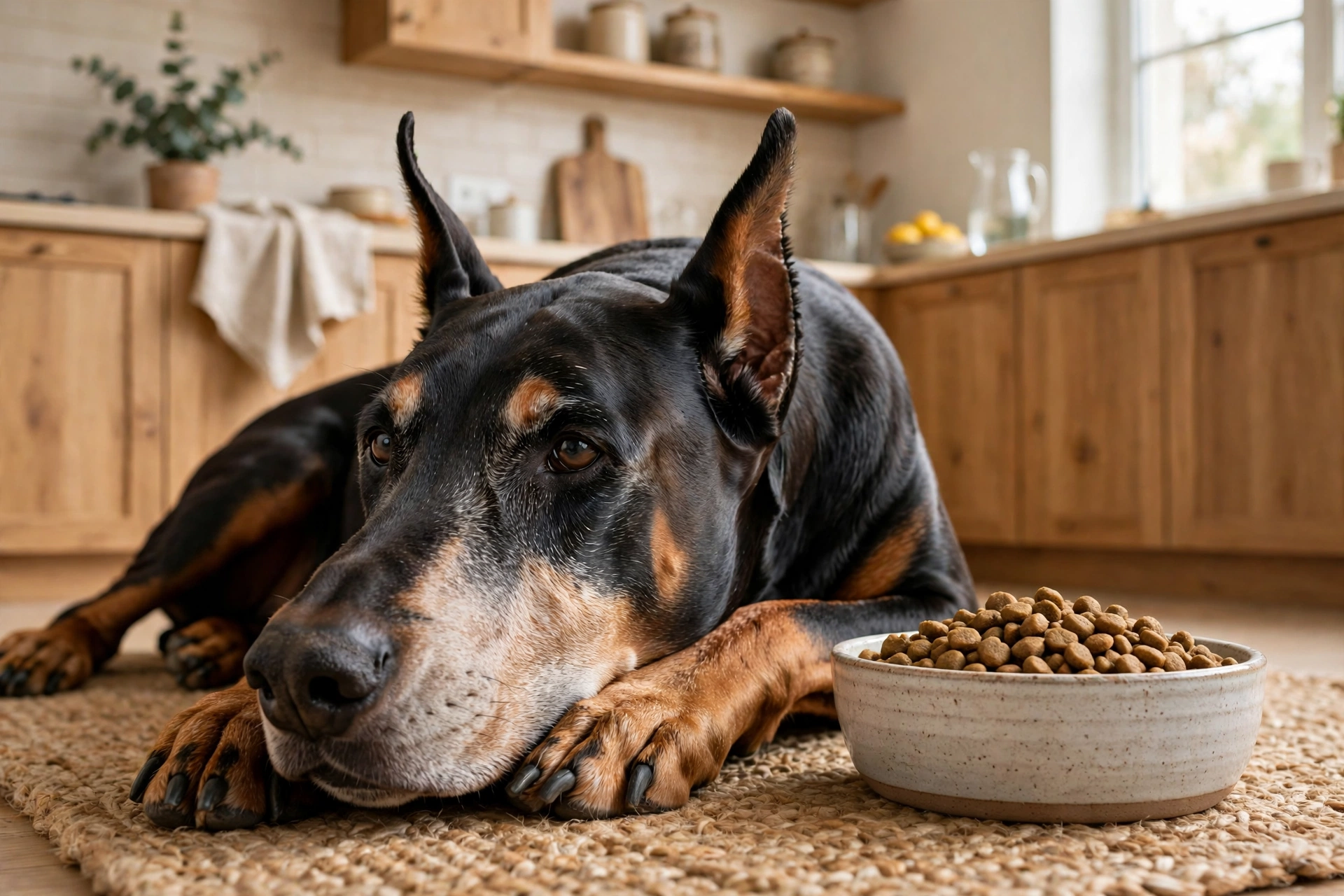
Best Senior Food for Doberman Pinschers: Heart & Joint Care for a Lean Senior (6 Picks 2026)
Finding the best senior Doberman Pinscher food is different from picking an adult formula and hoping it still fits. Dobermans age faster than small breeds, and by age seven or eight most of them are firmly in their senior years. Their metabolism slows, their joints carry years of wear, and their hearts, already a breed weak spot, deserve extra attention. The right senior food does not try to turn back the clock. It protects muscle, supports joints, controls calories, and stays easy on digestion.
This guide covers the best senior Doberman Pinscher food options available in the US in 2026. We compared the six senior large-breed formulas below on label values, joint and brain support, and how they portion for a 70 to 90 lb Doberman. You will find six senior large-breed picks, a clear look at what to check on the label, and the mistakes worth avoiding, including the grain-free question that matters for Dobermans. Whether your Doberman is just slowing down on long walks or is already a grey-muzzled retiree, this guide will help you choose with confidence.
Key Takeaways
- Most Dobermans count as seniors from around age 7, and large-breed senior formulas are built for their size, joints, and slower metabolism.
- Look for a named meat first, moderate fat, added glucosamine and chondroitin, omega-3s, and an AAFCO statement for adult maintenance or senior dogs.
- Do not cut protein just because your dog is older. Seniors need good-quality protein to hold on to muscle, and cutting it back is one of the fastest ways to lose the lean muscle that keeps a Doberman moving well.
- Be cautious with grain-free, legume-heavy diets: the FDA has investigated a possible link between those diets and dilated cardiomyopathy (DCM), and no causal link has been established. Talk to your vet about diet and heart health.
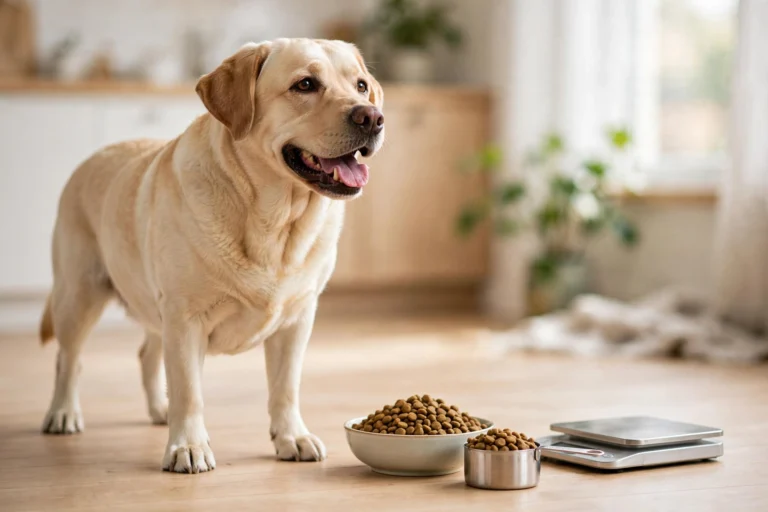
- Switch over 7 to 10 days and weigh every portion on a scale. A lean Doberman hides weight gain well under muscle, so the scale catches what the eye misses.
Best Senior Doberman Pinscher Food at a Glance
| Product | kcal/cup | Protein | Fat | Price (bag, store, date checked) | Cost / month |
|---|---|---|---|---|---|
| Hill’s Science Diet Healthy Mobility Large Breed, dry | 359 | 17.5% | 11.0% | $89.99 / 30 lb, Chewy, 2026-11-15 | Cannot compute |
| Purina Pro Plan Bright Mind Adult 7+ Large Breed Chicken & Rice, dry | 451 | 29% | 14% | $86.98 / 30 lb, Chewy, 2026-11-15 | Cannot compute |
| Royal Canin Large Aging 8+, dry | 308 | 25% | 15% | $109.99 / 30 lb, Chewy, 2026-11-15 | Cannot compute |
| Blue Buffalo Life Protection Formula Large Breed Senior Chicken & Brown Rice, dry | 344 to 345 | 20% | 10% | $72.97 / 30 lb, Chewy, 2026-11-15 | Cannot compute |
| Nutro Natural Choice Senior Large Breed Chicken & Brown Rice, dry | 348 | 22% | 12% | $74.97 / 30 lb, Chewy, 2026-11-15 | Cannot compute |
| Iams Proactive Health Healthy Aging (Mature Adult) Chicken, dry | 349 | 24% | 10.5% | $29.97 / 15 lb, PetSmart, 2026-11-15 | Cannot compute |
Prices checked on Chewy on 15 November 2026, except Iams (PetSmart, 15 November 2026; the 29.1 lb bag is $46.97 on Chewy). Purina Pro Plan Bright Mind Large Breed was listed at $78.99 / 30 lb at southernag but out of stock, so the Chewy price of $86.98 is used. Cost per month is Cannot compute for all six picks: no pick’s label feeding table covers the full 70 to 90 lb Doberman basis, so a monthly figure cannot be worked out from the labels.
Hill’s Science Diet Healthy Mobility Large Breed
Hill’s Science Diet Healthy Mobility Large Breed is the most rounded senior pick for a Doberman. It is an adult formula rather than a 7+ recipe, but it works well for seniors: chicken is a leading ingredient, and the nutrient profile aims at the two things senior Dobermans struggle with most, keeping muscle and keeping moving. At 359 kcal per cup, with 17.5% protein and 11.0% fat on the label, it is deliberately restrained. The formula includes glucosamine and chondroitin for joint support, balanced minerals for bone health, and omega-6 fatty acids plus vitamin E for skin and coat.
What makes it a good fit here is restraint. It does not overload an older, less active dog with calories, yet it keeps protein at a level that supports lean muscle rather than letting it waste away. Owners often report that their dogs stay keen on the food, which matters more than it sounds, because a senior who goes off food is a problem in itself. If you want one safe, widely available choice and do not want to overthink it, start here.
Who it is for: healthy senior Dobermans moving from adult food, especially those starting to stiffen after rest. Watch the portion carefully if your dog has already gained weight, and pair the food with short, regular walks rather than occasional long ones.
Purina Pro Plan Bright Mind Adult 7+ Large Breed
Purina Pro Plan Bright Mind Adult 7+ Large Breed is the pick for owners who have noticed their senior Doberman getting a little slower mentally, staring at walls, pacing at night, or seeming less sharp on familiar routes. Its headline feature is a blend of enhanced botanical oils, which Purina links to improved alertness and mental sharpness in dogs aged seven and older, alongside antioxidants, arginine, and B vitamins.
Beyond the cognitive angle, this is a solid large-breed senior food in its own right: chicken first, 451 kcal per cup, 29% protein and 14% fat on the guaranteed analysis, added glucosamine for joints, fish oil and fish meal for omega-3 and omega-6 fatty acids, and live probiotics for digestive health. That combination matters because senior Dobermans rarely have just one issue; a dog with a foggy brain often also has stiffer hips and a more sensitive stomach.
Who it is for: Dobermans aged seven and up showing early signs of cognitive slowing, and owners who want a formula that supports both mind and joints. It is pricier than basic senior kibbles, but for this age group the brain-support angle is a genuine point of difference rather than a gimmick.
Royal Canin Large Aging 8+
Royal Canin Large Aging 8+ (formerly Maxi Aging 8+) is designed for large dogs from eight years old, which makes it a natural step up once your Doberman is past the early senior stage. Its standout practical feature is rehydratable kibble: you can mix in warm water for an easy-to-chew meal, which is a real help for seniors with worn teeth or sore mouths who start leaving hard kibble behind. At 308 kcal per cup, with 25% protein and 15% fat, it is the lowest-energy food on this list, so it suits a Doberman who has slowed down a lot.
Nutritionally, it focuses on healthy ageing support with an antioxidant complex, EPA and DHA from fish oil, glucosamine and chondroitin for bones and joints, and highly digestible proteins with a balanced fibre supply for digestive health. The label puts glucosamine at 743 mg/kg, the highest joint figure on this list. The kibble is sized for large jaws to encourage proper chewing. The trade-off is honest: chicken by-product meal leads the ingredient list, which puts off owners who prefer a whole-meat-first label, and it is a premium-priced food. On the label values and what owners report, though, it remains one of the most complete 8+ large-breed formulas on the US market.
Who it is for: Dobermans aged eight and older, especially those with dental wear, a sensitive stomach, or joints that need the fullest senior support available.
Blue Buffalo Life Protection Formula Large Breed Senior
Blue Buffalo Life Protection Formula Large Breed Senior is built for senior dogs over 55 lb, squarely in Doberman territory. Deboned chicken leads the recipe, with brown rice for digestible energy, and the formula adds glucosamine and chondroitin for joint health plus the brand’s LifeSource Bits, a separate blend of antioxidants, vitamins, and minerals designed to support immune health in older dogs. At 344 kcal per cup, with 20% protein and 10% fat, it is a moderate-energy food that keeps weight in check without starving muscle.
This is also a sensible choice for weight control: the senior large-breed recipe is lower in fat than Blue Buffalo’s adult large-breed food, with L-carnitine to help maintain lean muscle while calories stay in check. There is no corn, wheat, soy, or poultry by-product meal, which suits owners who read labels closely. The one caution is protein level, because it is moderate rather than high, so very active senior Dobermans who still work or run daily may do better on a richer formula such as the Hill’s or Purina picks above.
Who it is for: senior Dobermans who need joint and immune support, are prone to weight gain, and do well on a chicken-and-brown-rice recipe.
Nutro Natural Choice Senior Large Breed
Nutro Natural Choice Senior Large Breed is the quiet achiever of this list. It is made for large senior dogs with a deliberately simple ingredient approach: real chicken first, whole grains, and omega-3 and omega-6 fatty acids for skin, coat, and joint comfort. At 348 kcal per cup, with 22% protein and 12% fat, it sits in the middle of the pack on energy. There is nothing exotic here, and that is the point, because older stomachs often do better on familiar, digestible ingredients than on a long list of novelties.
Senior Dobermans with intermittent loose stools, or dogs that have become fussy after years on the same adult food, often settle well on this kind of recipe. It also avoids artificial colours, flavours, and preservatives. It does not carry the same headline joint or brain-support extras as the Hill’s, Purina, or Royal Canin picks, so if your Doberman already has diagnosed arthritis, pair this food with a joint plan you have discussed with your vet rather than expecting the kibble alone to carry it.
Who it is for: senior Dobermans with sensitive digestion, fussy appetites, or owners who prefer a short, recognisable ingredient list.
Iams Proactive Health Healthy Aging (Mature Adult)
Iams Proactive Health Healthy Aging (Mature Adult) is the budget pick that still takes senior needs seriously. It is formulated for mature dogs with chicken first, L-carnitine to help support a healthy metabolism, and a blend of fibres and prebiotics for digestive health. At 349 kcal per cup, with 24% protein and 10.5% fat, it is the leanest split on this list. For multi-dog households or owners watching costs, it delivers the core senior formula, controlled calories, joint-friendly nutrients, and digestible protein, without the premium price tag.
The compromises are modest: it is less specialised than the senior large-breed formulas above, and owners who want maximum joint actives or brain-support ingredients will find more in the Hill’s or Purina picks. But as an everyday senior food for a healthy older Doberman, it is a strong value choice, and it is widely available in US stores, which makes it easy to stay consistent, a small thing that matters with a fussy senior who turns up their nose at the newest bag.
Who it is for: owners who want reliable senior feeding and diet at a lower price, and healthy senior Dobermans without complex medical needs.
When Should a Doberman Switch to Senior Food?
Most vets treat large breeds as seniors earlier than small breeds. For a Doberman, that usually means around age seven, and certainly by eight. But age alone is not the trigger, so watch for the signs. Your dog may tire faster on walks, take longer to get up after sleeping, gain weight on the same portions, or show a greying muzzle and a duller coat. Any of those is a good reason to talk to your vet about a senior formula, even if your dog’s birthday says six.
You do not need to wait for a health scare to make the change. The signs in the list above are reason enough to talk to your vet about a senior formula. Senior formulas are not medicine; they are a gentler nutritional profile for a body that processes food, builds muscle, and repairs joints less efficiently than it did at three. If your Doberman has kidney disease, heart disease, or another diagnosed condition, do not switch on this guide alone. Ask your vet whether a standard senior food is right for them.
Buying Guide: What to Look for in Senior Doberman Food
Protein source and quality. A named meat (chicken, lamb, salmon, or beef) should come first. Senior dogs lose muscle faster than young adults, so cutting protein to “protect the kidneys” in a healthy senior is usually the wrong move. Some older guides still say senior recipes should carry less protein because older dogs struggle to digest it. That advice is outdated: what matters is protein quality and digestibility, not just the percentage on the bag.
Fat and calories. Senior Dobermans burn fewer calories, but they still need enough energy to hold muscle. Look for moderate fat (roughly 10 to 15% on an as-fed basis for most senior kibbles) and, above all, measure portions. A cup is not a serving suggestion you can eyeball, so weigh the food for a week and you will be surprised how far off eyeballing can be.
Joint support. Glucosamine and chondroitin are now standard in good senior large-breed foods. They will not reverse arthritis, but they are a sensible baseline for a 70 to 90 lb dog whose hips and elbows have done years of work. Check the label for an actual figure: Royal Canin Large Aging 8+ publishes glucosamine at 743 mg/kg, while most of the other picks on this list do not publish a number at all. A named amount beats a vague promise.
Fibre and digestion. Older dogs are prone to constipation and sensitive stomachs. A mix of soluble and insoluble fibre (beet pulp, brown rice, oatmeal, or psyllium in small amounts), plus probiotics, helps keep stools regular without constant diet changes.
Omega-3 fatty acids. Fish oil (EPA and DHA) supports joints, skin, coat, and cognitive health. It is one of the few extras worth actively looking for on a senior label.
AAFCO statement. Check the back of the bag for an AAFCO nutritional adequacy statement. It confirms the food is formulated to meet recognised nutrient profiles, a basic but essential quality check. If you cannot find one, do not buy it.
What to Avoid
Grain-free, legume-heavy diets. Be cautious here. This matters for Dobermans because DCM is the heart condition owners of this breed ask about most. The FDA has investigated a possible link between certain grain-free diets, particularly those heavy in peas, lentils, and other legumes as main ingredients, and DCM, although a direct causal link has not been established. That uncertainty is the reason for caution, and your vet can advise on your own dog’s heart. Many vets advise Doberman owners to be cautious with boutique, exotic-ingredient, and grain-free (BEG) diets. If your Doberman is on a grain-free food, raise it with your vet rather than assuming it is the healthier option.
All-life-stages food as a permanent senior diet. All-life-stages formulas are built to cover puppies too, so they tend to be richer in calories and calcium than a senior needs. Fine as a stopgap, but not the best long-term plan for an older Doberman.
Cheap fillers and vague ingredients. Avoid foods that lead with corn, soy, or unnamed “meat meal” or “animal fat.” They are not automatically harmful, but they are a sign the formula was built to a price rather than to a senior dog’s needs.
Sudden switches. Changing food overnight is the fastest way to give a senior Doberman diarrhoea. Transition over 7 to 10 days: roughly 25% new food for a few days, then 50%, then 75%, then fully switched, slowing down if stools loosen.
Table scraps as a topper habit. A little plain cooked chicken or pumpkin is fine, but fatty scraps, bones, and seasoned leftovers add calories and stomach upset to a dog that can least afford either. Keep treats to under 10% of daily calories.
How Much Should You Feed a Senior Doberman?
There is no single number, because it depends on weight, activity, and the food’s calorie density. As a starting point, most senior Dobermans weighing 70 to 90 lb eat roughly 2.5 to 3.5 cups of senior kibble per day, split into two meals. That 70 to 90 lb basis sits inside the AKC adult range of 60 to 100 lb (males 75 to 100 lb, females 60 to 90 lb). As a rough estimate, seniors eat around 20% less than they did as adults, but that is an estimate, not a label value. Start with the feeding guide on the bag for your dog’s weight, then adjust every two weeks based on body condition: you should be able to feel ribs with light pressure but not see them clearly, and your dog should have a visible waist from above. No pick’s label feeding table covers the full 70 to 90 lb range, so a monthly cost cannot be worked out from the labels and is listed as Cannot compute in the table above.
Two meals a day suits most seniors better than one large meal, and it also fits the breed’s bloat risk, so avoid vigorous exercise right before or after meals and do not let your dog gulp a full day’s food in one sitting. If your dog is losing weight despite eating well, drinking more, or showing new stiffness, see your vet rather than simply adding more food; weight loss in a senior can signal dental pain, kidney disease, or another condition that food alone will not fix. If you are moving from adult portions, our Doberman Pinscher feeding guide covers portion changes by life stage in more detail.
Feeding a 7+ Doberman vs an 11+ Doberman: What Changes
At 7 to 10, a Doberman is a younger senior. The job is holding muscle and keeping joints moving: a large-breed senior formula with named meat first, moderate fat, and glucosamine on the label does the heavy lifting. This is the stage to step up from an adult recipe, and Royal Canin Large Aging 8+ is the natural next step once your dog turns eight. Short, regular walks matter as much as the bag you buy, and weighing portions on a scale beats eyeballing a cup. An adult Doberman weighs 60 to 100 lb by the AKC standard (males 75 to 100 lb, females 60 to 90 lb), and the 70 to 90 lb portion basis in this guide sits inside that range.
Past 11, the priorities shift. Teeth wear down, so a kibble that rehydrates with warm water, like Royal Canin Large Aging 8+, can keep a sore-mouthed dog eating. Smaller, more frequent meals suit many older Dobermans better than two large ones, and the weight to watch is loss, not just gain: a dog that drops weight while eating well needs a vet visit, not a bigger bowl. Royal Canin Aging 12+ exists for small and extra-small dogs in the US, so the 11+ market is well served for little dogs. For a large Doberman, the honest 11+ step is a rehydratable large-breed formula plus smaller, more frequent meals.
For the general senior framework behind these age splits, see our best senior dog food guide. For a heart-aware comparison with other large breeds, see our best senior Boxer food and best senior Cane Corso food guides.
Conclusion: Our Top Recommendation
For most senior Dobermans, Hill’s Science Diet Healthy Mobility Large Breed is the best senior Doberman Pinscher food to start with: balanced senior feeding and diet, joint support, and sensible calories. If cognitive support is the priority, Purina Pro Plan Bright Mind Adult 7+ Large Breed is the better targeted choice. For dogs aged eight and over, or those with sore mouths, Royal Canin Large Aging 8+ is worth the premium, and for tighter budgets Iams Proactive Health Healthy Aging (Mature Adult) covers the essentials well.
Whichever you choose, switch gradually, weigh portions, keep walks short and regular, and keep your vet in the loop, especially about heart health. A senior Doberman does not need a miracle food. He needs a steady, appropriate diet, a comfortable weight, and an owner paying attention. Get those right and the grey muzzle years can be some of the best ones. For the breed as a whole, see our best dog food for Doberman Pinschers guide, and if digestion is the main issue, our best food for Doberman Pinscher with sensitive stomach picks and our general best senior dog food guide may also help.
This guide covers general senior feeding for Dobermans. Your vet knows your Doberman’s heart, joints and weight, so check the shortlist with them before you switch.
Frequently Asked Questions
At what age is a Doberman considered senior?
Most Dobermans count as seniors from around age 7, and certainly by 8. Watch for slower walks, stiffness after rest, weight gain on the same portions, and a greying muzzle rather than relying on age alone.
How much should I feed my senior Doberman?
Most senior Dobermans weighing 70 to 90 lb eat roughly 2.5 to 3.5 cups of senior kibble per day, split into two meals. Start with the bag guide for your dog’s weight, then adjust every two weeks based on body condition.
Is grain-free food bad for senior Dobermans?
Be cautious. The FDA has investigated a possible link between certain grain-free, legume-heavy diets and dilated cardiomyopathy (DCM), and no causal link has been established. DCM is the heart condition Doberman owners ask about most, so discuss any grain-free diet with your vet.
What protein level is best for a senior Doberman?
Focus on protein quality first: a named meat should lead the ingredients. Healthy seniors need good-quality protein to hold muscle; do not cut protein sharply just because your dog is older unless your vet advises it for a diagnosed condition.
My senior Doberman is losing weight, what should I do?
Adding more food is not the first step. Weight loss in a senior can signal dental pain, kidney disease, or another condition, so see your vet promptly and check teeth, appetite, drinking, and stool changes.
Can I just keep feeding adult food to my senior Doberman?
You can as a stopgap, but adult and all-life-stages foods tend to be richer in calories and calcium than a senior needs. A senior large-breed formula better matches slower metabolism, joints, and weight control.

3 Comments