Great Dane Feeding Guide: How Much, How Often & What to Feed (2026)
An adult Great Dane eats 6 to 10 cups of kibble a day, split into two meals. Puppies eat 2 to 10 cups a day across three to four meals, depending on age. Pick a large breed food with calcium at 1.5 percent or less, keep your Dane lean, and never feed one big meal a day.
Bringing home a Great Dane puppy feels a lot like adopting a small horse, and every person you meet has a strong opinion about what should go in the bowl. Feeding a Dane wrong does real damage: too much food too fast can hurt growing bones and joints for life, and one big meal a day raises the risk of bloat. This guide gives you puppy and adult feeding charts, the calcium rule, a bloat safe routine, and the mistakes that trip up most new Dane owners.
Table of Contents
- How Much Does a Great Dane Eat?
- Great Dane Puppy Feeding Chart
- Great Dane Adult Feeding Chart
- Senior Great Danes: When and How Feeding Changes
- What to Feed a Great Dane at Each Life Stage
- How Often to Feed a Great Dane
- Feeding for Bloat Safety
- How to Switch Foods and When to Switch to Adult Food
- What Great Danes Should Never Eat
- Common Feeding Mistakes
- How Much Does It Cost to Feed a Great Dane?
- Pros and Cons of This Feeding Routine
- Expert Tips
- Key Takeaways
How Much Does a Great Dane Eat?
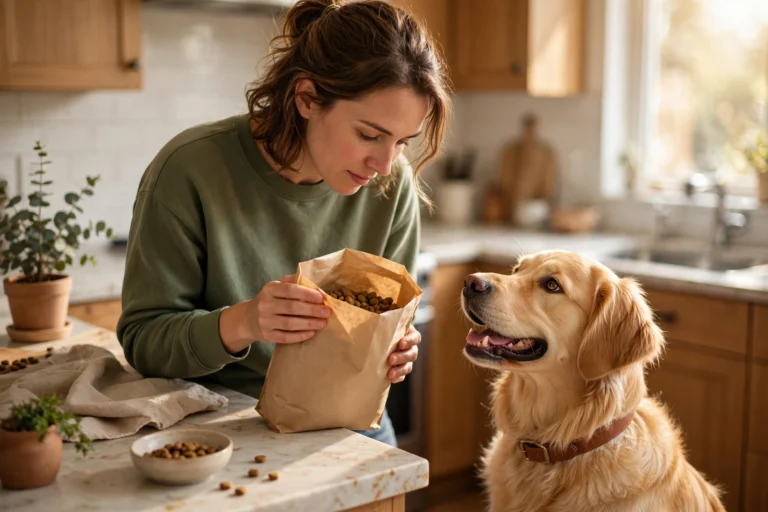
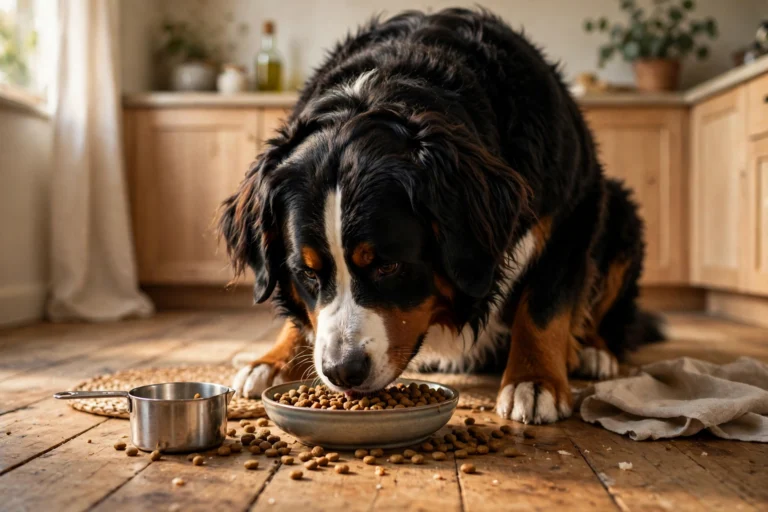
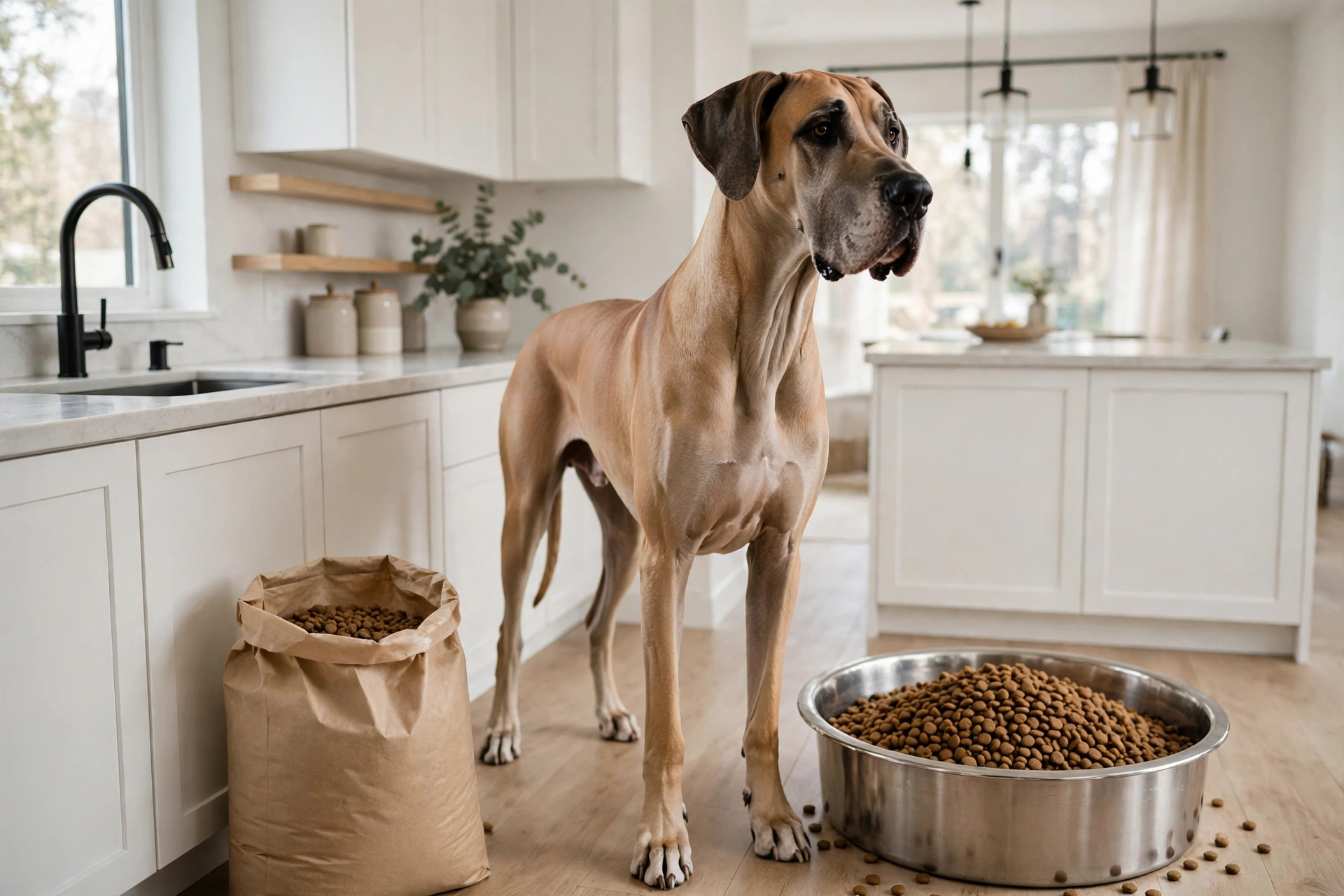
Less than you would guess. Danes are not the bottomless eaters their frame suggests. Most adults settle somewhere between 6 and 10 cups of dry kibble a day. Puppies are different: a five month old Dane can eat as much as an adult, sometimes more.
Cups are only half the story. One brand of kibble can pack 350 calories into a cup while another packs 480, so the same 8 cups a day can be right on one food and too much on another. Calories decide whether your Dane gains, loses, or holds weight, not cups. Start with the guide printed on your food bag, then watch the dog. Ribs gone under fat means cut back. More than the last rib or two showing means add a little.
Adult females usually land between 100 and 130 pounds, males between 120 and 175 pounds. A quiet 110 pound female needs far less food than a 170 pound intact male who patrols a big yard all afternoon. Neutered and spayed dogs often need around 20 percent fewer calories than intact dogs of the same size.
Takeaway: start with the bag guide and adjust to the ribs, not the chart.
Great Dane Puppy Feeding Chart
A Dane puppy grows faster than any dog you have fed before, and that speed is exactly why the feeding has to be careful. The goal is slow, steady growth. A puppy that grows too fast is more likely to develop knuckling, panosteitis, and other joint problems that can follow the dog for life. A slightly lean puppy is a safer puppy.
| Age | Cups per Day | Meals per Day | What to Watch |
|---|---|---|---|
| 8 weeks | 2 to 4 cups | 4 | First weeks at home |
| 3 months | 3 to 5 cups | 3 to 4 | Weigh weekly |
| 4 months | 5 to 7 cups | 3 | Sensitive window for growth problems |
| 6 months | 6 to 8 cups | 2 to 3 | Teething can cut appetite |
| 9 to 12 months | 7 to 10 cups | 2 | Stay on puppy food |
| 12 to 18 months | 7 to 10 cups | 2 | Ask your vet about switching |
Week by Week in the Early Months
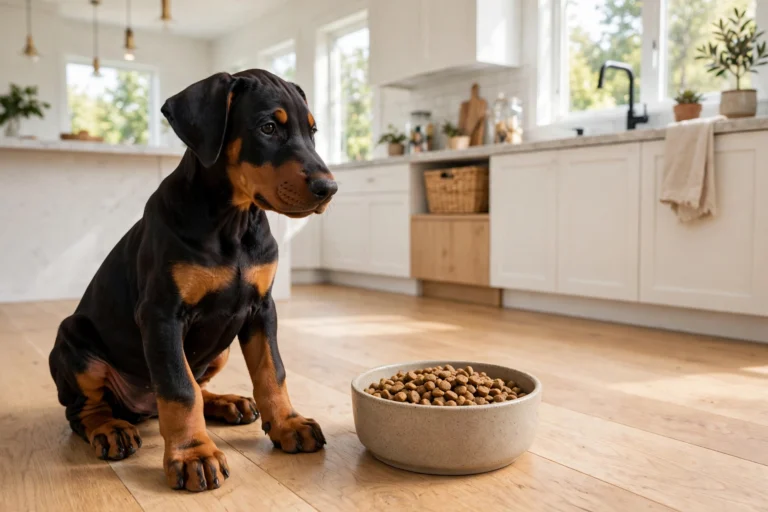
Most of the earliest feeding happens with the breeder. Puppies start on their mother’s milk, and around four weeks the breeder offers a soft gruel of puppy food mixed with warm water. Puppies usually go to their new homes at about seven to eight weeks. From that day, feed four small meals a day at set times and pick up uneaten food after about 15 to 20 minutes. A puppy that skips more than a meal or two, or also has vomiting, diarrhea, or low energy, needs a vet visit. Around five months you can drop to two meals a day.
Do not free feed a Dane puppy. Food down all day makes it easy for a giant breed puppy to eat too much and grow too fast, and you lose the warning sign a missed meal gives you.
Takeaway: four meals at eight weeks, three by four months, two by six months, and a lean puppy throughout.
Great Dane Adult Feeding Chart
Once your Dane reaches full size, feeding gets simpler. Two measured meals a day, morning and evening, about 10 to 12 hours apart. The table below covers typical adults, and your dog may sit outside these ranges as long as the body condition is right.
| Adult Dane | Cups per Day | Calories per Day | Meals |
|---|---|---|---|
| Female, 100 to 130 lbs | 6 to 8 cups | 1,900 to 2,400 | 2 |
| Male, 120 to 160 lbs | 8 to 10 cups | 2,500 to 2,800 | 2 |
| Very active adult, either sex | 9 to 11 cups | 2,800 to 3,400 | 2 to 3 |
| Neutered or spayed adult | 5 to 7 cups | 1,800 to 2,300 | 2 |
Check the calories per cup on your own bag before you trust any chart. A food with 480 calories per cup feeds the same energy in 6 cups that a 350 calorie food needs 8 cups to match. Switch brands and keep the same scoop, and you can add or cut hundreds of calories a day without noticing.
The Rib Test
Charts are a guess. The rib test is the truth. Stand over your Dane and look down. You should see a waist behind the ribs, feel the ribs under a thin layer of skin without pressing hard, and just see the faint outline of the last rib or two. If the dog looks like a solid rectangle from above, cut the food back a little. Weigh your Dane once a month.
Takeaway: the right amount keeps the last rib just visible and the waist easy to see.
Senior Great Danes: When and How Feeding Changes
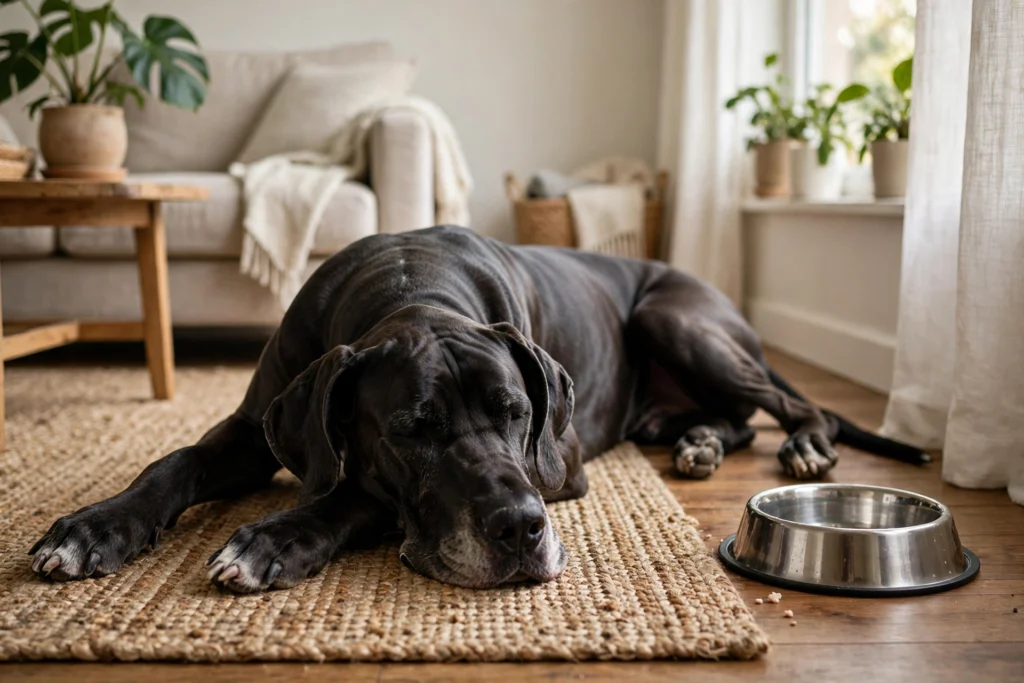
Danes age faster than small dogs. Most vets call a Great Dane a senior at around five to six years old. The dog moves a little less, burns a little less energy, and the same bowl that kept a three year old lean starts adding weight.
A typical senior Dane needs around 2,000 calories a day, often 5 to 7 cups split into two meals. The rule behind the number matters more: keep the protein up and the calories down. Older Danes still need around 23 percent protein to hold muscle, so do not switch to a low protein food just because the dog is old. Extra weight on an aging giant frame punishes the joints fast. If your senior Dane is stiff or slow on the stairs, talk to your vet before you change foods.
Takeaway: senior starts at five to six years, protein stays near 23 percent, and calories come down as activity drops.
What to Feed a Great Dane at Each Life Stage
Danes do best on a complete and balanced food made for large or giant breeds, from a brand that employs a veterinary nutritionist and runs feeding trials. Vets point to Purina Pro Plan Large Breed, Royal Canin, Hill’s Science Diet, and Eukanuba as safe defaults. The brand matters less than the nutrient profile, and for a Dane puppy one number on the bag matters more than all the rest.
The Calcium Rule for Puppies
Protein does not make a Dane puppy grow too fast. Studies have found protein in the range of about 23 to 31 percent does not harm growth. The real driver of growth disorders is excess calcium and too many calories. A Dane puppy cannot control how much calcium it absorbs the way other dogs can.
Look for a large breed or giant breed puppy food with calcium around 1.2 to 1.5 percent or less, and a calcium to phosphorus ratio near 1 to 1 up to about 1.3 to 1. The AAFCO statement should say the food covers growth of large size dogs of 70 lbs or more as an adult. If it only says growth, it is not built for a giant puppy. Never add a calcium supplement to a complete puppy food. For a giant breed puppy that is harmful, not helpful. The old rule said never feed a Dane puppy any puppy food, but that advice is out of date, so check the calcium number and confirm the food with your vet.
What Adult and Senior Food Should Have
For an adult, look for a named animal protein first on the ingredient list, protein in the range of about 23 to 27 percent, moderate fat, and an AAFCO statement for adult maintenance. Large kibble pieces help too, because they make the dog chew instead of gulping. Fiber keeps stools firm, and omega fatty acids help the coat. If your Dane has a sensitive stomach, a formula with probiotics can help, and our guide to what to feed a dog with skin allergies covers the elimination diet basics.
Skip grain free food unless your vet tells you otherwise. The FDA has been looking into a possible link between grain free diets built on peas, lentils, and potatoes and dilated cardiomyopathy, a heart condition Danes are already prone to.
Takeaway: puppies need calcium at 1.5 percent or less; adults need a named protein first and moderate fat.
How Often to Feed a Great Dane
Meal frequency is not a detail, it is a safety rule for this breed. The Merck Veterinary Manual gives a simple schedule most vets still use: four meals a day from six to twelve weeks, three meals a day from three to six months, and two meals a day from six to twelve months. Adults stay on two meals a day for life. Never drop an adult Dane to one meal a day. One large meal stretches the stomach and raises bloat risk.
Keep the meals on a clock. Morning and evening, about 10 to 12 hours apart, works for most households. A very active dog or a dog that wolfs food can do better on three smaller meals instead of two. Give the dog about 15 to 20 minutes to eat, then pick the bowl up. A Dane that walks away from a full bowl two meals in a row is telling you something.
Takeaway: four meals under twelve weeks, three to six months, two from six months on, for life.
Feeding for Bloat Safety
Bloat, or gastric dilatation volvulus, is the feeding topic that matters most for this breed. The stomach fills with gas and twists, and it can kill a Dane in hours. It is the leading cause of death in the breed after cancer, and feeding habits are one of the few parts of that risk you can control. The most reliable protection is a preventive gastropexy, a surgery that tacks the stomach in place, which is worth talking about with your vet.
The Bloat Safe Daily Routine
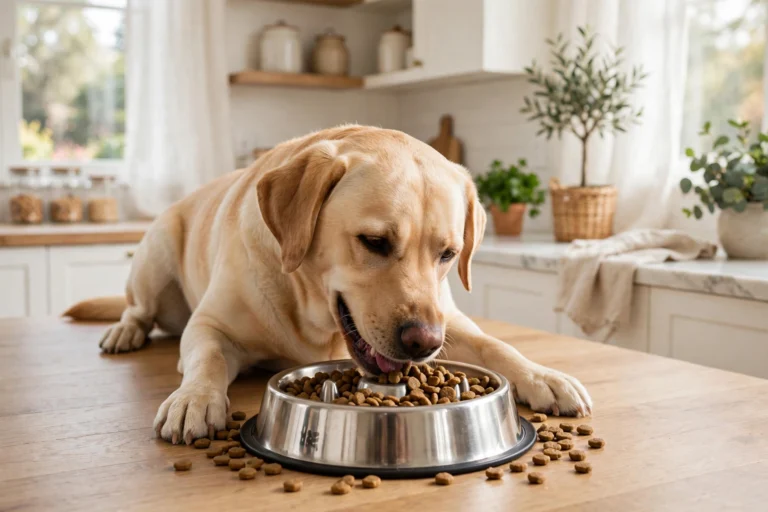
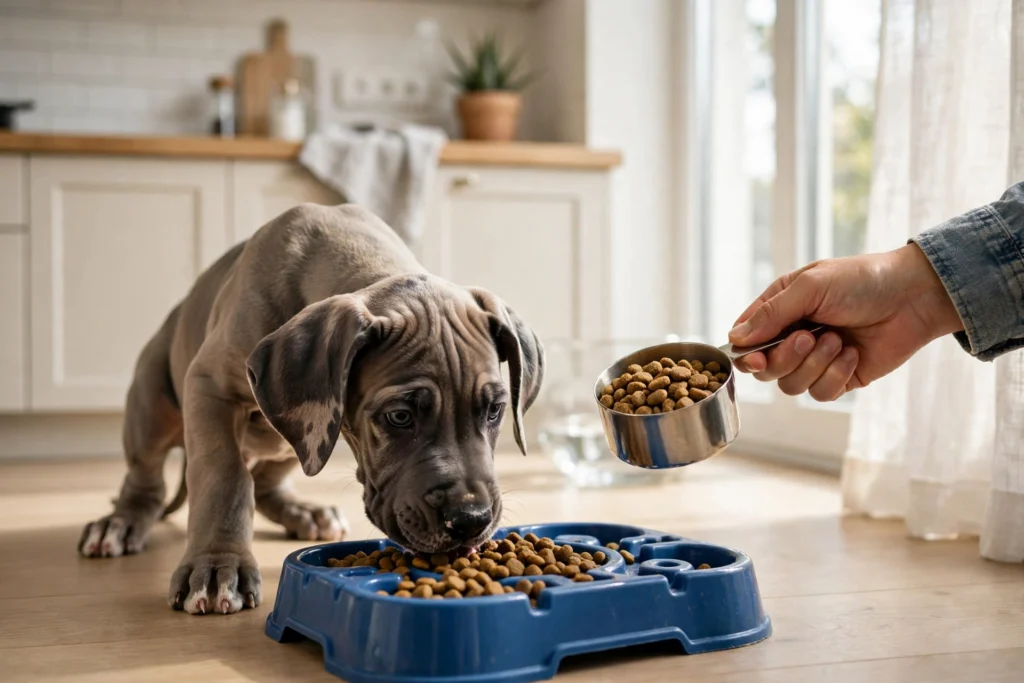
Feed two or more smaller meals instead of one big one, and use a slow feeder bowl if your Dane gulps food in seconds. Feed from a bowl on the floor. Raised bowls were once sold as bloat prevention, but a large study found they were linked to a much higher risk of bloat in large and giant breeds. Keep hard play away from meals for about an hour before and an hour after eating. Keep fresh water available, but do not let the dog gulp a huge amount of water right after a big meal.
Know the Emergency Signs
Bloat moves fast, so do not wait and see. Get to an emergency vet at once if you see a swollen or tight belly, retching without bringing anything up, sudden restlessness, drooling, pale gums, or a dog that cannot get comfortable. Minutes matter, and a dog that shows these signs after a meal needs help now.
Takeaway: small meals, a slow feeder, a bowl on the floor, an hour of calm, and know the warning signs.
How to Switch Foods and When to Switch to Adult Food
Danes have sensitive stomachs, and a sudden food change often ends in loose stools. Switch over about seven days: 25 percent new food for two days, then half and half for two days, then 75 percent new food for two days, then all new food on day seven. If the stool turns loose at any step, stay at that mix for an extra day or two. Our full walkthrough is in how to change dog food safely.
The puppy to adult switch comes later for a Dane than for most dogs. Small and medium breeds often switch at twelve months, but many vets keep Danes on a large breed puppy formula until eighteen to twenty four months old. Switching too early can leave a growing Dane short on energy, and staying on puppy food too long can push calcium and phosphorus too high. Ask your vet to pick the timing from your dog’s growth, not from a birthday. Every brand switch needs a fresh portion calculation too, so check the calories per cup on the new bag before the first bowl.
Takeaway: seven days to switch foods, eighteen to twenty four months to adult food, and recalculate portions on every new bag.
What Great Danes Should Never Eat
Danes can reach a countertop without trying, so keep food and bins out of reach. These foods can seriously harm any dog.
| Food | Why It Is Dangerous |
|---|---|
| Chocolate, coffee, caffeine | Vomiting, diarrhea, heart rhythm problems, tremors, seizures, death; dark chocolate is the worst |
| Grapes and raisins | Can cause kidney failure, even in small amounts |
| Xylitol | In sugar free gum and some peanut butters; low blood sugar and liver damage |
| Onions, garlic, leeks, chives | Damages red blood cells; causes anemia |
| Macadamia nuts | Weakness, tremors, high body temperature |
| Alcohol and raw yeast dough | Alcohol can be deadly; raw dough expands in the stomach |
| Cooked bones | Splinters can cut or block the gut |
Small amounts of plain cooked lean meat, cooked eggs, and plain vegetables such as carrots or green beans are safe treats for most dogs. Keep treats under 10 percent of daily calories and subtract them from the meals. If your Dane eats something on the danger list, call your vet, the nearest emergency clinic, or a pet poison helpline right away.
Takeaway: chocolate, grapes, xylitol, onions, macadamia nuts, alcohol, and cooked bones stay out of reach, always.
Common Feeding Mistakes
Most Dane feeding problems come from good intentions. Here are the mistakes owners make most often.
Feeding big to grow big. Pushing food to fill out a puppy faster is the most damaging instinct with this breed. Fast growth causes knuckling and joint pain between two and six months.
Adding calcium supplements. A complete large breed puppy food already has the right calcium. Extra calcium raises the risk of bone problems.
Feeding from a raised bowl. Raised feeders were sold for years as bloat prevention, but the best study we have points the other way. Feed from the floor.
One big meal a day. A single huge meal stretches the stomach and raises bloat risk. Two meals at least, three if the dog gulps, and never one.
Free feeding. Food down all day hides appetite changes and lets a puppy overeat. Measured meals keep growth slow and problems visible.
Switching to adult food at twelve months. Danes are still growing at a year old. Most need puppy food until eighteen to twenty four months. Let your vet set the date.
Going grain free by default. Grain free food does not help a Dane unless a vet has diagnosed a grain allergy.
Feeding by the scoop, not the scale. A coffee mug is not a measuring cup. A heaping scoop can add hundreds of extra calories over a week. Use a real measuring cup.
Takeaway: feed less, feed slower, and feed on a schedule.
How Much Does It Cost to Feed a Great Dane?
Less than the size suggests. Danes tend to self limit, which means they stop eating when they are full instead of eating everything in sight. The monthly food bill is moderate, often a couple of large bags of quality kibble a month.
Buy the largest bag your Dane finishes before it goes stale and store it sealed in a cool dry place. An adult eating 8 cups a day goes through roughly 2 pounds of kibble a day, so a 30 pound bag lasts about two weeks. Wet food costs far more per calorie than dry food, so save it for toppers.
Takeaway: two large bags a month, buy big, store sealed, and save wet food for toppers.
Pros and Cons of This Feeding Routine
No feeding plan is perfect. Here is an honest look at this routine.
Pros
- Two measured meals a day with a slow feeder is the simplest real step against bloat.
- Controlled calcium in puppyhood protects bones and joints during the fastest growth any dog goes through.
- Feeding to body condition keeps the dog lean, which is what giant joints need.
- A fixed routine makes appetite changes easy to spot.
- Buying large bags of dry kibble keeps a giant breed diet affordable.
Cons
- Measuring every meal takes more effort than filling a bowl by eye.
- Slow feeder bowls cost a little extra, and a Dane can chew through a cheap one.
- Two meals a day on a fixed clock is hard to keep when travel breaks the routine.
- Large breed puppy food with the right calcium costs more than generic puppy food.
- Storing 30 pound bags takes real kitchen space, and a stale bag wastes money.
Takeaway: a little time and planning pays back in a healthier dog.
Expert Tips
Weigh your puppy every week for the first six months. A steady climb is good. A sudden jump means cut back before the joints pay for it.
Ask your vet to check body condition at every visit, not just weight. Two Danes can weigh the same and carry it very differently.
Soak kibble in warm water for a teething puppy. Sore gums between five and seven months can turn a hungry puppy off hard kibble.
Talk to your vet about a preventive gastropexy when your Dane is spayed or neutered. It does more for bloat than any feeding habit, and doing it during a surgery the dog already needs saves a second anesthetic.
This guide is for information only, check with your vet for your dog’s specific needs.
Takeaway: weigh often, watch the ribs, and let your vet set the big decisions.
Key Takeaways
- Adults eat 6 to 10 cups a day in two meals. Puppies eat 2 to 10 cups a day in three to four meals.
- Calcium, not protein, is the danger for a Dane puppy. Keep it at 1.5 percent or less and never add a supplement.
- Grow the puppy slow and keep it lean. You should just see the last rib.
- Never feed one big meal a day. Small meals, a slow feeder, a bowl on the floor, and an hour of calm lower bloat risk.
- Switch to adult food at eighteen to twenty four months, and switch any food over seven days.
- Skip grain free food unless your vet diagnoses a grain allergy.
- Feed to body condition, measure with a real cup, and weigh your Dane every month.
A Great Dane is a big dog with a feeding plan that rewards care more than spending. Get the calcium right in puppyhood, keep the dog lean, and split the food into two calm meals a day. For food picks matched to this routine, see our best dog food for Great Danes guide and our best puppy food for Great Danes picks.
How much should I feed my Great Dane?
An adult Great Dane eats 6 to 10 cups of kibble a day, split into two meals. Females usually eat 6 to 8 cups and males 7 to 10 cups. Puppies eat 2 to 10 cups a day across three to four meals, depending on age. Always adjust to body condition, not just the chart.
How often should I feed a Great Dane?
Puppies need four meals a day from six to twelve weeks, three meals a day from three to six months, and two meals a day from six months on. Adults stay on two meals a day for life. Never drop an adult Dane to one meal a day.
What is the best food for a Great Dane puppy?
A large breed or giant breed puppy food with calcium at 1.5 percent or less and a calcium to phosphorus ratio near 1 to 1. The AAFCO statement should say it covers growth of large size dogs of 70 lbs or more as an adult. Never add a calcium supplement.
Is high protein bad for a Great Dane puppy?
No. Studies have found protein in the range of about 23 to 31 percent does not harm growth. The real danger is excess calcium and too many calories, which can cause bone and joint problems in a fast growing giant puppy.
When should I switch my Great Dane to adult food?
Most Danes stay on a large breed puppy formula until eighteen to twenty four months old, because giant breeds keep growing far longer than small dogs. Ask your vet to pick the timing from your dog’s growth and body condition.
How do I prevent bloat in my Great Dane?
Feed two or more smaller meals a day, use a slow feeder bowl, feed from a bowl on the floor, and keep hard play away from meals for about an hour before and after eating. Talk to your vet about a preventive gastropexy, which is the most reliable protection.
Should I feed my Great Dane from a raised bowl?
No. Raised bowls were once sold as bloat prevention, but a large study found they were linked to a much higher risk of bloat in large and giant breeds. Feed from a bowl on the floor unless your vet tells you otherwise.
How much does it cost to feed a Great Dane?
Less than most people expect. Danes tend to self limit, and the monthly food bill is moderate, often a couple of large bags of quality kibble a month. An adult eating 8 cups a day goes through roughly 2 pounds of kibble a day, so a 30 pound bag lasts about two weeks.