
Best dog food for dogs with itchy skin
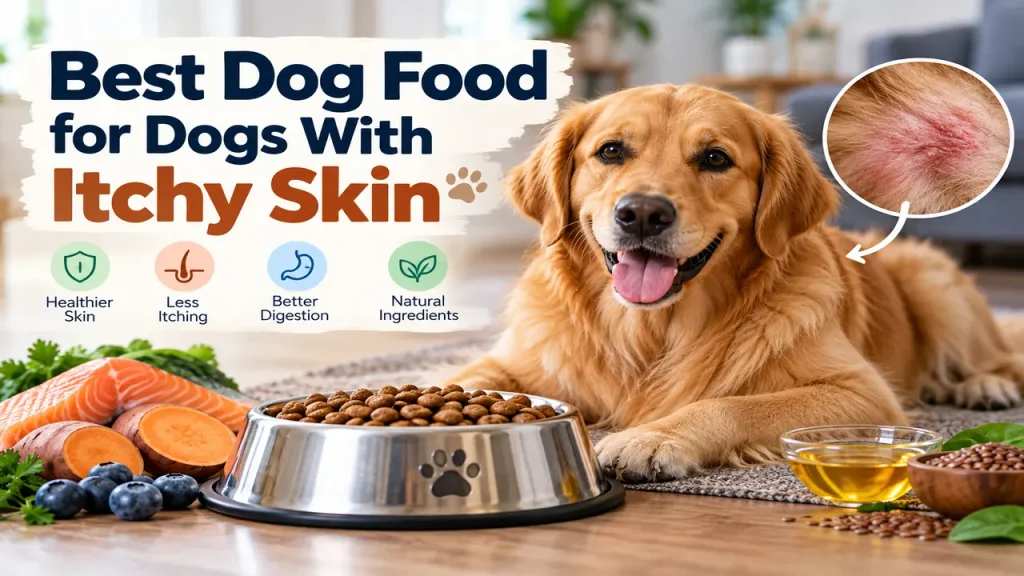
Best Dog Food for Dogs With Itchy Skin: What to Look For
If your dog is constantly scratching, licking their paws, rubbing their face, or dealing with irritated skin, it is natural to wonder whether their food could be part of the problem.
Diet can play a role in some dogs with itchy skin, especially when a food allergy or sensitivity is involved. However, food is not the only possible cause. Fleas, environmental allergies, bacterial or yeast infections, and other skin conditions can also make dogs itchy.
That means the best dog food for dogs with itchy skin is not necessarily the most expensive bag or the one with the longest list of “premium” ingredients. The right choice depends on what is actually triggering your dog’s symptoms.
In this guide, we’ll explain what to look for in dog food for itchy skin, when limited-ingredient or hydrolyzed diets may be useful, and when your dog’s itching needs veterinary attention.
Can Dog Food Cause Itchy Skin?
Yes, food allergies can cause itching in dogs, but they are not the most common explanation for every itchy dog.
Dogs with food allergies may experience itching around areas such as the ears, feet, face, belly, and other parts of the body. Some dogs may also develop recurring ear problems or bacterial and yeast skin infections.
A dog can also have more than one problem at the same time. For example, a dog with a food allergy may also react to environmental allergens.
This is why simply switching from one regular dog food to another may not solve the problem.
Signs That Your Dog’s Itching May Need Investigation
Watch for symptoms such as:
- Frequent scratching
- Persistent paw licking or chewing
- Face rubbing
- Red or irritated skin
- Hair loss from scratching
- Recurring ear irritation
- Unusual skin odor
- Repeated bacterial or yeast infections
- Digestive symptoms occurring alongside itching
These signs do not automatically mean your dog has a food allergy. They simply indicate that the underlying cause should be investigated.
If the itching is severe, persistent, causing wounds, or accompanied by other concerning symptoms, contact your veterinarian.
What Should You Look for in Dog Food for Itchy Skin?
There is no single ingredient list that works for every itchy dog. Still, several features are worth considering when choosing food.
1. Complete and Balanced Nutrition
Start with the basics.
For everyday feeding, look for food that is labeled as complete and balanced for your dog’s appropriate life stage.
AAFCO explains that “complete” means the food contains the required nutrients, while “balanced” means those nutrients are provided in appropriate ratios.
This is particularly important if the diet will be your dog’s primary long-term food.
2. A Protein Source Your Dog Can Tolerate
Food allergies commonly involve proteins.
Beef, chicken, dairy and several other ingredients can trigger reactions in some dogs, but this does not mean these ingredients are bad for dogs in general.
If your dog eats chicken without problems, there is no reason to eliminate it simply because another dog is allergic to chicken.
If a food allergy is suspected, your veterinarian may recommend a diet containing a protein your dog has not previously eaten or a hydrolyzed protein diet.
3. A Simple, Understandable Ingredient List
For dogs undergoing a diet trial, controlling exactly what they eat is extremely important.
A simpler formula can sometimes make it easier to identify what your dog is consuming, but the words “limited ingredient” on a package do not automatically make a food suitable for diagnosing an allergy.
A veterinarian-supervised elimination diet is much more reliable when a true food allergy is suspected.
4. Essential Fatty Acids
Fatty acids are important components of a dog’s diet and skin.
Some foods marketed for skin support include omega-3 and omega-6 fatty acids. However, don’t choose a diet based on one trendy ingredient alone. The overall nutritional profile and your dog’s individual needs matter more.
5. The Correct Life Stage
A puppy and an adult dog do not have identical nutritional requirements.
Check the nutritional adequacy statement on the package to determine whether the food is intended for growth, adult maintenance, all life stages, or another specific stage.
Is Hypoallergenic Dog Food Better for Itchy Skin?
It can be useful in the right situation, but “hypoallergenic” should not be treated as a universal cure for itching.
Veterinary hypoallergenic diets are often used as part of an elimination diet when a veterinarian suspects a food allergy.
These diets may use:
- Novel proteins
- Hydrolyzed proteins
- Carefully controlled ingredients
Hydrolyzed proteins are broken into smaller components in an effort to reduce recognition by the immune system.
A strict elimination diet followed by a controlled food challenge is considered the reliable method for confirming a food allergy.
What Is a Limited-Ingredient Diet?
A limited-ingredient diet generally uses fewer major ingredients or protein sources than many conventional foods.
It may be helpful for certain dogs, particularly when trying to avoid a known ingredient.
But fewer ingredients do not automatically mean:
- Better nutrition
- Better skin
- Higher-quality food
- A hypoallergenic diet
If you’re trying to diagnose an actual food allergy rather than simply choosing a different food, speak with your veterinarian about an appropriate elimination diet.
Novel Protein vs. Hydrolyzed Protein
These terms often appear when researching food for dogs with allergies.
Novel Protein
A novel protein is a protein source the individual dog has not previously eaten.
What counts as “novel” therefore depends on your dog’s diet history.
A protein that is new to one dog may be completely familiar to another.
Hydrolyzed Protein
Hydrolyzed diets contain proteins that have been broken into smaller components.
Veterinarians may use these diets during elimination trials because they can reduce the likelihood of the immune system reacting to intact dietary proteins.
Neither approach should be chosen solely because it sounds more advanced. Your dog’s previous diet and medical history matter.
Is Salmon Dog Food Good for Itchy Skin?
Salmon-based foods are commonly marketed for skin and coat support, and they can be appropriate for some dogs.
But salmon is not automatically the best protein for every itchy dog.
If your dog reacts to a particular dietary protein, simply switching proteins without understanding the trigger may not solve the problem. Merck also notes that allergenic cross-reactivity can complicate selection of novel proteins.
So consider the entire formula rather than choosing a food simply because “salmon” appears prominently on the package.
Is Chicken Bad for Dogs With Itchy Skin?
Not necessarily.
Chicken can be an allergen for some dogs, but that doesn’t mean every itchy dog should eat a chicken-free diet.
Removing ingredients randomly can make it difficult to determine what is actually causing the problem.
If your veterinarian suspects food allergy, a structured elimination diet is a better approach than repeatedly changing foods based on guesswork.
Grain-Free Dog Food and Itchy Skin
Do not assume that an itchy dog automatically needs grain-free food.
Food reactions can involve various ingredients, and proteins are important potential allergens. Removing grains without evidence that they are causing your dog’s symptoms may not address the actual problem.
The better question is not simply:
“Does this food contain grain?”
It is:
“Does this diet meet my dog’s nutritional needs and avoid an ingredient my dog has actually been shown or strongly suspected to react to?”
How an Elimination Diet Works
If your veterinarian suspects food allergy, they may recommend an elimination-challenge diet trial.
The process generally involves feeding a carefully selected diet exclusively for several weeks.
That means no random:
- Treats
- Table scraps
- Chews containing food proteins
- Flavored supplements
- Other foods
Even flavored medications can interfere with a strict trial in some situations.
If symptoms improve, the previous diet or specific ingredients may later be reintroduced under veterinary guidance to see whether symptoms return.
Merck describes elimination followed by controlled challenge as the reliable way to confirm food allergy.
How Long Does a Food Trial Take?
Do not expect an answer after only a few days.
Veterinary guidance commonly uses a trial lasting several weeks. VCA describes veterinary hypoallergenic elimination trials lasting approximately 8–12 weeks, while Merck notes that longer trials may be needed to identify most food-allergic patients.
Consistency matters during this period.
Giving your dog “just one” different treat can introduce another protein and make the results harder to interpret.
How to Read a Dog Food Label
Marketing on the front of a bag is only part of the story.
Check the actual label for:
Nutritional Adequacy Statement
Look for whether the food is complete and balanced and which life stage it is intended for.
Ingredient List
Pet-food ingredients are generally listed in descending order by weight as formulated.
If you’re avoiding a known ingredient, read the complete ingredient list rather than relying solely on the product name.
Feeding Directions
Use the manufacturer’s directions as a starting point, then adjust based on your dog’s body condition, activity, and veterinary recommendations.
AAFCO notes that feeding directions are guidelines and may need adjustment for an individual animal.
Don’t Forget Treats and Supplements
One common mistake is changing a dog’s main food while continuing to give treats containing the ingredient being investigated.
During a strict elimination trial, everything the dog consumes matters.
This may include treats, table food, chews, supplements, and certain flavored medications.
For everyday feeding outside a diagnostic trial, treats should still be considered part of the dog’s overall diet.
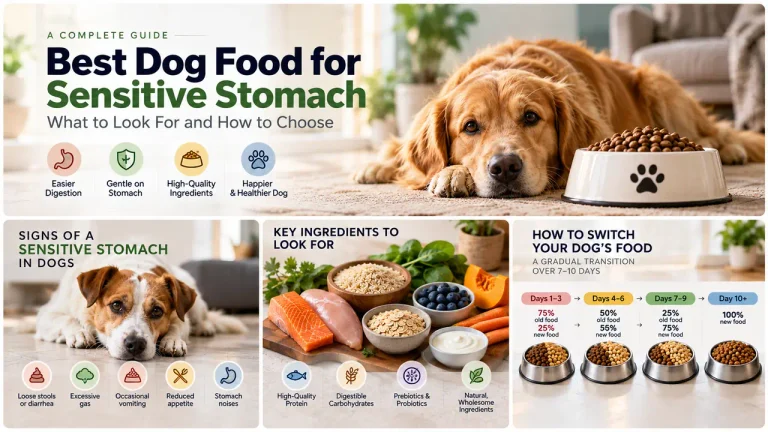
How to Switch to a New Dog Food
Unless your veterinarian gives different instructions, changing foods gradually is often easier on a dog’s digestive system.
A transition can involve slowly increasing the proportion of the new food while decreasing the old food over several days.
However, if your veterinarian is conducting a diagnostic elimination trial, follow their specific transition instructions, because the purpose is different from an ordinary food switch.
For dogs that also have digestive sensitivity, see our guide to Best Dog Food for Sensitive Stomach
When Should You See a Veterinarian?
Don’t rely on food changes alone if your dog has:
- Severe or persistent itching
- Open sores or bleeding
- Significant hair loss
- Strong skin or ear odor
- Recurrent ear infections
- Swelling
- Repeated vomiting or diarrhea
- Sudden worsening of symptoms
Skin infections themselves can cause significant itching, and environmental allergens, parasites and other conditions can look similar to food-related problems.
A veterinarian can help determine whether changing food is appropriate or whether another cause needs treatment.
Frequently Asked Questions
What is the best dog food for dogs with itchy skin?
There is no single best food for every itchy dog. The appropriate diet depends on the cause of the itching, your dog’s nutritional requirements, previous foods, age, and medical history. If a food allergy is suspected, a veterinarian-supervised elimination diet may be recommended.
What protein is best for dogs with itchy skin?
There isn’t one universally best protein. For an elimination trial, a veterinarian may choose a novel protein that your dog has not eaten before or a hydrolyzed protein diet.
Should I avoid chicken if my dog is itchy?
Not automatically. Chicken can trigger food allergy in some dogs, but many dogs tolerate it normally. Avoiding it makes the most sense when there is a specific reason to suspect it.
Can food allergies cause paw licking?
Yes. Food allergies can cause itching involving the feet, and affected dogs may lick or chew their paws. However, paw licking can have other causes as well.
How do I know if my dog is allergic to its food?
Symptoms alone cannot reliably identify a food allergy. A strict elimination diet followed by a controlled dietary challenge is the reference method for confirming one.
Will changing dog food stop itching immediately?
Not necessarily. Itching may have a non-food cause, and a proper food-allergy trial takes considerably longer than a few days. If symptoms are severe, consult your veterinarian instead of repeatedly switching foods.
Final Thoughts
Finding the best dog food for dogs with itchy skin starts with understanding why your dog is itching.
If diet is involved, the right food may be one that avoids a confirmed trigger while still providing complete and balanced nutrition. For dogs with suspected food allergies, novel-protein or hydrolyzed veterinary diets may be used as part of a structured elimination trial.
But don’t assume every itchy dog has a food allergy. Fleas, environmental allergies, bacterial or yeast infections, and other skin problems can produce similar symptoms.
Choose food based on your dog’s individual needs, and involve your veterinarian when itching is persistent, severe, recurrent, or accompanied by skin damage.
One Comment