
Best Food for Bernese Mountain Dog Skin Allergies: Chicken-based Picks for hot spots
Your Berner scratches, and you feel helpless watching it. The paws turn red, the ears smell off, and the belly shows pink patches under all that thick fur. You change the shampoo, wash the bedding, and try a new treat, and nothing sticks. The food bowl is the place most owners check last, but for a lot of Berners it is where the trouble starts. This guide covers why this breed itches, how to spot a food trigger, which foods help, and the trial that finds it.
This guide is for information only, check with your vet for your dog’s specific needs.
Table of Contents
- Why Bernese Mountain Dogs Get Itchy Skin
- Is Food Really the Cause
- Foods to Feed and Foods to Skip
- The Elimination Diet That Finds the Trigger
- Best Food for Bernese Mountain Dog With Skin Allergies
- How Much to Feed Your Berner
- Coat Care That Helps the Food Work
- Common Mistakes That Keep the Itch Going
- Tips That Make the Switch Easier
- Pros and Cons of an Allergy Diet
- Buying Guide: What to Look For
- Key Takeaways
Why Bernese Skin Needs a Different Conversation
At 70 to 115 lb, a Bernese eats a lot. A prescription or limited-ingredient diet costs far more per month here than for a small breed, so the picks table should show the monthly cost, not just the bag price.
This breed has real skin diseases that food cannot fix: histiocytosis and histiocytic sarcoma both show up as skin lumps. A lump that does not behave like a hot spot needs a vet, not a new food.
No AKC / Merck / VCA source lists Bernese as atopy-prone, so this page does not claim a breed allergy. It covers the trial that finds the trigger.
The thick double coat sheds heavily and traps heat in summer; keep the coat brushed out so you can actually see the skin you are treating.
Why Bernese Mountain Dogs Get Itchy Skin
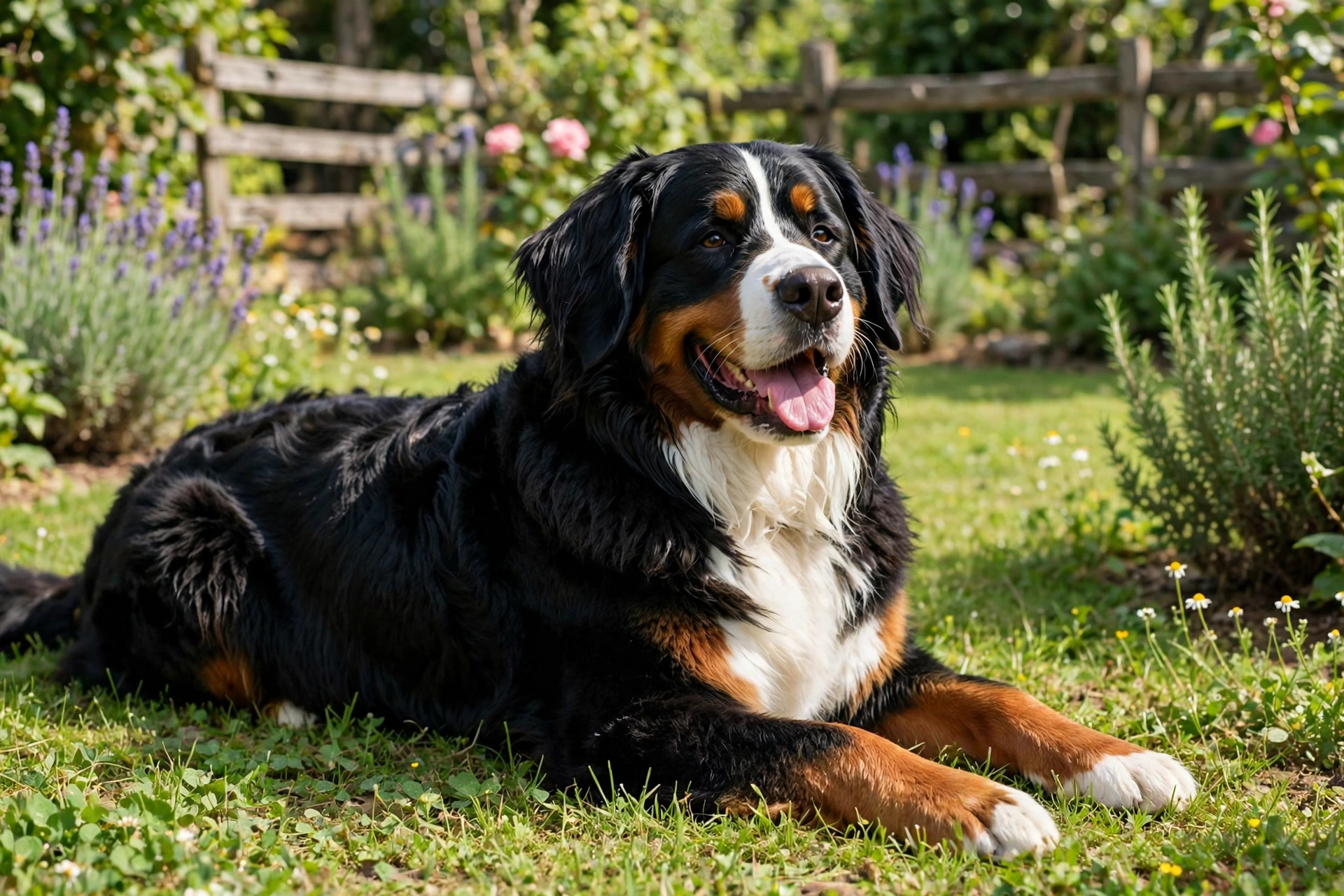
Berners are big, heavy coated dogs, and that coat is part of the problem. A thick double coat traps heat and moisture against the skin, and small irritations turn into hot spots fast.
Berners can run into food trouble too. Chicken, beef, dairy, wheat, corn, and soy show up again and again as the proteins and grains that set Berners off. A good allergy food leaves most of them out from the start.
Watch for the signs that point to food: itchy paws your dog licks for hours, red skin on the belly and inside the ears, repeat ear infections, soft stools or gas along with the itch, and hair thinning on the legs or chest. One sign alone may mean nothing. Three or four together are worth a proper look.
Berners can also react to pollen, dust, and flea bites. Food is the trigger you can control most easily, which is why vets start there. But if the itch follows the seasons, pollen may share the blame.
Is Food Really the Cause
Food allergy itch runs all year, often with ear infections and loose stools; environmental itch flares with the seasons. Only a strict eight-week elimination trial proves a food allergy. Our Best Dog Food for Skin Allergies guide explains how to run one, and Food Allergy Symptoms in Dogs and Best Dog Food for Allergies cover the signs and the triggers. For general itch relief, see Best Dog Food for Dogs With Itchy Skin.
Foods to Feed and Foods to Skip
No big competitor gives Berner owners a straight eat versus skip list, so here is one, built from what vets and allergy guides agree on.
Foods That Usually Help
- Salmon and other oily fish: rich in omega 3 fats that calm skin.
- Novel proteins: duck, venison, rabbit, and kangaroo, all new to most dogs.
- Hydrolyzed protein diets: the protein is broken into tiny pieces that the immune system mostly cannot see. These are prescription foods, and the gold standard when nothing else works.
- Sweet potato and potato: gentle carbs that rarely trigger a reaction.
- Pumpkin: adds fiber that firms up stools.
- Fish oil or flaxseed: extra omega 3 support for a dry, flaky coat. Ask your vet about the right amount.
- Oats: a mild grain that suits many sensitive dogs.
Foods to Skip During the Trial
- Chicken: the most common trigger in dogs, and it hides in foods labeled as lamb or beef.
- Beef and dairy: milk, cheese, and beef are all frequent triggers.
- Wheat, corn, and soy: cheap fillers that often sit behind skin flare ups.
- Eggs: a common hidden trigger, often listed as egg product.
- Table scraps and flavored treats: a single bite of chicken jerky can undo a week of careful feeding.
- Artificial colors, flavors, and preservatives: BHA, BHT, and ethoxyquin add nothing a Berner needs.
- Rawhide and mystery chews: many are made from beef hide with added flavoring.
If a bag lists chicken meal, chicken fat, or natural chicken flavor anywhere on the label, it fails the trial, even if the front of the bag says salmon. The front of the bag is marketing. The ingredient list is the truth.
The Elimination Diet That Finds the Trigger
An elimination diet sounds hard, but the idea is simple. Feed one new food with one new protein and one new carb, feed nothing else, and wait 8 to 12 weeks. If the itch fades, you found a safe food. Then add one old food back at a time and watch for the itch to return. The food that brings the itch back is the trigger. If your Berner’s stomach is as touchy as his skin, see our Best Food for Bernese Mountain Dog Sensitive Stomach guide. The full method is in our Best Dog Food for Skin Allergies guide and in What to Feed a Dog with Skin Allergies.
Pick the trial food with your vet. A hydrolyzed prescription diet is the cleanest choice, because it removes the guesswork. A limited ingredient salmon and sweet potato diet is the best over the counter option if your vet is happy with that route. Either way, the food should be the only thing your dog eats, including treats, dental chews, and scraps from the table.
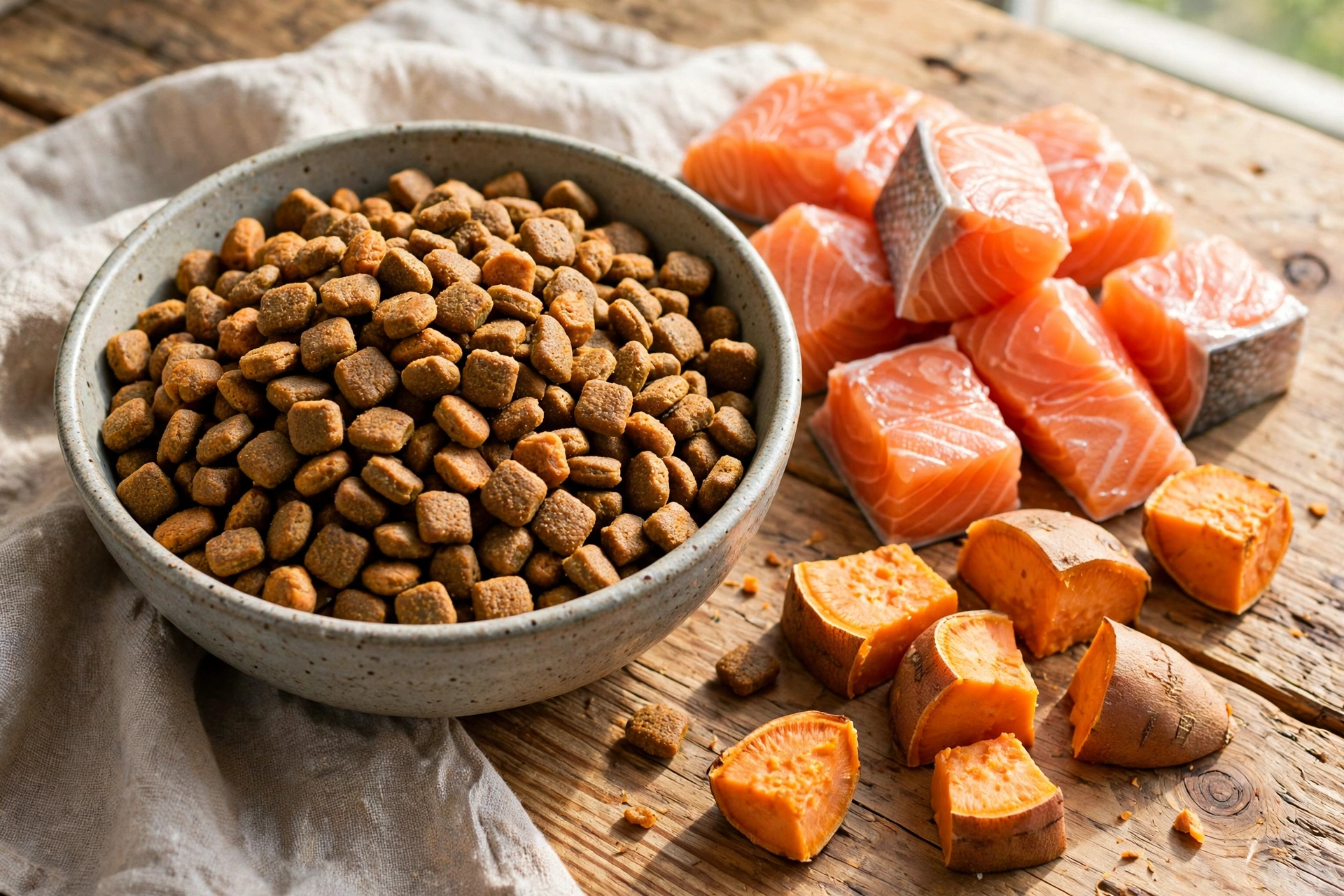
Switch foods over 7 to 10 days. Mix a little of the new food into the old food, and raise the new share a bit each day. A sudden switch can upset a Berner stomach and muddy the results. Slow and steady gives you a clean read.
Week two is too early to judge a trial. Skin needs 6 to 8 weeks to show real change. Skin takes time to calm down, and most vets say to wait the full 8 to 12 weeks before calling it. Some dogs show a clear change by week four or five. Others need the whole stretch. Quitting early is the most common reason a trial fails.
When the trial ends and the skin is calm, add one food back, such as chicken, and feed it for two weeks while you watch the skin. No reaction means chicken is probably safe. A flare up means you found a trigger, so drop that food and go back to the safe diet. One food at a time. Two at once and you will not know which one helped.
Best Food for Bernese Mountain Dog With Skin Allergies
These six picks cover the full range, from prescription diets that work when nothing else does to solid store bought foods for mild to moderate skin trouble. Start at the top for severe itching or repeat ear infections, further down if the itch is mild. Every pick is a real product sold in the US.
| Product | Best For | Key Feature | Kcal/cup | Cost/month |
|---|---|---|---|---|
| Royal Canin Veterinary Diet Hydrolyzed Protein HP | Severe allergies | Hydrolyzed soy protein, prescription only | 324 | ~$142 to $166/mo |
| Hill’s Prescription Diet z/d Skin/Food Sensitivities | Food trials | Hydrolyzed chicken liver, skin barrier support | 348 | ~$189/mo |
| Purina Pro Plan Veterinary Diets HA Hydrolyzed | Sensitive skin and stomach | Single hydrolyzed protein, easy to digest | 291 | ~$154 to $185/mo |
| Taste of the Wild Pacific Stream | Mild to moderate itch | Salmon first, omega 3 rich, no chicken | 408 | ~$72/mo |
| Diamond Naturals Skin and Coat Formula | Coat health on a budget | Salmon first, added omega fatty acids | 408 | ~$50/mo |
| Natural Balance L.I.D. Limited Ingredient Diets Salmon and Sweet Potato | Simple limited ingredient feeding | One protein, one carb, grain free | 365 | ~$98 to $115/mo |
Prices are Chewy ‘buy once’ prices as retrieved Nov 11, 2026; cost/month is for a 92-lb adult Bernese Mountain Dog.
Royal Canin Veterinary Diet Hydrolyzed Protein HP
This is the diet vets reach for when a Berner has tried everything else and still itches. The soy protein is broken down by hydrolysis into pieces so small that the immune system mostly cannot spot them. It also carries EPA and DHA fatty acids for skin and gut health. It is a prescription food, so your vet has to approve it. That is how we judged it: the ingredient list, the brand behind it, and what owners told us.
Hill’s Prescription Diet z/d Skin/Food Sensitivities
Hill’s z/d takes a similar path with hydrolyzed chicken liver, which sounds odd for a dog that may react to chicken, but the protein is broken down so far that the immune system does not read it as chicken anymore. The recipe adds vitamins and amino acids that help rebuild the skin barrier. It is prescription only and not cheap, but it is one of the two diets most vets trust for a proper elimination trial.
Purina Pro Plan Veterinary Diets HA Hydrolyzed
Purina HA uses a single hydrolyzed protein source and purified carbs, which keeps the ingredient list short and the trial clean. Dogs tend to like the taste more than some prescription diets. It is highly digestible, so stools stay firm, and it comes in dry and wet forms. Like the other prescription picks, it needs vet approval.
Taste of the Wild Pacific Stream
If the itch is mild and your vet is happy with an over the counter food, Pacific Stream is the pick most Berner owners land on. Salmon is the first ingredient, the recipe is grain free, and it skips chicken, beef, corn, wheat, and soy entirely. The omega 3 content is high, which shows in the coat after a few weeks of steady feeding. The price sits well below the prescription diets. It is not a true elimination diet food, but for a Berner whose trigger is likely chicken or beef, it is a practical daily food.
Diamond Naturals Skin and Coat Formula
Diamond Naturals gives you a salmon first recipe with added omega 3 and omega 6 fatty acids at a price that works for feeding a giant breed every day. It has no corn or wheat, and no chicken. It will not replace a hydrolyzed diet for severe allergies, but for coat health and mild skin trouble on a budget, it earns its place.
Natural Balance L.I.D. Limited Ingredient Diets Salmon and Sweet Potato
Natural Balance keeps it simple: one animal protein, salmon, and one carb, sweet potato. That short list is the whole point of a limited ingredient diet. It is not hydrolyzed, so a dog with many triggers may still react, but for a Berner with one or two known triggers, it is one of the easiest foods to live with long term.
How Much to Feed Your Berner
A Berner with skin trouble still needs the right amount of food. Most adult Berners do well on 4 to 6 cups of dry food a day, split into two meals, but the bag is only a starting point. Your dog’s weight, age, and how active he is matter more than the number on the bag.
Two meals a day works better than one big meal for a dog this size. Berners are a deep chested breed, and a single large meal raises the risk of bloat, a twisted stomach that is a true emergency. Two smaller meals, eaten slowly, are safer. Keep your dog calm for an hour after eating.
Weigh the food instead of guessing with a scoop. A kitchen scale takes ten seconds and keeps portions honest. If your dog gains weight on the new food, trim the portion by about a tenth and check again in two weeks. Extra weight strains joints that are already a weak point for this breed.
Keep treats under a tenth of daily calories, and during a trial, use only treats made from the trial food. For more on portions for this breed, see the Bernese Mountain Dog feeding guide.
Coat Care That Helps the Food Work
Food fixes the inside, but the coat still needs help from the outside. Brush your Berner two or three times a week with a slicker brush, and daily during shedding season. Brushing pulls out loose fur and lets air reach the skin, which keeps damp patches from turning into hot spots.
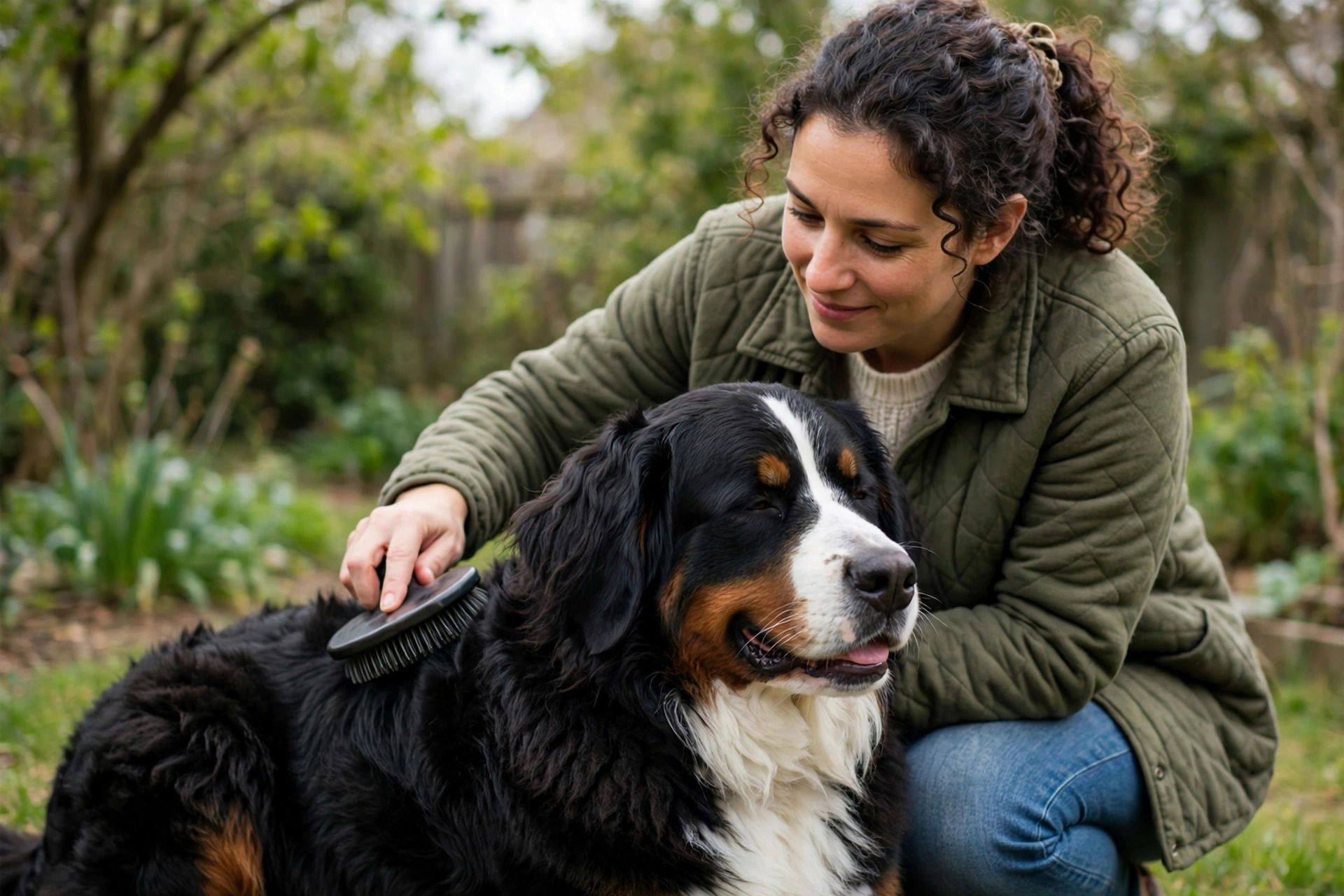
Bathe only when needed, about once a month or when the coat is truly dirty. Too much washing strips the natural oils that protect the skin, and that makes itching worse. Use a gentle, fragrance free shampoo, and rinse well. Dry the coat fully after a bath or a swim, especially under the ears and on the belly.
Check the ears every week. Berners get ear infections often, and a food trigger makes them worse. A red ear with a smell needs a vet visit.
Trim the fur between the paw pads. Long fur there traps moisture and dirt, and dogs lick at it for hours. A quick trim every few weeks, plus a wipe of the paws after walks, cuts down a lot of licking. For the full picture, read what to feed a dog with skin allergies.
Common Mistakes That Keep the Itch Going
- Quitting the trial too soon. Skin needs 8 to 12 weeks to calm down.
- Sneaking treats. One chicken jerky, one bite of cheese, or a flavored dental chew can restart the itch and ruin weeks of clean feeding. Everyone in the house has to follow the same rule.
- Trusting the front of the bag. Words like natural, sensitive, and hypoallergenic are not regulated the way you might think.
- Over bathing. More baths dry the skin out and strip the coat oils. Once a month is enough for most Berners.
Tips That Make the Switch Easier
- Warm the food slightly or add a splash of warm water to bring out the smell, which helps picky Berners accept a new diet.
- Tell your family and any dog walker that no other food is allowed.
- Take a photo of the worst itchy patch each week. Photos show progress your eyes miss day to day.
Pros and Cons of an Allergy Diet
Pros
- Removes the trigger instead of masking the itch, so the skin can heal.
- Less scratching, licking, and ear trouble, which means a calmer dog.
- Better stools and digestion, since the same foods that upset skin often upset stomachs too.
Cons
- Prescription diets cost more, and a giant breed eats a lot.
- The trial takes 8 to 12 weeks of strict feeding, which needs the whole household on board.
- Some dogs dislike the taste of hydrolyzed food.
- You need a vet visit to start a prescription diet, which adds a step before the trial begins.
Buying Guide: What to Look For
Start with the protein. Look for a single named protein your dog has not eaten before, or a hydrolyzed protein if your vet advises it. Salmon, duck, venison, and rabbit are the usual safe bets. Avoid recipes that list chicken, beef, or dairy anywhere in the ingredients.
Check the carb next. Sweet potato, potato, and oats are gentle choices. Wheat, corn, and soy are the grains most often linked to flare ups, so skip them during the trial. A short ingredient list is a good sign.
Look for omega 3 fats on the label, from fish oil, salmon oil, or flaxseed. An AAFCO statement of nutritional adequacy should be on the bag too. It tells you the food meets the basic standard for a complete diet.
Buy a large breed formula when you can, since Berners need the right calcium balance and joint support. Big kibble slows down a fast eater, which helps with bloat risk. For general allergy food advice, see best dog food for allergies, and if your Berner also has a touchy stomach, read best food for Bernese Mountain Dog with sensitive stomach.
What to Avoid
- Recipes with vague terms like meat meal, animal fat, or natural flavor with no source named.
- Foods that claim to be hypoallergenic but list three or four proteins, which makes a trial useless.
- Cheap bulk bags with artificial colors and preservatives like BHA and BHT.
Key Takeaways
- The best food for a Bernese Mountain Dog with skin allergies is a hydrolyzed or limited ingredient diet built around a protein your dog has never eaten.
- Chicken, beef, dairy, wheat, corn, and soy are the triggers to leave out first.
- A vet guided elimination trial of 8 to 12 weeks is the only sure way to find the trigger, and treats count as food during the trial.
- Salmon based foods with omega 3 fats are the best over the counter starting point for mild to moderate itch.
- Prescription hydrolyzed diets are the most reliable choice for severe itching and repeat ear infections.
Conclusion
An itchy Berner is miserable, and watching one scratch all night is hard on the whole house. The fix is rarely a new shampoo or a different brush. It is the food in the bowl, fed the same way every day, with nothing extra sneaking in. Start with your vet and run a proper 8 to 12 week trial on a hydrolyzed or salmon based diet.
For most Berners, the answer is one of the six foods above. If the itch is mild, Taste of the Wild Pacific Stream or Diamond Naturals Skin and Coat will likely do the job. If the itch is severe or keeps coming back with ear infections, ask your vet about Royal Canin Hydrolyzed Protein HP or Hill’s z/d, and let the trial do the work. Your dog will tell you when you got it right: the scratching stops and the coat fills back in. For the breed’s overall diet, see our Best Dog Food for Bernese Mountain Dogs guide.
Frequently Asked Questions
What food is best for a Bernese Mountain Dog with skin allergies?
A hydrolyzed or limited ingredient diet built around a protein your dog has never eaten, with omega 3 fats for the skin. For most Berners, a salmon recipe or a hydrolyzed soy diet works best, and a vet guided trial of 8 to 12 weeks finds the exact trigger.
What are Bernese Mountain Dogs most allergic to in food?
Chicken, beef, dairy, wheat, corn, soy, and eggs are the usual triggers. Chicken is the most common one, and it hides in foods labeled as lamb or beef, so always read the full ingredient list.
Is salmon good for a Bernese Mountain Dog with itchy skin?
Yes. Salmon is rich in omega 3 fats that calm the skin, and most Berners have eaten it less often than chicken or beef. Salmon based limited ingredient foods are the best over the counter starting point for mild to moderate itch.






2 Comments