
Best Dog Food for Rottweilers: 6 Top Picks (2026)
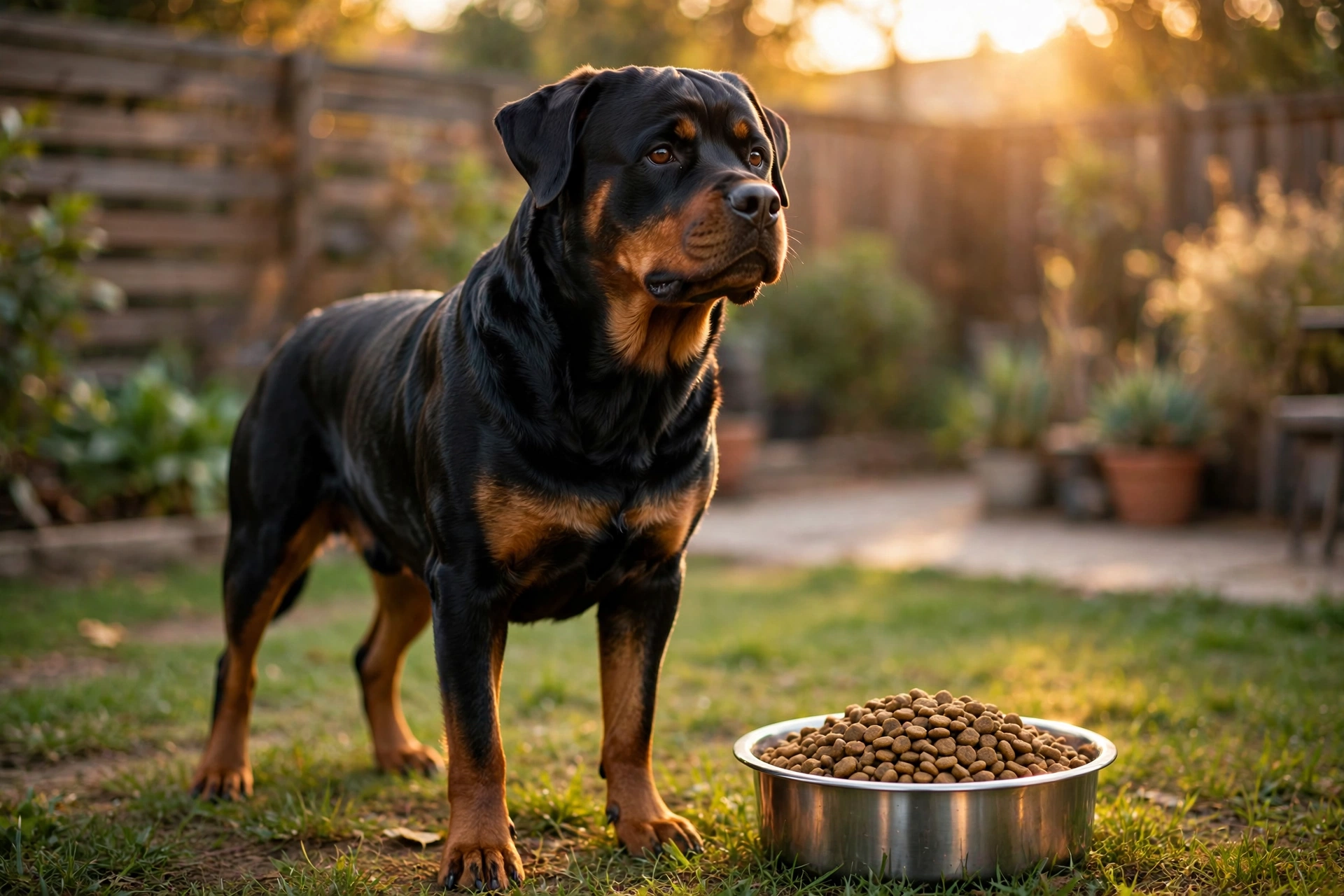
Rottweilers are powerhouses, 85 to 135 pounds of dense muscle, a deep chest, and an appetite to match. But behind the intimidating look is a breed with some of the most specific dietary needs in the dog world. The best dog food for Rottweilers supports lean muscle, protects vulnerable joints, and steers clear of the grain-free formulas linked to heart problems in large breeds. Get it wrong and you risk hip dysplasia, obesity, and bloat; get it right and you add healthy years to your Rottie’s life.
In this guide, I compare the top large-breed formulas and fresh-food options for 2026, break down exactly what to look for on a label, and answer the questions Rottweiler owners ask most, including how much to feed and why bloat prevention should shape every mealtime.
For Rottweilers, the best food is a grain-inclusive large-breed formula with 26 to 30 percent protein, 12 to 15 percent fat, and added glucosamine, omega-3s, and taurine. Royal Canin Rottweiler Adult is the top pick for joint and heart support. Feed two measured meals a day, keep your Rottie lean, and rest your dog around meals to lower bloat risk.
In This Guide
- Key Takeaways
- Top 6 Picks at a Glance
- Royal Canin Rottweiler Adult Dry Dog Food
- Hill’s Science Diet Adult Large Breed Dry Dog Food
- The Farmer’s Dog Fresh Dog Food
- Purina Pro Plan Sport 30/20 Chicken Formula
- Open Farm Grass-Fed Beef Dry Dog Food
- Nutro Max Large Breed Adult Natural Chicken Dry Dog Food
- What to Look For in Rottweiler Dog Food
- What to Avoid
- How Much Should a Rottweiler Eat?
- Pros and Cons
- The Bottom Line
- Slow Down Your Rottweiler at the Bowl
Key Takeaways
- Adult Rottweilers thrive on a large-breed formula with 26 to 30% protein from named animal sources and 12 to 15% fat.
- Look for added glucosamine, chondroitin, EPA/DHA omega-3s, and taurine. These target the breed’s joint and heart risks.
- Choose grain-inclusive formulas with whole grains like brown rice or barley; the FDA is still investigating a link between grain-free diets and heart disease in large breeds.
- Feed two measured meals a day (never free-feed) and skip exercise for an hour after eating to reduce bloat risk.
- My top pick: Royal Canin Rottweiler Adult for its breed-specific joint and heart support, with The Farmer’s Dog as the best fresh alternative.
Top 6 Picks at a Glance
| Product | Best For | Key Feature |
|---|---|---|
| Royal Canin Rottweiler Adult Dry Dog Food | Breed-specific nutrition | Tailored kibble with EPA, DHA, taurine, and L-carnitine for heart and joints |
| Hill’s Science Diet Adult Large Breed Dry Dog Food | Joint support | Glucosamine and chondroitin plus omega-6 for skin and coat |
| The Farmer’s Dog Fresh Dog Food | Best fresh food | Human-grade, gently cooked meals customized to your dog |
| Purina Pro Plan Sport 30/20 Chicken Formula | Active Rottweilers | 30% protein / 20% fat to fuel working muscles |
| Open Farm Grass-Fed Beef Dry Dog Food | Premium dry | 5-star rated beef-first recipe with fully traceable ingredients |
| Nutro Max Large Breed Adult Natural Chicken Dry Dog Food | Budget pick | No byproducts or fillers, joint support at a wallet-friendly price |
Royal Canin Rottweiler Adult Dry Dog Food
If you want a formula engineered around this breed’s anatomy, this is it. Royal Canin makes a Rottweiler-specific adult recipe for dogs 18 months and older, with a kibble shape designed for the breed’s powerful jaw and eating style. The formula includes EPA and DHA from fish oil plus taurine and L-carnitine to support heart health (a meaningful add for a breed with known cardiac risk) along with nutrients for weight management and joint support.
Based on ingredient analysis and owner reviews, this is the strongest breed-specific option on the market. It’s a premium-priced food and only suits adult Rottweilers, but for owners who want a formula purpose-built for the breed, nothing else matches its specificity. It meets AAFCO nutrient profiles for adult maintenance.
Key ingredients: chicken by-product meal, brown rice, oat groats, fish oil (EPA/DHA), taurine, L-carnitine, glucosamine, chondroitin.
Who it’s for: Adult Rottweilers (18 months+) whose owners want heart- and joint-focused, breed-tailored nutrition.
Hill’s Science Diet Adult Large Breed Dry Dog Food
Joint disease is the Rottweiler’s signature health problem. Hip and elbow dysplasia strike this breed earlier and harder than most. Hill’s Science Diet Adult Large Breed builds its formula around that reality, adding glucosamine and chondroitin to protect cartilage, plus omega-6 fatty acids and vitamin E for a healthy coat.
The formula uses chicken as the first ingredient with natural ingredients and no artificial colors, flavors, or preservatives. Protein sits around 20%, which is modest for the breed, so very active dogs may need more calories elsewhere. But for an average adult Rottie, the joint-support package and veterinary brand reputation make this a dependable pick.
Key ingredients: chicken, cracked pearl barley, whole grain wheat, soybean meal, glucosamine, chondroitin, omega-6 fatty acids.
Who it’s for: Adult Rottweilers whose owners want proactive joint support from a widely vet-recommended brand.
The Farmer’s Dog Fresh Dog Food
For owners who want to step up from kibble, The Farmer’s Dog delivers gently cooked, human-grade meals formulated by veterinary nutritionists and customized to your dog’s age, weight, and activity level. The beef recipe (a natural fit for Rottweilers) is rich in protein (around 39% on a dry-matter basis) with omega-3 fatty acids that support joints and calm inflammation.
Based on brand reputation, owner reviews, and nutrient analysis, this is the fresh-food leader for Rottweilers in 2026. The downside is cost: fresh subscription food for a 100-pound dog runs well above kibble prices. A practical middle ground many owners use is mixing fresh food as a topper over a quality large-breed kibble.
Key ingredients: beef, sweet potato, lentils, carrots, beef liver, human-grade ingredients throughout.
Who it’s for: Owners ready to invest in fresh, customized meals, or a premium fresh topper over kibble.
Purina Pro Plan Sport 30/20 Chicken Formula
Not every Rottweiler is a couch dog. Working Rotties (protection sport, obedience, farm work) burn serious calories, and a standard adult formula won’t keep up. Purina Pro Plan Sport 30/20 delivers 30% protein and 20% fat for sustained energy and muscle recovery, with chicken as the first ingredient.
This formula carries the full AAFCO statement and a feeding-trial-tested formulation from one of the most research-backed brands in pet food. It’s calorie-dense, so portion control matters. This one is strictly for active dogs, and a sedentary Rottie will gain weight fast on it. But for athletic Rottweilers, it’s the most proven high-performance option available.
Key ingredients: chicken, corn gluten meal, chicken by-product meal, fish meal, animal fat, DHA.
Who it’s for: Working, sport, or highly active Rottweilers that need serious fuel.
Open Farm Grass-Fed Beef Dry Dog Food
Open Farm’s Grass-Fed Beef recipe earned a 5-star rating from independent reviewers, and the ingredient panel explains why: beef first, 35% protein, 19% fat, and 100% traceable ingredients from audited farms. Ethically sourced, sustainably raised protein appeals to owners who read labels closely, and the nutrient density suits a muscular breed.
One honest caveat: this recipe is grain-free, and the FDA is still investigating a possible link between grain-free (“BEG”) diets and dilated cardiomyopathy in large, deep-chested breeds like Rottweilers. Unless your dog has a diagnosed grain allergy (which is rare), most nutritionists favor grain-inclusive formulas for this breed. If you choose this food, discuss taurine and L-carnitine supplementation and cardiac monitoring with your vet.
Key ingredients: beef, ocean whitefish meal, sweet potato, beef liver, peas, coconut oil.
Who it’s for: Owners prioritizing premium, traceable ingredients who understand the grain-free trade-off.
Nutro Max Large Breed Adult Natural Chicken Dry Dog Food
Feeding a 100-pound dog quality food is expensive, so a budget pick matters here. Nutro Max Large Breed keeps things honest: real chicken first, no corn, wheat, soy, byproducts, or fillers, and added ingredients for bone and joint health at a price well below premium brands.
Protein percentage is lower than the premium picks, so it’s not the choice for peak muscle maintenance in working dogs. But for a moderately active adult Rottie, it covers the essentials without the fillers that plague cheap dog foods. It’s one of the better values in large-breed nutrition.
Key ingredients: chicken, chicken meal, whole brown rice, rice bran, glucosamine, chondroitin.
Who it’s for: Budget-conscious owners who still want named-meat protein and joint support.
What to Look For in Rottweiler Dog Food
High-quality animal protein (26 to 30%)
Rottweilers carry serious muscle, and muscle runs on protein. Look for a named meat (chicken, beef, turkey, salmon, lamb) as the first ingredient, with total protein of 26 to 30% for adults. Avoid foods that lead with unnamed by-product meals or plant protein concentrates.
Moderate fat (12 to 15%)
Fat fuels the Rottweiler’s metabolism and keeps the coat healthy, but too much piles on weight fast in this food-loving breed. Active dogs can handle the high end; easy-keepers should stay at the low end.
Joint-support nutrients
Glucosamine and chondroitin are close to non-negotiable for Rottweilers. Aim for formulas that include them, and consider a dedicated joint supplement from around age two. Prevention beats treatment with hip and elbow dysplasia.
Heart-support nutrients
EPA and DHA omega-3s, taurine, and L-carnitine support cardiac function. These matter more for Rottweilers than most breeds because of their elevated heart-disease risk.
Controlled calcium and phosphorus
For Rottweiler puppies this is critical: excess calcium during the fast growth window (2 to 7 months) is linked to hip dysplasia and OCD later in life. Feed only formulas labeled for large-breed puppy growth, and never add calcium supplements.
AAFCO statement
Check the label for an AAFCO statement covering your dog’s life stage: adult maintenance, or growth including large dogs (70+ lb) for puppies. This is the baseline nutritional guarantee every food must clear.
What to Avoid
- Grain-free unless your vet advises it: the FDA’s investigation into diet-associated DCM in large breeds is ongoing. Grain-inclusive with whole grains (brown rice, barley, oatmeal) is the safer default for Rottweilers.
- Generic “meat and bone meal” or “animal by-products”: unnamed sources mean unknown quality. Named meals (chicken meal, beef meal) are fine.
- Corn, wheat, and soy as leading ingredients: cheap fillers that add calories without nutrition and can trigger allergies in sensitive Rotties.
- Artificial colors, flavors, and preservatives like BHA, BHT, and ethoxyquin, unnecessary chemicals in any dog food.
- Free-feeding: Rottweilers overeat easily, and obesity is their most common preventable health problem. Measure every meal.
- Exercising right around mealtimes: feed two smaller meals daily and keep your dog calm for an hour before and after eating to reduce bloat (GDV) risk.
How Much Should a Rottweiler Eat?
A healthy adult Rottweiler generally eats 3½ to 6 cups of quality kibble per day, split into two meals, or roughly 20 to 30 calories per pound of body weight. A 100-pound adult at moderate activity lands around 2,500 to 3,000 calories daily. Working dogs may need 35+ calories per pound. Puppies eat more per pound of body weight and should be on a large-breed puppy formula until 18 months. Rottweilers finish skeletal growth late, so don’t rush the switch to adult food.
These are starting points only. Weigh your dog monthly and adjust every two weeks based on body condition: you should be able to feel the ribs easily and see a waist from above. An overweight Rottweiler lives measurably shorter. Portions are the lever you control.
Pros and Cons
Six real 2026 picks cover dry, fresh, working-dog, and budget needs, but the list has gaps a buyer should know about. Here is the honest balance.
Pros
- Six real US formulas for 2026, covering dry, fresh, working-dog, and budget needs, all built on named-meat protein.
- Royal Canin Rottweiler Adult is the only breed-specific pick here, with kibble shaped for the breed’s jaw and added heart and joint support.
- Grain-free heart risk is covered honestly, with a clear warning on the one grain-free pick and a grain-inclusive default.
- Portions, calories, and the puppy-to-adult switch at 18 months are all spelled out, so feeding amounts are easy to follow.
Cons
- No wet food pick, so owners who want wet food have no named option here.
- No senior feeding guidance beyond a link, even though protein and calorie needs change after age seven.
- No monthly cost figures, so budgeting for a 100-pound dog takes guesswork.
- No senior pick in the list: the six picks are adult formulas, so owners of senior Rottweilers get no named option here.
The Bottom Line
The best dog food for Rottweilers in 2026 is a grain-inclusive, large-breed formula built on named animal protein and stacked with glucosamine, omega-3s, and taurine. My overall pick is Royal Canin Rottweiler Adult: the only formula here engineered specifically for the breed’s heart and joint risks. If you prefer fresh food, The Farmer’s Dog is the premium alternative, and Nutro Max Large Breed proves you don’t need to overspend to feed a Rottweiler well.
Whichever you choose, pair it with measured portions, two meals a day, and a joint supplement from young adulthood. That’s the combination that keeps a Rottweiler moving. For puppies, start with our guide to the best puppy food for large breeds, and when your Rottie ages past seven, transition to a formula from our best senior dog food list.
This guide is for information only. Check with your vet for your dog’s specific needs.
Slow Down Your Rottweiler at the Bowl
Your Rottweiler’s food choice matters, but how fast that food disappears matters too. Rottweilers are famous gulpers, and a dog that inhales two cups in under a minute swallows a lot of air with it. That extra air is one of the suspected triggers for bloat, the stomach twisting that can kill a deep-chested dog within hours. A slow-feeder bowl is the simplest fix. The ridges and maze shape force your dog to work for each mouthful, and most gulpers take two to three times longer to finish a meal. Pick a heavy, wide-based bowl your Rottie cannot flip, and wash it after every meal so old food does not sit in the grooves. Feed at floor level, not from a raised stand. Older advice said to raise the bowl for big dogs, but Purdue research linked raised feeders to a higher bloat risk in large breeds, so do not use one unless your vet prescribes it for a specific reason. Keep the rest of the routine simple: two measured meals a day, and no hard play or exercise for an hour before and after eating. Learn the warning signs too. A hard, swollen belly, retching with nothing coming up, restlessness, drooling, and collapse mean you drive to an emergency vet at once. Ask your vet as well whether preventive stomach-tacking surgery, called a gastropexy and often done at spay or neuter, is worth considering for your dog.
What is the best food for Rottweilers?
The best food for Rottweilers is a large-breed formula with 26 to 30% animal protein, 12 to 15% fat, a 1.2:1 calcium-to-phosphorus ratio, and added glucosamine, EPA/DHA, and taurine. Royal Canin Rottweiler Adult, Hill’s Science Diet Adult Large Breed, and Purina Pro Plan Sport are among the strongest 2026 options.
How much should a Rottweiler eat per day?
A healthy adult Rottweiler eats 3.5 to 6 cups of quality kibble per day, split into two meals (roughly 20 to 30 calories per pound of body weight). Working dogs may need 35+ calories per pound. Weigh monthly and adjust portions based on body condition.
Is grain-free food good for Rottweilers?
Generally no. The FDA is still investigating a possible link between grain-free diets and dilated cardiomyopathy in large, deep-chested breeds like Rottweilers. Choose grain-inclusive formulas with whole grains unless your vet advises otherwise.
Do Rottweilers need glucosamine?
Yes, starting by around age two. The breed’s high hip and elbow dysplasia risk makes glucosamine and chondroitin one of the most important preventive measures; look for them in the food or add a dedicated joint supplement.
When should a Rottweiler switch from puppy to adult food?
Around 18 months, not 12. Rottweilers reach most of their height by 12 to 14 months but do not finish skeletal growth until 18 to 24 months, so keep them on a large-breed puppy formula until 18 months.
What ingredients should I avoid in Rottweiler food?
Avoid corn, wheat, and soy as leading ingredients, unnamed meat by-products, artificial colors, flavors, and preservatives such as BHA, BHT, and ethoxyquin, and grain-free formulas unless your vet specifically recommends one.
How often should I feed a Rottweiler?
Twice a day with measured portions (never free-feed). Keep your dog calm for about an hour before and after meals and never exercise them right after eating, to reduce the risk of bloat (GDV).
Are Rottweilers prone to food allergies?
They can be, with itchy skin and ear infections being the most common signs. Limited-ingredient diets with novel proteins, plus omega-3s and probiotics, often help. Work with your vet to identify the trigger.
Should I use a slow-feeder bowl for my Rottweiler?
Yes, if your Rottweiler gulps food. A slow-feeder bowl with ridges or a maze shape forces your dog to eat more slowly, so less air gets swallowed with the meal. Pick a heavy, wide-based bowl your dog cannot flip, wash it after every meal, and feed at floor level. If your dog still finishes in under a minute, ask your vet about other ways to slow meals down.
How much does it cost to feed a Rottweiler each month?
Budget about 80 to 200 dollars a month for an adult Rottweiler on quality large-breed kibble, with premium brands at the upper end. Fresh-cooked or raw diets run higher, often 250 dollars or more a month. The exact number depends on your dog’s size, the brand, and where you shop, so add a little for treats and any joint or omega-3 supplement your vet recommends.



7 Comments