

Miniature Schnauzer Feeding Guide: How Much, How Often & What to Feed (2026)
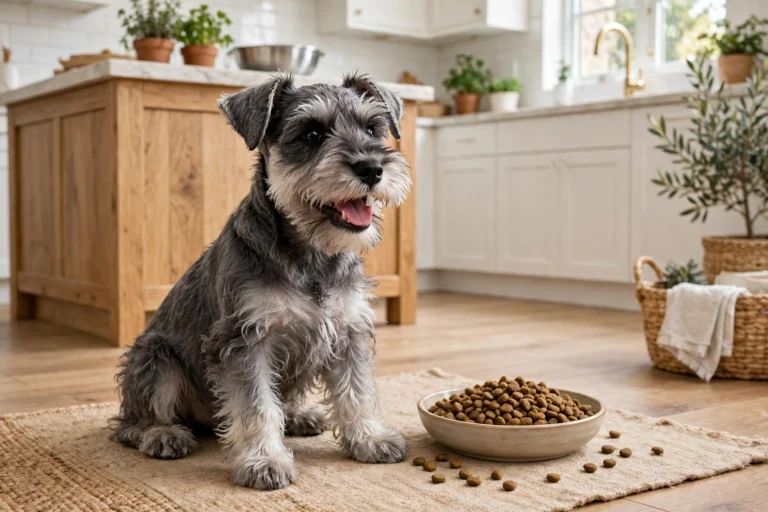
Feeding a Miniature Schnauzer well is less about finding one magic food and more about getting the small things right, every day: the right portion, the right fat level, and a routine your dog can count on. This miniature schnauzer feeding guide covers exactly that, how much to feed at every life stage, how many calories your Mini Schnauzer actually needs, and how to adjust when weight, age, or health changes the picture.
Miniature Schnauzers are small dogs with big appetites and a metabolism that punishes guesswork. Most adults weigh 11 to 20 pounds, yet many owners are surprised by how little food that size really needs, and how quickly a few extra treats a day turn into extra weight. This guide also tackles the breed-specific issues other feeding guides gloss over: the link between high-fat food and pancreatitis, the breed’s tendency toward high blood fat (hyperlipidemia), urinary stones, and diabetes risk when weight creeps up.
Use the tables below as your starting point, then adjust by what you see: your dog’s ribs, waist, energy, and stool. The feeding chart on the bag is a guideline, not a prescriptio. And for a breed as food-motivated as the Mini Schnauzer, measuring is what keeps a healthy dog healthy.
Quick Answer: Most adult Miniature Schnauzers need about 1/2 to 1 cup of dry food a day, split into two meals, or roughly 300 to 500 calories. Keep fat moderate, near 10 to 15%, and keep treats under 10% of daily calories. Puppies need 3 to 4 small meals a day, and seniors need fewer calories with the same steady routine.
In This Guide
- Key Takeaways
- How Much Should a Miniature Schnauzer Eat?
- Feeding a Miniature Schnauzer Puppy
- Feeding an Adult Miniature Schnauzer
- Feeding a Senior Miniature Schnauzer
- A Sample Feeding Day
- What to Look For in a Miniature Schnauzer Food
- What to Avoid
- Treats, Chews, and Table Food
- How to Switch Foods Safely
- Weight, Body Condition, and When to Adjust
- Water and Feeding Setup
- Pros and Cons
- Conclusion
- Two Checks That Catch Trouble Early: Lipid Blood Tests and the Rib Test
Key Takeaways
- Most adult Miniature Schnauzers need roughly 300 to 500 calories a day, or about 1/2 to 1 cup of dry food split into two meals. Always measure, never free-feed.
- Keep fat moderate: aim for 10 to 15% fat on a dry-matter basis for healthy adults, and lower if your vet has flagged pancreatitis or high blood fat.
- Feed puppies 3 to 4 small meals a day, adults twice a day, and seniors twice a day with fewer calories and joint support.
- Treats count: keep them under 10% of daily calories, or roughly 30 to 50 calories a day for most adults.
- Switch foods slowly over 7 to 10 days, and watch body condition. You should feel ribs easily but not see them.
How Much Should a Miniature Schnauzer Eat?
The short answer is: less than your Mini Schnauzer would like. These dogs are famous beggars, and their compact size means every extra handful shows up fast. The longer answer depends on weight, age, activity, and whether your dog is spayed or neutered. Neutered dogs typically need about 10 to 20% fewer calories than intact dogs of the same weight.
Competing guides disagree wildly on calories, with some quoting 480 to 720 calories a day for adults. That range is far too high for most pet Mini Schnauzers, who are companion dogs, not working farm dogs. A more realistic starting point for a moderately active adult is 300 to 500 calories a day, adjusted up for very active dogs and down for couch potatoes. If your dog is gaining weight on the bag’s recommended amount, the bag, not your dog, is usually wrong for your household.
Start with the table below, feed that amount for two weeks, weigh your dog, and adjust by 10% at a time. That two-week check is the step most guides skip, and it is the one that actually works.
Adult Portion Table by Weight
| Adult Weight | Dry Food per Day | Approx. Calories per Day | Meals per Day |
|---|---|---|---|
| 11 to 13 lbs | 1/2 to 3/4 cup | 300 to 380 | 2 |
| 14 to 16 lbs | 3/4 to 1 cup | 380 to 450 | 2 |
| 17 to 20 lbs | 3/4 to 1 1/4 cups | 420 to 500 | 2 |
These cups assume a typical dry food at around 350 to 400 calories per cup. If your food is much more or less calorie-dense, use calories, not cups, as your guide. The calorie content (kcal per cup) is printed on every bag, and it is the only number that lets you compare foods fairly.
Wet Food and Mixed Feeding
Wet food is roughly 75 to 80% water, so it takes a lot more of it to match dry food calories. As a rough conversion, one 13-ounce can of typical wet food (about 350 to 400 calories) replaces roughly 1 cup of dry food. But always check the can, because wet foods vary far more than kibble. A practical mixed routine many owners use is half the daily calories from kibble and half from wet food, which adds moisture and palatability without blowing the calorie budget. If you mix, reduce the kibble by the same calories you add in wet food; do not simply add a can on top of a full kibble portion.
Feeding a Miniature Schnauzer Puppy
Miniature Schnauzer puppies grow fast and need more calories per pound than adults, but in small, frequent meals their developing stomachs can handle. Feed a puppy formula, which has the higher protein, fat, and calcium balance growing bones need, until around 9 to 12 months, when most Minis can transition to adult food. For a detailed look at puppy formulas, see our guide to best puppy food for Miniature Schnauzers.
Puppy Portion Table
| Age | Meals per Day | Dry Food per Day (approx.) | Notes |
|---|---|---|---|
| 8 to 12 weeks | 4 | 1/2 to 3/4 cup | Soften kibble with water if needed; tiny, frequent meals. |
| 3 to 6 months | 3 to 4 | 3/4 to 1 1/4 cups | Drop to 3 meals around 4 to 5 months if stool stays firm. |
| 6 to 9 months | 3, then 2 | 1 to 1 1/2 cups | Move to 2 meals by 6 to 7 months; watch weight as growth slows. |
| 9 to 12 months | 2 | 3/4 to 1 1/4 cups | Transition to adult food gradually (see switching section below). |
Puppy portions change quickly, so weigh your puppy every two weeks and follow your food’s puppy chart by current weight, not by age alone. A puppy that is growing steadily, has firm stools, and is lean but not skinny is being fed about right. Constant hunger alone is not a reason to add food. Mini Schnauzers act hungry whether they need more or not.
Do not rush the switch to adult food. Small breeds mature faster than large breeds, but switching before 9 months can short-change bone and muscle development. When you do switch, do it over 7 to 10 days, mixing increasing amounts of the new food into the old.
Feeding an Adult Miniature Schnauzer
For most adults, two measured meals a day, morning and evening, roughly 12 hours apart, is the ideal routine. Two meals beat one large meal for digestion and blood-sugar steadiness, and they beat free-feeding outright: a bowl left down all day is an invitation for a Mini Schnauzer to graze its way to obesity.
Choose a food with real meat as the first ingredient, moderate protein (around 20 to 26% for most adults), and fat in the 10 to 15% range. That fat range matters more for this breed than for most: Miniature Schnauzers are prone to hyperlipidemia, and high-fat diets and fatty table scraps are linked to pancreatitis flare-ups in susceptible dogs. If your vet has ever mentioned high triglycerides or a pancreatitis episode, ask about a low-fat formula before choosing anything richer. Our roundup of best dog food for Miniature Schnauzers focuses on formulas that fit this moderate-fat profile.
Activity changes the math. A Mini Schnauzer that walks 30 to 45 minutes a day plus play may need the top of the calorie range; a senior-leaning adult that mostly naps may need 10 to 20% below it. Adjust in small steps, and give each change two weeks before judging it.
Feeding a Senior Miniature Schnauzer
Most Miniature Schnauzers become seniors around age 8 to 10, and they often live to 12 to 15 years. Seniors need fewer calories (metabolism slows and activity usually drops) but they still need good-quality protein to hold muscle. Do not cut protein drastically in old age; instead, cut calories, keep protein moderate to good, and look for joint support (glucosamine and omega-3s) and easy-to-chew kibble if teeth are worn.
Senior Portion Table
| Senior Weight | Dry Food per Day | Approx. Calories per Day |
|---|---|---|
| 11 to 13 lbs | 1/2 to 3/4 cup | 270 to 350 |
| 14 to 16 lbs | 3/4 to 1 cup | 330 to 420 |
| 17 to 20 lbs | 3/4 to 1 cup | 380 to 460 |
Senior dogs should be weighed every month or two, because gradual weight loss can hide dental pain, kidney issues, or other problems that need a vet, not a bigger bowl. If a senior is losing weight despite eating well, or suddenly drinking and urinating much more, get a vet check rather than simply feeding more.
A Sample Feeding Day
Here is what a typical day looks like for a healthy 15-pound adult Mini Schnauzer eating about 400 calories a day:
- 7:00 a.m. Breakfast: 1/2 cup dry food (about 200 calories), fresh water, short walk after eating.
- Midday. Training treats: a few pea-sized treats or carrot pieces, counted inside the daily total (about 20 to 30 calories).
- 6:00 p.m. Dinner: 1/2 cup dry food, or half kibble plus a small portion of wet food totalling about 200 calories.
- Evening: fresh water available; a small dental chew or green beans if treats are still within budget.
Keep meal times consistent. Mini Schnauzers thrive on routine, and regular timing also makes house training, digestion, and appetite monitoring far easier. A skipped meal is an early warning sign you will only notice if meals are scheduled.
What to Look For in a Miniature Schnauzer Food
Use this checklist when you read a label, and compare it with our general guide to best dog food for small breeds:
- Named meat first: chicken, turkey, lamb, or fish as the first ingredient, not “meat meal” alone or corn as the lead.
- Moderate fat (10 to 15%): the single most breed-relevant number on the bag for Mini Schnauzers.
- Protein 20 to 26% for adults: enough to hold muscle without the very high fat that often comes with very high-protein formulas.
- AAFCO statement: “complete and balanced” for your dog’s life stage. This is the minimum quality gate, not marketing.
- Fiber for fullness: beet pulp, pumpkin, or similar fiber sources help a food-motivated dog feel satisfied on fewer calories.
- Omega-3s: fish oil or flaxseed support the wiry Schnauzer coat and skin, and help with joint health in seniors.
- Small-breed kibble size: smaller kibble is easier for small jaws and encourages chewing rather than gulping.
What to Avoid
- Free-feeding: leaving food down all day is the fastest route to an overweight Mini Schnauzer.
- Fatty table scraps: bacon, sausage, fried foods, and rich leftovers are the classic pancreatitis triggers for this breed.
- Toxic foods: chocolate, grapes and raisins, onions, garlic, macadamia nuts, and anything sweetened with xylitol.
- High-fat treats that do not count: pig ears, fatty chews, and rich biscuits can add hundreds of calories invisibly.
- High-purine overload: frequent organ meats, sardines, and anchovies can worsen the breed’s tendency toward urinary stones. Keep these occasional, not daily.
- Grain-free by default: grain-free is not automatically healthier, and some grain-free formulas are higher in fat. Choose it only for a real sensitivity, and check the fat level first.
Treats, Chews, and Table Food
Treats should stay under 10% of daily calories. For a 400-calorie dog, that is 40 calories, or roughly a small handful of baby carrots, a few green beans, apple slices without seeds, or a couple of small commercial training treats. Use pea-sized training treats: your Schnauzer cares about the praise, not the size. If you give extra treats on a training-heavy day, trim the next meal by the same amount. That simple swap is what keeps treat-loving dogs lean without feeling deprived.
Safe everyday extras include carrots, green beans, cucumber, blueberries, and plain cooked pumpkin. Keep table food rare and plain. A bite of unseasoned chicken is fine; a plate of seasoned, fatty leftovers is not. And never feed from the table as a habit: it trains begging, and begging trains owners to overfeed.
How to Switch Foods Safely
Switch over 7 to 10 days, slower if your dog has a sensitive stomach or a pancreatitis history:
- Days 1 to 2: 75% old food, 25% new food.
- Days 3 to 4: 50% old, 50% new.
- Days 5 to 6: 25% old, 75% new.
- Day 7 to 10: 100% new food.
Loose stools during a switch usually mean you moved too fast. Step back a stage for two days, then continue. If vomiting, bloody stool, or refusal to eat lasts more than a day, stop and call your vet. For the full transition plan, see our guide on how to change dog food safely.
Weight, Body Condition, and When to Adjust
Weigh your Mini Schnauzer monthly and use the body-condition check weekly: you should feel the ribs easily under a thin layer of fat, see a visible waist from above, and see a slight tummy tuck from the side. If ribs are hard to feel, cut food by 10% and increase walks; if ribs and hip bones are prominent, add 10% and check with your vet if the loss is unexplained.
Red flags that mean “vet, not more food” include sudden weight loss, constant thirst and urination, vomiting or diarrhea lasting more than 48 hours, straining to urinate, or a painful, hunched belly after a fatty meal. The last can signal pancreatitis and needs prompt care. This guide is for information only. Check with your vet for your dog’s specific needs, especially if your dog has pancreatitis, diabetes, kidney disease, or urinary stones, where prescription diets may be required.
Water and Feeding Setup
Fresh water should be available all day, changed daily, in a clean bowl. A good rule is roughly 1/2 to 1 ounce per pound of body weight daily, more in heat or after exercise. Mini Schnauzers with beards often dunk their beards in water bowls; a narrower bowl or a water fountain can keep the beard drier and reduce mess. Feed in a quiet spot, on a non-slip mat, and pick the bowl up after 20 to 30 minutes if food is uneaten. Leaving it down trains pickiness and hides appetite changes.
Pros and Cons
A steady, moderate-fat feeding routine protects a Mini Schnauzer more than any single food choice. Here is the honest balance.
Pros
- Measured meals split into two keep a food-motivated dog from overeating.
- A moderate-fat target of 10 to 15% is clear and easy to check on the label.
- Two-week weigh-ins catch weight drift before it becomes a problem.
- Low-calorie treats like carrots and green beans keep training fun without breaking the calorie budget.
Cons
- The breed gains weight easily, so every extra treat shows up fast.
- High-fat food and table scraps can trigger pancreatitis, so rich treats are off the table.
- A wiry coat can hide weight gain, so eyes alone are not enough to judge condition.
- Seniors need fewer calories but still need good protein, so portions need regular review.
For older Schnauzers, see our guide to the best senior food for Miniature Schnauzers.
Conclusion
The best feeding plan for a Miniature Schnauzer is a boring one, done consistently: a moderate-fat, meat-first food, measured portions split into two meals, treats kept inside the calorie budget, and a monthly weigh-in to catch drift early. Start with the tables in this guide, adjust by body condition every two weeks, and keep fat and table scraps in check. That combination protects against the weight gain, pancreatitis, and blood-fat problems this breed is prone to, and it gives your Mini Schnauzer the steady energy for many more years of zoomies. If you are still choosing a food, start with our Miniature Schnauzer food picks and match the formula to the fat and calorie targets above.
Two Checks That Catch Trouble Early: Lipid Blood Tests and the Rib Test
A Miniature Schnauzer can look fine while blood fat runs high, and the first clear warning is often a painful pancreatitis flare. A simple blood test can catch it sooner. Ask your vet about a lipid panel at your dog’s annual visit: it measures triglycerides, the blood fats that run high in this breed, and catching a high reading early can head off a flare before it starts. Between visits, the rib test is your best tool, and it matters more here than in most breeds because the wiry coat and beard can hide weight gain. Run your hands along your dog’s sides each week: you should feel each rib easily under a thin layer of fat without pressing hard, and you should see a waist from above and a slight tuck from the side. If the ribs are hard to find, trim food by about 10% and weigh your dog again in two weeks. These two checks take minutes, and together they catch the two problems that cause most Mini Schnauzer feeding trouble: fat in the blood and fat on the body.
How much should I feed my Miniature Schnauzer?
Most adults need 1/2 to 1 cup of dry food a day, split into two meals, totalling roughly 300 to 500 calories. Start with the weight table in this guide, feed that amount for two weeks, then adjust by 10% based on weight and body condition.
How many times a day should a Miniature Schnauzer eat?
Adults twice a day, morning and evening. Puppies need 3 to 4 meals a day until about 6 months, then 3, then 2 meals by 6 to 7 months. Avoid free-feeding, which leads to weight gain in this food-motivated breed.
When should I switch my Mini Schnauzer from puppy to adult food?
Around 9 to 12 months for most Miniature Schnauzers. Switch gradually over 7 to 10 days, mixing increasing amounts of the new food into the old, and step back a stage if stools loosen.
What fat level is best for a Miniature Schnauzer?
Aim for 10 to 15% fat for healthy adults. This breed is prone to high blood fat and pancreatitis, so very high-fat foods and fatty table scraps are risky. If your vet has flagged pancreatitis or high triglycerides, ask about a low-fat formula.
Can Miniature Schnauzers eat wet food?
Yes. Wet food adds moisture and palatability, but it is mostly water, so one 13-ounce can roughly replaces 1 cup of dry food. If you mix wet and dry, reduce the kibble by the same calories you add in wet food.
How many treats can a Miniature Schnauzer have?
Keep treats under 10% of daily calories, about 30 to 50 calories a day for most adults. Use pea-sized training treats and trim the next meal if you give extra treats on a training day.
Why is my Miniature Schnauzer always hungry?
Mini Schnauzers are famously food-motivated and will beg whether they need more food or not. Judge portions by weight and body condition, not by begging, and use low-calorie extras like carrots and green beans.
What foods should Miniature Schnauzers avoid?
Fatty table scraps, chocolate, grapes and raisins, onions, garlic, macadamia nuts, and anything with xylitol. Also limit high-purine foods like organ meats and sardines, which can worsen the breed’s tendency toward urinary stones.
Should my Miniature Schnauzer have a blood test for triglycerides?
Ask your vet about a lipid panel at your dog’s annual visit. It measures triglycerides, the blood fats that run high in this breed. Catching a high reading early can prevent a painful pancreatitis flare, so regular bloodwork matters more for Mini Schnauzers than for most breeds.
How much does it cost to feed a Miniature Schnauzer each month?
About 20 to 30 dollars a month for a mid-range dry food, or about 27 dollars by one breed guide’s estimate. Premium brands or specialty diets can push the cost higher. The exact number depends on your dog’s weight and the food you choose.

4 Comments