
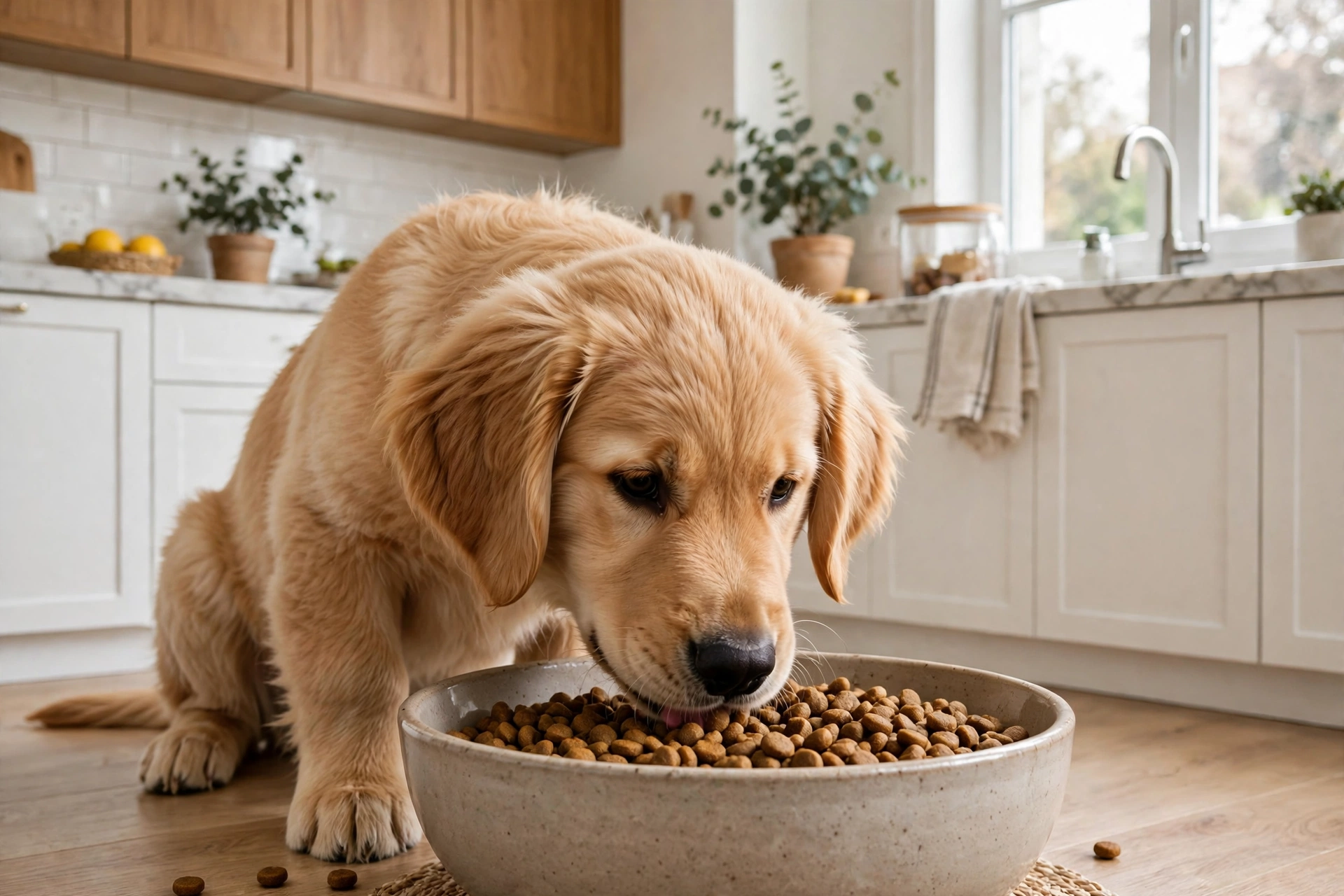
Best Puppy Food for Large Breeds: Calcium, Cost & Feeding Compared (2026)
Large-breed puppies grow fast, really fast. A Labrador puppy can go from 8 pounds at eight weeks to 70 pounds in a year, and that explosive growth puts unique demands on their bones, joints, and digestion. The best puppy food for large breeds isn’t just regular puppy food in a bigger bag; it’s formulated with controlled calcium, moderate calories, and joint-supporting nutrients to help your puppy grow at a safe, steady pace. In this 2026 guide, I’ll walk you through what to look for, my six top picks for large-breed puppies, and the mistakes to avoid.
As an Amazon Associate, we may earn a commission from qualifying purchases at no extra cost to you.
For most large-breed puppies, Royal Canin Size Health Nutrition Large Puppy is the best pick, sized for a 56 to 100 pound adult weight. Diamond Naturals is the best value. Choose a food whose AAFCO statement says growth including large size dogs, feed lean, and stay on puppy food until your vet confirms the growth plates have closed.
In This Guide
- Key Takeaways
- Comparison Table: Best Puppy Food for Large Breeds
- Royal Canin Size Health Nutrition Large Puppy
- Purina Pro Plan Large Breed Puppy
- Hill’s Science Diet Puppy Large Breed
- Diamond Naturals Large Breed Puppy
- Wellness CORE Large Breed Puppy
- Nutro Natural Choice Large Breed Puppy
- What to Look for in Large-Breed Puppy Food
- What to Avoid
- Feeding Schedule and Portions for Large-Breed Puppies
- Pros and Cons
- What About Giant-Breed Puppies? When “Large Breed” Isn’t Big Enough
- Warning Signs Your Large-Breed Puppy Is Growing Too Fast
- Conclusion
Key Takeaways
- Look for a label that says “growth including large size dogs” with controlled calcium. This is the single most important thing on the bag.
- Excess calcium during rapid growth is linked to developmental orthopedic diseases like osteochondrosis and hip dysplasia.
- Slow, lean growth beats fast growth: feed to a lean body condition through skeletal maturity (14 to 18 months for large breeds).
- Our overall pick is Royal Canin Size Health Nutrition Large Puppy for its precise formulation; the best value is Diamond Naturals Large Breed Puppy.
- Keep your large-breed puppy on a large-breed growth diet until the vet confirms growth plates are closed, not just until the first birthday.
Comparison Table: Best Puppy Food for Large Breeds
| Product | Best For | Calcium % (dry matter) | Ca:P ratio | kcal/cup | Cost / month | Bag sizes | AAFCO statement |
|---|---|---|---|---|---|---|---|
| Royal Canin Size Health Nutrition Large Puppy | Overall best | 1.02% (provisional, older US label) | 1.32 (provisional) | 349 | ~$79 to $83/mo | 17, 40 lb | Formulated for growth, incl. large breeds (70+ lb) |
| Purina Pro Plan Large Breed Puppy | Popular classic | 1.1% | 1.22 | 419 | ~$62 to $88/mo | 18, 34 lb | Feeding-trial tested, all life stages incl. large breeds (70+ lb) |
| Hill’s Science Diet Puppy Large Breed | Controlled calcium growth | 0.8% (min) to 1.16% dry-matter avg | 1.23 (dry-matter avg) | 387 | ~$109/mo | 15.5, 27.5 lb | Feeding-trial tested for growing puppies |
| Diamond Naturals Large Breed Puppy | Best value | 1.2% | 1.20 | 414 | ~$54/mo | 6, 20, 40 lb | Formulated, all life stages incl. large breeds (70+ lb) |
| Wellness CORE Large Breed Puppy | Grain-free choice | 1.30% min to 1.60% max (labels disagree) | 1.23 to 1.30 (labels disagree) | 387 to 423 (labels disagree) | ~$161 to $177/mo | 24 lb | Formulated for growth and gestation/lactation, incl. large breeds (70+ lb) |
| Nutro Natural Choice Large Breed Puppy | Clean ingredient list | 1.2% (min) to 1.7% (max) | 1.20 to 1.70 | 396 | ~$97/mo | 13, 30 lb | Formulated for growth, incl. large breeds (70+ lb) |
Prices are Chewy “buy once” prices as retrieved Nov 11, 2026. Monthly costs are computed for a 60 lb puppy at about 6 months old. Royal Canin calcium is provisional. It comes from an older US label reproduction and is not on the current official US page. Wellness CORE label reproductions conflict on calcium, phosphorus and kcal/cup, so those cells show the conflict instead of a single value.
Royal Canin Size Health Nutrition Large Puppy
Royal Canin builds its Size Health Nutrition line around one straightforward idea: a puppy’s feeding and diet needs depend on how big they’ll grow, not just how old they are. The Large Puppy formula is designed for puppies with an expected adult weight of 56 to 100 pounds, fed from 2 to 15 months, a level of precision most competitors don’t offer.
Fish oil and marine microalgae oil give your puppy DHA and omega-3s for brain and eye development, and glucosamine hydrochloride and chondroitin sulfate are in the mix for joint support through that long growth window. Vitamins E and C back the developing immune system, and prebiotics help with digestion.
The formula comes in four bag sizes (4, 17, 30, and 40 pounds), which makes it easy to scale up as your puppy’s appetite grows. The price per pound runs higher than some rivals, but for owners who want the most precisely targeted large-breed puppy food on the market, this is the one to beat.
Purina Pro Plan Large Breed Puppy
Purina Pro Plan has been feeding large-breed puppies for decades, and its large-breed puppy formula is backed by the kind of long-term feeding trials few brands can match. Real chicken is the first ingredient, and the formula is balanced for the steady growth rate large breeds need, with appropriate calcium and phosphorus levels for healthy bone development.
The formula includes DHA from omega-rich fish oil for brain and vision development, plus live probiotics for digestive health, a genuine plus for a formula at this price point. Glucosamine supports developing joints, and the calcium-to-phosphorus ratio is tuned for large-breed skeletal growth.
This is the pick if you trust the long-established veterinary diet brands and want a formula with years of use behind it. It’s easy to find. You’ll see it in pet stores, big-box retailers, and online across the US.
Hill’s Science Diet Puppy Large Breed
Hill’s Science Diet takes the calcium question more seriously than almost anyone: its Large Breed Puppy formula is built around an optimal calcium level specifically for controlled bone growth, which the brand positions as the defining feeding and diet need of large-breed puppies. Chicken leads the ingredient list, supported by brown rice and whole grain oats, and fish oil supplies DHA for brain and eye development.
The joint-support story here comes from controlled growth rather than added joint supplements. The formula doesn’t include glucosamine or chondroitin. That’s a deliberate philosophy: get the calcium right and bones and joints develop on a sounder schedule. The food comes in Chicken & Brown Rice and Lamb & Brown Rice flavors, in 15.5- and 27.5-pound bags.
For owners whose veterinarian has stressed calcium control, or who want an established veterinary diet brand standing behind the bag, this is the dependable pick.
Diamond Naturals Large Breed Puppy
Diamond Naturals pairs a lamb-first recipe with a genuinely wide probiotic blend at a price well below the premium brands. Real lamb is the first ingredient, followed by lamb meal, keeping named-protein content high, a good option if you want to rotate away from poultry-based proteins. The grain-inclusive base (whole grain brown rice, cracked pearled barley, grain sorghum) means this isn’t a fit for grain-free seekers.
What stands out at this price is the five-strain probiotic blend (including Lactobacillus plantarum and Bifidobacterium animalis), plus salmon oil for DHA and whole-food extras like kale, blueberries, and pumpkin. The formula is available in 6-, 20-, and 40-pound bags.
If you’re feeding a puppy that will become an 80-pound adult for 14+ months of growth, the bag price compounds. Diamond Naturals keeps the lifetime cost meaningfully lower without skimping on the large-breed essentials.
Wellness CORE Large Breed Puppy
For owners who specifically want a grain-free large-breed puppy formula, Wellness CORE delivers two named proteins (deboned chicken and turkey meal) with no corn, wheat, or soy anywhere in the ingredient list. Chicken meal is confirmed on the label as a source of glucosamine and chondroitin sulfate, and salmon oil provides DHA.
A note of caution: some large-breed families (Dobermans, Boxers, Great Danes) carry higher risk for heart issues, and the FDA has investigated potential links between grain-free, legume-heavy diets and dilated cardiomyopathy. This formula’s ingredient list avoids the worst legume stacking, but owners of cardiac-risk breeds should discuss grain-free feeding with their vet first.
It sits at a higher price per pound than the grain-inclusive options, but if grain-free is your requirement, this is a well-constructed large-breed puppy food with honest joint support.
Nutro Natural Choice Large Breed Puppy
Nutro Natural Choice leads with real chicken, then chicken meal (confirmed on the label as a source of glucosamine and chondroitin sulfate) with brewers rice, whole grain sorghum, barley, and brown rice as the grain base. Fish oil supplies DHA for brain and eye development. The formula skips corn, wheat, and soy specifically, though it isn’t fully grain-free.
Nutro sells this recipe as non-GMO, and since it skips corn, wheat and soy, the label is easy to read. Two bag sizes (13 and 30 pounds) cover the whole puppy stage, from an 8-week-old just starting out to a 60-pound six-month-old eating over five cups a day.
At a mid-range price with confirmed joint support, this is a solid all-rounder for owners who prioritize ingredient transparency.
What to Look for in Large-Breed Puppy Food
AAFCO large-size growth statement
This is the non-negotiable. The bag should carry an AAFCO statement saying the food is formulated (or feeding-trial substantiated) for “growth, including the growth of large size dogs (70 pounds or more as adults).” AAFCO caps calcium at 1.8 grams per 1,000 calories for foods carrying this statement, meaningfully lower than the ceiling on generic puppy food. A generic “for growth” statement without the large-size language doesn’t meet the bar.
Controlled calcium and phosphorus
Large-breed puppies cannot down-regulate calcium absorption the way small-breed puppies can. Dietary calcium excess passes directly into growing skeletal tissue and can disrupt the cartilage-to-bone conversion that shapes healthy joints. Research going back to the 1980s links excess dietary calcium to developmental orthopedic disease, including osteochondrosis and hypertrophic osteodystrophy. Controlled calcium is what keeps a fast-growing puppy’s skeleton on track.
Adequate protein, moderate calories
The old advice to feed large-breed puppies low-protein food has been superseded. The issue was never protein itself, but too many calories and calcium excess. AAFCO sets the growth minimum at 22% protein (dry matter basis); the danger is feeding excess calories to “bulk up” a puppy. Aim for a slightly lean body condition through skeletal maturity. Slow growth produces sounder adults than fast growth.
DHA and joint-support nutrients
DHA (from fish oil or marine algae) supports brain and vision development during the first year. Glucosamine and chondroitin appear in several of the picks above; they won’t fix genetics, but they’re a reasonable layer of joint support through the 14- to 24-month skeletal-development window.
Digestive support
Large-breed puppies eat a lot of food and produce a lot of stool. Prebiotics, probiotics, and digestible fiber keep digestion steady. If your large-breed puppy has a sensitive stomach, read my guide to the best puppy food for sensitive stomachs alongside this one.
What to Avoid
- Generic puppy food with no large-breed formulation. Regular puppy formulas can deliver calcium and calories at levels meant for a 15-pound adult, a recipe for overgrown, unsound joints in a future 80-pound dog.
- Calcium supplements. Adding bone meal, calcium chews, or cottage cheese on top of a complete puppy food can push calcium over the safe ceiling. Don’t supplement unless your vet prescribes it.
- Grain-free legume-heavy diets for cardiac-risk breeds. The FDA’s investigation into diet-related dilated cardiomyopathy flagged grain-free diets heavy in peas, lentils, and potatoes. Breeds like Dobermans, Boxers, and Great Danes need extra caution here.
- Switching to adult food too early. Large breeds don’t finish skeletal development until 14 to 18 months (giants: 18 to 24). Transition when your vet confirms growth plates are closing, not at a fixed birthday.
- Overfeeding to “keep up.” A lean large-breed puppy grows into a sounder adult. Feed to the lower end of the bag’s recommended range and adjust by body condition, not by begging.
Feeding Schedule and Portions for Large-Breed Puppies
Most large-breed puppy foods recommend 3 to 4 meals per day until 6 months, then 2 meals per day through growth. Watch body condition carefully: the ribs should be easily felt without being visible. For exact daily portions, follow the puppy feeding schedule; the best dog food for puppies guide covers small vs large breed portions.
Pros and Cons
These six picks all carry the large-size growth statement, but each one has a trade. Here is the honest balance.
Pros
- Six real large-breed formulas, all with the large-size growth AAFCO statement and controlled calcium.
- Royal Canin targets a precise 56 to 100 lb adult weight range, fed from 2 to 15 months.
- Diamond Naturals keeps the lifetime cost lower with a five-strain probiotic blend at a budget price.
- Joint and brain support across the picks: glucosamine, chondroitin, and DHA from fish oil.
Cons
- All six picks are dry kibble, so there is no wet food option for young puppies or picky eaters.
- Royal Canin costs more per pound than the other picks.
- Hill’s has no added glucosamine or chondroitin, so joint support rests on calcium control alone.
- Wellness CORE is grain-free, so owners of Dobermans, Boxers, and Great Danes should talk to their vet first.
Large-Breed Puppies by Breed
Feeding amounts and growth timelines differ by breed. Pick your breed for the full guide:
- Best Puppy Food for Great Danes Calcium-safe picks for fast-growing Danes
- Best Dog Food for German Shepherds Feeding and diet for joint strength and steady growth
- Best Puppy Food for Golden Retrievers feeding amounts, growth and cost
- Best Dog Food for Labradors feeding amounts and the best formulas for Labs
- Best Dog Food for Great Danes feeding amounts and the best formulas for Danes
- Best Dog Food for Rottweilers feeding amounts, the best formulas for Rottweilers, and joint support
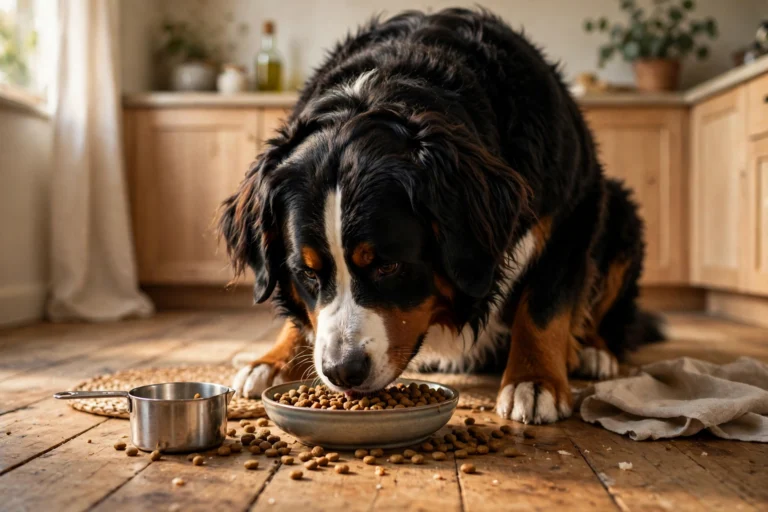
- Best Dog Food for Bernese Mountain Dogs feeding amounts and the best formulas for Bernese
- Best Dog Food for Doberman Pinschers feeding amounts and the best formulas for Dobermans
- Best Dog Food for Cane Corsos feeding amounts and the best formulas for Cane Corsos
- Best Puppy Food for Small Breeds growth needs, feeding amounts, and the best formulas for smaller puppies (contrast to large breeds)
- Best Dog Food for Sensitive Stomachs If your large-breed puppy has a sensitive stomach, these gentle formulas help
- Best Dog Food for Puppies if you’re still deciding between dry, wet, small or large: a broad guide for all puppies
What About Giant-Breed Puppies? When “Large Breed” Isn’t Big Enough
Large breed usually means an expected adult weight of 50 to 100 pounds. Giant breed means 100 pounds and up: Great Danes, Mastiffs, Saint Bernards, Newfoundlands, and similar dogs. If your puppy will pass 100 pounds, the large-breed advice on this page still applies, but the timeline stretches: giant breeds keep growing for 18 to 24 months, compared with 14 to 18 months for most large breeds, so they stay on puppy food longer. Some formulas are made to be fed up to 18 months, and Eukanuba Large Breed Puppy can be fed up to 2 years, which suits the slowest giants.
The rules matter even more at giant size. Controlled calcium under an AAFCO statement for the growth of large size dogs is still the non-negotiable, and the puppy should stay lean. A Great Dane puppy gaining two pounds a week is normal, but fat, not muscle, is what harms growing joints. It’s best not to add calcium supplements on top of a complete food. Ask your vet first if you are considering them. Check that the feeding guide covers your puppy’s expected adult weight; if the bag tops out at 100 pounds and your dog will pass that, ask your vet whether a giant-specific or longer-feeding formula fits better. And switch to adult food only when your vet confirms the growth plates have closed, not on a birthday.
Does my puppy count as a large breed?
As a rough guide, an expected adult weight of 50 pounds or more counts as large breed, and 100 pounds or more counts as giant breed. Check your breed’s standard adult weight, or ask your vet to estimate it from the parents’ size and your puppy’s growth curve. If you are unsure, a formula whose AAFCO statement explicitly includes the growth of large size dogs is the safe default. It covers the calcium control large puppies need.
How long should a giant-breed puppy stay on puppy food?
Usually 18 to 24 months, longer than most large breeds, which finish around 14 to 18 months. The right trigger is skeletal maturity, not age: your vet can confirm when the growth plates have closed. Switching to adult food early removes the calcium and calorie control a still-growing giant puppy relies on, so keep the puppy formula until your vet says growth is done, and transition gradually over 7 to 10 days when you do switch.
Warning Signs Your Large-Breed Puppy Is Growing Too Fast
The right food only works if the growth rate stays slow and steady, and the first signs of trouble show in your puppy’s body, not on the bag. Check body condition every two weeks. Run your hands along the ribs: you should feel them easily without seeing them, see a waist when you look down from above, and see a tuck in the belly from the side. If the ribs are hard to feel under fat, cut the portion a little and check again in two weeks. Weigh your puppy on the same scale each week, since steady gains beat jumps, and at around 4 months a large-breed puppy weighs about half its adult size. Watch how your puppy moves, too. A limp that shifts from one leg to another, stiffness after rest, swollen joints, or a bunny-hopping run are warning signs of developmental orthopedic disease, the same hip dysplasia and osteochondritis dissecans this guide warns about. Call your vet if you see any of them instead of waiting for the next visit, and ask for an X-ray if the signs keep coming back. Keep exercise gentle while the growth plates are open: several short walks and play sessions a day beat one long run, and skip forced running, long hikes, and repeated jumping until your vet confirms the plates have closed. Food sets the growth rate, but your hands and eyes catch the problems food alone cannot fix.

Conclusion
The best puppy food for large breeds is the one with the large-size growth AAFCO statement, controlled calcium, and the ingredient profile that fits your puppy and your budget. My overall pick is Royal Canin Size Health Nutrition Large Puppy for its precise weight-range targeting and complete joint and brain support; the best value is Diamond Naturals Large Breed Puppy; and the pick to discuss with your vet is Hill’s Science Diet Puppy Large Breed for its calcium-first philosophy.
Whichever you choose, feed to a lean body condition, keep your puppy on the formula through skeletal maturity, and let your veterinarian confirm when growth is done. A little patience during the growth months pays off in a sounder, longer-lived dog. This guide is for information only. Check with your vet for your dog’s specific needs.
Frequently Asked Questions
What is the difference between large-breed puppy food and regular puppy food?
Large-breed puppy food carries an AAFCO statement for “growth, including the growth of large size dogs” with calcium capped at 1.8 grams per 1,000 calories, plus moderate calorie density and joint-support nutrients. Regular puppy formulas can deliver calcium and calorie levels meant for a much smaller adult dog, which raises the risk of developmental orthopedic problems in a fast-growing large breed.
How much calcium should large-breed puppy food have?
AAFCO caps calcium at 1.8 grams per 1,000 calories for foods substantiated for large-size growth, meaningfully lower than the ceiling on generic puppy food. Research going back to the 1980s links excess dietary calcium to developmental orthopedic diseases like osteochondrosis, so controlled calcium is the single most important number on the bag.
When should I switch my large-breed puppy to adult food?
Go by skeletal maturity, not a birthday. Large breeds typically finish growing around 14 to 18 months and giant breeds at 18 to 24 months; your vet can confirm when growth plates close. Switching to adult food too early removes the calcium and calorie control your puppy’s still-growing joints rely on. Transition gradually over 7 to 10 days.
Can I feed my large-breed puppy regular puppy food?
It is risky. Regular puppy food lacks the calcium cap and calorie control that large-size growth formulas carry, and a generic “for growth” label without the large-size language does not meet the bar. Choose a formula whose AAFCO statement explicitly includes the growth of large size dogs (70 pounds or more as adults).
Should large-breed puppies eat grain-free food?
Discuss it with your vet first. The FDA has investigated potential links between grain-free diets heavy in peas, lentils, and potatoes and dilated cardiomyopathy, and large-breed families like Dobermans, Boxers, and Great Danes carry higher cardiac risk. A grain-inclusive large-breed puppy formula is the safer default.
Should I give my large-breed puppy calcium supplements?
No, extra calcium, bone meal, or mineral supplements on top of a complete large-breed puppy food can push total intake over the safe ceiling and disrupt joint development. Only supplement if your veterinarian prescribes it.




27 Comments